On June 22, 1962, inside the federal penitentiary in Atlanta, Joseph Valachi walked the prison yard convinced that one of the men around him had been sent to kill him. He had no weapon, no trusted crew, and no street corner where he could disappear. The walls belonged to the government, but inside those walls, Valachi believed Vito Genovese still controlled who lived and who died.
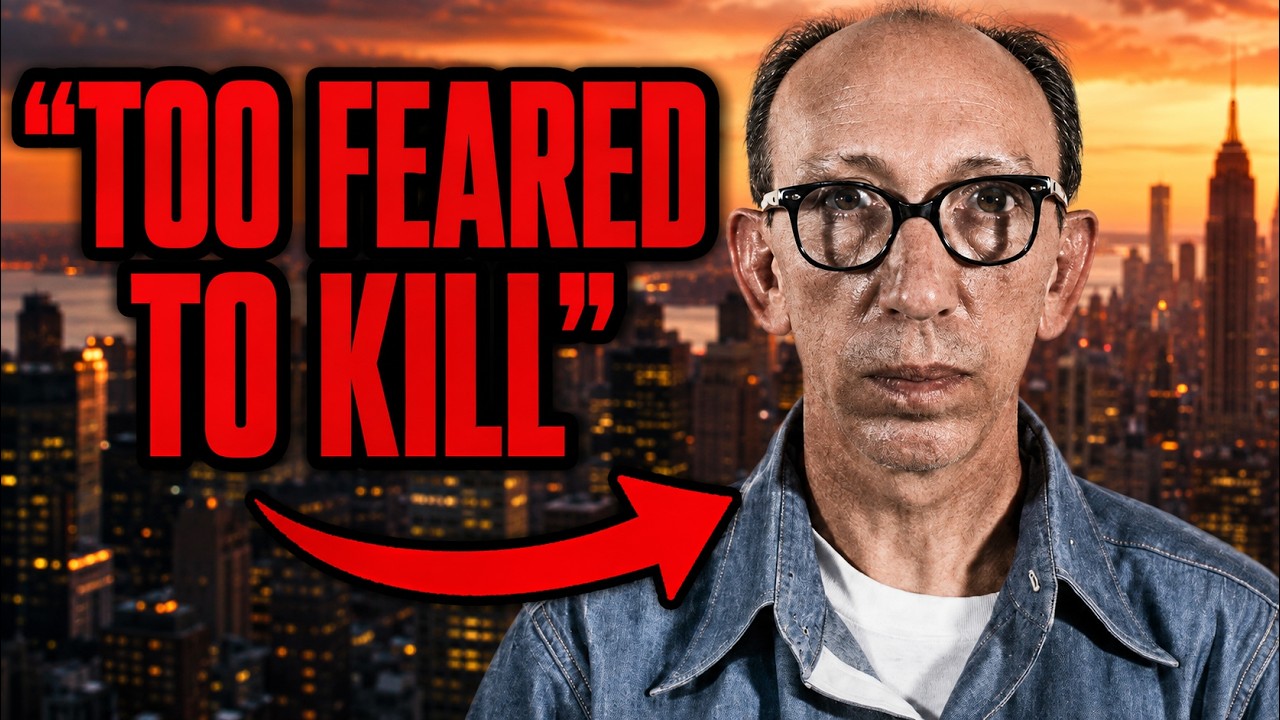
For days, one name had followed him through the cellblocks: Joe Beck, also known as Joseph DiPalermo, a quiet New York drug trafficker serving time in the same prison. Valachi believed Beck had received the assignment. He waited for the right moment, certain that Joseph Valachi would never leave Atlanta alive.
Near a construction area in the yard, Valachi noticed a prisoner approaching. The man looked like Joe Beck. That was enough. Valachi grabbed a piece of iron pipe and attacked before the other prisoner could clarify his identity, striking him repeatedly. Guards rushed to the scene and pulled Valachi away.
Only after the attack did he learn the truth. The man on the ground was not Joe Beck. His name was John Joseph Saupp, a prisoner with no known role in any alleged murder contract. He was killed because, in the mind of a terrified inmate, he resembled the name that had been haunting him. The real Joe Beck was still alive.
That mistake would change the history of the American Mafia.
Valachi was already serving long drug sentences. Now he faced another life term for killing an innocent prisoner. He believed Genovese still wanted him dead, and he knew the Mafia would never forgive what he was about to do next. So Joseph Valachi began to talk.
He told federal investigators about the secret organization that powerful Mafia bosses insisted did not exist. He explained the families, the leaders, the soldiers, the initiation rituals, the Commission, and the rules of silence. Then he carried those secrets to nationally televised Senate hearings, giving the American public its first detailed look inside Cosa Nostra.
But the chain of events leading to that moment did not begin with a government hearing. It began with fear. And at the center of that fear was Joe Beck.
Why did the name of a small, aging drug trafficker terrify a seasoned killer like Joseph Valachi? What had DiPalermo done to make Valachi believe he was the man Genovese would choose to carry out a prison execution? Was Beck truly part of a murder plot? Or had his reputation grown so powerful that he did not need to threaten Valachi at all?
Joseph DiPalermo worked differently from the famous bosses whose names filled newspaper headlines. He was not known for expensive suits, public trials, or photographers waiting outside a Manhattan restaurant. His value came from drugs. That work required a man to remain visible enough for distributors to find him, but distant enough that the merchandise rarely stayed in his hands.
Heroin moved through layers. A supplier obtained the drugs. A courier transported them. A lab cut and packaged the product. Wholesalers supplied regional distributors. Street dealers absorbed the arrests and violence at the bottom. The farther a man stayed from the customer, the harder it became to prove he controlled the transaction.
Joe Beck worked near the center. He knew the people who imported drugs. He knew the men who ran processing sites. He knew which couriers could travel and which distributors could move quantities to other cities. His reputation came not from selling individual packages but from connecting the people who did.
During the 1950s, federal agents began investigating one of the largest drug conspiracies of that period. The network involved Vito Genovese, John Ormento, Joseph DiPalermo, DiPalermo’s brother Charles, and numerous suppliers, couriers, lab workers, and distributors. One of the government’s key witnesses was Nelson Cantellops, who described meetings at Al’s Luncheonette on East Fourth Street in Manhattan.
The location seemed ordinary. Customers came in for food and coffee. Men gathered at tables. Messages could be passed without anyone scheduling a formal meeting. Behind the public activity, drug arrangements were discussed. Cantellops worked as a courier, moving drugs between cities and along routes reaching Florida, Puerto Rico, Las Vegas, and New York. He picked up packages, delivered heroin, and returned with money.
Every trip protected the men above him. If Cantellops was caught with drugs, he was the one physically holding the evidence. The organizers could claim they never saw the package. But couriers also created danger. A courier learns addresses. He hears names. He recognizes the men who pay him. Once he cooperates, the layers designed to protect the organization become a map leading upward.
Another government witness, Joseph Bassa, testified that he bought drugs directly through Joe Beck. According to Bassa, DiPalermo offered heroin at $8,000 per kilogram and cocaine at $400 per ounce. These were not street-level transactions. A kilogram of heroin could be cut, divided, and resold through thousands of small deals. The money multiplied as the product moved down the chain.
Witnesses described repeated contact with DiPalermo to arrange payments and receive shipments from men working around him. Sometimes someone else transported the drugs. Sometimes money moved through an intermediary. Joe Beck did not need to appear at every exchange. The people working beneath him knew exactly whose product they were handling.
That was the power behind the name. Joe Beck was not just one man. His name represented access to supply. A dealer calling Beck was not making a social visit. He was asking about heroin availability, price, where the money should go, and who would deliver the package.
Court records later identified DiPalermo as one of the principal conspirators. Vito Genovese was also convicted as a directing figure in the organization. The government did not prove Genovese personally handled heroin or collected every payment. It proved he attended meetings, understood the nature of the business, and exercised influence over those running it. Reports indicated that men inside the conspiracy called him the “Right Guy.”
Joe Beck operated under and around that power. That relationship placed DiPalermo near one of the most feared crime bosses in the country. It also helped put both men inside Atlanta Federal Penitentiary.
Joseph Valachi had arrived through a separate drug case. He was a fully initiated member of the organization controlled by Genovese. He had spent decades in a world of robbery, burglary, gambling, drugs, and murder. Valachi understood Mafia rules because he had helped enforce them. That knowledge became a source of torment inside prison.
On the street, a targeted man could change his residence. He could use another car. He could stay near armed friends. Inside prison, the government decided when cells opened. The government decided when inmates ate. The government decided when they entered the yard. A man could look over his shoulder, but he could not choose another city.
Valachi began to believe that the powerful inmates around Genovese suspected him of cooperating with authorities. Men who once spoke to him now pulled away. Conversations stopped when he approached. Eyes seemed to follow him across the yard. Valachi later claimed that several attempts had already been made on his life. Whether every incident was a real, organized murder attempt cannot be proven based on his fear alone. In his mind, the verdict had already been delivered.
Valachi believed Vito Genovese thought he was an informant, and informants do not get another hearing. They get an execution order. One conversation with Genovese became the focus of Valachi’s terror. According to Valachi’s later account, Genovese spoke indirectly about betrayal and men who had harmed the organization. Then he kissed Valachi. A kiss between Mafia figures can mean affection, respect, or farewell. Valachi interpreted it as a death sentence. The kiss of death.
From that moment, every inmate connected to Genovese became a potential attacker. But Joe Beck became the name Valachi feared most. DiPalermo had several qualities that made the suspicion believable. He was close enough to Genovese to be trusted. He was serving a long sentence, so he had little to lose from another violent act. He was experienced enough to understand that an order did not need a public announcement. Most importantly, he was already inside the walls. Genovese did not need to send a killer into prison. The alleged killer was already eating, sleeping, and exercising a short distance from his target.
Valachi began seeing Joe Beck everywhere. A man entering the cellblock might be watching him for DiPalermo. A conversation near the dining hall might be arranging the timing. A shared meal might be poisoned. A routine walk in the yard might put Beck behind him. Prison did not create Valachi’s understanding of Mafia violence. It removed his ability to escape it.
Valachi requested separation from the other inmates. He told prison officials his life was in danger. But explaining Mafia fear to administrators created another problem. He could not prove a murder contract without admitting how the organization he knew operated. He could not identify the killer with certainty because no one had explicitly told him Beck received the order. Everything rested on behavior, reputation, and the meaning Valachi assigned to Genovese’s kiss.
Officials saw a nervous inmate. Valachi saw a countdown. After a short period of isolation, he returned to the general population. The name Joe Beck returned with him.

June 22 began like any other day inside Atlanta. Inmates moved through the yard. Construction materials were left nearby. Valachi noticed men approaching and believed the attack had begun. Then he saw John Joseph Saupp, who resembled DiPalermo closely enough to trigger the fear Valachi had been carrying. Valachi did not stop to confirm facial features. He did not call for a guard. He did exactly what his criminal life had trained him to do. He struck first.
The pipe gave him the advantage he believed Joe Beck had been waiting to take. Saupp never understood why he was chosen. He was not killed for money. He was not killed for violating a Mafia order. He was killed because Joseph Valachi needed the man in front of him to be Joe Beck. The real identity would have forced Valachi to admit he still did not know where the threat was coming from.
By believing it was Saupp, Beck gave the terror a face. Killing him gave Valachi a few seconds of thinking the danger was over. Then the guards revealed the mistake. The man Valachi feared was somewhere else in the prison. John Joseph Saupp was dying because of a plot that may not have existed outside Valachi’s mind.
That distinction matters. Valachi genuinely believed Joe Beck had been assigned to kill him. That belief shaped his actions. But no court proved Beck accepted a contract to kill Valachi. No reliable confession from Beck confirmed it. No recordings captured Genovese issuing the order. The strongest evidence is Valachi’s own account, given after he killed the wrong man and decided to cooperate. Valachi had reasons to explain his violence as self-defense against the Mafia. That does not mean he invented every fear. It means the story must remain tied to the language of belief.
Joe Beck haunted Valachi’s cell because Valachi believed the name represented death. The reputation did its work before the man did anything provable.
After Saupp’s death, Valachi’s position became impossible. The Mafia still viewed him with suspicion. The government now held him responsible for another death. Silence offered no realistic path back to freedom. Cooperation offered protection, attention, and a reason for authorities to keep him alive.
Valachi began providing information to federal agents. At first, the conversations were not a dramatic public confession. Investigators asked questions. Valachi provided names. He explained relationships that surveillance had revealed but not fully interpreted. The man seen entering a social club was not just a visitor. He belonged to a crew. The boss did not personally collect gambling payments. Soldiers and associates earned money beneath him and passed it upward. The boss did not need to order every crime in direct language. The structure allowed power to move through layers.
Valachi gave the government a vocabulary. He described the organization as Cosa Nostra. He explained the oath. A proposed member entered a ceremony. His finger was pricked. Blood touched a religious image. The image was burned while he pledged loyalty and silence. The ceremony claimed to create a family stronger than ordinary blood ties. The punishment for betrayal was death.
Valachi had spent his adult life believing in that oath. Now the government was preparing to put him in front of cameras and ask him to explain it to the country.
In September 1963, he appeared before the Senate Permanent Subcommittee on Investigations. Television carried the hearings into American homes. The public had heard of gangsters. They had seen photos from the Appalachian meeting and read stories about men like Lucky Luciano, Albert Anastasia, Frank Costello, and Vito Genovese. Powerful figures still argued that the idea of a national Mafia structure was exaggerated. Valachi gave that structure a human voice.
He named the families and the leaders. He described the bosses and the soldiers. He explained the initiation rituals. He made clear that murder, gambling, drugs, extortion, and corruption were not always isolated crimes committed by unrelated individuals. They could be activities protected by an organization with rules and authority.
His testimony did not destroy the Mafia immediately. It did not directly lead to convictions against everyone he named. But it changed the way law enforcement and the public understood organized crime. The secret was no longer just a theory assembled from surveillance reports. A former member under oath had described it.
The event that pushed him toward the government was the killing of John Saupp. Saupp’s death became one of the strangest turning points in Mafia history. He had no intention of exposing Cosa Nostra. He never volunteered to become a witness. He was not secretly gathering information. His resemblance to Joe Beck placed him in a chain of events that ended before the United States Senate.
Valachi feared Beck. He killed Saupp. The killing led to another life sentence. The sentence reinforced his decision to cooperate. The cooperation led to the hearings. The hearings made Cosa Nostra part of the national vocabulary. Joe Beck did not hold the iron pipe himself. But his name stood behind it.

DiPalermo continued to survive. He served his drug sentence and eventually returned to the street. An ordinary man might leave the drug world after losing years in federal prison. Joe Beck returned to the work that first placed him alongside Genovese and Valachi.
By the late 1970s, federal agents were investigating a conspiracy to manufacture methaqualone, known commercially as Quaalude. The product had changed. The structure had not. The conspirators needed chemicals. They needed an isolated lab. They needed someone with enough pharmaceutical knowledge to produce usable tablets. A paid informant from the Drug Enforcement Administration entered the operation.
Nearly 500 pounds of chemicals were discussed. $10,000 was set aside for the purchase. A house on Staten Island was proposed as the lab. Participants used counter-surveillance, evasive driving, coded conversations, and trusted intermediaries. When one conspirator became concerned, he said he needed to speak with his friend in New York. That friend was Joe Beck.
DiPalermo was now an elderly man. But his name still carried authority. The operation did not contact him because he knew how to mix every chemical himself. It contacted him because he understood criminal coordination: the money, the supply, the location, the security, and the people with specific skills. The same role that made him important in the heroin conspiracy remained valuable decades later.
Agents raided the lab and recovered chemicals, equipment, and methaqualone. DiPalermo was convicted again. The man Valachi believed was waiting to kill him in 1962 remained involved in drugs long after Valachi had exposed the Mafia and died in federal custody. That survival added another layer to the legend.
Valachi had imagined Joe Beck as an executioner. In reality, DiPalermo’s most documented talent was not prison murder. It was endurance. He survived the heroin prosecution. He survived the years in Atlanta. He survived being the name behind the story of Valachi’s cooperation. He returned to drugs and survived long enough to enter another federal case.
He never became a famous boss because his position did not require public recognition. A wholesaler benefits when the customer knows his name. But he loses when the whole country knows it. Joe Beck was more useful as a connection spoken about quietly among criminals.
That is why Valachi’s fear remained so strong. He did not choose the loudest man in prison as the alleged killer. He chose the man whose reputation depended on quiet transactions. A man who could arrange drug deals without personally delivering every package could also seem capable of arranging death without announcing the order. Valachi understood how organized crime used distance because he had lived inside the same system. He knew Genovese could communicate through a look. He knew a murder could be presented as an ordinary conversation. He knew the person approaching might smile before the attack.
That knowledge did not protect him. It destroyed his ability to distinguish between danger and imagination. Joe Beck became the answer to every unexplained movement. The unanswered question is whether Valachi’s fear saved his life or created a crime that did not need to happen.
Perhaps Genovese really wanted him eliminated. Perhaps the inmates around him were already trying to carry out that wish. Perhaps DiPalermo knew more than he ever admitted. But the moment in the yard remains clear. John Saupp was not attacking Valachi. And Valachi was not striking Joe Beck. He was attacking the image that fear had created.
The Mafia claims fear protects the organization. The witness stays silent because he fears death. The businessman pays because he fears violence. The soldier obeys because he fears the boss. Inside Atlanta, the direction of fear reversed. Valachi became so afraid of the organization that he killed the wrong man. Then he became so afraid of dying in silence that he exposed the organization publicly. The weapon designed to enforce secrecy created the most famous informant of that era.
The name Joe Beck haunted Valachi’s cell because it represented everything Valachi knew about Mafia punishment: no warning, no appeal, no safe haven, no need for proof. Only the belief that a man, somewhere behind those walls, was waiting for permission to move. Valachi tried to kill the name before the name killed him. Instead, he killed John Joseph Saupp.
That mistake did not destroy Joe Beck. It destroyed what remained of Valachi’s connection to the oath. The terrified soldier turned to the government. The secret society entered American living rooms. And a drug trafficker who never became nationally famous became permanently linked to the moment Cosa Nostra could no longer deny its name.
It was never proven that Joe Beck was the killer. He did not need to be. In the mind of Joseph Valachi, he had already entered the cell. He was present in every silence, every glance, every step behind him. And when Valachi finally turned around with an iron pipe in his hand, he was not attacking the prisoner in front of him. He was attacking the fear that slept beside him every night.
The wrong man died. The real Joe Beck lived. And the American Mafia lost the secret it had spent generations protecting.