In late 1941, as Nazi Germany’s invasion of the Soviet Union entered its first brutal winter, the Crimean Peninsula became the site of some of the Holocaust’s most systematic killings. Among the officers responsible was Karl Rudolph von Brauner, commander of Special Detachment 11b, a unit within the mobile killing squad Einsatzgruppe D.
Von Brauner was born on April 11, 1909, in the village of Meithen, then part of the German Empire. He completed high school in 1929 and studied law at the universities of Jena, Bonn, and Munich. In July 1931, at age 22, he joined the Nazi Party while still a student. By November of that year, he had also joined the SA, the Nazi paramilitary force known as the Storm Troopers.
In November 1934, von Brauner became a member of the SS and began working for the SD, the intelligence agency of the SS and the Nazi Party. By 1936, he was an officer of the Gestapo, and by 1938 he served as deputy head of the Gestapo in Münster. After the outbreak of World War II in September 1939, he rose through the ranks, becoming Gestapo chief in Koblenz, then Wuppertal, and finally in Halle by May 1941.
Germany launched its invasion of the Soviet Union on June 22, 1941, under the code name Operation Barbarossa. The campaign was not an ordinary military operation. It was framed by the Nazi regime as a war of annihilation between German fascism and Soviet communism, and as a racial war against those the Nazis deemed subhuman, particularly Jews and Slavs.
From October 1941 to early September 1942, von Brauner commanded Special Detachment 11b within Einsatzgruppe D, which operated under the command of Otto Ohlendorf. Ohlendorf would later be executed as a war criminal. Von Brauner’s younger brother, Fritz, commanded Sonderkommando 4b, a unit involved in the disposal of gas chamber victims.
As Einsatzgruppe D advanced through occupied Soviet territories, its operations extended across Ukraine, Moldova, and Crimea. At the time of the German invasion, Crimea was home to more than 65,000 Jews, including over 7,000 Krymchaks, a Turkic-speaking indigenous people closely associated with Judaism. By the time Soviet forces liberated Crimea in May 1944, only 499 Jews and Krymchaks remained alive.
Between November and December 1941, the Nazis massacred most of the Jewish and Krymchak residents of major Crimean cities. On November 25 and 26, 1941, Einsatzgruppe D executed 603 Jews near Yevpatoria, a city on the western coast of Crimea.
Several weeks later, in the city of Simferopol, Special Detachment 11b under von Brauner carried out the worst massacre in Crimea during the Nazi occupation. On December 6, 1941, the Jewish population of Simferopol was ordered to gather at four collection points across the city. They were told they would be resettled and instructed to bring enough food and clothing for eight days.
On December 9, approximately 2,500 Krymchaks were rounded up in the former Talut Torah building on Studencheskaya Street. After being stripped of their belongings and valuables, they were forcibly loaded onto trucks. On December 11, they were executed at an anti-tank trench near the 10th kilometer of the Simferopol–Feodosia road.
Between December 11 and 13, an estimated 9,500 Ashkenazi Jews, including many women and children, were gathered at three other collection points: the Pedagogical Institute, the Medical Institute, and the regional party committee building. Several Jews who failed to report on time were captured and publicly hanged in the city streets. Their bodies were left with signs on their chests that read, “For not reporting on time.”

After surrendering their provisions and valuables, the Jews were loaded in groups onto large canvas-covered trucks and driven to the same execution site. The trucks shuttled back and forth, transporting more and more victims. Upon arrival, the Jews were forced to remove their outer clothing and shoes. Some were made to strip completely naked. Their clothing and personal belongings were piled near the trench and later hauled away by truck to be distributed among German forces.
The executions lasted from early morning until nightfall. In addition to von Brauner’s Sonderkommando 11b, the mass murder operations were carried out by Sonderkommando 10b, Sonderkommando 11a, and the 683rd motorized military police detachment. The victims were lined up in groups of 100 to 300 at the edge of the trench and shot with machine guns and submachine guns. Soviet prisoners of war were then forced to cover the bodies with earth. Many of the wounded fell into the mass grave and were buried alive alongside those who had been executed.
According to some witnesses, small children were killed in front of their parents’ eyes. Poison was smeared under their noses and on their lips. Along with Jewish victims, Roma residents of Simferopol were also executed at the site.
Between May and July 1942, Jews who had been in hiding, children from mixed marriages often along with their non-Jewish parents, Jewish artisans and craftsmen who had been temporarily spared for their labor, as well as Communists, partisans, and other perceived enemies of the Nazi regime, were rounded up and taken in groups to the city prison. There they were beaten, forced to undress, and loaded in groups into black gas vans by a detachment of Sonderkommando 12. They were suffocated immediately. Their bodies were then transported to the Simferopol–Feodosia road, where they were dumped into anti-tank trenches.
Several Jewish men were forced to unload the corpses from the gas vans and bury them. Once the task was completed, they too were executed, most of them shot by von Brauner and his men.
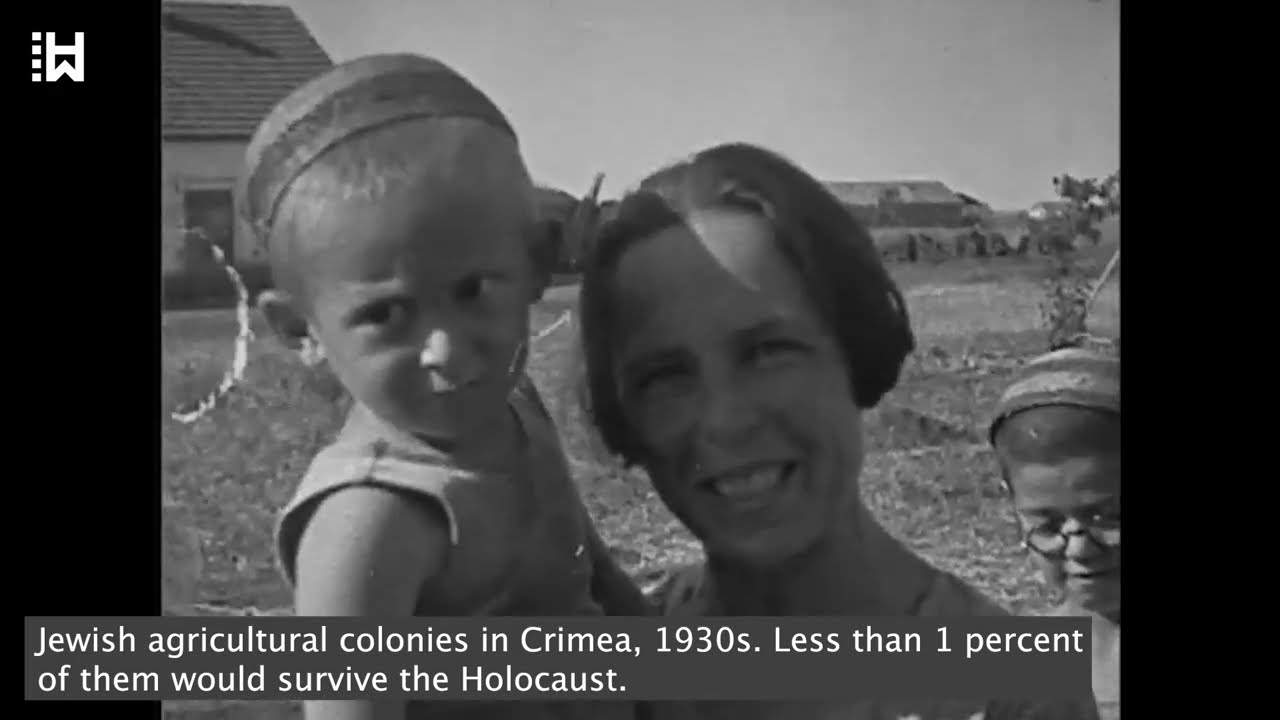
The massacres in Simferopol were not isolated incidents. Similar atrocities unfolded across the peninsula. In Yalta, 1,500 Jews were executed on December 18. Other towns, including Karasu Bazar, Bakhchysarai, Kerch, and Feodosia, saw comparable killings. German reports indicate that between mid-November 1941 and late March 1942, Einsatzgruppe D carried out the execution of 3,211 Jews in Crimea, including 254 Krymchaks, within a single month.
While mass executions tapered off in 1942, sporadic killings continued. Following the capture of Sevastopol in July 1942, an estimated 1,500 to 4,200 Jews were murdered. Historians estimate that approximately 40,000 Jews and Krymchaks perished in the Nazi genocide in Crimea.
In September 1942, von Brauner returned to Halle, Germany. In 1943, he was promoted to the rank of SS-Obersturmbannführer, equivalent to lieutenant colonel in the U.S. Army. From 1943 to 1944, he served as leader of the German Foreign Service Academy. In 1945, he was sent to Norway as commander of the security police and SD.
After the war, von Brauner attempted to go into hiding using false papers and a new identity. He was quickly unmasked and arrested in the German city of Minden.
During the Einsatzgruppen Trial, held between September 29, 1947, and April 10, 1948, as part of the Nuremberg follow-up trials, von Brauner was among 24 former SS leaders charged with serious war crimes. The prosecution estimated that between 1941 and 1943, the Einsatzgruppen murdered at least 600,000 people in the Soviet Union. Based on Einsatzgruppen reports, they argued that the actual number of victims exceeded one million.
In court, von Brauner placed the blame on Hitler, claiming he had no choice but to obey orders under duress, a common defense strategy used by Nazi war criminals. When asked what had happened to the Jews arrested during raids, he responded bluntly: “They were all shot.” His statements during the trial showed no sense of wrongdoing.
On April 8 and 9, 1948, all defendants were found guilty. On April 10, 14 of them, including von Brauner, were sentenced to death. The verdict was delivered one day before von Brauner’s 39th birthday.
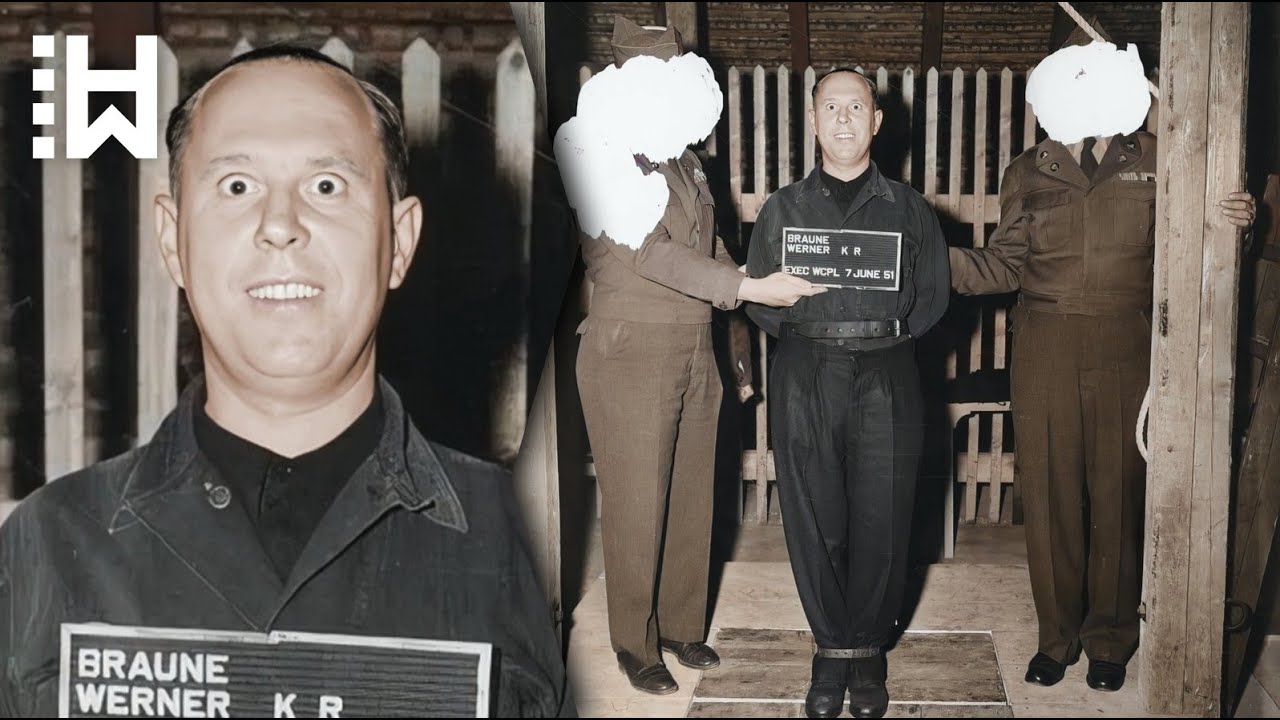
Von Brauner was 42 years old when he was hanged on June 7, 1951, at Landsberg Prison in West Germany. He was executed alongside other Nazi war criminals, including Otto Ohlendorf, Erich Naumann, Paul Blobel, and Oswald Pohl. As he was escorted down the hallway to the gallows, von Brauner shouted, “Comrades, long live Germany!” While standing on the gallows, he was smiling, as if he were insane. There were no tears shed for him.