On June 25, 1876, the Battle of Little Bighorn unfolded across the green plains of Montana. Five companies of the U.S. 7th Cavalry, led by General George Armstrong Custer, were annihilated in a fierce fight against combined forces of Lakota Sioux, Northern Cheyenne, and Arapaho warriors. For the Native peoples involved, it was a desperate struggle for survival. For the U.S. Army, it became one of the most legendary and devastating defeats in military history.
While the battle itself is well documented, the strange journeys of the personal artifacts left behind remain a source of fascination. These objects—pocket watches, military medals, and handwritten letters—are more than historical relics. They are silent witnesses to the chaos and destruction of that day, carrying stories of the men who owned them and the conflicts they endured.
Over the years, these artifacts passed through the hands of Native warriors who considered them spoils of war, surviving soldiers, and collectors seeking to preserve fragments of history. Some were lost, some were sold, and some were forgotten. Yet all retained their connection to the bloody events of that fateful day.
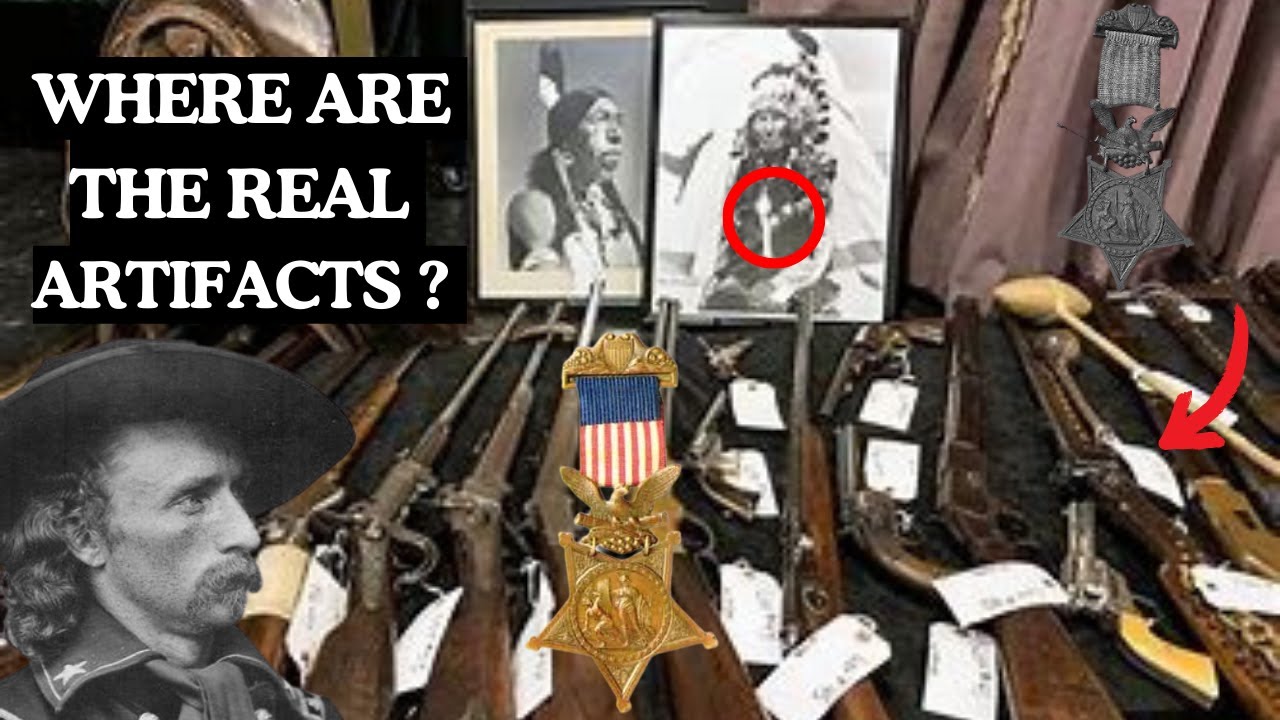
One of the most intriguing items is the engraved pocket watch belonging to Custer himself. According to historian Evan S. Connell, the watch first surfaced in 1906 when a Montana saloon keeper purchased it from a Sioux man. The watch survived the battle and became a silent remnant of Custer’s final moments. But it did not stay with its new owner for long. It was lost in a dice game, eventually finding its way into a traveling sideshow that toured the country.
From there, the watch disappeared for years before resurfacing in California. It later became part of the Don and Stella Foote collection in Billings, Montana. When the city of Billings declined to pay the insurance costs needed to keep the collection intact, the artifacts were sold, including Custer’s watch. The current whereabouts of this famous piece remain a mystery, adding another layer of intrigue to the strange history of Little Bighorn artifacts.
There is another account of the watch’s fate. Cecil Denny, a member of the Royal Canadian Mounted Police, claimed he recovered the same watch from Sitting Bull, the renowned Lakota leader who played a pivotal role in the battle. Denny said he sent the watch to Custer’s widow, Libbie Custer, after retrieving it. The truth remains unclear, and the watch’s final destination is still unknown. Whether it reached Libbie Custer or vanished into obscurity, the story continues to puzzle historians and collectors alike.

Another significant artifact is Custer’s final message to Captain Frederick Benteen. Written by adjutant William W. Cooke amid the fighting, it was a desperate plea for reinforcements. The letter was lost for decades, and its location remained unknown until biographer William A. Graham attempted to find it in the 1920s. Graham was told the letter had burned in a house fire and was lost forever. That turned out to be false.
The letter had passed from Captain Benteen to another officer, who then sold it to a private collector in New Jersey. After years of obscurity, the letter was finally located and placed in the West Point Museum, where it remains today. It stands as a silent testament to the desperation and disorder of Custer’s final hours.
The medals of Captain Myles Keogh tell another compelling story. Keogh fought bravely alongside Custer and died in the battle. Unlike many other fallen soldiers, his body was not mutilated. Some believe the two papal medals he wore around his neck may have been the reason. These medals, awarded to Keogh for his service in the Papal War of 1860, were a powerful symbol of his Catholic faith.

After the battle, Keogh’s family in Ireland requested the return of the medals. They remained with the family for over a century until 1988, when they were sold at public auction to a private collector for $35,000. It was a steep price for a pair of medals, but a testament to their historical and personal significance.
The story of Second Lieutenant John James Crittenden is equally striking. A young officer from Kentucky, he was just twenty-two years old when he died at Little Bighorn. His body was identified by his glass eye, a distinguishing feature that set him apart from other fallen soldiers. But one item was missing from his remains: a gold watch given to him by his father for his twenty-first birthday.
In 1880, a few years after the battle, a Canadian fur trapper entered a trading post with a gold watch he had acquired through barter. The post owner, E.F.G. Joe, bought the watch for just two dollars. Curious about its origin, Joe began investigating its history. His inquiries eventually led him to the Crittenden family, confirming the watch had belonged to the young lieutenant. Today, the piece is preserved at the Kentucky Historical Society, a precious link to a life cut short by the horrors of war.
These artifacts, though small, carry immense weight. They are not mere objects but fragments of a larger story of conflict, resilience, and legacy. They have passed through the hands of Native warriors defending their land, American soldiers caught in the chaos of battle, collectors preserving history, and historians working tirelessly to uncover the truth. Their journeys reflect the turbulent history of the land and the many peoples who have called it home.
As we trace the strange and captivating paths of these relics from Little Bighorn, we honor those who fought and died on both sides of the conflict. Their history, much like the artifacts they left behind, deserves to be remembered and passed on to future generations.