Hasso von Manteuffel was born in 1897 into a noble Prussian family with a long tradition of military service. His great-uncle was Edwin von Manteuffel, a Prussian field marshal. As a young man, he entered the Naumburg Cadet Institute, where he was shaped by rigorous discipline and martial traditions.
In 1916, during the First World War, Manteuffel received his first commission as a lieutenant in the Imperial German Army, joining the prestigious 3rd Hussar Regiment. He soon faced the harsh realities of modern warfare on the Western Front. He was severely wounded at the Battle of the Somme but returned to active duty with a deeper understanding of the evolving nature of combat.
After the war, Manteuffel chose to remain in the military during the interwar period. He served in the reduced Reichswehr and encountered new ideas about mechanized warfare. As Germany rebuilt its military strength, Manteuffel found himself at the forefront of a tactical revolution centered on mobile operations and panzer divisions.
In February 1937, he joined the Panzer Troop Command of the OKH. By February 1939, he had become a senior professor at Panzer Troop School 2 in Berlin. There, he emphasized independent action and integrated team efforts in armored warfare. His approach focused on speed and flexibility, and he argued that courage and the ability to sense the pulse of battle were essential in this new form of combat.
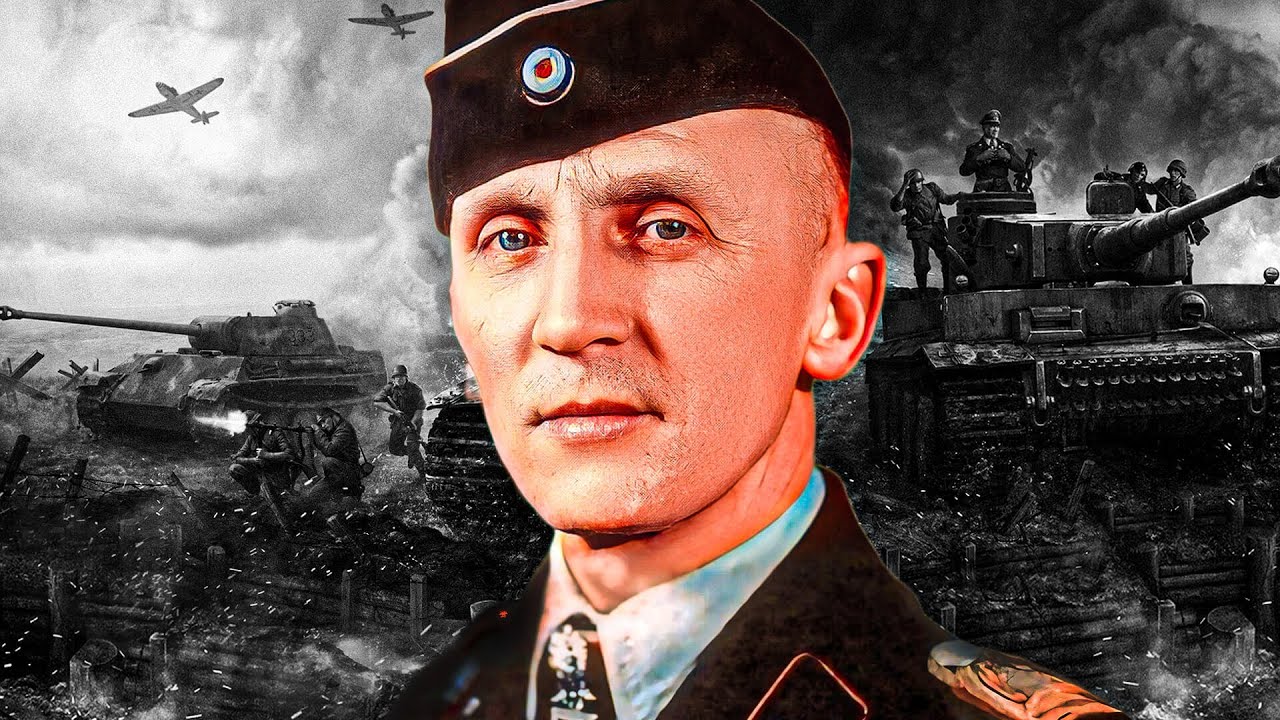
Manteuffel also published a pamphlet on military training that applied traditional skills to modern warfare. His appointment as a battalion commander in the 7th Panzer Division allowed him to implement his tactical innovations in real combat situations.
When Operation Barbarossa began, Manteuffel’s 7th Panzer Division demonstrated the effectiveness of coordinated armor attacks, catching Soviet defenders off guard. However, as German forces neared Moscow, they encountered vast distances, deteriorating supply lines, and strengthening Soviet resistance. The brutal Russian winter worsened these problems.
By mid-December 1941, his division was reduced to 200 men and five operational tanks. Despite these challenges, Manteuffel maintained his troops’ fighting spirit and led them through a grueling 300-mile retreat to Gzhatsk. His ability to keep his division operational even in a greatly reduced state caught the attention of his superiors.
Manteuffel was then transferred to North Africa, where he commanded Division Manteuffel. He adapted his tactics to the desert environment and executed successful counterattacks against British and French troops in Tunisia, pushing the Allies back 20 miles. His performance on two vastly different fronts solidified his reputation as one of Germany’s most capable panzer commanders.

On August 22, 1943, Manteuffel assumed command of the 7th Panzer Division on the Eastern Front. On February 1, 1944, he became commander of the Grossdeutschland Division. The division saw action against the Red Army before retreating across Ukraine. In late July, it received orders to proceed to East Prussia in response to the collapse of Army Group Center during Operation Bagration.
In late 1944, Hitler initiated the Ardennes Offensive, known as the Battle of the Bulge. Manteuffel, now promoted to General der Panzertruppe, was given command of the 5th Panzer Army. During planning, he voiced objections to Hitler’s overly ambitious objectives, arguing they were unachievable given Germany’s depleted resources. His concerns were overruled.
The attack launched on December 16, 1944, achieved complete surprise against the overextended American front line. Manteuffel’s forces made significant initial gains, exploiting gaps in Allied defenses. However, the limited road network in the densely forested Ardennes region slowed his panzer divisions. Critical road junctions at St. Vith and Bastogne were heavily defended by U.S. forces.
As the battle progressed, the tide turned. Allied forces regained control of the skies and launched relentless attacks on German supply lines and armored units. Manteuffel’s forces faced growing shortages of fuel and ammunition. By late January 1945, German forces had been pushed back to their starting positions.
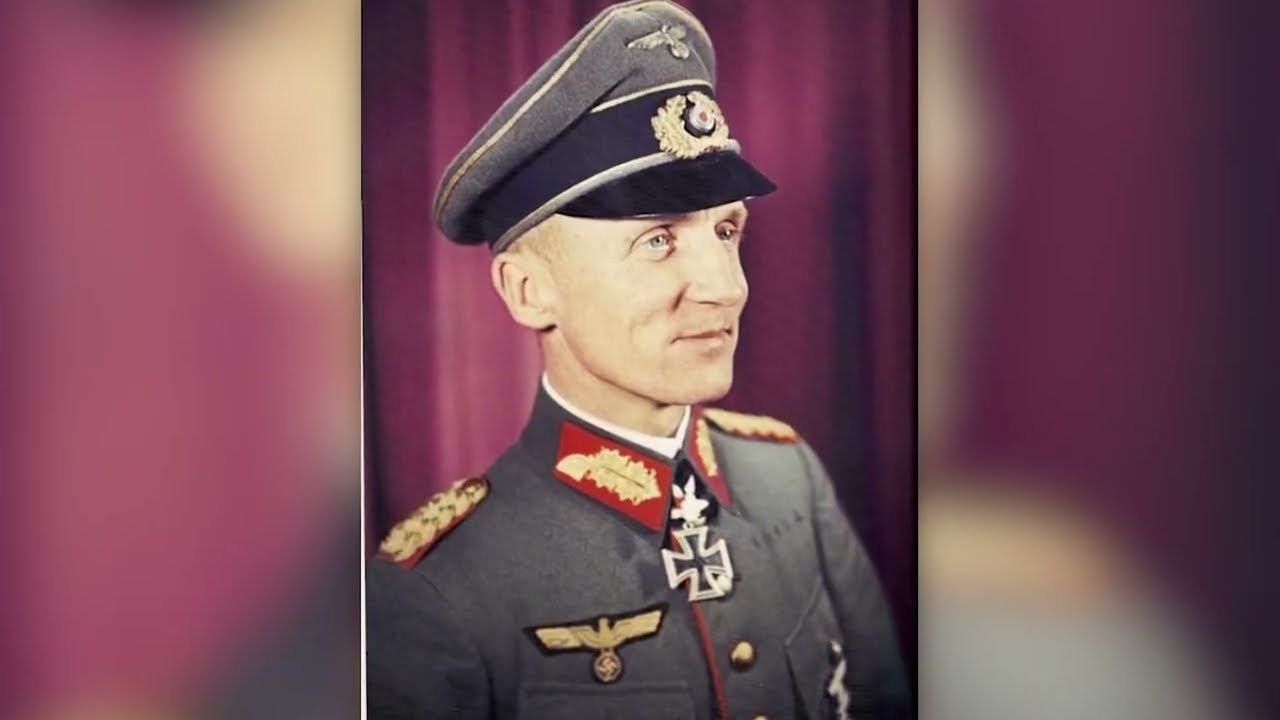
In the war’s final months, Manteuffel was transferred to the Eastern Front, taking command of the 3rd Panzer Army in a last-ditch effort to halt the Soviet advance. Faced with overwhelming odds, he fought a series of defensive battles before surrendering to British forces on May 3, 1945.
Manteuffel was initially held at Island Farm Special Camp 11, a detention center under British administration. In 1946, he was transferred to American custody and participated in the U.S. Army Historical Division project. He authored an essay on the mobile warfare aspect of the Ardennes Offensive.
After his release in December 1946, Manteuffel entered politics, serving in the Bundestag from 1953 to 1957. He advocated for West German rearmament and contributed to the establishment of the Bundeswehr. In 1959, he was convicted and sentenced to 18 months in prison for manslaughter for ordering the execution of a deserter during the war. After a public outcry and lobbying by German politicians, he was granted early release after just two months.
Despite these challenges, Manteuffel’s expertise found new purpose. In 1968, he lectured at the U.S. Military Academy at West Point, discussing tactics and strategies for military operations in extreme snowy conditions. This symbolized a remarkable shift from enemy general to respected educator.
Hasso von Manteuffel died on September 24, 1978, at the age of 81, while on a trip to Austria.