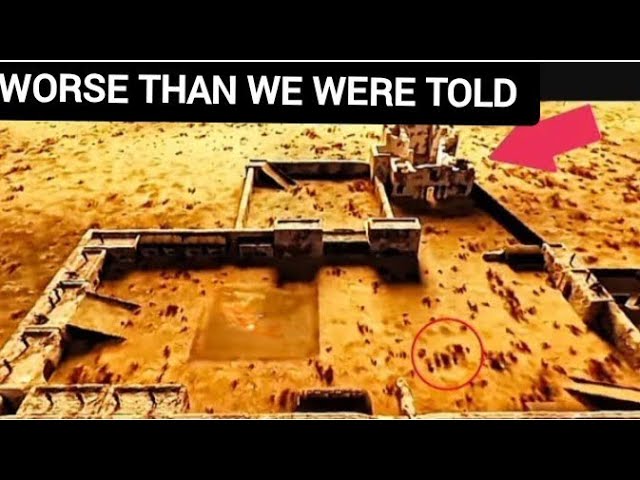
On March 6, 1836, at 5:30 in the morning, roughly 1,800 Mexican soldiers launched a final assault on the Alamo Mission in San Antonio, Texas. The battle that followed lasted just 60 to 90 minutes, and the accounts of what happened inside those walls contradict much of the heroic story taught in American classrooms for generations. For 12 days, 189 defenders had held the mission against the forces of General Antonio López de Santa Anna. They knew reinforcements were not coming.
On the evening of March 5, Travis wrote a final, desperate letter to a friend, a far more personal message than his famous “Victory or Death” letter of weeks earlier. The defenders could have escaped. Several chances to flee appeared during the siege, and at least one courier, John Smith, slipped out on March 3. Most men stayed, not because they were fearless, but because they still believed help would arrive.
Colonel James Fannin had 400 troops. Sam Houston had an army. No one came. That night, the defenders heard the Mexican army preparing.
Thousands of soldiers took their positions, artillery was repositioned, and trumpets practiced the “degüello,” a battle cry from Spain’s wars against the Moors. The message was unmistakable: no quarter, no prisoners, no mercy. At dawn, the assault came from four directions at once. For the first fifteen minutes, the defenders held their ground.
They had the high ground and rifles, and Mexican soldiers fell in large numbers, with some reports saying over a hundred died in those opening moments. The attack faltered, and some Mexican troops panicked. The Mexican army then shifted its focus to the north wall, the weakest point with the fewest defenders. The wall collapsed, and soldiers poured through the breach.
This is where the popular story diverges sharply from the surviving records. Mexican Lieutenant José Enrique de la Peña, who was inside the Alamo during the final moments, kept a diary that contradicts nearly every familiar detail of the battle. According to de la Peña, once the walls were breached, the fight was short and brutal. Most defenders were quickly overwhelmed by superior numbers and bayonets.
De la Peña noted that some defenders threw down their weapons and pleaded for their lives. He stated they declared themselves prisoners. Other Mexican officers, including Colonel Fernando Urriza and Sergeant Francisco Becerra, gave similar accounts. These were men who had fought for 12 days against impossible odds, and when the walls broke, some made the human choice to try to survive.
Santa Anna had ordered that no prisoners be taken. According to de la Peña’s account, soldiers executed the surrendering defenders where they stood. Some were bayoneted, others beaten to death with rifles, and some forced to kneel before being shot. De la Peña described the scene as one of horror, noting that even the Mexican soldiers carrying out the orders were troubled by them.
The death of Davy Crockett lies at the center of the controversy. According to de la Peña, Crockett was among the surviving defenders brought before Santa Anna after the fighting ended. De la Peña wrote that Crockett and several other captives were executed at the general’s command. This account is disputed, with some historians arguing de la Peña fabricated or exaggerated the events, while others point out that his diary matches details found in other Mexican sources that were never published together.
By 6:30 that morning, all 189 defenders were dead. What happened after the battle shocked even Santa Anna’s own officers. Santa Anna ordered that all the bodies be burned, denying the fallen any burial. Francisco Antonio Ruiz, the mayor of San Antonio, was ordered to oversee the burning.
His account remains one of the most disturbing primary sources from the Texas Revolution. Ruiz described bodies stacked in layers with wood between them, like a funeral pyre. But there was not enough wood, and the bodies did not fully burn. They cooked for hours.
The stench was so overwhelming that Mexican soldiers vomited, and residents of San Antonio kept their windows closed for three days. Ruiz said he could not sleep for weeks, haunted by what he had supervised. The act was a deliberate tactic, a break from Mexican military tradition, which usually honored fallen enemies with proper burials. Santa Anna considered the Alamo defenders traitors to the Mexican government, and he wanted to send a clear message: rebellion would bring not just death but dishonor.
No grave would mark their resting place. For a time, the tactic worked. News of the Alamo sent panic across Texas. Families fled toward the United States border, and the Texas army nearly collapsed from desertions.
The phrase “Remember the Alamo” later became a rallying cry, but in those first days it was a warning about what resistance cost. There is another story historians have largely overlooked, the story of Colonel Francisco Javier Portillo. Portillo was a seasoned officer in Santa Anna’s army who took part in the final assault. According to multiple reports, when he witnessed soldiers executing men who had surrendered, he tried to intervene.
He physically placed himself between the prisoners and the firing squad, arguing that military honor required humane treatment of captives. Santa Anna learned of the intervention. Some accounts say Portillo was executed immediately for insubordination. Others claim he was dishonorably discharged and returned to Mexico City in disgrace.
Either way, he paid a price for attempting to show mercy. The true history of the Alamo remains contested. De la Peña’s diary is one of the few detailed eyewitness accounts from the Mexican side, and it survived because it was kept hidden in archives for generations. The story of men who surrendered and were executed on orders sits uncomfortably against the narrative of a glorious last stand.
More than 180 years later, the full truth of what happened inside those walls may never be completely settled.