On April 16, 1945, a strange procession formed on the road leading out of Weimar, Germany. Hundreds of well-dressed citizens, men in suits and fedoras, women in fur coats and high heels, walked under guard. American soldiers flanked them, rifles at the ready.
The mood was light at first. The citizens chatted and smiled, treating the march like an inconvenience. They believed they were being subjected to a propaganda stunt. Their destination was Buchenwald, a concentration camp five miles away, a place they claimed to know nothing about.
Two days earlier, General George S. Patton had visited the camp. He saw the ovens and the piles of bodies. He saw the zoo the SS had built for amusement while prisoners starved. The sight broke him. He wrote in his diary that he had never felt so sick in his life.
Patton refused to accept the citizens’ claims of ignorance. He ordered his military police to round up the elite of Weimar. He wanted professors, lawyers, businessmen, and politicians’ wives. He wanted 1,000 of the city’s most prominent citizens to take a tour.
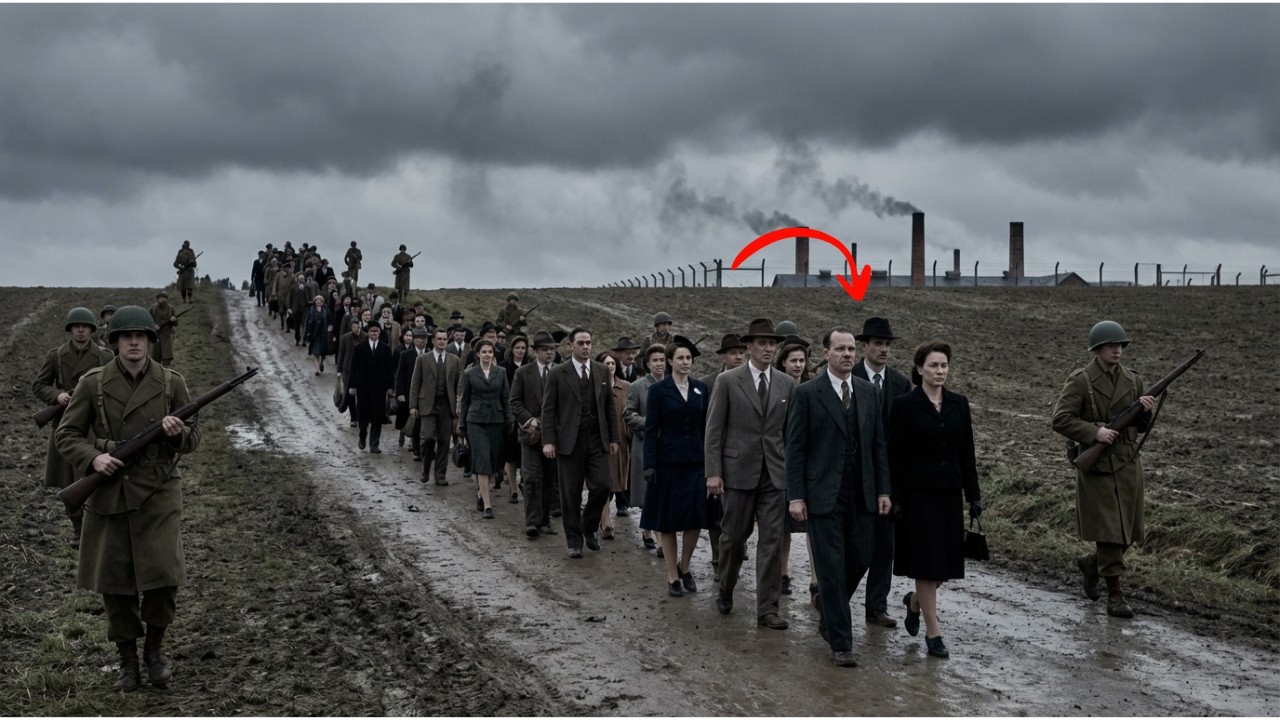
Weimar was the cultural heart of Germany, the city of Goethe and Schiller. Its residents prided themselves on their civilization. Yet Buchenwald had operated just five miles away since 1937. The smoke from the crematorium drifted over the city. The SS officers lived in the suburbs, and their wives shopped in Weimar’s boutiques.
When the Americans arrived, the citizens repeated the same phrase. They said they knew nothing. They claimed the smoke came from a factory. They claimed the emaciated men on the railroad were volunteers.
The march took about two hours. As the column neared the camp, the conversation stopped. The wind shifted, and the smell of death hit them. The women stopped smiling and pulled out handkerchiefs. The guards pushed them forward.
They passed through the iron gate with its cruel inscription, “To each his own.” Inside, thousands of prisoners stood behind barbed wire, silent and watching. The civilians stared at the men they had claimed did not exist.

The first stop was the crematorium courtyard. A trailer was piled high with naked, emaciated bodies. One woman in a fur coat screamed and fainted. An American MP nudged her and told her to get up. He said she had not seen anything yet.
The tour continued into the pathology lab. On a table were shrunken heads and pieces of tattooed human skin. The commandant’s wife had ordered prisoners with interesting tattoos to be killed so she could make lampshades. The civilians wept and vomited.
An American officer addressed them in perfect German. He asked how they could claim ignorance while these items were made in their backyard. The civilians had no answer.
They were led through the quarantine zone, where prisoners were left to die of typhus. The stench was so strong that American soldiers wore masks, but the civilians were not allowed that relief. A former prisoner pointed at a banker and said he remembered seeing him at the train station. The banker fell to his knees, sobbing that he did not know.

By the time the tour ended, the 1,000 citizens were destroyed. They walked back down the hill in silence. No one smiled. The women’s makeup was streaked with tears. The city of poets would never look the same to them again.
When General Dwight Eisenhower heard about Patton’s tour, he expanded the order. He sent for the press, congressmen, and parliament members. He wanted witnesses. He said the things he saw beggared description and that he made the visit deliberately to provide firsthand evidence against future claims of propaganda.
The impact was immediate. In the days that followed, several prominent citizens who had taken the tour committed suicide. Patton was told about the deaths. He said it was good, and that maybe the rest of them would learn.
The forced tour of Buchenwald raises a question that remains relevant. How much does the average citizen know about the crimes of their government? The people of Weimar did not pull the triggers or turn on the gas. But they looked away. They stayed silent.
Patton understood that silence is complicity. On that April day, he forced them to open their eyes. The citizens walked up the hill as arrogant aristocrats. They walked down as broken accomplices. The ghost of Buchenwald followed them home.