The war in Europe ended on May 8, 1945, but for Germany’s top U-boat commanders, the reckoning came in fragments over the following weeks, months, and years. Some were killed by their own men. Others faced prison, courtrooms, or exile. A few returned to service under a new flag.
Wolfgang Lüth did not survive the peace. On the night of May 13, 1945, five days after the surrender, the 31-year-old captain was walking across the grounds of the naval academy at Mürwik near Flensburg. A sentry, 18-year-old Mattheus Gotthold, challenged him in the dark. Lüth did not give the password. The sentry fired once, hitting him in the head.
Lüth died two days later. He was buried with full honors on May 16, 1945, in what became the last state funeral of the Third Reich. Grand Admiral Karl Dönitz spoke at the graveside. Lüth had sunk 46 merchant ships and a French submarine across 15 patrols, totaling 225,924 gross register tons. He was the first U-boat commander to receive the Diamonds to the Knight’s Cross. A court martial later cleared the sentry of wrongdoing.
The most successful U-boat commander of the war was not in Germany that night. Otto Kretschmer had been a prisoner of war since March 1941. He sank 47 ships totaling around 274,000 tons in 18 months of combat, more than any other submarine captain of the war. His crews called him “Silent Otto” for his radio discipline and his preference for attacking convoys on the surface at night.
Kretschmer’s war ended on March 17, 1941, when British destroyers HMS Walker and HMS Vanoc drove his boat U-99 to the surface and forced him to scuttle it. He was pulled from the Atlantic as a prisoner. He spent the rest of the war in captivity, first in Britain and then at Camp 30 in Bowmanville, Ontario, where he became the senior naval officer among the prisoners.
He was not released until December 1947. He returned to a divided, occupied Germany with no navy and little interest in its old heroes. He studied law, worked as an interpreter, and became president of the Deutsche Marinebund, an association for former sailors. Then the Cold War changed everything.
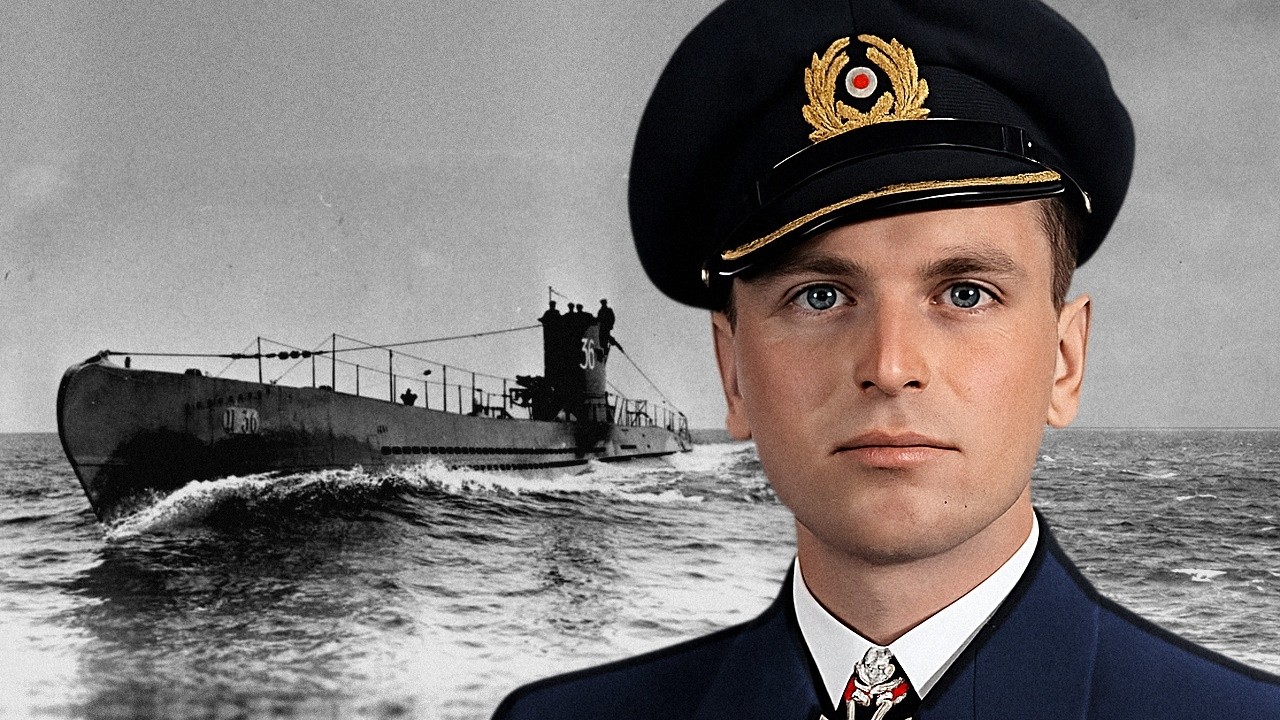
In 1955, West Germany joined NATO and began building a new military. Kretschmer was among the first men sworn into the new Bundesmarine on December 1, 1955. He rose to command the Navy’s amphibious forces and later served as chief of staff of NATO’s naval command for the Baltic approaches. He retired in 1970. He died in 1998 at age 86 after a fall on a river cruise, and his ashes were scattered at sea.
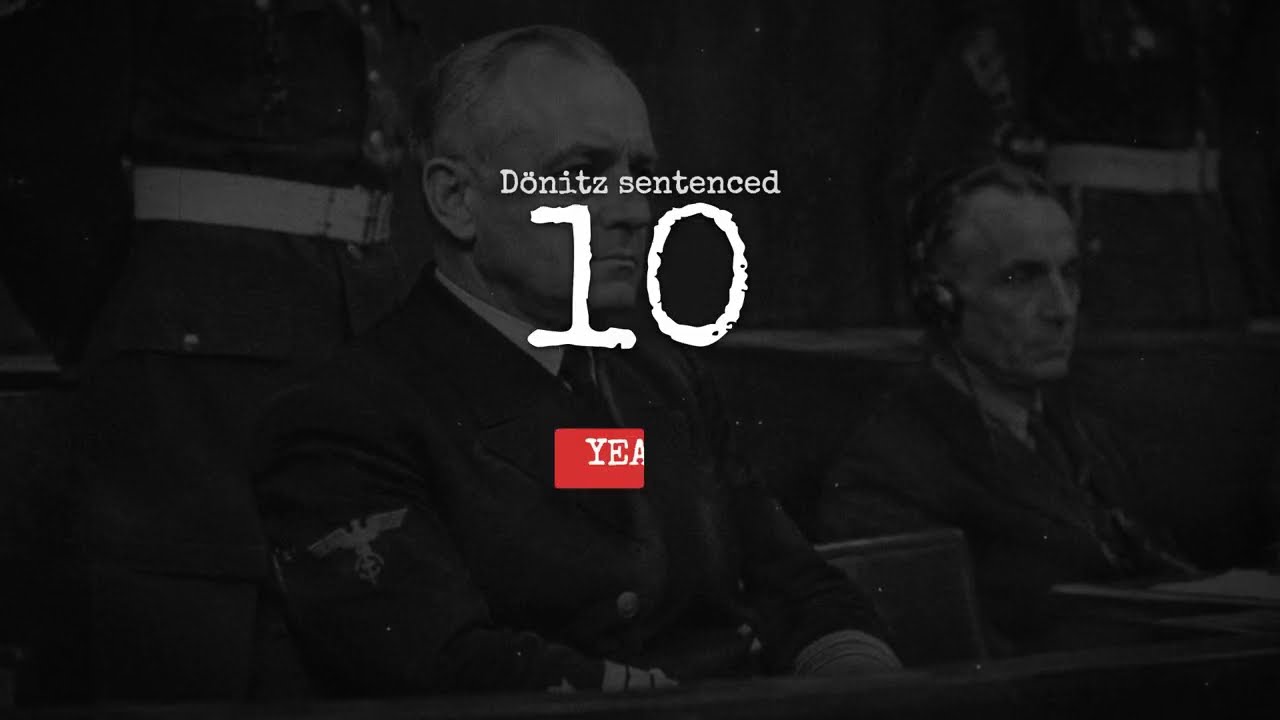
Other aces faced courts instead of commands. The most significant trial was not of a captain but of the admiral who led them. Karl Dönitz stood in the dock at Nuremberg in 1945. The prosecution focused on his September 1942 order, issued after the sinking of the British liner Laconia, that all efforts to rescue survivors of sunken ships were to stop. The defense argued it was a ban on dangerous rescue attempts.
The defense produced a surprise: written answers from Admiral Chester Nimitz, who had commanded the U.S. Pacific Fleet. Nimitz confirmed that American submarines had waged unrestricted warfare and generally had not rescued survivors when doing so put their boats at risk. The tribunal found Dönitz guilty of crimes against peace and war crimes and sentenced him to 10 years, but the judges stated the sentence was not assessed on the ground of breaches of submarine warfare law.
One case did not fit the belief that U-boat men had fought cleanly. In March 1944, U-852 under Captain Heinz-Wilhelm Eck torpedoed the Greek steamer Pelus in the South Atlantic. Eck ordered his crew to fire on wreckage and rafts with machine guns and hand grenades, fearing the debris would reveal his position. Men in the water were killed.
A British military court in Hamburg tried Eck and four crew members in October 1945. Eck, his second-in-command, and the boat’s doctor were sentenced to death and shot on Lüneburg Heath on November 30, 1945. The Pelus affair remained the only case in which German U-boat men were convicted of war crimes in the Second World War.
Some aces were arrested for reasons that had nothing to do with their records. Reinhard Hardegen, who had led the U-boat offensive against the American East Coast in early 1942, was arrested by the British two months after the surrender. They had confused him with an SS officer of the same name. He spent about a year and a half interned at Neuengamme before the error was cleared.

Hardegen never served again. He joined the Christian Democratic Union, started an oil trading business in Bremen, and sat in the city-state parliament from 1959 to 1979. In his later years, he returned to the United States as a guest, meeting veterans and survivors of the coastline he had attacked. He died in 2018 at age 105, one of the last surviving U-boat commanders.
Heinrich Lehmann-Willenbrock, who commanded U-96 and sank 24 ships, spent a year as a prisoner before returning home. He salvaged sunken ships from the Rhine, then went into the merchant navy. In 1959, he and his crew rescued 57 survivors from the burning Brazilian ship Commandante Lyra. His last command was the Otto Hahn, West Germany’s nuclear-powered research and cargo ship. He died in 1986.
Some aces left Germany for good. Hans-Diedrich von Tiesenhausen, who sank the British battleship HMS Barham in 1941, was captured in 1942 and held in Canada until 1947. He immigrated to Vancouver in 1951 and built a new life as an interior designer and nature photographer. He died there in 2000.
Albrecht Brandi, one of only two U-boat commanders to receive the Diamonds, surrendered to Canadian troops in May 1945 and was released that September. Later research cut his credited tonnage sharply. He trained as an architect and designed buildings in Dortmund and Saudi Arabia. He died in 1966 at age 51.
Reinhard Suhren, known as “Teddy,” refused every offer to serve in the new armed forces. He had won the Swords to the Knight’s Cross with U-564 and sank 18 merchant ships. After the war, he learned that his parents and sister had taken their own lives in 1945. He would not serve, he said, in a military that treated former soldiers as criminals. He died in 1984, and his ashes were scattered over the spot where his old boat had gone down.
Erich Topp took a different path. With U-552, he sank 35 ships, the third-highest tonnage of any U-boat commander. One of his torpedoes struck the American destroyer USS Reuben James on October 31, 1941, more than five weeks before Pearl Harbor. She was the first U.S. Navy warship lost in the war.
Topp had joined the Nazi Party in 1933 and the SS in 1934. After the war, he became an architect. In 1958, he joined the Bundesmarine and rose to rear admiral, serving as deputy inspector of the Navy. In his later memoirs, he broke with Dönitz, saying the naval leadership had known of the Holocaust and that Dönitz’s failure to act came close to passive toleration of the crimes. Topp died in 2005 at age 91.
Otto von Bülow, who had been decorated for sinking an aircraft carrier that was never actually sunk, joined the Bundesmarine in 1956. He commanded one of the American Fletcher-class destroyers lent to the new German Navy. Klaus Scholtz, who had sunk 25 ships, served in the maritime branch of the federal border guard before moving into the Bundesmarine and commanding the naval base at Kiel.
The new Navy even brought back submarines. U-2365, scuttled by its crew in May 1945, was raised in 1956 and commissioned into the Bundesmarine as Hai. In September 1966, Hai went down in a gale on the Dogger Bank. Nineteen of her 20 crewmen died. It was one of the worst peacetime naval disasters in German history.
The arguments over the past did not fade. When Dönitz died in December 1980, thousands of former servicemen attended his funeral. The West German government had forbidden serving officers to attend in uniform. To Bonn, Dönitz was a convicted war criminal. To many of the old men at the graveside, he was still their commander.
That same year, the film Das Boot reached cinemas. It was based on a novel by Lothar-Günther Buchheim, who had sailed aboard U-96 in 1941 under Lehmann-Willenbrock. The film earned six Academy Award nominations, a record for a German production. Many veterans objected to it, and in 1986 two former commanders published a book whose title said everything: We U-boat Sailors Say No. It Was Not Like That.
The paths of these men split in every direction after 1945. One was shot by his own sentry five days into the peace. One sat in a Canadian camp and returned as a NATO admiral. One faced a firing squad. One was locked up for another man’s record and then built a business and a political career. One rescued sailors from a burning ship and ended his career on the bridge of a nuclear vessel. One settled in the country that had held him prisoner. One refused ever to wear a uniform again.
What joined them was the sea itself and the shadow of the men who never came back from it. At Möltenort near Kiel, bronze plaques carry the names of more than 30,000 U-boat men killed in the war. Some of the aces chose to return to that sea at the end. Kretschmer’s ashes were scattered over it. Suhren’s were scattered over the grave of his old boat.
For decades, they argued about how they should be remembered. Some insisted they had been honorable sailors in a hard war and pointed to the judges at Nuremberg. Others came to believe that honor at sea could not be separated from the regime that had sent them there. The last of them, Reinhard Hardegen, lived until 2018, long enough to see that argument outlive almost everyone who had fought in it.