In August 1944, as the Polish Home Army launched the Warsaw Uprising, Nazi Germany responded with an order of unparalleled brutality. Adolf Hitler commanded that every inhabitant of the city be killed and that Warsaw be razed to the ground. To carry out this directive, German command deployed a collection of improvised units, including a collaborationist formation known as the Waffen Sturmbrigade RONA.
RONA, which stood for the Russian Liberation People's Army, was also known as the Kaminski Brigade. It was formally incorporated into the Waffen SS but lacked the discipline and structure of regular military units. The brigade was commanded by SS-Brigadeführer Bronislav Kaminski, and its soldiers were drawn from German-occupied Soviet territories.
On the 4th of August, 1944, around 1,700 RONA troops under Major Ivan Frolov entered Warsaw's Ochota district. Instead of engaging the insurgents, the soldiers immediately descended into chaos. They began carrying out rapes, robberies, and murders, targeting civilians on nearby streets. Homes were broken into, residents were forced out, and many were shot on the spot. Buildings were looted and set on fire.
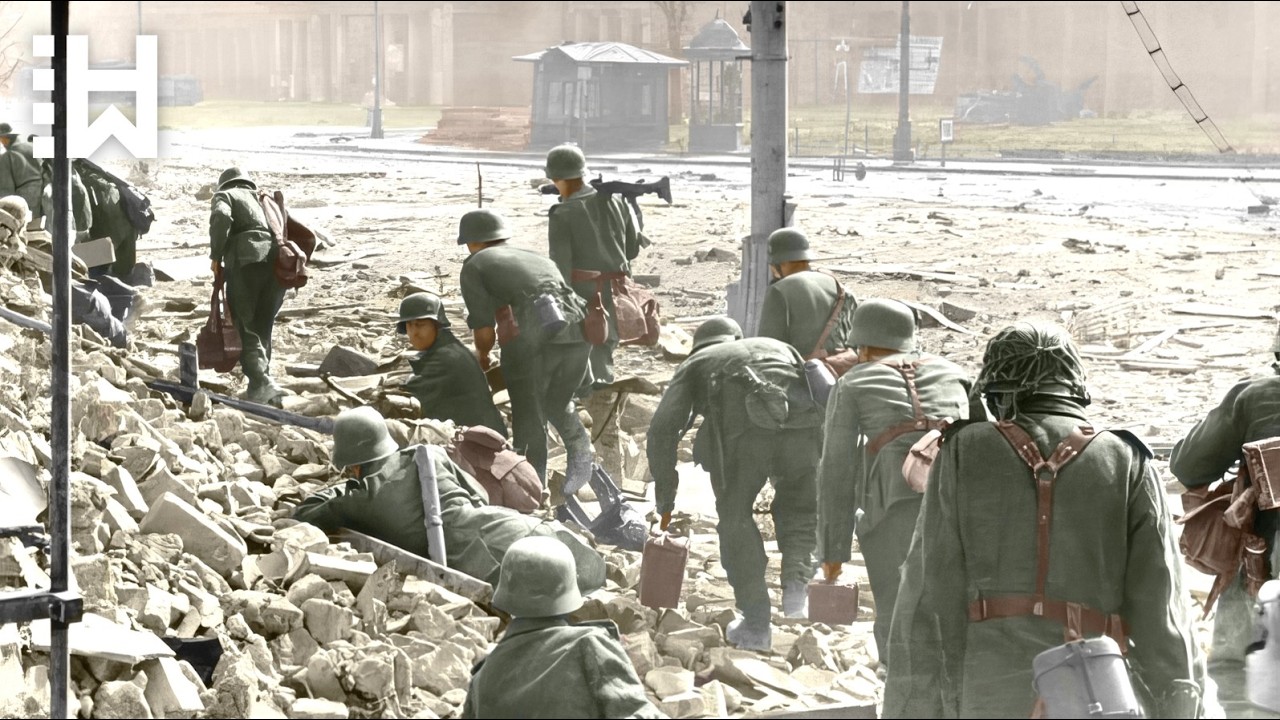
The violence escalated the following day. As more civilians were driven from their homes, the Germans established a makeshift camp at a former vegetable market known as Zieleniak. Prisoners were stripped of watches, jewelry, and anything of value. Witnesses later described how soldiers cut off fingers to remove rings and tore earrings from ears, sometimes along with pieces of flesh.
Young women and girls were pulled from the crowds and raped in ruins and doorways. Some victims were shot simply because they could not keep up with the march. Soldiers fired into crowds for amusement or threw grenades into them. By the evening of the 5th of August, between 10,000 and 20,000 residents had been forced into the camp.
Conditions inside Zieleniak were catastrophic. There were no toilets, no medical care, and almost no food. Prisoners were occasionally given moldy bread, but there was no drinking water. Women smeared their faces with mud or soot and wore men's clothes to protect themselves from rape. Families hid young women under piles of clothes or blankets.

The atrocities spared no one. Witnesses recalled RONA troops murdering newborns and babies, strangling them or bashing their heads against walls. A huge pile of bodies quickly grew near the camp gate. In the summer heat, the corpses rotted quickly before being buried in shallow graves or burned. More than 1,000 people died at Zieleniak from executions, beatings, starvation, and disease.
Similar horrors unfolded at the Radium Institute, founded by Nobel Prize-winning scientist Marie Curie. On the 5th of August, RONA troops broke into the hospital, looted it, and robbed the staff and patients. They set fire to the library and destroyed food supplies and medical equipment. In the evening, drunk soldiers gang-raped nurses and patients, including those gravely ill with cancer.
The next day, the building was set on fire, and some patients were burned alive. About 60 people survived by hiding in the cellar and chimneys. On the 19th of August, troops dragged out remaining survivors and killed 50 critically ill patients on the spot. Around 170 people, patients and staff, were murdered at the institute.

In total, over 10,000 people were killed during the Ochota massacre. The violence was so extreme that it attracted widespread outrage, even among the Nazi leadership. Kaminski himself was executed by the SS in late August 1944, officially for looting, but likely because his unit had become uncontrollable.
After the war ended in May 1945, justice caught up with some of the perpetrators. Hans Frank, the Governor General of the General Government, was executed in October 1946. Major Ivan Frolov, who led the regiment of killers, was interrogated in Moscow. He denied that his men had participated in the executions of civilians and claimed to know nothing about mass executions. Nevertheless, he was executed on the 31st of December, 1946.
Many members of the Kaminski Brigade were killed or split up as German forces retreated west. Others were captured and forcibly repatriated to the Soviet Union, where many were sent to forced labor camps in the Gulag system or executed.