On the afternoon of June 8, 1844, a Comanche war party of roughly 75 warriors faced 16 Texas Rangers at a place called Walker’s Creek. The warriors had every reason to expect another victory, just as their people had dominated the Texas frontier for nearly two centuries. But the small, quiet man leading the Rangers did something that day that no white commander had ever done before: he turned his horse and charged directly into the fight, carrying two strange, short-barreled weapons that would change the history of the American West. The man was John Coffee Hays, a 27-year-old Tennessean who would become known to the Comanche as “Captain Jack” and to the Mexican army as “El Diablo,” the Devil of Texas.
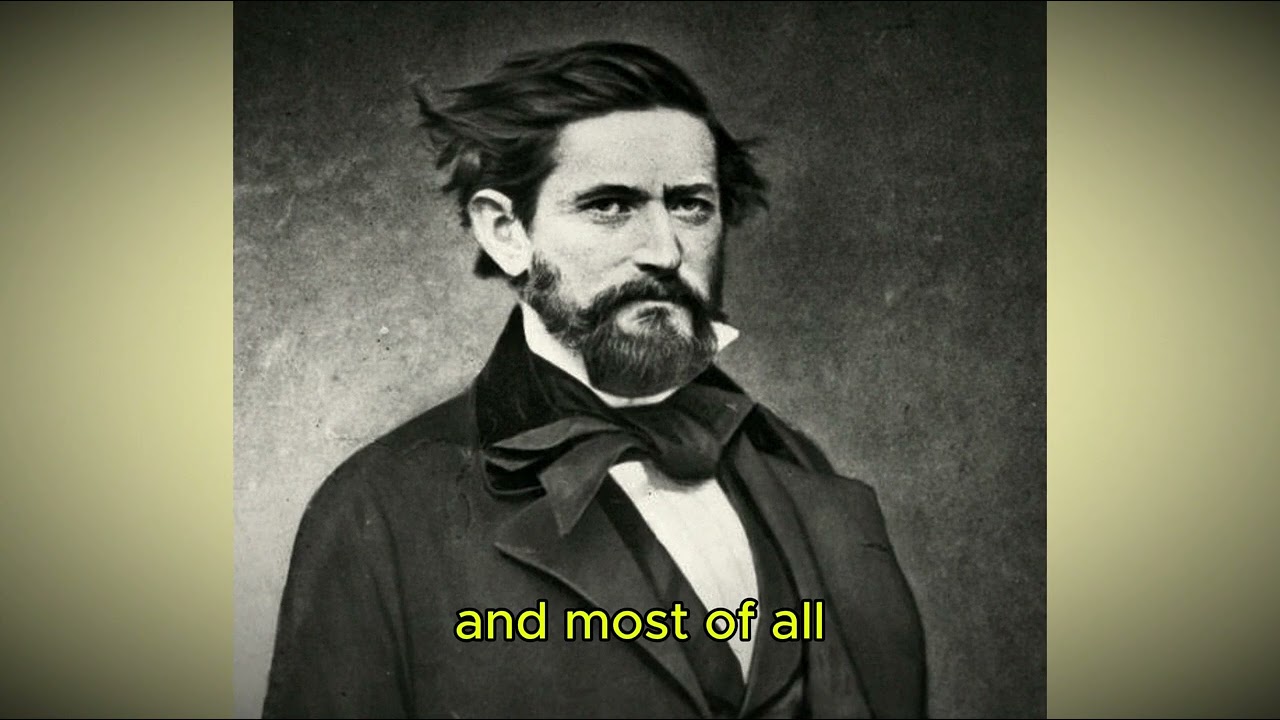
By the time the sun set on that June afternoon, more than 20 Comanche warriors lay dead, and the brutal war for Texas had entered a new era. The story of how that happened begins with an orphaned boy who arrived in Texas with a rifle, two pistols, and a letter of recommendation from his uncle, former President Andrew Jackson. Hays was born on January 28, 1817, in Little Cedar Lick, Wilson County, Tennessee, about 60 miles east of Nashville. He was named for a family friend, a colonel who had ridden with his father in the War of 1812 under Andrew Jackson.
Jackson was more than a family friend; his wife Rachel was Hays’s great-aunt. The Hays children grew up hearing stories of Jackson’s campaigns, and when Jackson became president, the family read his letters from Washington aloud by lamplight. When Hays was 15, his father died, and his mother died soon after. The farm was lost, and the orphaned boy moved south to Mississippi, where he worked with a surveying crew, dragging chains through pine forests for pennies a day.
Surveying in that era was demanding work that required knowledge of mathematics, botany, geology, astronomy, and survival in the wilderness. By the time he was 18, Hays was considered one of the most promising young surveyors in Mississippi. In the spring of 1836, news arrived that the Alamo had fallen and the entire Texian garrison had been wiped out by the army of Antonio López de Santa Anna. Hays sold everything he owned, bought two pistols, a good rifle, and a horse, and headed west.
He was 19 years old. He arrived in Texas too late for the Battle of San Jacinto, but in time to help bury the dead at Goliad, where 442 prisoners had been executed on Santa Anna’s orders after surrendering. Their bodies had lain under the Texas sun for weeks before anyone came to bury them. After that experience, Hays went to see Sam Houston, president of the Republic of Texas.
Houston later recalled that the thin, soft-faced boy looked about 15 years old. Hays said he wanted to serve. Houston, who had known Hays’s father and had ridden with Andrew Jackson, wrote him a letter of recommendation and sent him to San Antonio to serve under a legendary scout known as Deaf Smith, one of the few Texans who could enter Comanche territory and return alive. Smith died within a year, but Hays found another teacher who would shape his understanding of frontier warfare: Flacco, a chief of the Lipan Apache.
Flacco and Hays became friends. Flacco taught Hays how the Comanche moved across the country, how they read the land, where they camped and why, and how they concealed their horses. He taught him the difference between a Comanche trail and a Kiowa trail, how Comanche war leaders made decisions in their councils, and which battles they would refuse to fight. In return, Hays taught Flacco how a trained Tennessee rifleman shot with a long rifle.
Flacco’s assessment of Hays survives in multiple accounts: “Captain Jack is very brave, not afraid to go to hell alone. ”
The Texas Rangers in San Antonio began calling him “Jack the Devil. ” In 1837 and 1838, he served as a sergeant, scout, and surveyor, riding into places no other white man was willing to go and returning alive. Then, in the summer of 1840, events unfolded that changed everything.
The Comanche had dominated the southern plains for more than 100 years. Their empire stretched from the Arkansas River through what is now Kansas, Oklahoma, and West Texas, down to the Rio Grande. They were horsemen with no equal on the continent, riding horses stolen from every people they met, using bows strong enough to pierce a buffalo at 50 yards. Their territory, called Comancheria, covered 400,000 square miles ruled by a people who had not lost a serious war in four generations.
In March 1840, Texas officials invited a delegation of Comanche chiefs to San Antonio for peace talks. Twelve chiefs came in good faith with their families. When negotiations stalled over the release of captives, Texas soldiers tried to seize the chiefs inside the council house. Fighting broke out, and the 12 chiefs and about 20 other Comanche were killed in the streets of San Antonio.
The Comanche considered this an unforgivable betrayal. A chief called Buffalo Hump began rallying the Penateka villages, gathering a war party estimated at 500 warriors, with some accounts saying as many as 1,000. Their families traveled with them because this was not a raid; it was a war of revenge. In early August 1840, they swept down the Guadalupe Valley, plundered Victoria, burned the coastal town of Linnville while residents watched from boats, stole 2,000 horses, killed dozens of settlers, and took hostages.
Laden with plunder, they headed north. Hays joined the volunteers who pursued them. At Plum Creek, near present-day Lockhart, Texas, on August 12, 1840, the Texans caught up with the Comanche, slowed by their spoils. It was the greatest defeat the Penateka had suffered up to that day.
But Hays, then a 23-year-old sergeant, watched the battle carefully and drew a conclusion he would never forget: the Comanche could be beaten, not by chasing them or forming Napoleonic lines, but by men who rode like them, tracked like them, and understood the same silence. That fall, President Mirabeau Lamar gave Hays his chance. At age 23, Hays became captain of his own Ranger company, tasked with defending San Antonio and a hundred miles around it. He received almost no money, no uniforms, and barely enough ammunition, but he built what became the most effective fighting force the American frontier had ever seen.
He chose his men carefully: riders who could stay in the saddle 18 hours a day, marksmen who could hit targets from a moving horse, trackers who could read a broken branch, and above all, men who stayed calm when arrows came from three directions at once. His recruits included Ben McCulloch, Henry McCulloch, Samuel Walker, William Alexander Anderson Wallace, known as “Big Foot,” and Robert Addison Gillespie. They were mostly young men under 30, most of whom had lost family in Comanche raids, and all of whom would follow Hays anywhere. He did not look like a leader.
He was small, pale-faced, with a thin, boyish voice. He rarely spoke, never swore, rarely drank, and never told stories about himself. But when the shooting started, he became calmer, not louder. He always rode at the front of his men, never behind them.
If a Ranger was going to die that day, Hays would die first. That was why they followed him. One of the engagements that built his legend was the fight at Bandera Pass, dated variously to 1841 or 1843, with modern historians noting that the details are disputed. What is known is that Hays and about 40 Rangers entered a narrow gap through the hills about 15 miles south of present-day Kerrville, where a large band of Comanche warriors lay in ambush.
The sides were steep, with only one way in and one way out. The Comanche descended from the rocks on both sides, and arrows and gunfire poured in from every angle. Rangers were knocked from their saddles; horses reared and threw their riders. Amid the chaos, Hays’s voice cut through.
According to the men who survived that day, he did not shout and did not order a retreat. He looked at the wreckage of his ranks and said quietly, “Steady, boys, we can whip them. ” The Rangers dismounted, took cover behind rocks, and returned fire as individual marksmen. What had been an ambush became a direct firefight, which was not what the Comanche had come for.
The fight turned into hand-to-hand combat. A Comanche chief was killed in single combat by one of the Rangers, and the warriors withdrew to bury their dead. Five Rangers lay dead in the pass, and others were wounded. But Hays had done something no white commander had done before: he had walked into a full Comanche ambush and walked out intact.
Shortly after Bandera Pass came the story that made him legendary: the fight at Enchanted Rock. The Rock is a dome of granite rising about 500 feet above the Texas hills, about 70 miles northwest of San Antonio. It was considered sacred by the Tonkawa and Comanche, who said ghost fires appeared on its summit at night and singing sounds came from the stone. According to the story, in the fall of 1841, Hays was surveying near the Rock when he became separated from his men.
He was spotted alone by a band of Comanche warriors who chased him. He rode for the Rock, climbed it, and found a small depression about four feet deep near the summit, where he took cover. Then, according to the tale told by his men for the rest of their lives, Hays held his ground alone against a war party of anywhere from 10 to 100 warriors. He carried two Colt Paterson revolvers, each holding five shots, a rifle, and a knife.
Modern historians point out that no contemporary newspaper mentioned the fight, that the summit of Enchanted Rock is a bare granite dome offering almost no cover, and that a single man would have been visible for 100 yards in every direction. These points are true. But every Ranger who served under Hays believed the story and told it to his grandchildren. Whether it happened exactly as told or not, something occurred at Enchanted Rock that made the men who followed Hays believe he could not be killed.
The weapon that changed everything had been invented in Paterson, New Jersey, by Samuel Colt: a revolver that could fire five times without reloading. It was not initially a commercial success. The United States Army was not interested, and Colt went bankrupt in 1842, closing his factory. But a few hundred of the pistols had been purchased for the Texas Navy.
When the navy was disbanded, the pistols were redistributed to a handful of Rangers on the Texas frontier. Hays’s company was among them. The realization of what those pistols could do came on June 8, 1844, at Walker’s Creek. That morning, Hays rode at the head of a small detachment of 15 Rangers returning to San Antonio from a reconnaissance mission along the Pedernales River.
His men included Samuel Walker, Ed Gillespie, and a young German immigrant named Peter Fohr. They were tired after weeks in the field and had been watching the countryside carelessly. A Comanche war party had been tracking them all morning: 75 warriors, by some accounts, or 60 by others. The Rangers were outnumbered by more than four to one and were about to ride into an ambush set on a hilltop.
The Rangers spotted the ambush before they rode into it. Then Hays did something no white commander in Texas history had tried before: instead of retreating, he ordered his men to ride around the hill at full speed, come up from a hidden angle, and attack. The Comanche were stunned; their ambush became a defense of their own position. But they had numbers, and they pushed the Rangers off the hill.
The chase continued for two miles over rough terrain, with the Comanche closing in, certain they had won. Then Hays turned. He led his men into a small grove of live oak trees, formed them up, and as the confident Comanche charged, his men drew those strange short pistols. Sixteen men, each carrying two Colt Paterson revolvers with five shots each, could fire 160 rounds from that grove in a matter of seconds.
No warrior in North America had ever faced anything like it. The first charge was cut down before it reached the trees. The Comanche fell back, reorganized, and came again. They were cut down again, and again.
Hays led a countercharge at the front, his voice this time reportedly audible over the gunfire. The battle stretched for three miles across the hills of what is now Kendall County, Texas. When it ended, at least 20 warriors were dead, with some accounts saying 23 or as many as 30. Every Comanche who could mount a horse was in full retreat toward the north.
Peter Fohr was dead. Samuel Walker was wounded by a Comanche lance in his side, and no one expected him to survive. Four other Rangers were wounded. In exchange for these losses, the Comanche suffered a defeat that changed their view of the Texas frontier forever.
An old Penateka chief reportedly said years later, “I will never fight Captain Jack, who has a shot for every finger on his hand. ”
Against all expectations, Walker survived. When he recovered, he wrote a letter to Samuel Colt in Connecticut, describing what had happened at Walker’s Creek and what those pistols had done. That letter and the collaboration between Walker and Colt produced the massive Walker Colt revolver of 1847, a four-pound pistol powerful enough to kill a horse at 100 yards.
About 21,000 were produced in the following years, and its cylinder bore an engraved scene depicting Texas Rangers fighting Comanche warriors, a scene of the battle of Walker’s Creek. The story of the Colt revolver, the weapon that shaped the American West for the next 50 years, began at Walker’s Creek with Jack Hays. Hays’s story might have ended there and still left him among the greatest frontier leaders in American history, but a larger war was looming. In May 1846, the United States declared war on Mexico.
Texas had joined the Union the previous year, and President James Polk and generals Zachary Taylor and Winfield Scott needed men who knew the country between the Rio Grande and Mexico City. Taylor asked Texas Governor J. P. Henderson for cavalry.
Henderson asked Hays to form a regiment. Hays raised his men within weeks. His unit was officially the First Regiment of Texas Mounted Volunteers, but everyone called them “Hays’s Rangers. ” When they crossed the Rio Grande and moved south into Mexico, they were something the American army had never seen.
They wore whatever they wanted: sombreros, buckskins, patched wool coats, handwoven trousers. They rode small, tough Mexican horses. Each man carried several Colt revolvers, Bowie knives, and his own rifle. They did not march in formation, did not salute, and did not obey most orders they saw no use in.
But they scouted better and fought harder than any other American unit in Mexico. In the streets of Monterrey in September 1846, in a house-to-house battle through the stone passages of one of the oldest Spanish cities in the New World, they did things that made Mexican mothers tremble in fear. Regular Mexican soldiers had never seen men like Hays’s Rangers. The Rangers moved through Monterrey like ghosts, using ropes and scaling hooks to move from rooftop to rooftop, entering houses through windows, appearing in courtyards where no one had heard them coming.
When they left a place, the Mexican soldiers who had been there were rarely still standing. It was here that they earned the name “Los Diablos Tejanos,” the Devils of Texas. Their quiet leader they called “El Diablo,” the Devil himself. The full story is not one of pure glory.
During the Mexican-American War, Hays’s Rangers committed acts officially condemned by Winfield Scott and other American leaders. There were incidents in villages where civilians were killed, acts of vengeance, and nights when the terror spread by these Rangers was not the terror of soldiers but of men who did not always distinguish between an enemy in uniform and an enemy on a farm. The controversy between the Rangers and the Mexican people continued for generations after the war ended. But the Rangers were also effective.
Under Zachary Taylor at Monterrey, they scouted the approaches to the city. They marched with Winfield Scott from Veracruz to Mexico City. They kept supply lines open through regions where Mexican guerrillas would otherwise have cut them. Hays himself, according to the men who served with him, personally killed enemy soldiers in close combat in the narrow streets of Mexican towns.
He was 29 years old. By 1848, the war was over. The Treaty of Guadalupe Hidalgo was signed. The United States gained California, New Mexico, Arizona, and half a million square miles of land north of the Rio Grande.
Hays, at age 31, quietly resigned his commission and returned home to Texas. He had married Susan Calvert in April 1847 at the Magnolia Hotel in Seguin, Texas, during the war. She was the daughter of an old family friend, a beautiful, composed young woman who understood the nature of the man she married. They would eventually have six children: three sons and three daughters.
Texas was already changing. The Comanche remained a force to be reckoned with for another quarter century, but the tide had turned. Settlement was moving west, forts were being built one after another, and a young captain who had spent his life fighting looked around and saw that the country no longer needed him the way it once had. In 1849, the federal government appointed Hays Indian agent for the Gila River territory, in what would become New Mexico and Arizona.
He traveled the route from San Antonio west toward the Pacific, arriving in California with his wife in early 1850. He was 33 years old. Behind him were more than a decade of frontier wars and more than 40 engagements without a single serious wound. Ahead of him was a different life entirely.
In April 1850, the newly formed County of San Francisco held its first election for sheriff. San Francisco in 1850 was a city of about 20,000 people, most of them armed and half of them drunk most of the time. Gold had been discovered less than two years earlier, ships sat abandoned in the bay because their crews had all left for the goldfields, and the streets teemed with miners, gamblers, thieves, and the human chaos of a fast-growing city. The city needed a sheriff who feared nothing.
Hays got the job and served as the first elected sheriff of San Francisco County for two years. He kept the peace and pursued criminals into saloons that lesser lawmen would not cross, doing it all in the same quiet, unassuming way he did everything else. He rarely raised his voice and rarely drew his pistol. He did not need to.
The reputation of “Jack the Devil,” the man who had stood at Enchanted Rock and Walker’s Creek, had preceded him. In 1853, he was appointed United States Surveyor General for California, returning to the profession he had trained for as a boy in Mississippi. He made a great deal of money in real estate, became one of the founding fathers of Oakland across the bay from San Francisco, and served as its first mayor. In 1860, at age 43, he was called to military service once more for a war in Nevada between the U.
S. Army and the Paiute people over disruptions to the Pony Express. He was named colonel of the Washoe Regiment and fought at the Second Battle of Pyramid Lake. The campaign was short, and he returned home to Oakland when it ended.
When the American Civil War broke out the following year, most old Texans went home to fight for the Confederacy. Hays did not. He stayed in California and remained neutral. His younger brother, Harry T.
Hays, became a Confederate general and fought at Gettysburg. But Jack himself, for reasons he never fully explained, stood apart from that war. Some biographers believe he had simply seen enough killing. Others believe he was too grateful to the Union that had welcomed him in California to take up arms against it.
Whatever the reason, he stayed. He made money. He built a home in the Piedmont hills above Oakland. He watched his children grow up under the California sun, in a country as different from the mesquite plains of Texas as any place could be.
He lived a quiet life and rarely spoke publicly about his past. When old Rangers came to visit, which they did, they said he sat on his porch in Piedmont and listened to their stories more than he told his own. When they asked him about Walker’s Creek, Enchanted Rock, or the streets of Monterrey, he would smile, change the subject, and pour another cup of coffee. He died on April 21, 1883, at age 66.
He lived long enough to see the transcontinental railroad completed, to see the American West he had helped open become, within his own lifetime, a completely different country. He lived long enough to see the buffalo herds vanish from the plains where he once rode, and to see the Comanche people he had fought, respected, and understood better than any other white man forced onto reservations in Oklahoma. He was buried in Mountain View Cemetery in Oakland, California, more than 1,500 miles from Little Cedar Lick, Tennessee, where he was born. He was not a large man, not a loud man, not the kind you would notice if he walked into a room unless you already knew who he was.
In every photograph we have of him, his face looks calm, almost sad. He never boasted and never told his own story. But between the ages of 19 and 31, this quiet man rewrote the rules of frontier warfare. He forced the Comanche to abandon land they had held for a hundred years.
He made a bankrupt Connecticut inventor named Samuel Colt a household name. He led the men who terrorized Mexican garrisons across 600 miles of mountain terrain. He established the fighting traditions that Texas Rangers still claim today. He did it all his quiet way, never quite believing he had done it.
The Comanche called him Captain Jack. The Mexicans called him the Devil. The Apache chief Flacco said he was not afraid to go to hell alone. The old chief at Walker’s Creek said he had a shot for every finger on his hand.
His men called him Jack, and every one of them, without exception, would have followed him back into any of those fires at any moment, as long as those fires kept burning.