A surveyor sent to map a railway route through the Blue Ridge Mountains in 1893 returned with a report that left out everything that mattered. He told his employer the ground was unsuitable for rail construction, but he never mentioned the well, the wagon, or the woman in the gray dress. His private journal, however, told a different story. It recorded 50 years of silence, an unsolved disappearance, and a warning he carried to his grave.
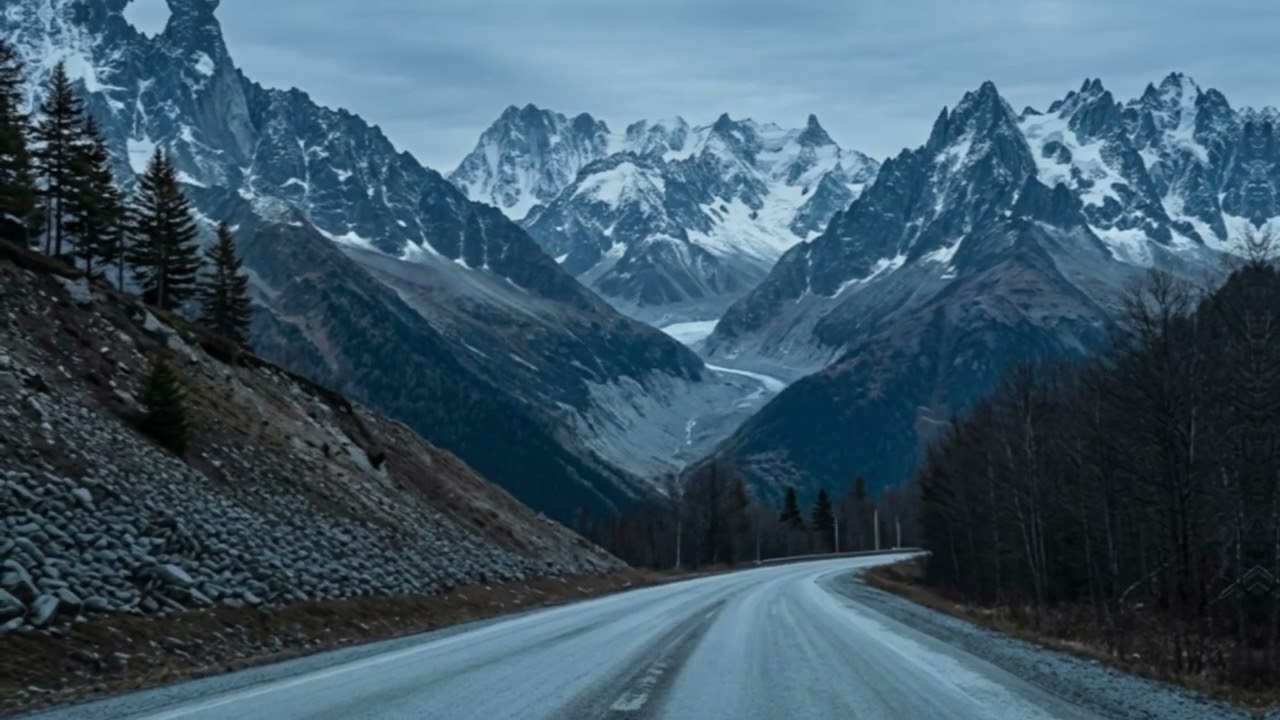
The surveyor was Ambrose Rener, a 47-year-old veteran of surveying work in nine states. The Norfolk and Western Railway hired him to walk a valley called the Salow Down in western North Carolina. The valley sat near a settlement called Caldwell Notch, a community of about 140 people descended from a handful of families who had arrived in the 1790s and did not welcome outside attention. The railroad’s red pencil line passed directly through the valley, and Rener’s job was to confirm whether the route could be built.
Rener hired a local guide named Zebulon Hardacaker, who agreed to take him only as far as the fork above an old mill. Hardacaker set firm terms: they would camp above the valley on the first night, enter only at first light, and turn back when he said so. Rener, surprised by the conditions, agreed. On the walk in, Rener noticed that the woods held no birds, no squirrels, and no flies.
Hardacaker warned him not to drink from any water coming out of the north side of the ridge. At the fork overlooking the valley, Hardacaker refused to go further that afternoon. When Rener asked why, the guide said simply: “Because a man does not go into that valley in the afternoon. It is a rule.
”
That night, Rener heard what he described as a wagon passing by the tent, though the trail was empty and the dust undisturbed. A woman’s voice spoke low, in words he could not make out. Hardacaker was awake. He told Rener: “Do not answer if it speaks to you.
”
The next morning, they descended into the valley. Rener found the land beautiful, with a clean creek and chestnut trees a hundred feet tall, but the air was several degrees colder than the ridge above. He found tracks in the soft ground by the creek that resembled a man’s shoe print, but longer, with a toe that ran straight forward. Hardacaker told him not to follow them.
At the old mill, they found a mark cut into the stone wall: a circle with a line through it, and three shallow notches beneath. Hardacaker said it meant someone had left a warning for the next man who came by. That night, Hardacaker told Rener the story of the Fenwick wagon train. In the summer of 1843, a party of 62 people led by Bartholomew Fenwick, a trader from Wilkes County, passed through Caldwell Notch on a Sunday heading west.
The local preacher, the Reverend Hosea Wexler, stopped them in the street and warned them not to take the valley. He said it plainly enough for the whole congregation to hear: “The Salow Down does not let travelers pass through in the fall. ”
Fenwick laughed and took his people down into the valley that same afternoon. None of them were seen alive again.
Two weeks later, hunters found no trace of the wagons, no fire pits, no ruts. The creek ran clean, and the valley was empty, as if no one had ever walked there. Sheriff Josiah Bramwell wrote in his log that the party had gone through and continued west, signing off the disappearance as a matter for the next county. Hardacaker called this “the wrong word.
” The party had not gone west. They had never come out of the valley at all. Three members of the party had left wills behind. Their heirs waited the seven years required by law to declare the missing dead, and each estate was granted through probate.
In each hearing, Sheriff Bramwell testified that the party had gone through and continued west. After each hearing, he went to the church, where the Reverend Wexler shut the door with him for the afternoon. Hardacaker’s father said Bramwell was crying both times he saw him come out. Rener also spoke with a 78-year-old woman named Otley Marsh Payne, who had been a girl of 15 when the wagons passed.
She remembered the wagon master, a big man with a black beard and a green coat, who laughed loud enough to be heard at the church door. She remembered a woman in the last wagon, in a gray dress with a white collar, who did not laugh. As the wagon passed, the woman leaned down and handed the girl a small carved figure of dark wood, cut with the same mark: the circle with a line through it and three notches beneath. The woman said one sentence: “If you are old when we come back for you, do not answer.
”
Otley kept the carving in a box on her mantel for 63 years. She also told Rener that on some nights, with the wind out of the west and the moon low, you could hear a wagon go by on the ridge road below the preacher’s grave: wheels on hard ground, an axle creaking, and a woman’s voice saying something you could not make out. Rener returned to the boarding house and wrote in his journal that he was not a superstitious man. He had surveyed 31 counties in nine states.
But he had heard a wagon that could not have been there, and the country down in that valley behaved as if it were listening. He wrote: “I will walk it tomorrow. I have a contract. ”
The next day, Sheriff Lemuel Crowther met Rener at the fork and would not walk past it either.
But he gave him a leather satchel that had belonged to Sheriff Bramwell, containing the papers of the 1843 disappearance. Most were water-damaged beyond reading, but three were legible. The first was a log page dated September 14, 1843: “Went down into the valley, found nothing. Will not go back.
”
The second was a letter from the Reverend Wexler to Bramwell, dated three days later. It said: “I told you what I could. I did not tell you all of it. There is a well at the head of the valley at the base of the north ridge which was there before any settler came into this country and which the old people of the region who were here before us would not draw from and would not fill in.
Whatever your party found, they found because that well was the last place they went. And I ask you as a Christian man and as a keeper of the peace to seal it. ”
The third was a page in Bramwell’s hand, dated a week later: “Sealed the well. May God forgive me for what I saw when I looked down.
”
Sheriff Crowther then produced one more paper, in a cramped hand he did not know. Dated October 22, 1882, it read: “Checked the well again. Cover has moved a full inch since spring. Repaired.
Told no one. ” And beneath it, in a slightly different hand, underlined twice: “He who owes the answer keeps the count. ”
The sheriff said the saying came from the Reverend Wexler and had never been written down anywhere else. He also said he checked the well every October, and it was the only reason he still held the office.
Rener went down alone. He worked the survey line through the morning without incident. Then, in the early afternoon, he came out of a stand of chestnut and found the well. It was not where it should have been.
His map and the sheriff’s description placed it 400 yards away, on the other side of the creek. It stood 20 feet from him instead, round and low, made of dressed fieldstone, with an iron-banded wooden cover sealed at the edges with cracked pitch. On the cover, in grayed whitewash, was the same mark: the circle with a line through it and three shallow notches. He shot bearings to his last stake and to the ridge.
The readings confirmed he was 400 yards from where the well was supposed to be. But it was there, and there was no other explanation, he wrote, unless the country itself had moved. On the walk out, he heard the wagon again, closer this time, on the ridge above. A woman’s voice spoke, and he could almost make out the words.
He held still. He did not look up. He remembered what Hardacaker had said. That night, Sheriff Crowther told him the well had been unsealed twice since 1843.
In 1871, a photographer from Asheville named Corus Bain wanted to photograph the inside. He went down with a lantern, a camera, and a rope. He came back up on his own two feet, but he did not speak for the rest of his life. He lived 19 more years in his sister’s house, eating and sleeping, writing when he needed to.
He refused to speak. His sister said that if you sat with him long enough, he would begin to hum, always the same tune, and she did not know it. Bain left his camera and lantern in the valley. They were recovered two months later.
One of the dry plates in the camera had been developed before it was ruined, and the sheriff’s grandfather kept the print in a locked drawer. He showed it to Crowther once, then made him promise to burn it. Crowther burned it. Asked what was on the plate, he said: “Faces.
Looking sideways. As if they had turned at the moment the shutter opened to see who was there. ”
The second time the well was opened was by Crowther’s own father, in 1882. A widow named Epherta Milbour asked him to open it because her husband had gone down into the valley 12 years earlier and she wanted to know where to look.
The father lowered a lantern on a rope. The bottom was farther down than any well he had ever seen. He drew the lantern back up, replaced the cover, sealed it with fresh pitch, and went to the widow’s house. He told her her husband was down there, and that he was not alone, and that she was not to ask him another question about it as long as she lived.
On her deathbed, 20 years later, she called for him and asked one question: “How many? ” He answered: “62. ”
Sheriff Crowther told Rener the pitch cracked a little further every year. The cover moved an inch, maybe two, always in the same direction.
Up. Asked what he would do when it opened, Crowther said: “I do not know. Because I do not know, Mr. Rener, what happens then.
”
The next morning, Rener went down one last time. The well was not where it had been the day before. It stood at the base of the north ridge, 400 yards from where he had found it. The cover had moved, pushed to one side, leaving a gap of roughly six inches along the eastern edge.
The pitch lay in a crumbled ring at the base. He got down on his knees and looked into the gap. In the light that came in with him, he saw stillness that went down further than any light could reach. In that stillness, he saw people.
Arranged, not fallen. Hands and shoulders and the tops of heads, the ribs of dress fabric, the bands of hat brims, the pale curve of a cheekbone. All 62, in rows, in a slow, patient spiral going down. The last row was newer than the ones below.
At the bottom of that row, on the eastern edge, in a gray dress with a white collar, lay a woman whose face was 50 years dead, with her eyes open, looking at him. Then one of the shapes near the top of the spiral shifted. It was a small movement, the movement of a person who has been kneeling for a very long time and has just remembered they can move. A shoulder, the tilt of a head, the slow turn of a face toward the light.
A pale hand laid flat against the stone, as if to steady the body for what came next. And from a great distance down below the light, a woman’s voice said his name. Not the name his friends used. His full name, as written on his contract with the railroad, on a piece of paper he had not shown to anyone in Caldwell Notch.
He shut his mouth. He clenched his teeth. He held the answer in his throat where it wanted to come out. He did not scream.
He put the cover back, pushed it flush against the stone, gathered every piece of broken pitch he could find, and sealed the seam with the flat of his knife until the gap was closed. Then he walked out of the valley. He did not look back. At the fork, Sheriff Crowther asked if he had looked.
Rener said he had, and that the well was open. Crowther went pale. Rener said he had closed it and did not know if it would hold. Crowther told him the cover always came open on its own.
No one had ever closed it well enough to hold. Then he said what saved Rener was not the sealing. It was that he had not answered. “If you had answered, Mr.
Rener, if you had said one word to what looked up at you out of that well, you would not have come out of that valley on your own feet. That is the rule. It is the only rule. ”
Rener left Caldwell Notch that same afternoon.
He paid his debts, shook hands with the sheriff, and wrote his report on the train: “The terrain of the Salow Down Valley is unsuitable for rail construction, soft ground, poor drainage, unstable ridge base. Recommend the alternate route over Baron Gap. ” He did not mention the well, the wagon, or the woman in the gray dress. He never surveyed new country again.
He worked only where he had already been, a strange rule for a surveyor that cost him work, but he kept it. He lived 22 more years and died in the winter of 1915. On his deathbed, he repeated the same words over and over: “62. And I did not answer.
Thank God. ”
In the last week of his life, he wrote to a professor of folklore at the University of North Carolina, describing the mark: the circle with a line through it and three notches beneath. The professor replied, but the letter arrived four days after Rener was buried. The professor said he could not identify the mark with certainty, but a version of it had appeared in the notes of a missionary who traveled through the region in 1748.
The missionary recorded a saying used by the people who lived there before the settlers came. In rough translation: “This place does not answer. ” The professor noted that the missionary wrote it in the margin, and that it was spoken always as a warning, always to travelers, and always at the mouths of certain valleys. The well is still there.
The office of sheriff continued the October check through the deaths of Crowther, his successor Ellery Weatherbe, and sheriff Vashi Kolkahoon, who held the office until 1952. The current sheriff still performs the check and has asked not to be named. In 1955, a United States Geological Survey team mapped the general area but did not name the valley. In the margin of the field notes, in the hand of a junior surveyor named Harmon Peele, is written one line: “Do not send us back here.
”
Roads still lead toward the country where Caldwell Notch once stood, though the town is called something else on modern maps. No one at the store will tell you where the Salow Down lies. But if you press, someone will send you down a road that dead ends at a wire gate. Past that gate, if you go in the fall, when the light is thin and the air holds still, you may hear wheels on hard ground, the creak of an axle, and a woman’s voice saying something you cannot make out.
There is one more record. In the fall of 1947, a college student named Perpetual Howeran came into the county writing a thesis on abandoned communities of the southern Appalachians. She had heard the name of the valley in a letter from her grandmother, who grew up there. The storekeeper told her there was no such place.
She did not accept the answer. She spent three days walking the roads and asking questions, and on the fourth day, she disappeared. Her car was found at the wire gate at the end of the dead-end road. Her notebook was in the car and her keys were in the ignition.
There was no sign of struggle or accident, and no evidence of any human hand in her disappearance. Sheriff Kolkahoon performed the October check one week early. She wrote in the log only: “Cover shifted 3 inches. Sealed.
” On a line she added later, beneath the entry, she wrote: “63, not 62. 63. ”
That is the last change to the number ever entered in the log of that office.