On February 18, 1993, Judith Shemtov heard the doorbell at her Staten Island home. The 46-year-old wife and mother had no reason to fear the two men standing outside. She did not know they had been watching her family for weeks, nor that a young man waited in a getaway car down the street. She opened the door.
Within seconds, she was dead. The shooting was chaotic and pointless. The men fled without taking cash, valuables, or a single dollar. The victim was simply the unlucky wife of a New York adult-store owner who was rumored to keep large sums of money at home.
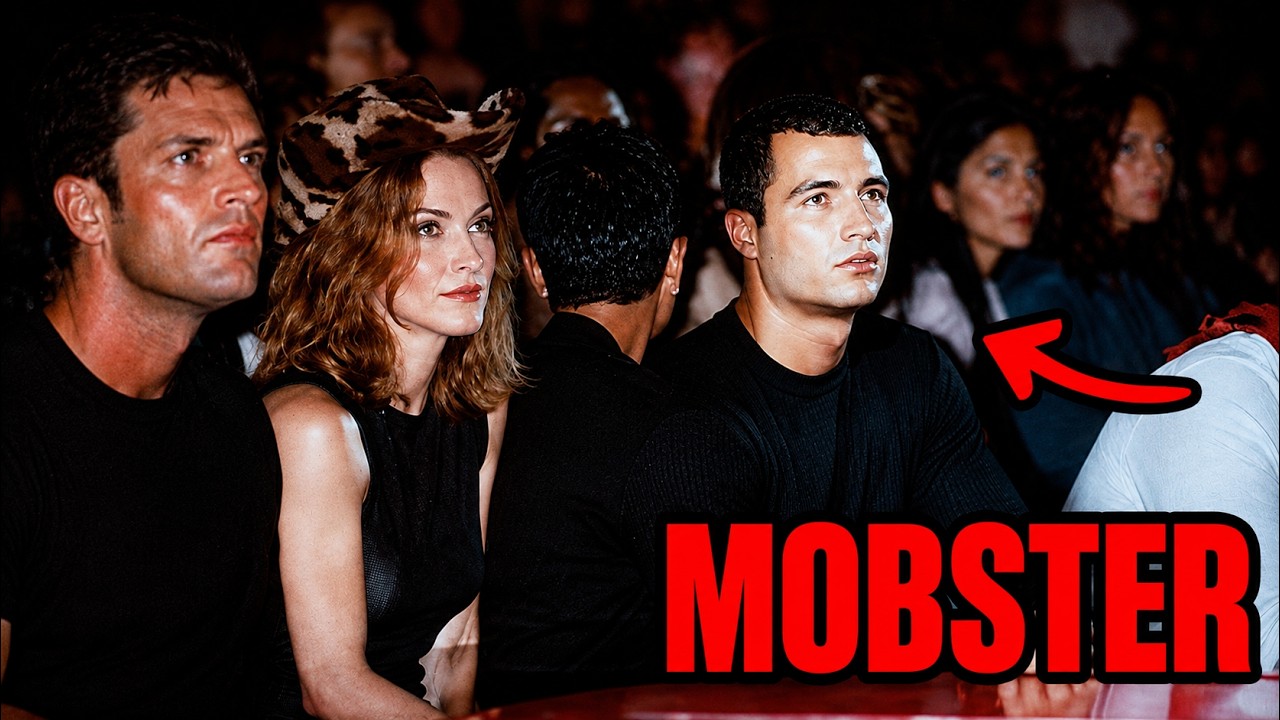
The man behind the wheel of that getaway car was not an unknown thug. He would later become one of the most famous nightlife figures of the 1990s Miami scene, a celebrity club owner romantically linked to Madonna, Sofia Vergara, Jennifer Lopez, Naomi Campbell, and model Nikki Taylor. His real name was Christian Ludvigsen. The world knew him as Chris Paciello, also called “Bussy E” or “Bussy Ielo” in the streets.
Born on September 7, 1971, in Borough Park, Brooklyn, Ludvigsen grew up in an Italian-American neighborhood. His father, George Ludvigsen, was an absent addict and small-time thief. His mother, Margaret, came from an Italian family originally named Basileo, and the family began using her surname. That name change carried enormous weight in the world Ludvigsen wanted to enter.
To become a formal “made man” in the Cosa Nostra, a member of the Mafia needed Italian blood on the father’s side. Ludvigsen did not have it, and never would. He could take his mother’s name, outwork and outfight anyone around him, and prove himself more useful than all of them, but he would always remain an associate, standing outside the only club he truly wanted to join. That rejection became the engine of his entire life.
Growing up on Bath Avenue in the Bensonhurst section of Brooklyn, he ran with a crew of mostly Jewish and Italian young men who provided violent labor for the Bonanno crime family. They handled the dirty work that made men were not allowed to touch: armed robberies, truck hijackings, home invasions, car theft, and arson. Every job was an audition, with reputation as the real prize. The family at the top was led by Anthony Spero, a throwback Mafia boss born in 1929.
Spero had risen through the old-school ranks under legendary Bonanno leader Carmine Galante and served as consigliere and twice as acting boss. He ran his affairs quietly, face to face, and allegedly even kept racing pigeons on a rooftop in Bensonhurst. Spero, the patient, silent, ruthless traditionalist, spent 40 years building power through discipline and silence. Paciello wanted the same power in five years, and he wanted the whole world to watch him take it.
In the early 1990s, Paciello’s crew pulled off a bank robbery in Bensonhurst. Prosecutors estimated the take at about $300,000, though some accounts put it closer to $1 million. The crew then set their sights on Samuel Shemtov, who owned adult stores in New York and was believed to keep large amounts of cash in his home. They believed up to $200,000 was waiting inside.
On the night of the murder, two men went to the door while Paciello sat in the getaway car. One of the gunmen, Thomas Reynolds, was reportedly so unreliable that, according to some accounts, he spent most of the day using drugs before the most important job of his life. The doorbell rang. Judith Shemtov opened the door.
A shot was fired at close range, and she was killed at her own doorstep. The crew fled with nothing. In 1994, Paciello, then 22, vanished from Brooklyn and resurfaced in Miami Beach. South Beach at that time was a glittering, cash-driven party town where nobody asked where your money came from.
He invested laundered cash into a nightclub that looked legitimate, and the real money flowed through the bar every night. He opened his first club, Risk, in November 1994, taking over a space once associated with actor Mickey Rourke. In April 1995, Risk burned to the ground under circumstances that were never fully explained. Paciello collected insurance money and used it to build something much bigger.
That was Liquid, which opened in late 1995 in partnership with Ingrid Casares, a South Beach figure close to Madonna. Casares gave him access to the elite that money alone could not buy. Madonna became a regular. Gianni Versace, Gloria Estefan, and a parade of icons frequented his rooms.
Overnight, the young man who could never be made in Brooklyn became a king in Miami. He was linked romantically to Madonna, Sofia Vergara, Jennifer Lopez, Nicky Taylor, and Naomi Campbell. He wore his first tuxedo at a charity event. He became a millionaire before he turned 30.
But by the late 1990s, his old Brooklyn crew was crumbling. Men were getting arrested and flipping. One crew member, Jimmy Calandra, turned against them. Federal investigators had been quietly circling Paciello since around 1997, with recordings capturing fragments of his real past underneath the party lifestyle.
On November 23, 1999, a federal grand jury in Brooklyn indicted him alongside former Bonanno boss Anthony Spero and others on racketeering charges. The indictment named Paciello in the murder of Judith Shemtov and in the bank robbery. On December 1, 1999, he surrendered in Miami. Then came a detail that seems too perfect to be true: His celebrity friends helped bail him out.
Sofia Vergara and other wealthy club patrons helped raise his $3 million bail. A man accused of murder walked free thanks to famous South Beach supporters who had no idea what he had allegedly done in Staten Island. Facing the possibility of life in prison, Paciello pleaded guilty to two racketeering counts before his trial in October 2000. He admitted to driving the getaway car the night Judith Shemtov was killed.
He admitted to the bank robbery. Then he did the one thing that a man of honor was never supposed to do. He cooperated. In session after session with the FBI, more than 15 hours in total, he revealed everything: the crew, the murders, the loansharking, and the men above him in the ranks.
His cooperation went straight to the top. Anthony Spero, the old man of silence and pigeons, was convicted in April 2001 on conspiracy and racketeering charges involving multiple murders, illegal gambling, and loansharking. He was sentenced to life in prison and died behind bars. Spero’s defense attorney, the famous Benjamin Brafman, claimed that Paciello’s cooperation helped imprison dozens of mobsters from the Bonanno and Colombo families, a number Brafman estimated at more than 70 people.
Thomas Reynolds, the man who pulled the trigger at Judith Shemtov’s door, was sentenced in 2004 to 42 years in prison. For his cooperation, Paciello received a 10-year sentence instead of life. He served about six years and was released in September 2006. The government offered him witness protection, a new name, and money to disappear into a quiet, unknown town.
He refused. He did not want to be a stranger selling insurance in a place nobody had ever heard of. He wanted to remain Chris Paciello. He moved to Los Angeles, opened pizza restaurants, and eventually returned to Miami and the restaurant world where he had risen.
The contrast remained stark to the end. The old boss spent 40 years building a legend from silence. The young man from the nightclub world dismantled it with a signature and a confession. One treated the code as sacred.
The other proved, officially, that it was just a rule for fools.