In January 1996, a 32-year-old woman stood on a small jazz club stage in Georgetown, Washington, D. C. , and sang for an audience she had personally begged her friends to fill. She had cashed out her retirement savings from her day job at a plant nursery to rent the club, and paid for a live recording truck to park outside.
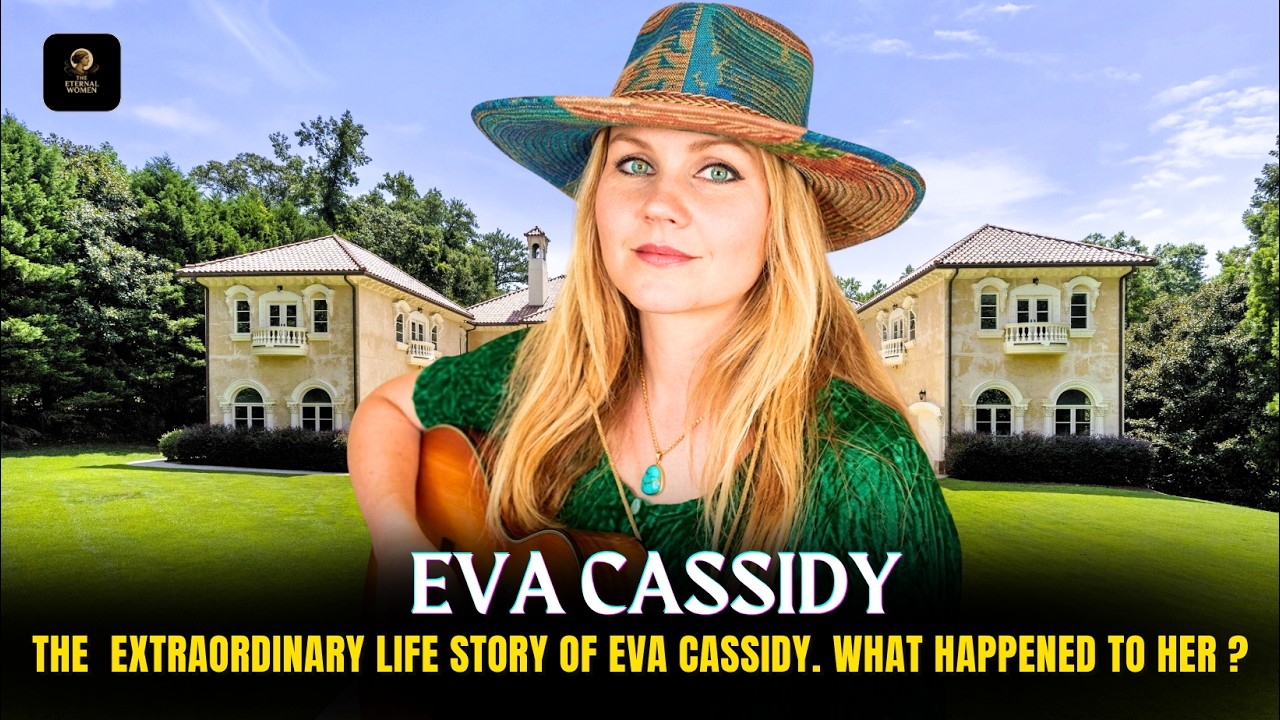
Every major label that had heard her had turned her down because she refused to confine herself to a single musical genre. The first night’s recording was ruined by a technical malfunction. She hated the way her voice sounded. She was battling a heavy cold.
Five months later, on November 2, 1996, Eva Cassidy died of skin cancer at her family home in Bowie, Maryland. She was 33 years old, and virtually unknown outside the Washington, D. C. area.
Two years after her death, a BBC Radio 2 presenter played her recording of “Fields of Gold. ” Terry Wogan followed with “Over the Rainbow. ” The phones rang for days. The album “Songbird” reached number one in the United Kingdom and went quadruple platinum.
Sting praised her. Paul McCartney praised her. The Guardian called her one of the greatest voices of her generation. She never knew any of it.
Born Eva Marie Cassidy on February 2, 1963, in Oxon Hill, Maryland, she was the third of four children of Hugh and Barbara Cassidy. The family was not wealthy and had no connections to the entertainment industry. Her father, a special education teacher, sculptor, cellist, and bass guitarist, filled the home with creative work as an everyday reality rather than a distant ambition. Eva began drawing at age two, and by age nine her father had taught her guitar.
She sang at family gatherings, not as a performance but simply as the most natural form of expression for her. Adolescence was difficult. When mandatory busing began in Prince George’s County in the 1970s, the racial tensions at her school affected her deeply. She opposed racist attitudes out of personal conviction, found herself isolated from many peers, struggled academically, and dealt with anxiety and depression.
What carried her through those years were art and nature. She would ride her bike from Old Town Alexandria to Washington museums to study Vermeer and Van Gogh. After finishing high school in 1981, she enrolled in art classes at Prince George’s Community College and was accepted to the California Institute of the Arts, but the tuition was beyond her family’s means. She left community college in 1982 and took a job at the plant nursery where her mother worked.
For the next 15 years, she worked at the nursery by day and sang by night. At 18, she began performing professionally with a Washington-area band called Easy Street, playing weddings, corporate events, and a variety of venues. During the summer of 1983, she sang and played guitar six days a week at Wild World, an amusement park in Maryland. Throughout the 1980s she worked with groups including the soul-and-Motown oriented The Honeybees and Characterz Without Names, which later became Method Actor.
She also worked as a plant nursery worker and as an furniture painter in Annapolis. The pivotal meeting came in 1986, when Eva entered a studio run by Chris Biondo to sing backup on another band’s demo. Biondo heard her voice and immediately understood he was listening to something out of the ordinary. He asked her to return to record as a solo artist, and became her producer, bassist, and one of the most consistent advocates in her musical life.
Rather than rushing her toward a major label deal, he spent years recording her carefully and building her catalog on her own terms. In 1990, Biondo and Cassidy formally established the band Eva Cassidy, gathering musicians who became her longtime collaborators. They performed regularly throughout the Washington area to a loyal, enthusiastic local following. In 1992, Biondo played a tape of Eva’s voice for Chuck Brown, the godfather of go-go and a Washington music legend who was also a gifted jazz and blues singer.
The result was “The Other Side,” a duo album of jazz, blues, and soul that included songs like “Fever,” Billie Holiday’s “God Bless the Child,” and “Over the Rainbow. ” Released on the local Liaison Records label in 1992, it drew interest from several record companies. Every major label that expressed interest made the same demand: Eva had to choose a single genre and commit to it. She refused every offer.
In 1993, she won her first Wammies, the annual Washington Area Music Association honors for local musicians, as traditional jazz vocalist and traditional R&B vocalist. The following year, she was invited to perform at the awards ceremony, and The Washington Times called her rendition of “Over the Rainbow” stunning. She won two additional Wammies that night. The local community knew what she had.
The rest of the world did not. By the end of 1995, at age 32, Eva had no true solo studio album and no major label deal. A brief, unsatisfying arrangement with Blue Note Records to work with the jazz group Pieces of a Dream had left her musically unfulfilled. She, Biondo, and her manager Brianne Dill decided to produce the album themselves.
Eva cashed out a small pension from her nursery job to help fund the recording. They chose Blues Alley, the premier jazz club in Washington, a small brick building in a cobblestone alley in Georgetown. They rented it for two nights, January 2 and 3, 1996, and paid for a live recording truck to park outside. Eva personally asked her friends to come fill the tables.
The first night’s recording was lost to a technical malfunction, leaving only the January 3 session usable. Twelve songs from that night were released in May 1996 as “Live at Blues Alley” on Eva Records. Eva hated the album. She thought her voice had sounded terrible; she was suffering from a bad cold and was keenly aware of every imperfection.
Yet the album became one of the best-selling records in the Washington area that year. A Washington Post review noted that she could sing anything and make it sound like the only music that mattered. In July 1996, during a promotional event for “Live at Blues Alley,” Eva noticed pain in her hip. At first she attributed it to stiffness from painting murals while standing on a ladder.
The pain persisted and became severe. In 1993, doctors had removed a malignant mole from her back and told her they had caught the cancer early. Now, when she sought medical help and went to Johns Hopkins Hospital in Baltimore, X-rays revealed a fracture. Further tests showed the melanoma had returned and spread to her bones and lungs.
Her doctors estimated she had three to five months to live. Eva chose intensive treatment. She underwent chemotherapy at the Johns Hopkins Oncology Center. She lost her hair, needed blood transfusions, and her physical strength deteriorated rapidly.
Before she lost the ability to perform, she sang one last time in public. On September 17, 1996, at a benefit held by friends and fans at the Bayou club in Washington, Eva appeared on stage for the final time, physically exhausted from a recent blood transfusion, wearing a scarf to hide her chemotherapy-related baldness and needing a walker to move. She closed her set with “What a Wonderful World. ” The audience wept.
Further chemotherapy was not effective. Eva Cassidy died on November 2, 1996, at her family home in Bowie, Maryland. In accordance with her wishes, she was cremated and her ashes were scattered on the shores of a lake in Maryland. She was 33 years old.
Three weeks after her death, the Washington Area Music Association honored Eva Cassidy and “Live at Blues Alley” at its annual ceremony. She was inducted posthumously into the WAMA Hall of Fame. Before she died, she had signed with a small independent label in Los Angeles called Blix Street Records, thanks to the efforts of Washington folk singer Grace Griffith, who wrote a letter and sent a tape to founder Bill Straw. Blix Street prepared to release “Songbird,” a compilation drawn from “Live at Blues Alley” and the posthumously completed studio album “Eva by Heart,” for national release in 1998.
In 1998, Mike Harding, a presenter on BBC Radio 2 in Britain, broadcast Eva’s recording of “Fields of Gold” on air. The response was immediate. Terry Wogan, one of the most beloved broadcasters in British radio history, followed with “Over the Rainbow. ” A video of Eva performing it at Blues Alley also aired on “Top of the Pops.
” BBC Radio 2’s phones rang for days. The answer to the biggest question halted everything: Eva Cassidy was not alive. She had died two years earlier. “Songbird” entered the UK charts in 2001 and rose to number one.
It went platinum, then double and quadruple platinum in Britain. Her 2002 album “Imagine” reached number one on the Billboard independent albums chart. “American Tune” reached number four. “Songbird” spent 28 weeks on the Billboard pop albums chart.
Time and People published features on her, NPR reported on her, and Nightline covered her story. In 2002, figure skater Michelle Kwan used Eva’s version of “Fields of Gold” in her Olympic performance in Salt Lake City. Her recording of “Over the Rainbow” appeared in the 2003 film “Love Actually. ” By 2005, Amazon listed Eva Cassidy as the fifth best-selling musician on its platform.
The story of Eva Cassidy and the music industry is widely cited as one of the clearest examples of institutional failure in popular music history. The executives who rejected her were not cruel or stupid; they were doing exactly what the industry was designed to do, which was to find commercially profitable products, not exceptional voices. Her music was too eclectic to market because it could not be classified. Bruce Lundvall, president of Blue Note Records, said after her death, “I made a grave mistake.
I should have signed her. ” A potential deal with Apollo Records collapsed when the label went bankrupt. Offers that came with genre restrictions and stylistic compromises were refused. Eva’s entire catalog was built nearly entirely from work completed in her lifetime but released after her death.
“Live at Blues Alley” was her only solo album released while she was alive. The posthumous “Eva by Heart,” completed before she died, represented her full intentions more closely than the live album she disliked. “Songbird” became the compilation that started the British phenomenon. “Time After Time,” “Imagine,” “American Tune,” “Wonderful World,” and “Somewhere” expanded the catalog with previously unreleased recordings.
Sting said she had a unique talent that transcended all musical barriers. Paul McCartney’s admiration was widely known. Eva Cassidy was a complex and introverted person, sensitive to criticism, committed to her values, and difficult to fully know. She loved nature deeply; the nursery was not just a day job but an environment that suited something essential in her character.
She loved the visual arts with genuine dedication. She loved music not as a career but as a necessity. And she was stubborn in a way that is easy to admire in retrospect. She refused to compromise her artistic identity for commercial success, even when the alternative was obscurity.
The world eventually discovered her exactly as she was, and responded exactly as she had always hoped. She just never knew. She never heard a single radio play outside Washington. She never saw the BBC phones ringing for days.
She never knew Michelle Kwan skated to her voice at the Winter Olympics, or that her “Over the Rainbow” played in cinemas around the world in “Love Actually. ” She never knew Sting, Paul McCartney, or Roberta Flack admired her. She never knew The Guardian called her one of the greatest voices of her generation. She died without knowing she was famous.
The only consolation in the story is that she knew her own truth. The people in those Washington clubs knew it. Chris Biondo knew it. Chuck Brown knew it.
Those who filled the candlelit tables at Blues Alley in January 1996 knew the value was real before anyone else acknowledged it. She was right about herself. The industry was wrong about the market, and the world eventually confirmed both truths at once. She was 33 when she died, ten months after the recording that changed everything.
She never heard the echo of it.