On May 22, 2025, nearly 50 years after two 14-year-old girls vanished from Hollywood, Florida, authorities finally named the men responsible for their murders. The problem was that both suspects had died years earlier, meaning the case would never see a courtroom. Darlene Zetterauer and Barbara Schreiber, known as Barbie, were inseparable best friends who had just finished eighth grade at Attucks Middle School. On June 18, 1975, they left Barbara’s house carrying their report cards, planning to spend the night at another friend’s home.
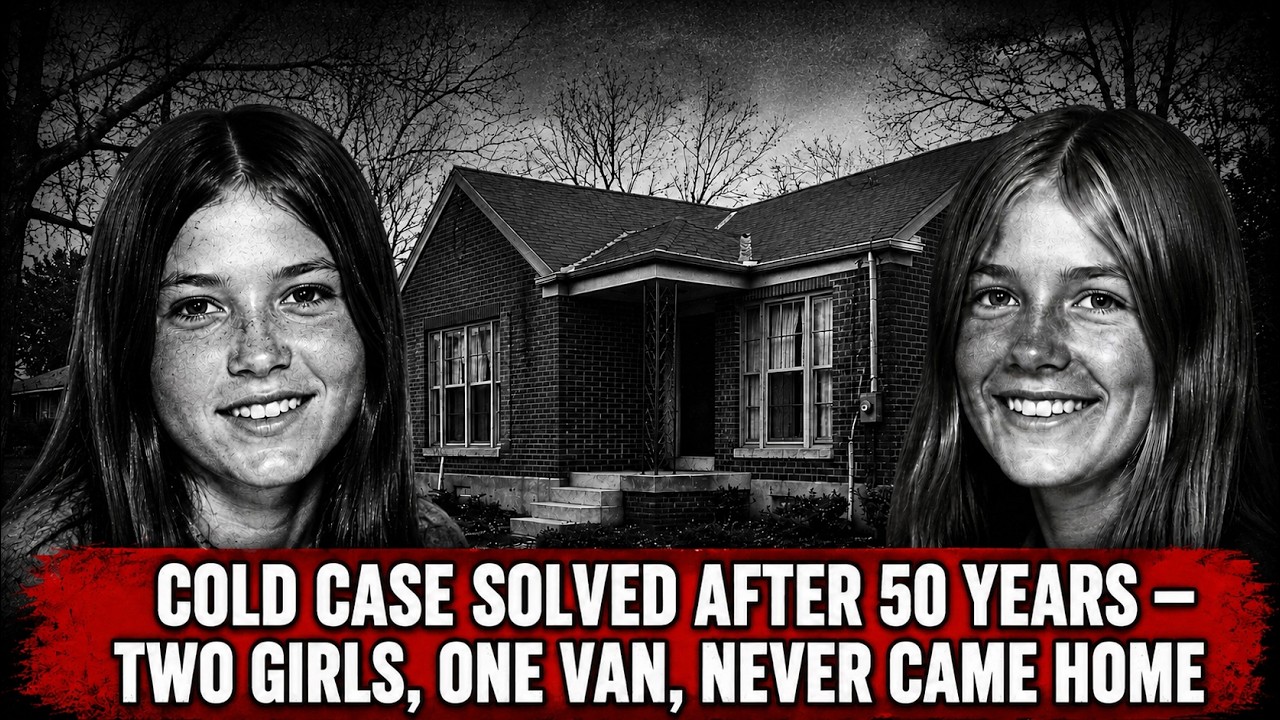
They were last seen sitting on a bench along Sterling Road, a busy street in their Broward County town. Witnesses later told investigators the girls had climbed into a white van driven by two men. Hitchhiking was not unusual for teenagers in that era, and both girls had done it before, more often than their parents were comfortable with. They got in willingly and were never seen alive again.
The following morning, a family on a fishing trip near the Everglades discovered the girls’ bodies on a remote dirt road in an area known as Andytown, roughly 30 miles from where they had last been spotted. Investigators determined both had been brutally assaulted and shot to death. The location suggested the killer knew the area and chose a spot where the bodies would not be found quickly. In 1975, detectives launched a large-scale investigation.
They interviewed classmates, combed the scene, and chased leads. They even explored a possible connection to a series of South Florida killings known as the flat tire murders, but investigators later ruled that link out. What they could not do was use the biological evidence left at the scene because DNA testing for criminal cases did not exist yet. The girls’ clothing was collected, preserved, and tested repeatedly over the decades, but every test came back inconclusive.
The case went quiet. Detectives retired or passed away. An entire generation of the girls’ parents died without knowing who killed their daughters. The answer had been sitting in a filing cabinet for 48 years.
Seven days after the murders, a man named Robert Clark Keebler was arrested in Pompano Beach, Florida, following a road rage incident. He was driving the same white van connected to the case, and police found a handgun inside it. At the time, no one connected that minor arrest to a double homicide in another part of the county. Keebler had moved to South Florida from California earlier that year, driving a white van.
His criminal history stretched back to at least 1972 and spanned California, Arizona, and Florida, including armed robbery and aggravated assault. His accomplice, Lawrence Stein, had a similar violent record across multiple states. Neither man was ever questioned about the girls. In 2019, the Broward Sheriff’s Office created a dedicated cold case homicide unit.
Detective Andrew Giannino picked up the file and refused to retire while the case remained unsolved. He ordered another round of DNA testing using newer forensic techniques. In February 2023, Detective Roberto Caseras ran the newest test on evidence from Darlene’s clothing. This time, it produced a full DNA profile that matched Keebler in CODIS, the FBI’s national DNA database.
Tests also found a partial profile belonging to a second man, later identified as Stein. Investigators corroborated the white van through Keebler’s 1975 arrest record and found a witness who had never been interviewed before, someone who confirmed seeing the girls climb into the van. Keebler died in 2019 in Miami. Stein died in 2005.
Neither was ever arrested or spent a single night in jail for the murders. Because both suspects were dead, the Broward State Attorney’s Office reviewed the case and determined the evidence was sufficient to have prosecuted both men had they been alive. The case was officially classified as exceptionally cleared, meaning it is considered solved, but no trial is possible. Sheriff Gregory Tony announced the findings publicly on May 22, 2025, telling reporters that “justice doesn’t have an expiration date.
” Detective Giannino was more measured, saying, “I don’t know if it’s justice, but at least it gives the family some answers. ”
Barbara’s younger sister, Kimberly Schreiber, was five years old when her sister was murdered. She told reporters the loss “devastated us,” “destroyed us,” and fractured her parents’ marriage. She thanked the detectives who “never forget people like us.
”
Both girls’ parents and Barbara’s brother died before the truth was known. The case was closed without a conviction or a trial, but after nearly half a century, two grieving families finally had names to hold onto.