A screenplay that was never supposed to reach David Fincher ended up defining his career—and nearly every choice behind it was one someone tried to soften. Fincher had sworn off feature films after Alien 3 was recut against his wishes. The script that landed on his desk, written by Andrew Kevin Walker, ended in the bleakest way a studio thriller could. That ending was the reason he said yes.
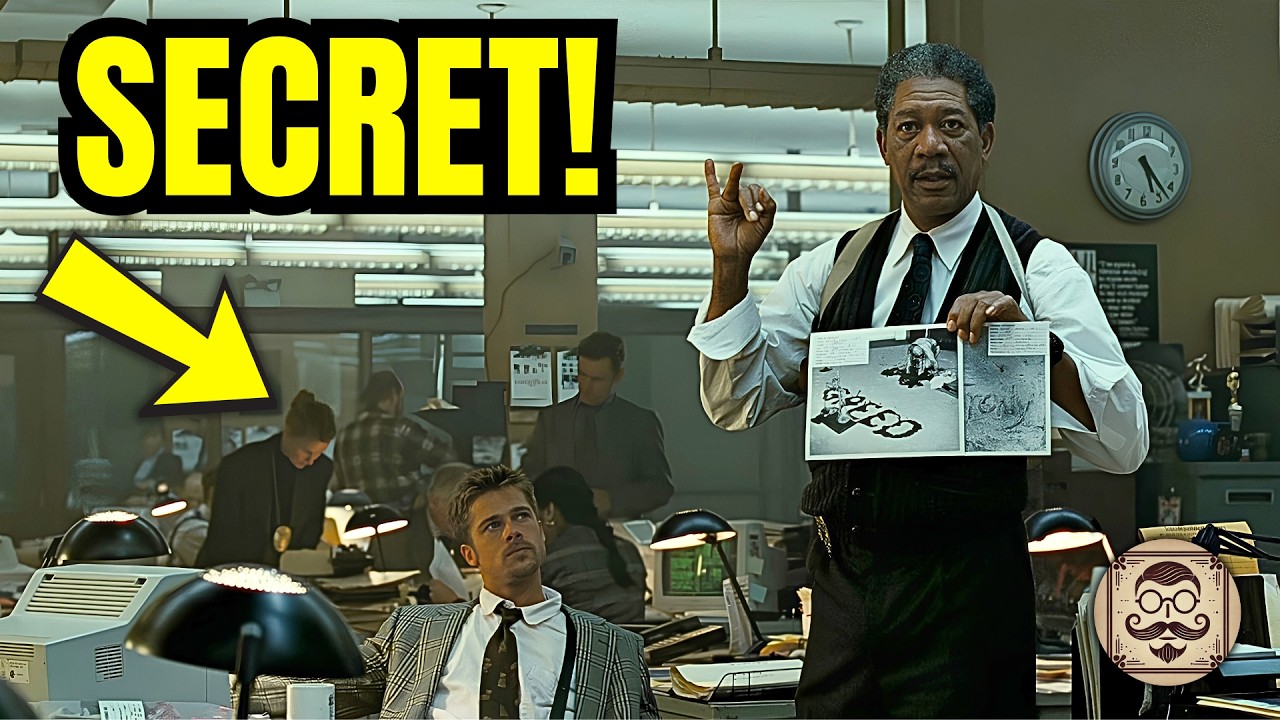
The story began years earlier with Walker selling records in New York City, a place he despised. He moved there from Pennsylvania suburbs in 1986 with a film degree from Penn State. By 1991, he was working as a sales assistant at Tower Records and writing on the side. “I didn’t like my time in New York,” Walker said years later.
The script was born in misery. He imagined a man who noticed the seven deadly sins everywhere and decided to punish what everyone else ignored. The spec script was set in a nameless city, but its grime came straight from the one outside his window. Walker admitted that without New York, he probably would never have written it.
The pages then spent years in other hands. An Italian company had optioned the script and hired a director who wanted the grim finale gone. Walker gave in, writing a conventional climax in a burning church where Detective Mills died and his pregnant wife Tracy left the city safely. He went through 13 drafts trying to satisfy the people above him.
When the rights passed to producer Arnold Kopelson and then to New Line Cinema, the search for a new director began. Fincher’s agent handed him a copy. He was initially unimpressed by the police procedural side, but the slow reveal of the killer’s plan held him. The copy he received turned out to be Walker’s original—the one where the detectives arrive too late and the box waits at the end.
New Line sent him the current version where Tracy survived. Fincher replied that he would only direct the first one. Michael De Luca, the studio’s president of production, preferred the original too, and it became the draft they agreed to shoot. New Line was a smaller studio with a different appetite.
De Luca and Fincher made a practical decision: they agreed to start filming within six weeks. Every extra week gave executives another chance to ask for changes, so speed became their shield. The case for the dark material grew as Morgan Freeman, Brad Pitt, and eventually Kevin Spacey signed on. The picture had been budgeted at around $30 million, and Fincher kept persuading executives to find more.
By the end, it ran about $3 million over, making it the most expensive production New Line had made up to that point. Before the cameras rolled, actor Leland Orser sat alone breathing in fast, shallow gulps until his hands trembled. His entire role was a single interrogation scene as a terrified man John Doe had forced into a crime at gunpoint. Orser reportedly went several nights with almost no rest before filming, letting real exhaustion show.
Between takes, he kept breathing rapidly to slip back into hyperventilating the moment the camera turned to him. None of the crime was ever shown on screen. Everything the audience learned came from one shaking man describing what he had been made to do. In the film’s most unbearable conversation, the orchestra barely plays at all.
Composer Howard Shore was hired on the strength of his work on The Silence of the Lambs. He wrote for an orchestra of up to 100 players, leaning on brass, percussion, and piano. In the finale, the restraint meant the audience heard every word John Doe said with nothing to cushion them. Three of the most respected actors of their generation turned down the part of Somerset before Morgan Freeman got it.
Robert Duvall, Gene Hackman, and Al Pacino all passed on the weary detective. Denzel Washington and Sylvester Stallone both declined Mills. An earlier version had been developed with Washington in mind, and Fincher described it as a far more conventional action cop movie. Fincher had not considered Brad Pitt at all because Pitt did not match his image of the character.
A meeting changed his mind—Pitt had enough charm to keep the audience on Mills’s side even when Mills behaved badly. Pitt wanted to move away from romantic leads toward grittier work, and he had turned down other offers to find it. Freeman came in on Kopelson’s suggestion. The studio hesitated, worried the pairing would make the picture look like a copy of Lethal Weapon, but Fincher cast him anyway.
Tracy Mills appears in only a handful of scenes, yet the entire finale depends on the audience caring about her. Fincher’s first choice was Gwyneth Paltrow, but early word was that she would have no interest in anything this dark. Fincher reportedly auditioned around 100 people. Robin Wright auditioned and Christina Applegate turned the part down.
The breakthrough came through Brad Pitt. He had been impressed by Paltrow when she auditioned for Legends of the Fall, and he contacted her himself to ask her to meet the filmmakers. She agreed, and the meeting settled it. When the cameras first rolled on the villain scenes, the man playing John Doe was an unknown actor whose footage never reached the screen.
The filmmakers decided quickly that it was not working and replaced him. The search had a long history. Fincher and Walker had first wanted Ned Beatty, inspired by the plain face in the composite sketch of the Zodiac Killer. Beatty read the script and declined, calling it the most evil thing he had ever read.
Brad Pitt had wanted Kevin Spacey from the start, but the studio balked at his price. After the first actor was let go, Pitt helped negotiate the deal. Spacey got a call on a Friday night and was filming by the following Tuesday, completing all his scenes in 12 days. Rain was pouring down as Brad Pitt went after a fleeing suspect, running full speed onto the hood of a parked car.
On one take, his feet went out from under him, and he went through the windshield. The glass cut deep into his left hand, badly damaging tendons and nerves. Filming stopped while Pitt was taken away for surgery. A few days later, he was back with his forearm in a cast.
The shoot was not running in story order, and plenty of scenes set before the chase had yet to be filmed. The solution split the story in two. For everything after the chase, the injury was written into the script, and Mills carried it through the rest of the week. For scenes set earlier, Pitt kept the hand out of sight, tucked into a pocket or hidden by camera placement.
One of the film’s best-known actors appears nowhere in its opening credits, and that was at his insistence. Kevin Spacey knew what his billing would do to the story. If he appeared third on the poster behind two stars who spent the whole film hunting someone, audiences would work out who he was long before the detectives did. New Line refused at first.
It took Fincher backing the idea to change the studio’s mind. Spacey was placed first in the closing credits and stayed away from the publicity tour entirely. Plenty of viewers came away sure the story took place in New York, yet the location work was done in downtown Los Angeles. The confusion was partly deliberate.
Walker had drawn on his years in New York, so a few clues point that way, but the film never names its setting. Fincher had hoped to shoot in Oakland, but the schedule would not allow it. The production built a nameless metropolis out of Los Angeles, stripping away anything that would pin it down. The film was supposed to open somewhere green and quiet with Somerset touring a country house.
There was not enough money to shoot the train journey, so the sequence was dropped. Fincher needed temporary titles to screen the cut for executives, so he brought in designer Kyle Cooper. Cooper’s team put together a montage from the killer’s point of view. The executives liked it so much they suggested keeping it.
The new sequence showed John Doe at work filling his journals, developing photographs in a bathtub, and erasing his own fingerprints. Digital tools were available for the opening sequence, but Cooper’s team chose to make it the slow physical way. The lettering was etched onto a black scratchboard, then filmed over a light box and overexposed in several variations. The team scratched and marked the film negative itself.
The shoot took eight days, and assembling the pieces took another five weeks. The rain that runs through the week began partly as a practical fix. It rained often during the shoot, so Fincher decided to film in it instead of fighting it. Fincher soon found better reasons to embrace it.
He said the rain gave the characters no escape because conditions were miserable indoors and out. It also disguised the location—constant rain made Los Angeles streets read as some other darker place. The rain stops for good only when the story leaves town. One of the most striking reveals involved the sloth victim.
Green light shone through the window, and the figure on the bed looked as if he had been dead for a long time. That was the whole trick of the scene—right up until he coughed. Actor Michael Reid MacKay won the part with an audition in which he played a corpse slowly turning its head toward the camera. The makeup took up to 14 hours, so MacKay started at 5 a.
m. to be ready by 8 at night. Then he had to lie motionless for four hours of filming, limiting his breathing while crew members kept spraying him with water on a cold set. The journals in John Doe’s apartment were real props.
Designers Clive Piercy and John Sable made them by hand, filling the pages with cramped writing, clippings, and photographs. Around six were completed from cover to cover, and the rest of the shelves were filled with blank books no camera would ever open. Much of the film looks as if it were shot with barely any light, yet the actors’ eyes nearly always carry a thin, bright glint. That glint came from a kino flo tube placed just above or below the lens and taped off so it lit only a line across the eyes.
Cinematographer Darius Khondji brought Robert Frank’s photo book The Americans to early meetings and called it his bible for the project. Fincher pointed to a scene in Klute lit only by a flashlight, saying he disliked films where characters complain they cannot see while the audience sees everything. Out in open country near Lancaster, California, under a row of high voltage transmission towers, the story left its city behind. The towers played havoc with the production’s own radios, making it hard to coordinate across the long distances.
Harsh sun brought its own trouble—no matter where the three men stood, they were always lit from behind. Part of the film’s inky look was created in chemical baths at Deluxe long after the cameras had stopped. A silver retention method called Color Contrast Enhancement left roughly three-quarters of the silver in place. Blacks went deeper, colors grew muted, and the picture took on a gritty texture.
The process was expensive and slow. Of roughly 2,500 prints sent to theaters, only a few hundred received the full treatment, mostly for big city engagements. With a large stretch of the story still to go, John Doe walked into the police station and called out to the detectives, covered in blood that was not his. Walker placed the capture here on purpose.
It robbed the characters and the audience of the satisfaction they had been waiting for. Doe had two sins left to complete, and he was the only person who knew where the last pieces of his plan were waiting. He would lead the police to two more victims, but only if Mills and Somerset took him there alone. The studio feared the film was too dark.
Khondji had underexposed many interiors by two full stops, and rumors spread that the producers were unhappy with what they were watching. Fincher refused to print the dailies brighter. What finally ended the complaints was a show reel cut for ShoWest, the convention for theater owners—it went over so well that the grumbling stopped. The most talked about object in the film is a cardboard box the camera never looks inside.
Fincher said it held a taped bag of shot and a wig. Everything the audience believes about what was inside came from the performances, the sound design, and the rhythm of the cutting. Editor Richard Francis-Bruce quickened the pace as Doe’s plan came out. To make up for never showing what was inside, he slipped in a flash of Tracy, lasting just four frames as Mills fires.
Most viewers see it without realizing they have. Executives floated alternatives, including one in which the box held one of Mills’s dogs and another built around a rescue. Fincher wanted to cut straight to black after the shot. In the end, he and Pitt kept the box.
The studio got a slightly longer epilogue with Mills taken away and Somerset’s closing narration. Fincher recalled meeting a woman who was certain she had seen what was in the box. He took that as proof that leaving it unseen had worked better than any special effect.