Historians have long cataloged the horrors of Nazi medical experiments: the freezing chambers, the malaria infections, the surgical mutilations performed without anesthesia. But one experiment became the centerpiece of the prosecution’s case against 23 Nazi doctors and administrators. The evidence was so damning that seven men, including Hitler’s personal physician, would hang for it.
The DACA low pressure chamber experiments were the smoking gun that sent them to the gallows.
In March 1942, a small team of Luftwaffe physicians arrived at Dachau concentration camp carrying requisition orders signed by Heinrich Himmler himself. Their equipment was a mobile decompression chamber. Their mission was to solve a problem killing German pilots at an alarming rate: what happens to the human body at extreme altitude when oxygen vanishes and atmospheric pressure plummets?
The experiments began simply enough. Prisoners were placed inside the chamber. Air was pumped out to simulate altitudes of 40,000 or 50,000 feet, heights where unprotected humans cannot survive. Then the doctors watched what happened.
They took meticulous notes as subjects suffered severe physiological trauma while trying to breathe. Dr. Sigmund Rascher documented the exact moments of oxygen deprivation, capturing the clinical signs of total bodily collapse and the point at which hearts finally stopped.
Between 200 and 300 prisoners died in these experiments. Every scream, every death, every moment of agony was carefully recorded in official Luftwaffe research reports complete with data tables, timestamped observations, and clinical photographs of men dying in unimaginable terror.
When American prosecutors opened those files in 1946, they had something unprecedented in legal history: a complete record of murder disguised as science, signed by the men who ordered it and executed it.
Rascher was not a typical Luftwaffe physician. Born in Munich in 1909, he had studied medicine but struggled to find his footing in the competitive German medical establishment of the 1930s. He joined the SS in 1939 and by 1941 had secured a position as a Luftwaffe medical officer, though his actual credentials were questionable at best.
What Rascher lacked in medical brilliance, he compensated for with ambition and ruthlessness. He also had something far more valuable than credentials: connections. His wife, Caroline, allegedly had personal access to Himmler. When Rascher proposed conducting high altitude experiments on camp prisoners instead of volunteers, Himmler listened.
In early 1942, Himmler gave his approval. The official justification was simple. German pilots were dying when their aircraft were hit at high altitude. They would bail out, but the sudden decompression and lack of oxygen at extreme heights killed them before their parachutes could carry them to breathable air.
It was a real problem. But Rascher’s proposed solution was monstrous: place human subjects in a chamber, simulate deadly altitudes, and record what happened as they died.
The Wehrmacht initially resisted using prisoners for such experiments. Too many variables, some officers argued. Rascher had a counterargument that revealed everything about Nazi logic: camp prisoners were going to die anyway, so why not make their deaths useful?
Himmler found this reasoning persuasive. By March 1942, a mobile low pressure chamber was installed at Dachau. Rascher was given permission to proceed with one crucial stipulation from Himmler himself: the experiments must produce publishable research that would benefit German pilots.
That stipulation would seal Rascher’s fate and the fate of 22 other defendants who would face American prosecutors four years later.
The experiments began in March 1942 and continued through May of that year. Rascher worked with two other physicians, Dr. Hans Wolfgang Romberg and Dr. Siegfried Ruff, both legitimate aviation medicine specialists who had initially been sent to observe and ensure scientific rigor.
The test protocol was straightforward in design, horrific in execution. Prisoners, most of them Russian POWs and Polish political prisoners, were selected from the camp population. They were told nothing, or in some cases told they were participating in experiments that would help German pilots and might earn them better treatment. Both statements were lies.
Each subject was placed inside the chamber, often with electrodes attached to monitor heart rate and other vital signs. Rascher would then begin pumping air out, simulating rapid ascent to altitude. The chamber had a small observation window. Rascher watched through it, stopwatch in hand, as the human body responded to conditions incompatible with life.
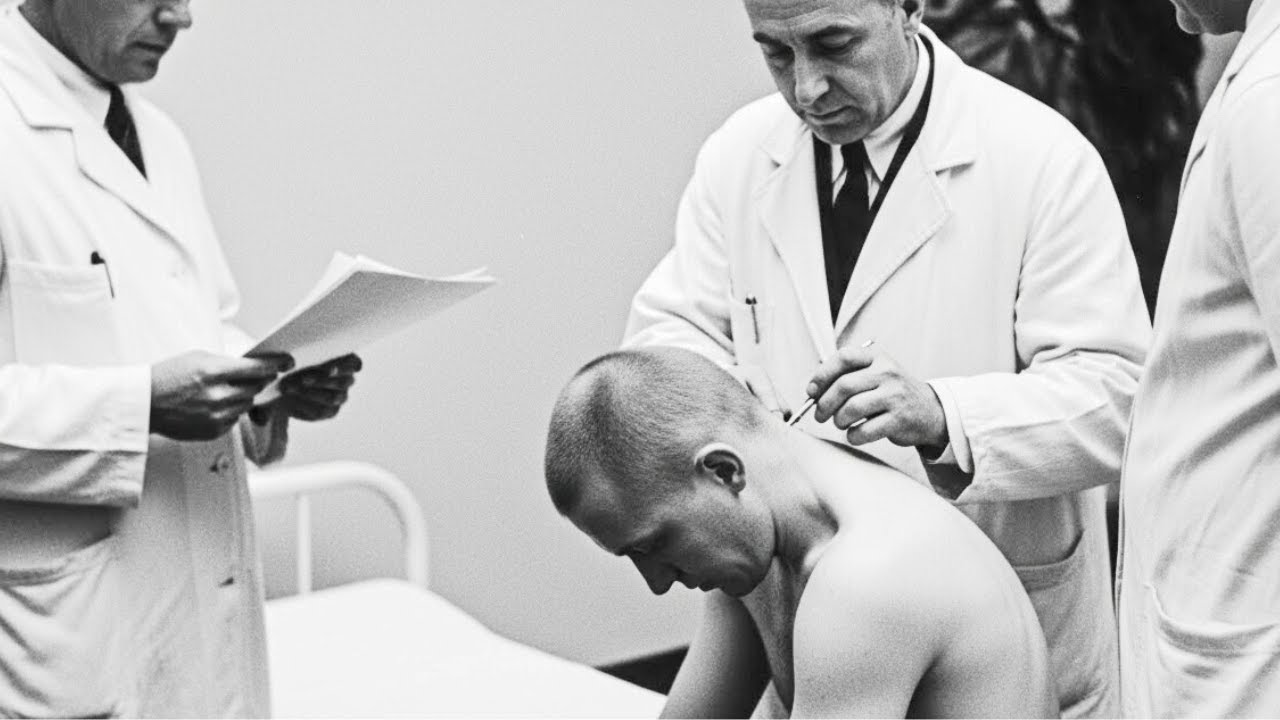
What happened next was documented in excruciating detail in Rascher’s reports. At simulated altitudes above 40,000 feet, subjects began showing distress within seconds: gasping, hyperventilating, clutching their chests. Between 50,000 and 60,000 feet, the symptoms became severe.
Blood vessels in the eyes ruptured from internal pressure changes. Subjects screamed, though Rascher noted the screams became quieter as air thinned. Some tore at their faces, literally trying to rip away the obstruction they couldn’t see. Others convulsed violently, their bodies arching backward in what medical literature calls opisthotonos, a spasm so severe it can fracture vertebrae.
Rascher recorded the exact time when each subject lost consciousness. He recorded when breathing stopped. He recorded when the heart stopped beating. And in multiple cases, he recorded what happened when he waited, deliberately waited before repressurizing the chamber to see if subjects could be revived after clinical death.
Some could. Some couldn’t. Those who survived one experiment were often subjected to repeated tests until they died. Between 70 and 80 prisoners died during the altitude experiments alone.
But here’s what makes these experiments uniquely damning from a legal perspective: Rascher’s bureaucratic obsession. He created a paper trail so dense and so clinical that it left no room for deniability. Every physiological collapse was treated as a data point, signed and stamped for his superiors.
Little did he know he wasn’t just writing research papers. He was writing his own death warrant.
The prosecution didn’t have to rely on survivor testimony or circumstantial evidence. They had the Nazis’ own documentation, created to prove their scientific credibility, turned into evidence of premeditated murder.
Rascher genuinely believed he was advancing science, and he wanted credit for it. So he wrote detailed reports, submitted them to his superiors, and presented findings at Luftwaffe medical conferences. His research was circulated among aviation physicians throughout the Reich.
When American forces captured German military medical records in 1945, they found not just evidence of crimes, but evidence with a complete chain of custody: signed authorization from Himmler and distribution lists showing exactly who knew what.
The prosecutors at Nuremberg would later describe it as a gift. In most war crimes prosecutions, you struggle to prove intent. You struggle to prove who gave orders. You struggle to connect high-ranking officials to atrocities committed by subordinates in the field. But with the Dachau medical experiments, the Nazis had done the prosecution’s work for them.
Rascher’s altitude experiments were only the beginning. In August 1942, he proposed a second series of experiments, this time focusing on hypothermia. The justification was similar: German pilots shot down over the North Sea or English Channel were dying of exposure before rescue boats could reach them.
Himmler approved this proposal as well. Prisoners were stripped naked and immersed in tanks of ice water, sometimes for three hours or more. Rascher monitored body temperature, heart rate, and consciousness level. He documented the exact point when shivering stopped, not because the subject was warming up, but because their body no longer had energy to generate heat.
Approximately 90 prisoners died in the freezing experiments.
The war ended in May 1945. American forces liberating Dachau on April 29th found 32,000 survivors in conditions that defy description. But they also found something else: filing cabinets full of medical records. Among those records were Rascher’s reports.
The Allies had known generally about Nazi medical experiments. Rumors had circulated throughout the war, and some survivor testimony had reached intelligence services. But now they had documentation: official Luftwaffe research reports typed on proper letterhead, signed by SS physicians, detailing experiments that any competent doctor would immediately recognize as torture.
American authorities decided these crimes deserved their own trial. What followed would become known as the Doctors’ Trial, or more formally, United States of America v. Karl Brandt et al. It was the first of 12 subsequent Nuremberg trials conducted by American prosecutors after the main International Military Tribunal concluded.
Twenty-three defendants were indicted in October 1946. The lead defendant was Dr. Karl Brandt, Hitler’s personal physician and Reich Commissioner for Health and Sanitation. If the prosecutors could prove Brandt knew about and authorized the Dachau experiments, they could hold the entire Nazi medical establishment accountable.

Brandt’s defense strategy was simple. Yes, experiments occurred, but they were scientifically justified wartime research conducted by individual physicians who may have occasionally exceeded proper bounds. He would claim ignorance of the worst abuses. He would argue that some degree of human experimentation was necessary and accepted in all nations during wartime.
It was a sophisticated defense, and it might have worked if not for Rascher’s meticulous documentation.
The trial began December 9th, 1946 in Nuremberg’s Palace of Justice. Brigadier General Telford Taylor led the American prosecution team. Taylor understood that proving medical war crimes required something beyond the standard prosecution playbook. He needed to prove that the defendants knew they were committing crimes, not conducting legitimate research.
Taylor’s opening statement set the stage. He described the experiments in clinical detail, then made an argument that would echo through medical ethics for decades: the voluntary consent of research subjects is absolutely essential. No wartime emergency, no matter how dire, justifies experimenting on prisoners who cannot refuse.
This was a radical argument in 1946. Human experimentation wasn’t uncommon. Many nations, including the United States, had conducted research on prisoners and institutionalized people. But Taylor argued that Nazi crimes were categorically different because the Nazis didn’t see their subjects as human beings. They saw them as raw material, and Rascher’s reports proved it.
The prosecution’s most powerful evidence wasn’t testimony. It was documents. Starting in January 1947, prosecutors began introducing Rascher’s actual reports into evidence. Report after report described experiments in detached clinical language. Each report was carefully dated, each experiment numbered, each death recorded as a data point.
The judges read them in silence.
Defense attorneys objected, argued the documents were taken out of context, claimed Rascher was a rogue operator whose crimes shouldn’t be attributed to their clients. But then the prosecution introduced the authorization documents: letters from Himmler approving the experiments, memos from the Reich Research Council allocating funding, distribution lists showing which Wehrmacht and SS officials received copies of Rascher’s reports.
Most damningly, they introduced requests from other concentration camps asking to replicate Rascher’s work, with approvals granted by defendants sitting in the courtroom. This wasn’t a rogue doctor. This was a system.
The prosecution also introduced something unprecedented in a war crimes trial: motion picture evidence. Rascher had filmed several experiments for presentation at medical conferences. The footage was grainy and silent, shot from outside the pressure chamber through the observation window, but it was clear enough.
You could see prisoners placed in the chamber, see the door sealed, see their initial calm giving way to confusion, then panic, then agony. You could see them clawing at the walls as their bodies realized what was happening. And in several sequences, you could see Rascher himself, visible through the observation window, calmly taking notes while a human being died three feet away from him.
The footage was screened in the courtroom on April 15th, 1947. Several defendants refused to watch. Defense attorneys objected strenuously, arguing the film was prejudicial. The judges overruled them.
The film didn’t just prove that experiments occurred. It proved that the defendants’ claims of ignorance were lies. They’d seen this footage before. It had been screened at Luftwaffe medical conferences in 1942 and 1943, events that several defendants had attended. Karl Brandt himself had sat through a presentation that included sequences from Rascher’s films, and he’d authorized continued funding afterward.
The prosecution rested its case in May 1947, having introduced 570 documents and called 85 witnesses over five months. The defense consumed another two months presenting their case, calling 53 witnesses and introducing 901 documents of their own. But they couldn’t overcome the fundamental problem: their clients had created a paper trail proving their own guilt.
On July 19th, 1947, the judges retired to deliberate. They returned with verdicts on August 20th, 1947.
Of 23 defendants, 16 were found guilty on one or more counts. Seven were acquitted, mostly lower level administrators who successfully argued they had minimal involvement in or knowledge of the experiments.
But the major figures were convicted. Karl Brandt, guilty on all counts. Wolfram Sievers, head of the SS Ahnenerbe Institute that administered concentration camp research, guilty on all counts. Waldemar Hoven, camp physician at Buchenwald who’d conducted similar experiments, guilty on all counts. Joachim Mrugowsky, chief hygienist of the SS, guilty on all counts.
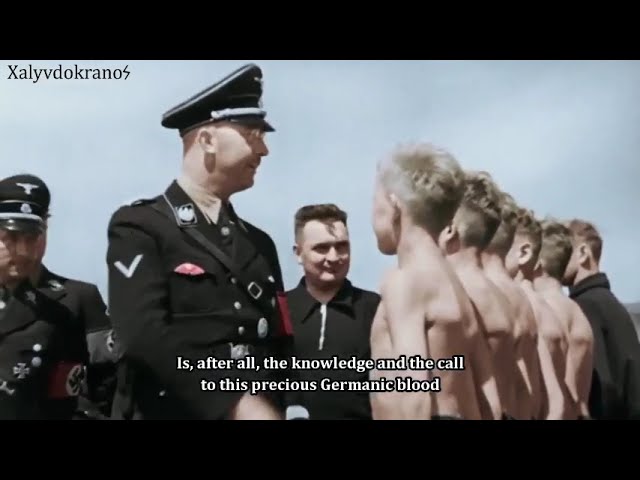
Seven defendants received death sentences. Seven others received sentences ranging from 10 years to life imprisonment.
Under the trial procedures, defendants had the right to appeal to the US military governor for Germany. Several filed such appeals. Karl Brandt’s appeal was particularly elaborate, running to hundreds of pages, arguing again that he’d been a bureaucrat insulated from the actual conduct of experiments.
General Lucius Clay reviewed every appeal personally. He commuted none of the death sentences. In his review notes, Clay wrote that the evidence of premeditated murder was overwhelming and that the defendants had shown no remorse.
The executions were scheduled for June 2nd, 1948 at Landsberg prison, the same prison where Hitler had been incarcerated after the Beer Hall Putsch in 1923 and where he’d written Mein Kampf.
The night before the executions, several condemned men met with a chaplain. Karl Brandt remained defiant to the end, insisting he’d done nothing wrong and that history would vindicate him. Wolfram Sievers was more reflective, admitting in his final statement that perhaps the experiments had gone too far, though he stopped short of expressing actual remorse.
On the morning of June 2nd, 1948, seven men were led one by one to the gallows. The hangman was Master Sergeant John C. Woods, an American soldier who’d also executed the major war criminals condemned at the main Nuremberg trial in 1946.
Karl Brandt was hanged at 1:02 a.m. Wolfram Sievers at 1:30 a.m. The others followed at intervals through the early morning hours. All seven were pronounced dead by US Army medical officers.
Their bodies were photographed for official records, then transported to Munich, where they were cremated. Following standing orders regarding executed Nazi war criminals, their ashes were scattered in the Isar River to prevent graves from becoming neo-Nazi shrines.
Rascher never made it to trial. In 1944, Himmler discovered that Rascher’s wife had faked multiple pregnancies and kidnapped babies to pass off as her own children, apparently to demonstrate her fertility and maintain Himmler’s favor. The scheme fell apart when one of the real mothers came forward.
Himmler was outraged, not at Rascher’s medical experiments, but at the personal deception. Rascher and his wife were both arrested by the SS in April 1944. Caroline was executed in early 1945. Rascher was transferred to Dachau, the same camp where he’d conducted his experiments, and held in the bunker normally reserved for special prisoners.
On April 26th, 1945, three days before American forces liberated Dachau, SS guards executed Rascher along with several other prisoners. Some sources say he was shot, others say he was hanged. The exact circumstances remain unclear.
Rascher died in the same camp where he’d killed hundreds of prisoners. He died at the hands of the same system he’d served, just days before liberation. If the war had ended a week earlier, he would have faced justice at Nuremberg alongside the men whose work he’d pioneered.
Instead, his death at SS hands allowed the other defendants to blame him for the worst excesses. Rascher was a madman, they argued. We didn’t know how far he’d gone. If we’d known, we would have stopped him.
It was a convenient narrative. The monster was dead, killed by his own organization, unable to defend himself or implicate others. And it allowed men like Karl Brandt to maintain until their final moments that they’d been administrators processing paperwork, not architects of atrocity.
The judges didn’t buy it.
The Doctors’ Trial established that just following orders or processing paperwork is no defense for atrocity. It gave us the Nuremberg Code, establishing that the voluntary consent of the human subject is absolutely essential.
Today, every ethics review board and every informed consent form we sign is a distant echo of those judges who looked at the horrors of Dachau and decided never again.