For 1170 miles, across some of the harshest terrain in the American interior, General Oliver Otis Howard chased an enemy he had once tried to protect. Over four months in the summer and fall of 1877, he fought eleven engagements against the Nez Perce, a people he had personally negotiated with in good faith. He rode with one arm, having lost his right arm to amputation at Fair Oaks, Virginia, in June 1862. Every dispatch he sent to his superiors explained why the people he was pursuing had not yet been caught, and every mile made the campaign look less like a military operation and more like a public accounting of everything he believed about himself, his government, and the promises they had made.
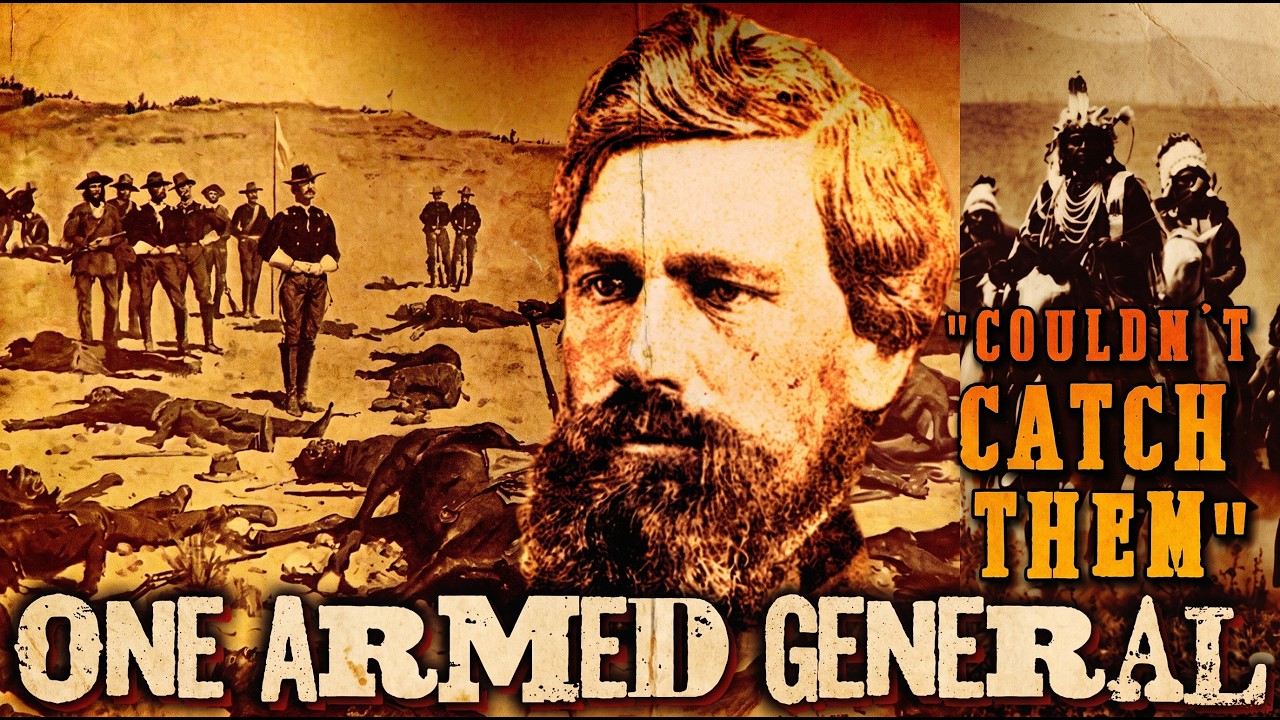
Howard was a decorated West Point graduate, fourth in his class of 1854. He entered the army with the total commitment of a man whose abilities met his calling at exactly the right time. The Civil War found him ready. At Fair Oaks in May 1862, he was wounded twice in the right arm in a single engagement, and the arm was amputated.
He returned to command within months, not because the army demanded it, but because he demanded it of himself. At Chancellorsville, his corps was shattered by Stonewall Jackson’s flank attack, one of the most complete tactical surprises of the war, and the defeat stuck to his military reputation. Yet he continued. He fought at Gettysburg.
He marched with Sherman to the sea. He built a record that reflected a man who understood that the only answer to a bad entry in the ledger was to keep writing until the ledger told a different story. After the war, the government gave him a mission that revealed more than any military order how his superiors saw him. They handed him the Freedmen’s Bureau.
Four million people had been freed from slavery into a freedom that the surrounding society was specifically designed to deny them. The most morally burdensome administrative responsibility of the postwar government was given to the officer whose religious convictions and sincere belief in human dignity made him, in the government’s estimation, the man most likely to treat it as more than a bureaucratic burden. He founded schools. He built hospitals.
He negotiated on behalf of people who had no other negotiator but the silence of a government that had freed them and then lost interest in what that freedom required. He founded Howard University in Washington, a deliberate act of institutional conscience, built to provide what the surrounding civilization was organized to prevent. When the army sent him to command the Department of the Columbia in 1874, he brought every conviction he had gained, and every lesson the Freedmen’s Bureau had taught him, and applied them to the Indigenous peoples of the Pacific Northwest. With the same sincerity he had brought to everything before, he met with the Nez Perce.
He negotiated. He believed, with the full weight of a man whose actions were recorded and documented according to his beliefs, that the government he represented intended to honor the agreements reached. He was wrong, and the 1170 miles that followed were the specific shape that error took when it came to collect what it was owed. On June 17, 1877, at White Bird Canyon in Idaho Territory, Howard had sent Captain David Perry with 99 cavalrymen to locate the non-treaty Nez Perce bands and push them toward compliance.
Nearly 70 Nez Perce warriors met that force in the canyon and drove them from the field with such completeness that the official report later had to be worded in a way that preserved the officers’ careers. Thirty-four soldiers died. The survivors retreated in a manner documented more honestly by field evidence than by official reports. The Nez Perce lost no lives during the battle.
It was the first engagement under Howard’s command and one of the most lopsided defeats the U. S. Army ever suffered in the history of the Indian Wars. The people who had just inflicted that defeat were already moving with their families, horses, elders, children, and wounded toward a destination Howard was now officially and publicly obligated to prevent them from reaching.
He pursued them. He pursued them through the Bitterroot Mountains to Lolo Pass. The terrain was so difficult that his column fell further and further behind with each passing day. The gap between the pursuing force and the pursued widened in a way that reports to his superiors described in the careful language of men who knew their reports were read by people expecting results that were not coming.
He pursued them through the Bitterroot Valley, where local civilians greeted the passing Nez Perce with a warmth never shown to the passing army, which was itself a commentary on the months of pressure and broken promises that no military report directly acknowledged. He pursued them across the Yellowstone plateau, through the national park the nation had created five years earlier as a place of contemplation and wonder, which the Nez Perce crossed in late August while civilian tourists who had traveled great distances to see hot springs instead watched a continental-scale military campaign pass through their vacation too quickly for acquaintance. He pursued them toward the Missouri River as summer turned to fall and nights grew colder, and the distance to the Canadian border, beyond which Sitting Bull and his people already sat beyond the army’s reach, shrank from an abstraction to a distance measurable in days of hard riding. Throughout it all, the Nez Perce stayed ahead of him.
Not by a narrow margin, not by a thin edge of desperate people relying on reserves of endurance that would eventually run out. They advanced with a consistency and tactical skill that the official reports continued to refuse to state plainly: the force Howard was chasing was being managed by first-rate military minds. Minds that read terrain, managed logistics, and made decisions under pressure with an ability the army’s own officer corps could not reliably match under the same conditions. Howard was a genuinely distinguished soldier.
He had proven it over four years in the most demanding military conflict the continent had seen. And he was consistently outmatched by his opponents for four months and eleven engagements across 1170 miles of the American interior, outmatched by people whose land was being taken from them and who had decided, with the clarity that military desperation sometimes produces, that they would not surrender that land without making the invaders pay for every mile. His letters during those four months are documents worthy of close reading. They are the letters of a man maintaining the official discipline required by his rank against the growing gap between what he had believed when the campaign began and what the campaign was demonstrating every passing week.
They do not collapse into self-pity. They do not reconsider the official position or acknowledge the private calculations the miles and engagements and insufficient results were constantly imposing on him. They maintain the professional tone of an officer reporting to superiors who demand progress and are not receiving it at the required pace. But beneath that tone, in specific word choices, in glimpses of admiration that occasionally surface in his descriptions of Nez Perce tactical decisions, and in the precision with which he documents what was done to him and his command and why it worked, emerges a portrait of a man conducting a continuous internal examination of the gap between what he had told the Nez Perce about the reliability of the government he represented and what that government was practically demonstrating about its credibility.
He had told them promises would be kept. He believed it when he said it. The four months that followed were proof that believing something sincerely and being right about it are entirely different things, and that a man of sincere conviction can be sincerely, completely, and consequentially wrong. Colonel Nelson Miles finished it.
A forced march from Fort Keogh intercepted the Nez Perce at the Bear Paw Mountains on September 30, 1877. Forty miles from the Canadian border. Forty miles from Sitting Bull. Forty miles from the end of an extraordinary journey of 1130 miles that was heading toward five days of fighting.
Chief Joseph surrendered on October 5. Howard arrived in time to witness the surrender that Miles received. He arrived as a general who had chased his enemy for 1170 miles and attended only the last forty. The concrete composition of that arrival, the man who had led the pursuit present at its end as an observer rather than its architect, needed no narration to convey its meaning to anyone who had followed the previous four months.
Howard lived until 1909. He wrote his memoirs. He continued the public Christian life that had defined him since before the war that took his arm at Fair Oaks. He wrote about the Nez Perce with the sober admiration of a man who had spent enough time trying to catch them to understand precisely what he had been trying to catch.
Their military development, the quality of their leadership, the discipline of a people moving through impossible terrain under unbearable pressure with a cohesion that fully resourced armies with institutional support struggle to maintain. He expressed his belief that they had been wronged. The records indicate he truly meant it. What the official structures of memoirs and public speeches could not fully contain was the internal weight of four months spent riding toward an accounting that no amount of military achievement could resolve in his favor.
The Freedmen’s Bureau. Howard University. The negotiations conducted in what he understood, and what the records sincerely indicate was, good faith. The entire structure of a life built on the assumption that a man could serve his government and serve justice without the two commitments eventually diverging onto conflicting paths.
The Nez Perce War was the moment that assumption was tested across 1170 miles of the American interior. It was a test conducted in the currency of terrain and engagement, of documented and undeniable failure to catch people who had every reason to be caught and refused to be. That test returned a verdict that Oliver Otis Howard’s convictions were not prepared to receive, and his sincere records of integrity could not replace with something more comfortable. He was a good man in the service of a policy that goodness alone was not enough to save.
The frontier produced that combination regularly and never fully resolved it. Oliver Howard was its most complete expression. A man of documented virtue, genuine failure, and the particular devastation of someone who looked at what his country was doing and believed, with everything his life had given him reason to believe, that he was on the right side of it. He was on the right side of the man he had made himself.
But he was on the wrong side of everything else. And the 1170 miles between those two positions is the truest distance the American frontier ever produced.