A letter written by Confederate General John Bell Hood ten years after the Battle of Gettysburg offers a rare and dramatic firsthand account of the fighting on July 2, 1863, including a direct claim that he begged to change the attack plan and was refused. The letter, addressed to his former superior, General James Longstreet, was composed in 1875 and paints a vivid picture of the battlefield, the decisions made, and the devastating cost of the assault. By the time Hood wrote the letter, Longstreet had become a controversial figure among former Confederates due to his post-war political stance. Seeking Hood’s personal recollections of the battle, Longstreet prompted a response that details the movements and critical choices made on the second day of the fight.
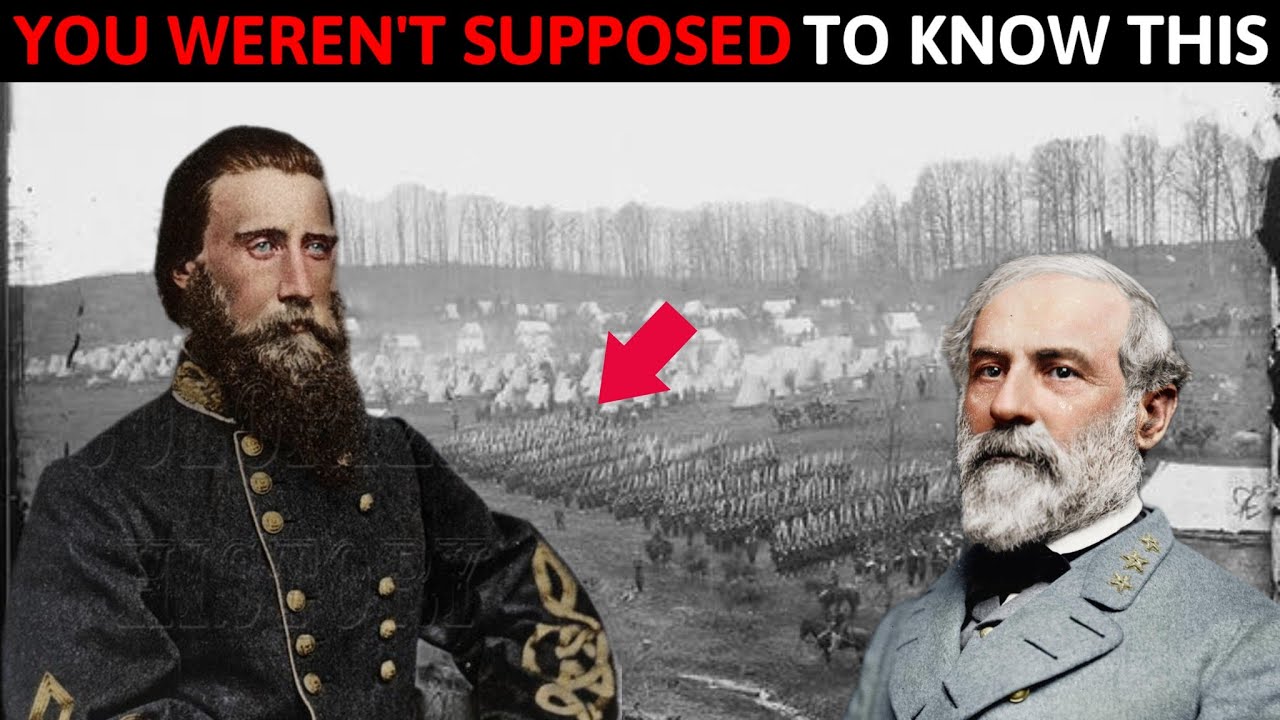
Hood’s account focuses heavily on his division’s attack toward Little Round Top, an action that became one of the most famous and deadly episodes of the entire Civil War. Hood described arriving at the high ground near Gettysburg on the morning of July 2 and positioning his men in a meadow to wait for orders. He recalled seeing General Robert E. Lee and General A.
P. Hill studying the Federal lines. According to Hood, Lee appeared hopeful but also lost in deep thought about the coming fight. Hood wrote that Lee expressed a clear desire to strike the enemy that day, telling him, “The foe waits here.
Unless we break them, they’ll break us. ”
Hood noted his own hesitation, preferring to wait for the arrival of General George Pickett’s division before committing to an attack. He quoted Longstreet as saying the general was restless and wanted an assault, but Longstreet reportedly refused to move without Pickett. Hood claimed he never liked entering a fight unprepared, saying, “I never marched to war half booted.
”
The situation changed near 3:00 in the afternoon. With Pickett’s men still not in position, the decision was made to move forward. Hood’s division was ordered to advance along the Emmitsburg Road, and he sent pioneers ahead to break down fences and clear the route. His instructions were to cross the road, form battle lines, and prepare to charge.
Before launching the attack, Hood sent Texas scouts forward to locate the far left edge of the Federal line. Their report changed his understanding of the situation. The scouts found that the Federal flank was anchored on Round Top mountain, with open ground that would have allowed Confederate forces to move through wooded pasture, swing around the mountain, and strike the enemy from the side and rear. They also reported that Federal wagons were packed tightly behind the lines, vulnerable to such an approach.
When Hood reached the Emmitsburg Road, he placed two artillery batteries and opened fire. The enemy’s return fire quickly exposed their positions. The Federal left flank sat near Round Top, with their lines bending backward to form a concave curve. Hood observed a body of enemy troops camped ahead of the main force, positioned between the road and the mountain, standing ready on a slope near an orchard.
Hood concluded that following the direct order to charge up the Emmitsburg Road would mean first pushing back this forward line. He also saw that the base and slopes of Round Top were covered in massive stacked boulders, creating narrow passes that would break up his ranks as men climbed. He believed his division would face murderous volleys from the main Federal line on the high ground, with crossfire from the front, sides, and rear. He called the position nearly unassailable, writing that the enemy could repel an attack simply by tumbling boulders down the hill.
Convinced that a direct assault would be disastrous, Hood sent an aide to Longstreet requesting permission to move around Round Top and strike the Federal flank instead. The response was swift and firm: “General Lee orders attack up Emmitsburg Road. ” Hood sent a second officer, again stressing his fear of failure and repeating his request to flank the position. He received the same reply.
A third time, he dispatched an aide, Colonel Harry Sellers, urging Longstreet to come see the ground himself. Colonel Sellers returned with the same order: “General Lee orders attack up Emmitsburg Road. ”
Hood described this as the only time during the war that he protested an order. He wrote that he then ordered his lines forward.
As the troops advanced, Longstreet approached him directly. Hood repeated his regret about the denied flanking maneuver, and Longstreet replied, “We must follow General Lee. ”
Hood pressed on under heavy fire. About twenty minutes after reaching the orchard, he was struck by a severe wound to his arm and had to leave the field.
Carried off on a stretcher, he felt deep anguish for his men, whom he called among the finest in the army. He wrote that he firmly believed that had he been allowed to flank Round Top, his division would have taken the position and crushed the enemy. The letter was written a decade after the battle, which raises questions about the reliability of memory. Hood did not record his thoughts immediately after the fighting, and details may have blurred with time.
Yet the account remains a valuable piece of Civil War history, offering insight into the mind of a Confederate general during one of the war’s most critical hours. John Bell Hood died in New Orleans in 1879, four years after writing the letter. His actions at Gettysburg, particularly the assault near Devil’s Den and Little Round Top, remain central to the study of the battle and its lasting impact on American history.