The ground between Seminary Ridge and Cemetery Ridge was not just open ground. It was a killing ground, a gently undulating bowl of Pennsylvania farmland that offered no cover, no defilade, and no mercy to the men who were ordered to cross it. The decision to send them into that void was not made in a vacuum of ignorance, but in a fortress of miscalculated confidence, a belief system built on two years of improbable victories that had calcified into a fatal certainty.
The story of how Pickett’s Charge became synonymous with military suicide is not a story of Confederate stupidity, but of Confederate arrogance, a tale of how the best tactical mind in the Army of Northern Virginia looked at the plan and saw only ruin, while the commanding general saw only the ghost of Chancellorsville.
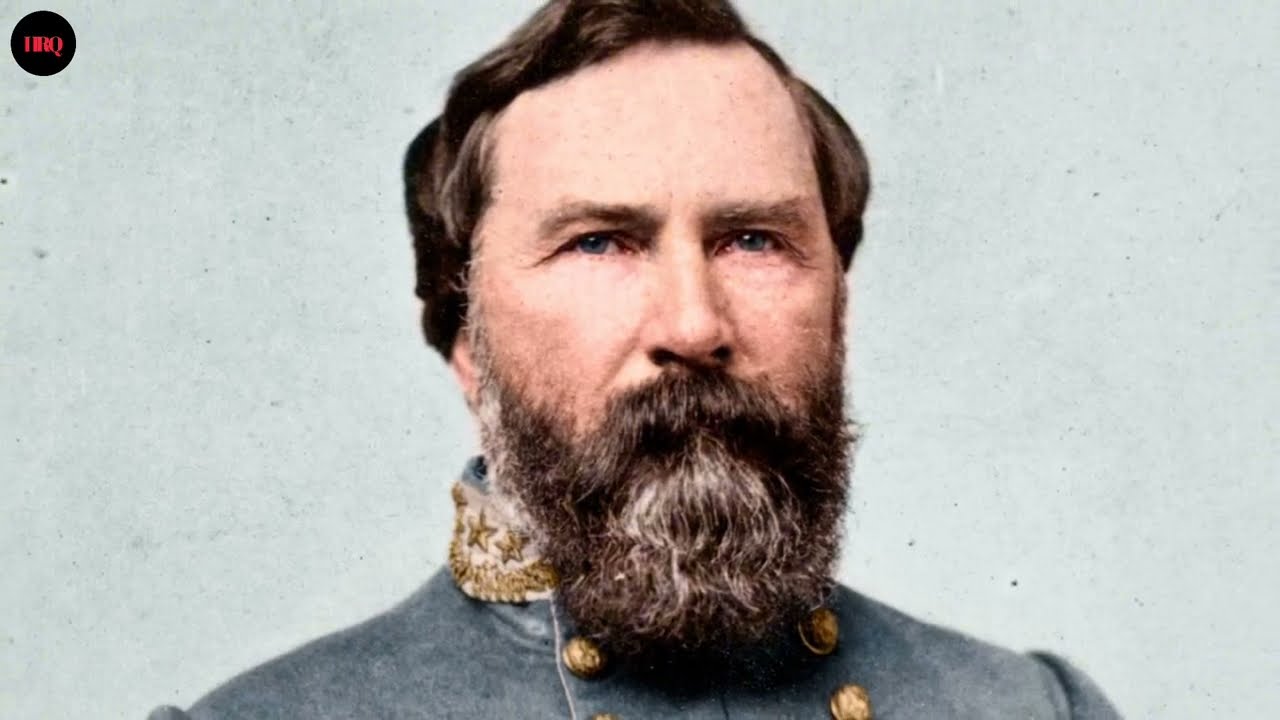
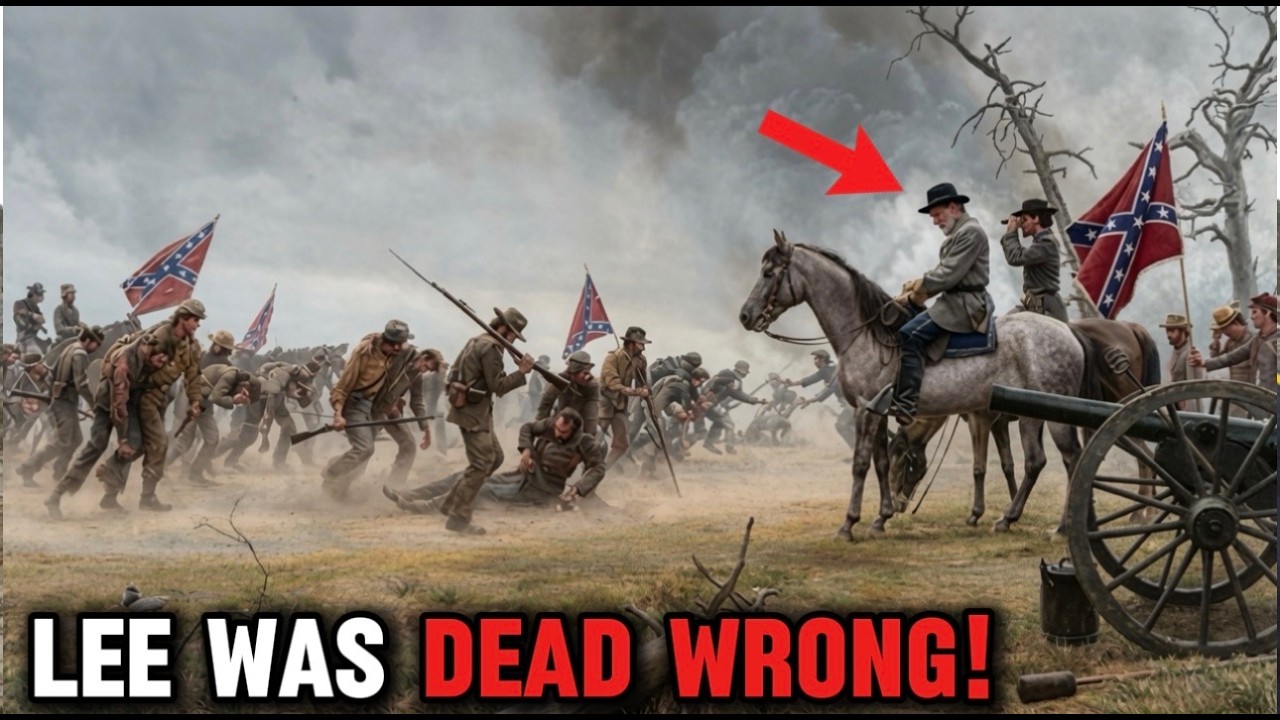 The tragedy began not with the thunder of 170 guns, but with a quiet, desperate conversation on the morning of July 3rd, 1863. James Longstreet, Lee’s Old War Horse, the man whose tactical acumen had saved the army on more than one occasion, stood before his commanding general and begged him to reconsider. He had been arguing against the assault since the previous night.
He reiterated his position at dawn with the flat, unshakeable certainty of a man who has exhausted every formal argument and now speaks only from the bone-deep knowledge of a soldier who understands the mathematics of war. He told Lee, with brutal clarity, that no 15,000 men born of woman could take the Union position on Cemetery Ridge by frontal assault. He did not say it was risky.
He said it was impossible. Lee heard the words, looked at his subordinate, and ordered him to proceed. The machinery of destruction was already in motion.
To understand how experienced, serious men arrived at such opposite conclusions, one must reconstruct what Lee believed he knew on that pivotal morning. The Army of Northern Virginia had stumbled into Gettysburg, not by design, but by a collision of advanced infantry and Union cavalry on July 1st. The fighting escalated with a ferocity that neither commander had intended, drawing both armies into the ridges surrounding the small college town.
By the end of that first day, the Confederates had driven the Union 1st and 11th Corps through the streets and back to the high ground of Cemetery Hill. To Lee, this was not a defensive victory; it was an opportunity. He saw a Union army reeling, and he believed that one more coordinated, powerful blow could shatter it completely.
The fighting on July 2nd seemed to validate his aggressive instincts. Lee attacked both Union flanks simultaneously. On the right, Longstreet’s men drove deep into the Union left at Little Round Top, Devil’s Den, and the Wheatfield, coming agonizingly close to breaking the line.
On the left, Ewell’s corps hammered Culp’s Hill. The near misses were spectacular. Gouverneur Warren’s last-minute reinforcement of Little Round Top prevented a catastrophic collapse.
Dan Sickles’ unauthorized advance to the Peach Orchard created a gap that the Confederates nearly exploited. The 1st Minnesota’s suicidal charge, which sent 262 men against a Confederate brigade to buy eight minutes of time, demonstrated just how thin the Union defense had become. From Seminary Ridge, Lee watched his men reach the Union lines, reach the crests, and penetrate the center, only to fall back for lack of coordination.
He did not see a flawed concept. He saw a sequencing problem. The attacks had gone in piecemeal, giving Meade time to shift reserves.
A single, coordinated, massive assault on the center, he reasoned, would prevent that lateral movement and find the break that had been so close the day before.
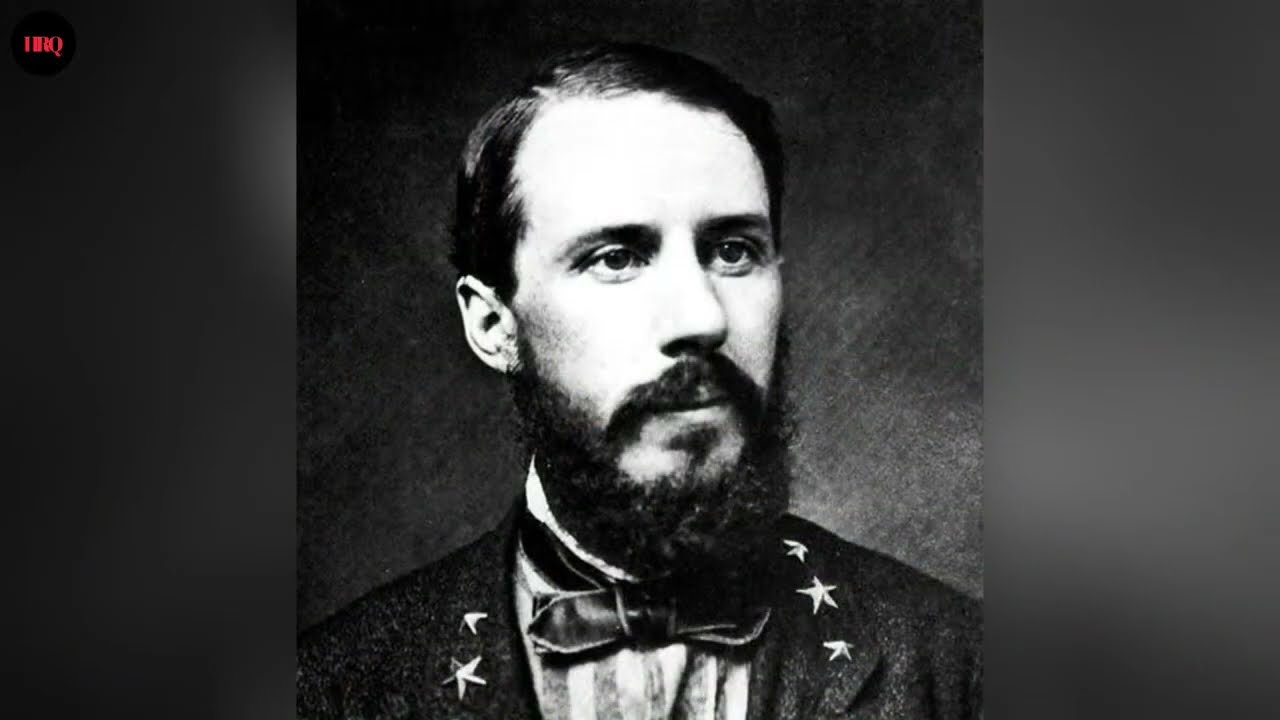
This analysis was not unreasonable, given what Lee could observe. But he was blind to what was happening on the other side of the field. George Meade, the newly appointed Union commander, was not a man prone to panic.
He spent the night of July 2nd doing exactly what a careful commander does: he examined his line, identified the vulnerabilities, and reinforced them. The center of the Union position, Cemetery Ridge, had been stripped of troops to feed the flanks. On the morning of July 3rd, Meade rebuilt it with a vengeance.
He moved artillery forward and positioned fresh infantry brigades behind the stone walls and wooden fences along the crest. He massed his artillery reserve in positions from which it could sweep every acre of ground the Confederates would have to cross. Brigadier General Henry Hunt, the Union’s Chief of Artillery, placed his guns with the precision of a man who intended to demonstrate, completely and finally, what artillery could do to infantry caught in the open.
 Hunt understood something that morning that the Confederate high command had failed to account for: the ground in front of Cemetery Ridge was a bowl, slightly lower in the center than at either end, which concentrated fire from multiple angles onto anything moving through it. The Union center on the morning of July 3rd was the strongest position on that field. Lee was planning to walk 12,500 men directly into it.
The Confederate plan was built on a single, fragile assumption: that the artillery could pave the way. Before the infantry moved, approximately 170 Confederate guns would conduct the largest bombardment in the history of the Western Hemisphere, firing simultaneously against the Union center. The specific purpose was to destroy the Union artillery and break the morale of the infantry behind the stone walls.
If the bombardment succeeded, the assault would be costly but not suicidal. The bombardment failed on multiple levels simultaneously. The first failure was physics.
The Confederate guns were firing nearly a mile across open ground at targets obscured by smoke and terrain. At that range, with 1863 artillery technology, genuine suppression was not achievable. The rounds that landed on Cemetery Ridge hit the ground hard, created noise and smoke, and largely overshot the Union positions, landing instead in the rear areas where ammunition trains and medical personnel were working.
The Union soldiers pressed against the forward slope were actually sheltered by the very crest they were defending.
The second failure was in how the bombardment was read. Colonel Edward Porter Alexander, the Confederate artillery officer responsible for giving the signal for the infantry to advance, was watching the Union artillery positions for evidence of damage. He observed Union batteries being withdrawn from the line, which seemed promising.
What he did not know was that Henry Hunt had ordered those batteries to conserve ammunition and reposition them in defilade, where they would be ready to fire on the advancing infantry. The withdrawal was tactical preparation, not evidence of damage. Alexander interpreted it as success and sent the signal for the infantry to move.
The third failure was ammunition. The Confederate guns had been burning ammunition for two full days and were critically short. When the infantry advanced and the Union artillery reopened, the Confederate guns that were supposed to advance with the assault and continue suppressing fire could not function in that role.
They had spent themselves in a bombardment that had not achieved its purpose. The infantry went forward without the rolling support the plan required.
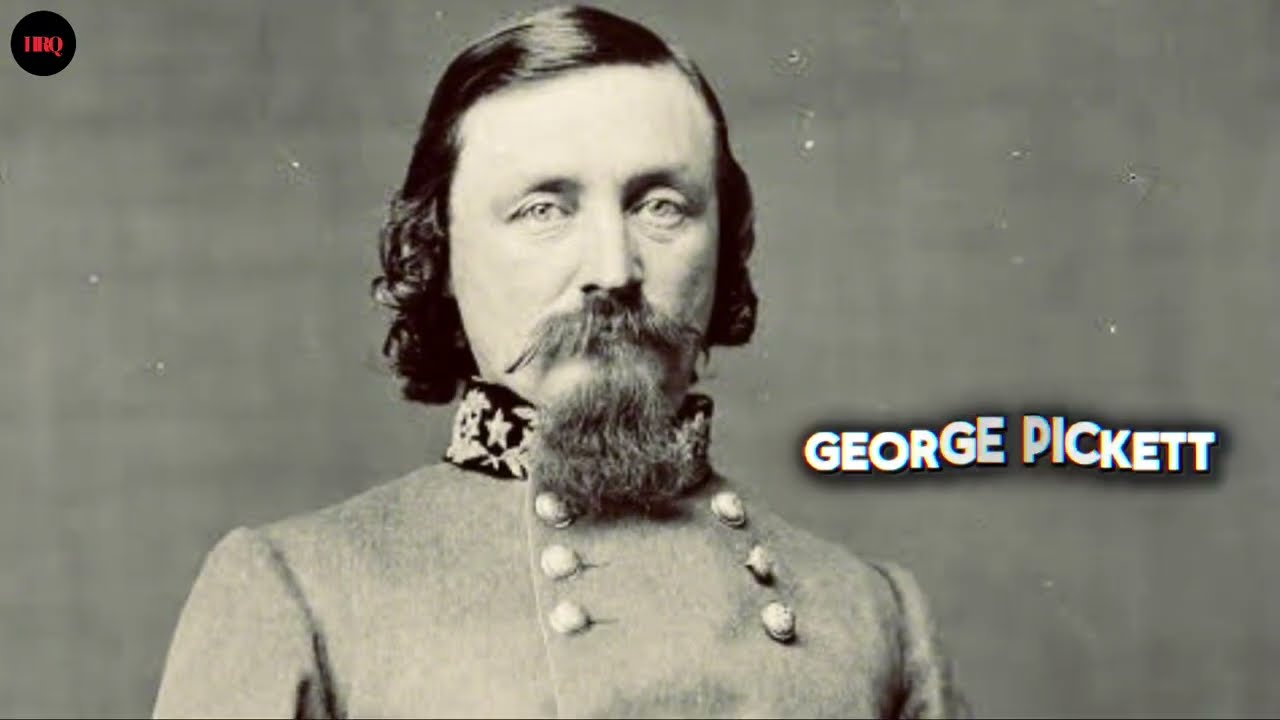
George Pickett’s three Virginia brigades formed the right side of the assault. Pettigrew’s and Trimble’s divisions made up the left. The formation stretched approximately a mile from flank to flank.
Between Seminary Ridge and Cemetery Ridge lay roughly a mile and a quarter of open farmland, a gently rolling plain that offered no meaningful cover, no ravines, no wood lots. The Union artillery that had not been suppressed was waiting for them. The moment the Confederate lines stepped off, Henry Hunt’s guns opened.
Not the degraded fire of a beaten-down artillery arm, but the coordinated fire of batteries that had been carefully conserving ammunition for exactly this moment. At long range, Union guns fired solid shot and explosive shell rounds designed to tear through formed ranks, each one removing men in groups. As the distance closed, batteries switched to canister, tin cylinders packed with iron balls that turned each cannon into an enormous shotgun.
 At close range, canister fire did not wound infantry formations. It removed sections of them.
The Confederate formations had to cross several wooden rail fences as they moved, forcing the men to break stride and climb over while under fire. Each fence was a pause, and each pause was a moment when the artillery could find them stationary. Officers on horseback tried to maintain the alignment, riding along the face of the assault to dress the lines back into order after each volley hit.
The smoke from tens of thousands of rifle and artillery rounds thickened across the field until men 20 yards apart could barely see each other, navigating toward the Union position by sound and by landmarks. Still, they came. This needs to be stated plainly and without qualification.
The men of Pickett’s division and Pettigrew’s and Trimble’s commands walked into that fire and did not stop. They closed ranks when gaps opened. They advanced at assault pace even as their formations were being reduced with every step.
Battle flags went down and were picked up by the next man and carried forward. Whatever had gone wrong in the command decisions that brought them to that ground, the soldiers crossing it demonstrated a quality of personal courage that nearly everyone who witnessed it struggled afterward to describe. Union soldiers who shot them down wrote about it in their letters with a mixture of grief and disbelief that lasted for the rest of their lives.
The left side of the Confederate formation collapsed early. Pettigrew’s and Trimble’s men had fought hard on July 1st and were attacking again after less than 48 hours of rest. Worse, they faced Union forces on their 𝓮𝔁𝓹𝓸𝓼𝓮𝓭 left flank that began hitting them with enfilading fire before they were halfway across the field.
George Stannard’s Vermont Brigade, nine-month volunteers who had never fought in a major engagement before Gettysburg, executed a flanking movement that tore into the Confederate right flank at the worst possible moment. The left side of the assault broke apart under combined frontal and flanking fire before it reached Cemetery Ridge. Pickett’s division on the Confederate right made better progress.
They angled inward toward the angle of a slight jog in the stone wall on Cemetery Ridge and kept their formation more intact than the men to their left. Richard Garnett rode forward on horseback because a previous injury left him unable to walk the distance. He was killed before reaching the wall.
James Kemper was shot from his horse, badly wounded. Lewis Armistead, 56 years old, put his black hat on the tip of his sword so his men could follow it in the smoke and noise and led what remained of the advance to the wall. They went over it.
For somewhere between 15 and 20 minutes, Confederate soldiers stood on the Union side of the stone wall. They captured federal guns. They pushed Union infantry back from the crest.
Armistead reached one of the captured cannons and put his hand on the barrel. Then the Union reinforcements that Meade had positioned the night before arrived from three directions. The men who had broken through the wall were surrounded, shot, or taken prisoner.
Armistead collapsed mortally wounded next to the gun he had touched. The breakthrough had no support behind it. The assault had been nearly consumed in the crossing, and there was no way to exploit even the ground it had briefly held.
 Within minutes, the Confederate soldiers who had reached Cemetery Ridge were dead, wounded, or running back across the field. What came back to Seminary Ridge was a fraction of what had gone forward. George Pickett’s division had ceased to exist as a fighting formation.
Of the 15 brigade and regimental commanders who led the assault, every single one was killed, wounded, or captured. Some regiments returned with fewer than 50 men. The field between the two ridges was covered with the dead and wounded of an army that had walked into a position its own artillery was incapable of suppressing, that was hit from the flanks before it reached its objective, and that had no mechanism for holding any ground it might seize.
Pickett himself rode back with tears on his face by multiple accounts, looking for men who were not there to be found. Pickett rode to Lee and told him his division was destroyed. Lee told him to rally his division to repel a Union counterattack.
Pickett said he had no division. That exchange, preserved in various forms across multiple accounts, close enough to verified to carry the weight of truth, says something essential about what had just happened. Lee had committed so completely to his reading of the situation, so fully to the belief that his army could break any position the Union placed before it, that the actual results kept arriving as a kind of shock rather than confirmation of what Longstreet had been telling him since the previous day.
Longstreet’s objections need to be understood accurately because they are sometimes misread as the reluctance of a cautious general or, in the more hostile interpretation, deliberate delay designed to sabotage the attack. The historical record does not support either reading. What Longstreet told Lee was not that the assault was risky.
He said it could not succeed under any circumstances. His argument was not about timing or troop positioning. It was arithmetic.
The Union position on Cemetery Ridge was too strong. The approach offered no cover. The Confederate artillery could not suppress Union guns at that range.
An infantry assault across a mile of open ground against a prepared position held by equal numbers was not a calculated risk. It was a certainty of failure.
Longstreet was right in every particular. He knew he was right. He had to order the assault anyway.
That is among the stranger facts embedded in this story, that the officer who supervised the charge believed from the beginning it would fail. That his belief was entirely correct. And that his post-war writings show a man who spent decades turning over the same question, whether a different argument made differently might have changed Lee’s mind.
It probably could not have. Lee’s confidence in his army in the summer of 1863 had been built by two years of victories that from inside the Confederate command structure seemed to validate exactly this kind of audacious push. Chancellorsville, fought just eight weeks before Gettysburg, had produced one of the most improbable Confederate victories of the war, an army half the size of its opponent, splitting its own force in the face of the enemy, attacking from two directions at once, and winning.
It worked because Lee pushed when conventional military judgment said do not push. Second Manassas, the Seven Days, Fredericksburg, the Army of Northern Virginia had a record of doing what nobody expected it to do, and that record had calcified into a belief within the Confederate high command that aggressive action would find a way through almost any difficulty. Gettysburg was the shadow side of that temperament.
The same willingness to ignore conventional limits that made Lee extraordinary when his gambles paid off made him catastrophically wrong when the conditions did not support the gamble. Cemetery Ridge was not a position that audacity could overcome. It was a position that physics and arithmetic had made unassailable by the means Lee had available.
The charge that history remembered under George Pickett’s name was not the beginning of the end of the Confederacy because of the courage of the men who crossed that field, but because of the certainty of the man who ordered them to do it.