In the spring of 1933, Dillard Darby was eating lunch at the Brooks Boarding House in Ruston, Louisiana, when he looked out the window and saw a man get into his Ford V8 and drive off with it. Darby had left the keys in the ignition, and the car was only seven days old. A woman named Sophia Stone, who was also dining there, offered Darby her car to chase the thief, but only if she could come along.
The car thief was W.D. Jones, and he was driving for Clyde Barrow. The Barrow gang had planned to use Darby's car as a getaway vehicle for a bank robbery in town, and they did not appreciate being pursued. After Darby and Sophia lost sight of the stolen car, they turned back toward town. Clyde spun his own vehicle around, cut them off, and forced them to stop in the middle of the road.
Clyde and his older brother Buck jumped out with guns drawn. Also in the car were Buck's wife Blanche, Bonnie Parker, and the gang was missing only Raymond Hamilton. Clyde demanded to know why they were following the stolen car. Darby explained that his brand new car had just been stolen. Clyde struck Darby on the head with the butt of his pistol, then forced both captives into the back seat of his car.
Clyde's initial thought was to shoot them there on the road, but he changed his mind. Instead, the gang drove around with their two kidnapped victims before deciding to let them go. Before releasing them, Bonnie asked Darby what he did for a living. When he told her he was a mortician, she laughed and made him promise that he would embalm her and Clyde someday. Darby agreed, no doubt willing to say anything to survive. The gang dropped the pair off in Arkansas, less than an hour's drive from where the ordeal began, and Buck gave Darby five dollars for a bus ride home.

Thirteen months later, in Bienville Parish, Louisiana, near Gibsland, Ivy Methvin made a deal to save his son Henry, who was a member of the Barrow gang. In the process, he sold out Bonnie and Clyde. Frank Hamer and his posse, including Sheriff Henderson Jordan and Ted Hamilton, set up an ambush using Methvin's truck as bait. On May 23, 1934, they opened fire on the outlaws' car, killing both Bonnie Parker and Clyde Barrow instantly.
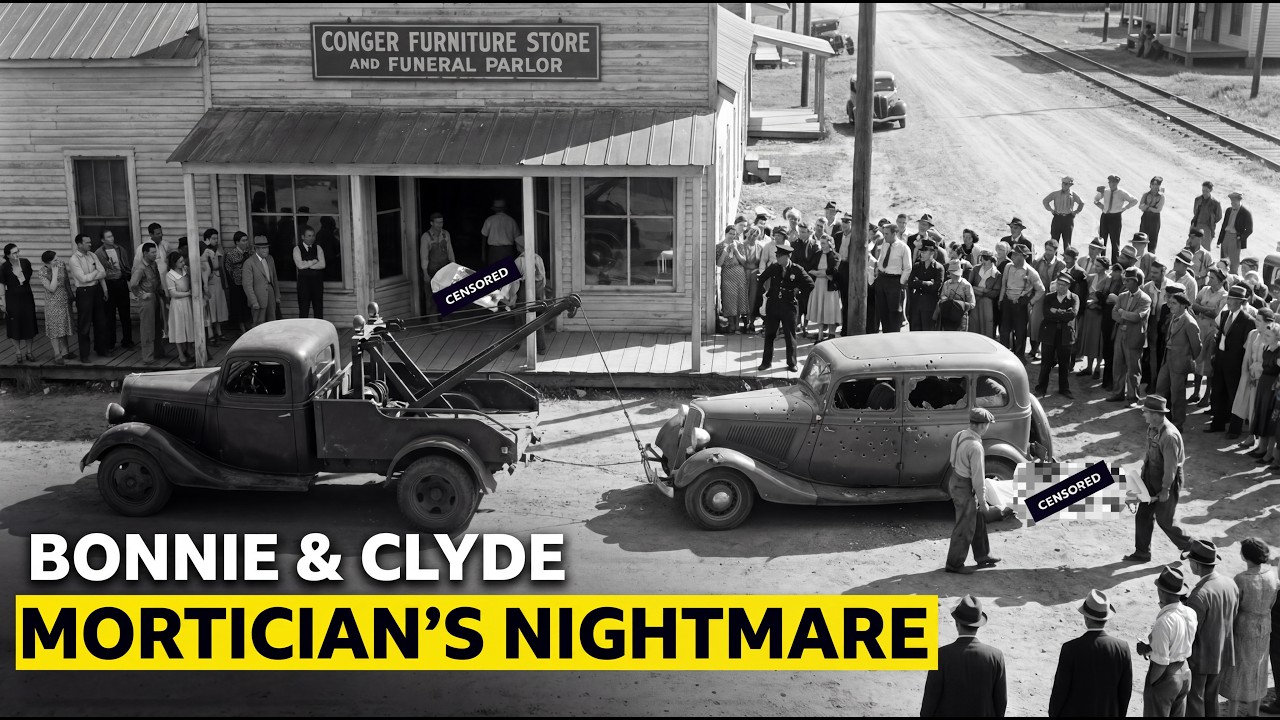
The bodies were taken to Conger Furniture Store and funeral parlor in Arcadia, Louisiana. The mortician in charge was C.F. Boots Bailey, and standing beside him was none other than Dillard Darby, the man Bonnie had made promise thirteen months earlier. Bailey later described the scene as a serious problem. The two bodies were riddled with bullet holes, and when an embalmer pumps preservative fluid into a body, it relies on the vascular system to carry it through. With that many wounds, the vascular system was destroyed. The fluid went in and simply ran back out, like trying to fill a bucket that had been hit with a shotgun.
Word of the deaths spread fast. Arcadia had a population of about 2,000 people, and within hours, that number reportedly swelled to 12,000. People arrived by horseback, car, and plane. The price of a bottle of beer jumped from fifteen cents to a quarter, and ham sandwiches sold out entirely. Clyde's father arrived to identify the bodies. After seeing them, he walked into the front showroom, sat down in a rocking chair that was still for sale, and cried.
After Bailey and Darby did what they could in Arcadia, the bodies were transported to Dallas. Clyde was taken to the Sparkman-Holtz Brand Funeral Home, and Bonnie was taken to the McCamy-Campbell Funeral Home. The morticians' notes from Dallas describe hours of grueling work on Bonnie's body. It took two hours just to pick dirt and rocks out of her hair before it could be washed. She had a tattoo of two hearts on her right leg, one spelling Roy and the other spelling Bonnie. All the embalming fluid that had been used in Arcadia had leaked out. The Dallas embalmer spent several hours bathing her. Some of the dried blood had to be scraped off, and gold dust was used to remove the rest.
That night, they noticed a condition called skin slip, where the outer layer of the skin begins separating from the body because preservation has failed. By the next morning, she had started to smell and turn dark. By the last day of the viewing, the notes described her as rotten. The odor was awful. Bonnie had taken more rounds than Clyde, and her wounds were worse. Her face was badly damaged, but the embalmers rebuilt it to the point where you could hardly tell. Only one bullet had gone through her brain, but several others had grazed her head, leaving three large holes in her scalp that did not penetrate the skull. Her left eye was badly blackened, so the embalmer put eye shadow on the other eye to make it match and disguise the damage.
The funerals were a massive spectacle. Around 10,000 people viewed Clyde's body. For Bonnie, the number was closer to 20,000, with some estimates as high as 40,000. The largest floral tribute came from a group of Dallas city newsboys. The sudden deaths of Bonnie and Clyde sold half a million newspapers in Dallas alone. It was the biggest marketing event of the century.
Through all the crowds, chaos, and spectacle, there was still a man in the back of that furniture store in Arcadia who had done the work nobody else wanted to do. A man who, thirteen months earlier, had been eating lunch when his car was stolen, got kidnapped, got pistol-whipped, and got shoved into the back seat of an outlaw's car. A man who had a woman laugh in his face and tell him he would embalm her later. And he did. Bonnie Parker got exactly what she asked for. She made Dillard Darby promise, and Dillard Darby kept that promise. Neither of them likely thought it would actually happen, but in the public enemy era of John Dillinger and Pretty Boy Floyd, weirder things had happened.