A rare artifact has connected a modern-day history enthusiast directly to one of the most critical moments of Pickett’s Charge at Gettysburg. The item in question is a signed bank check from 1890, bearing the autograph of George G. Benedict, a Medal of Honor recipient from Vermont who witnessed General Winfield Scott Hancock being wounded on July 3, 1863. The document was brought back to the exact spot on the battlefield where Benedict stood during the fighting.
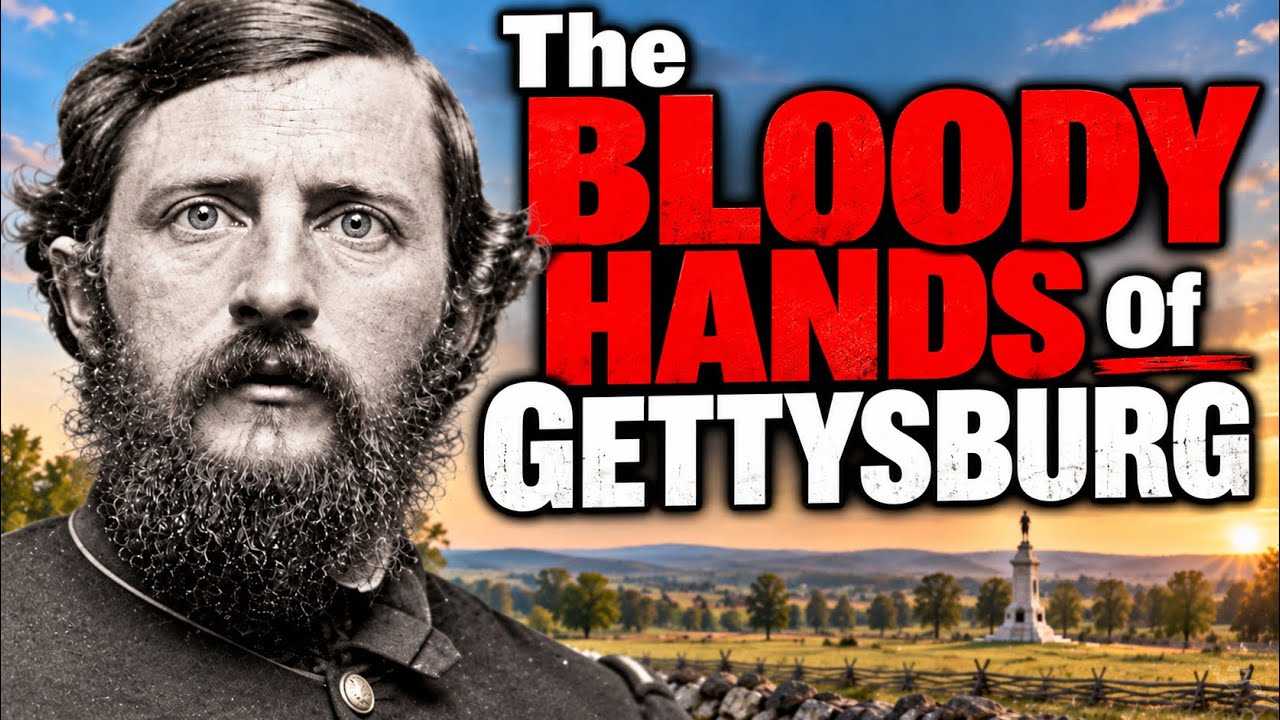
George Grenville Benedict was born on December 10, 1826, in Burlington, Vermont. He attended the University of Vermont, where he earned degrees with high honors, eventually receiving a master’s degree in 1850. He married Mary Anne Kellogg in 1853 and was an active member of several academic societies before the Civil War broke out. During the war, Benedict served as an aide-de-camp, working alongside the 13th, 14th, and 16th Vermont regiments on the Gettysburg battlefield.
His role involved relaying orders along the Union line while the Confederates advanced across the open fields toward the Emmitsburg Road. Although the 12th Vermont, the unit Benedict was formally attached to, was assigned to guard wagon trains and did not take part in the frontline fight, Benedict himself was present for the action. He watched as Confederate troops under General J. Johnston Pettigrew became bogged down while climbing the fences along the Emmitsburg Road, where Union artillery opened fire with devastating effect.
When the Confederates reformed and continued their advance, the 13th and 16th Vermont moved out from their position, swung toward the Confederate flank, and struck hard. The flank attack was brutal and effective. Confederate soldiers were killed or wounded in large numbers, and many turned back toward their starting positions rather than continue into the murderous fire. Vermont troops captured three Confederate battle flags, took numerous prisoners, and inflicted heavy casualties.
Their own losses were significant, with roughly 355 men killed, wounded, or missing during the fighting at Gettysburg. It was during this chaotic period that Benedict witnessed the wounding of Major General Winfield Hancock. Benedict was standing nearby when a bullet or missile fragment struck the wooden portion of Hancock’s saddle near his thigh. The impact drove a nail and a piece of wood into the general’s leg.
Hancock, believing the wound was fatal, called out for a tourniquet. As he slumped and began to fall from his saddle, men on the ground, including Benedict, rushed forward and pulled him down safely. The officers attending to Hancock examined the wound and initially found only a bent nail from the saddle, reassuring the general that the injury was not as severe as he feared. But further examination revealed a piece of wood embedded in the leg.
A tourniquet was applied to stop the bleeding. Benedict later wrote to the press describing the scene, recalling that his hands were stained with General Hancock’s blood. With no water nearby to wash them, he continued his duties on the battlefield with the general’s blood on his hands and arms. The danger was not limited to the enlisted men or junior officers.
Benedict’s own superior, a general on the field, was later struck by a round shot fragment that embedded itself three inches into his thigh, forcing him to be carried from the field. Benedict’s letters back to Vermont newspapers provided a detailed account of the battle from his perspective, allowing later generations to reconstruct the role the Vermont regiments played in stopping Pickett’s Charge. Another notable figure connected to the Vermont troops was Lieutenant Stephen F. Brown of Company K.
During the march to Gettysburg, Brown ordered a soldier guarding the unit’s water supply to step aside so he could fill the canteens. This violated a direct order requiring the men to move at all hazards without stopping for water. As a result, Brown was placed under arrest. In that era, being under arrest meant being stripped of weapons but allowed to roam the field freely, though not permitted to fight.
Brown refused to sit out the battle. He joined his men on the line, armed only with a camp hatchet, and fought until he captured a sword from a Confederate officer. After the war, Brown’s men wanted his statue on the Gettysburg battlefield to include the hatchet. The monument commission objected, considering it inappropriate.
Vermont eventually got its way, and the hatchet was placed at the base of the statue. The inscription on the monument recounts Brown’s arrival without a sword and his use of the camp hatchet until he captured one from a Confederate officer. The Confederate forces that crossed the fields that day suffered catastrophic losses. Estimates suggest that out of roughly 13,000 to 15,000 men who took part in the charge, about 6,000 were left dead or wounded on the field.
The destruction was so severe that Confederate officers reportedly began referring to Robert E. Lee as a butcher, a sharp contrast to the reputation usually assigned to Ulysses S. Grant. Pickett himself was emotionally devastated by the carnage and later insisted that Lee had butchered his men.
Benedict walked the field after the fighting and described scenes that rivaled the aftermath of Antietam. He saw hundreds of dead Confederate soldiers, dead horses scattered across the roads, and Union casualties as well. He wrote that the old photographs of Antietam were nothing compared to what he witnessed at Gettysburg. After the war, Benedict continued a life of public service.
He was elected to the Vermont Senate, managed the state’s Free Press newspaper, and remained active in civic and intellectual circles. He passed away in 1907, not long after receiving the Medal of Honor. The signed check from the National Bank of Burlington, Vermont, where Benedict worked, became a collector’s item over the years. The owner of the artifact, who brought it to the battlefield, described it as one of his most treasured possessions, not for its monetary value but because it connects directly to an officer whose actions helped turn the tide at Gettysburg.
Standing at the location where Benedict stood when Hancock was hit, the document serves as a tangible link to the bravery displayed on that field more than 160 years ago.