In December 1945, a letter arrived at the British political division in Lübeck, Germany. It was addressed to the Duke of Windsor, the former King Edward VIII. The correspondence contained an extraordinary proposal: would the Duke be prepared to accept the throne of Hanover?
The letter came from Count Bentinck, a member of a prominent diplomatic family. It suggested that after Germany’s recent disastrous experiences, many Germans believed a British-style constitutional monarchy would be the most suitable form of government. The writer added that the Duke’s personality would certainly appeal to the German people.
The proposal was a shock to British authorities. The Duke of Windsor had abdicated the British throne in 1936, but the idea of him becoming a king in Germany was a new and unwelcome complication.
To understand the plot, one must understand the Duke’s history. Known as David to his family, he succeeded to the British throne in 1936 upon the death of his father, King George V. He reigned as King Edward VIII and was also Emperor of India.
Edward had been a popular but playboy Prince of Wales. His only real interests appeared to be socializing and relationships with other men’s wives. Then he met Wallis Warfield Simpson, a twice-divorced American, and fell deeply in love.
The British establishment and the Church of England found Wallis completely unacceptable. Her divorces, her American background, and her ignorance of court life made her unsuitable as a potential queen. There was genuine fear that Edward might marry her and make her his queen.
Edward became king the same year Hitler began testing the waters regarding German expansion in Europe. Many who knew him noted that Edward was a natural fascist. He stated that he felt more German than English and was fluent in the language.
His ancestry was largely German. His mother was Princess Mary of Teck, from a German princely state. His father, George V, was almost completely German by descent. Edward’s grandfather, Edward VII, was the son of Queen Victoria, a Hanoverian princess, and Prince Albert of Saxe-Coburg and Gotha.
Edward’s admiration for Adolf Hitler was less understandable than his German heritage. When Hitler sent troops into the Rhineland in 1936, violating the Treaty of Versailles, Edward reportedly threatened to precipitate an abdication crisis if Britain stood up to Hitler. Britain and France did nothing, emboldening Hitler and putting Europe on the road to war.
There were also serious concerns about Edward’s fitness to be king. Hitler’s ambassador to Britain before the war was Joachim von Ribbentrop. He formed a close relationship with Wallis Simpson. At a diplomatic reception, von Ribbentrop mentioned information that could only have come from secret cabinet meetings.
The monarch receives state papers just as the prime minister does. These confidential reports should not be shared with anyone. It was clear that Edward had told Wallis about confidential information, which she in turn had passed to von Ribbentrop. For anyone else, such an action would have been considered treason.

These problems led to a plot among the establishment to remove Edward from the throne. The plotters used Edward’s wish to marry Mrs. Simpson as the pretext. Edward played into their hands by giving the government an ultimatum: either he would marry Wallis or he would abdicate.
The prime minister chose the latter option. Edward abdicated after barely a year on the throne. His brother Bertie took over as King George VI.
Edward and Wallis went to France and married. Edward was not officially banished from Britain, but he entered a period of self-imposed exile that lasted most of his life.
The problem for the British government was Edward’s continued interest in Hitler. In 1937, he and Wallis visited Germany and met Hitler at the Berghof. What they discussed has never been fully revealed. Hitler definitely saw Edward as a friend of Germany.
When war broke out, Edward, now titled the Duke of Windsor, was attached as a major general to the British military mission in France. According to German sources, Edward leaked Allied war plans for the defense of Belgium to the Germans, helping Hitler’s 1940 invasion.
Fleeing France ahead of the Germans, Edward and Wallis set up a house in neutral Lisbon, Portugal. The Duke became the focus of a kidnap plot conducted by the SS, called Operation Willi, to place him under German intelligence control.
In 1940, when Britain and her Empire stood alone, Prime Minister Winston Churchill ordered Edward to return to Britain. Churchill threatened a court martial if he refused. Thereafter, the Duke and Duchess of Windsor were sent to the British colony of the Bahamas, where Edward was appointed Governor to keep him out of harm’s way.
Edward remained in that post until March 1945. In September, he and Wallis returned to Europe. She reopened their old French mansion, which had been carefully guarded by the German army during the occupation. Edward went to Britain to see his mother, Queen Mary, for the first time in nine years, and his brother, King George VI.
During the meeting, it was made clear that Wallis would not be received by the royal family and that Edward would not be given any further jobs. Edward was independently wealthy, but he desired two things above all: a useful role and the title of Her Royal Highness for his wife, which was specifically denied her.
Meanwhile, the royal family had enacted a secret mission to Germany. They retrieved a series of letters and documents held in the archives of their German cousins at Marienburg Castle. The goal was to keep potentially damaging information about the royal family out of the newspapers.
Among the documents were German intelligence files on the Duke of Windsor and his Nazi ties. These would have been damaging to the royal family if published.

The British government preferred that Edward stay in France. But Edward was thick-skinned and kept pushing for a role. From this unsatisfactory state of affairs emerged the curious plot found in the archives.
With the defeat of Germany in May 1945 came the dissolution of Germany as a nation-state. It was divided into four occupation zones: American, British, French, and Soviet. It was governed by the Allied Control Commission, made up of representatives of the four powers.
The British section controlled much of northwestern Germany. The British political division based in Lübeck received the December 1945 letter from Count Bentinck. It asked whether the Duke of Windsor would accept the throne of Hanover.
Hanover and Britain have a long history. In 1714, the Elector of Hanover was crowned King George I of Great Britain, Ireland, and Hanover. This personal union lasted until 1837, when Queen Victoria succeeded to the British throne.
The Duke of Windsor, by descent from Queen Victoria, was closely related to the Dukes of Hanover. The various German dukedoms, kingdoms, and principalities had been united in 1871 to form Germany. The King of Prussia was made Emperor, or Kaiser.
At the conclusion of World War I in 1918, the German monarchy was abolished. Hanover became part of the Weimar Republic. But the old ruling Hanoverian family retained their estates, castles, and their position at the top of society.
Many German princes and dukes actively collaborated with Hitler before and during World War II. This included the Hanoverian royals, now the Dukes of Brunswick, or in German, Herzog von Braunschweig.
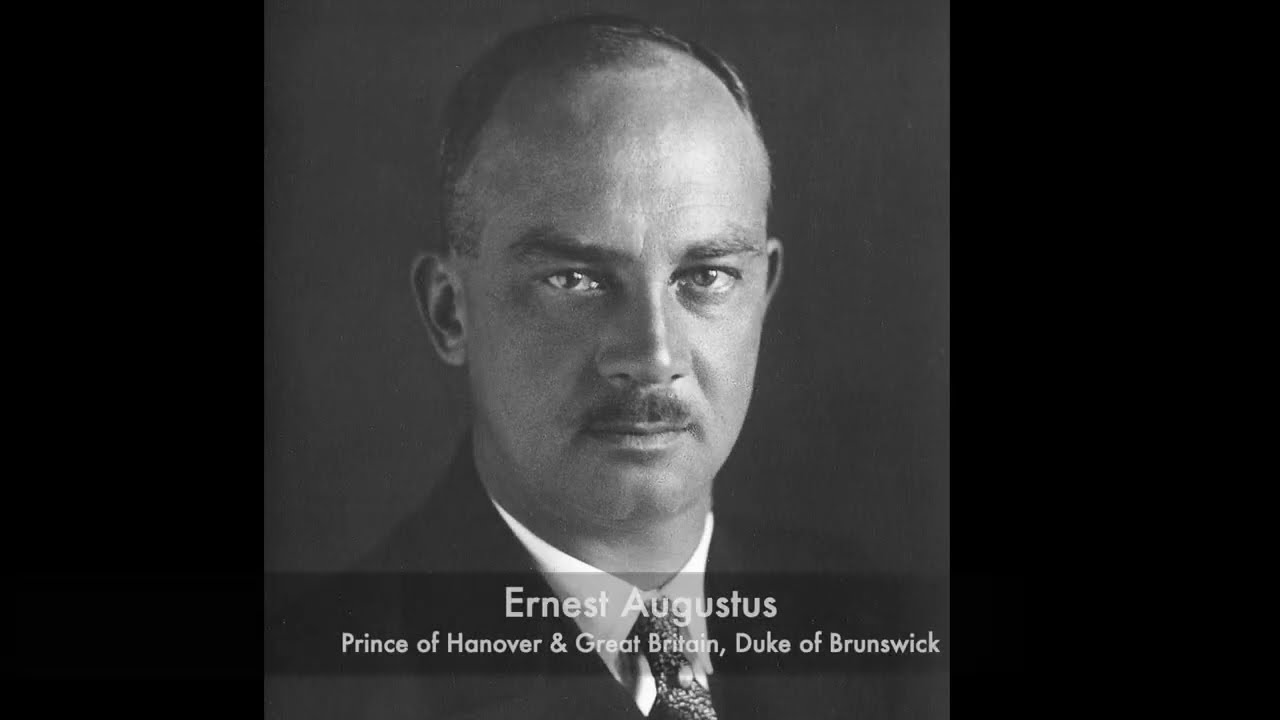
Ernest Augustus, Duke of Brunswick, was the grandson of the last King of Hanover and also a prince of the United Kingdom until stripped of that title in 1917. During the Nazi period, he donated funds to the Nazi party and was close friends with several senior Nazi leaders. He desired peace between Germany and Britain.
The Duke of Windsor was also his friend and had stayed with his cousin in 1937. In 1945, Brunswick had lost one of his castles to the Soviets. Aided by his cousin King George VI, British troops were ordered to transfer the castle’s contents and Brunswick family property to his other castle at Marienburg in the British occupation zone.
However, the family was tainted by its association with the Nazis. Brunswick’s son and heir, Ernest Augustus Prince of Hanover, had briefly been an SS officer. He later served in the Army on the Eastern Front and was imprisoned following the July plot against Hitler.
Count Bentinck’s extraordinary letter of December 1945 offering the crown of Hanover to the Duke of Windsor was politely rebuffed. The British used the curious expedient that Germans were not allowed to send letters abroad at this time.
The actual person behind the plot appeared to show himself on November 5, 1946. British authorities became aware of an article published in the magazine World Affairs by famous editor and writer Kenneth de Courcy.
The article concerned the state of occupied Germany and its future. It outlined the idea of the British turning its occupation zone into a royal realm, with someone appointed as king. De Courcy wrote that parliamentary democracy would never function in Germany unless this was done. Otherwise, there would be chaos ending in dictatorship, or dictatorship ending in chaos.
De Courcy believed constitutional monarchy to be the best type of government and the British model the finest example in the world. As for who should be the new monarch, he wrote that it would not be difficult to find him. An able man thoroughly accustomed to constitutional practice, acquainted with world problems, and with political flair ought not to be hard to find from amongst the exalted personages in the Royal circle of Europe.
He added that it would be a great mistake to have a German. It must be someone who knows America and Britain and who has the support of them both.
The man is not named in the article. But it is not difficult to work out who de Courcy might have thought had the right qualifications and was free.
Major Brahma of the political division in Lübeck drew the government’s attention to the de Courcy article. He also noted that de Courcy had told him he had recently lunched with the Duke of Windsor.
Even more interestingly, Brahma learned that de Courcy was in Germany to meet with the Duke of Brunswick and another unnamed Duke at Glücksburg Castle. As Glücksburg was the family seat of the Dukes of Schleswig-Holstein, the unnamed noble may have been Wilhelm Friedrich, Duke of Schleswig-Holstein. This remains speculation.
Count Bentinck’s curious offer of the crown of Hanover to the Duke of Windsor now made sense. De Courcy had evidently pitched the idea to a frustrated Edward, then in France, as a way back into a useful position.
Edward would be a king once again, of a part of a nation he loved and respected in its time of greatest need. Wallis would be his queen, gaining the full royal status Edward had desired so badly for his wife, and which King George VI had specifically denied her.
Edward was of Hanoverian blood. His meeting with the Duke of Brunswick must have been to clear the way for Edward to have the crown. Edward and Wallis had no children. Perhaps it was intended that upon Edward’s death, the crown would go to the Duke of Brunswick’s son or grandson, both of whom were princes of Hanover.
Edward was due to go to America. British Foreign Office minutes recalled there was some disquiet that he might be seeking U.S. support for de Courcy’s plan to put him on the throne of Hanover.
Ultimately, the de Courcy and Edward plan came to naught. King George VI and his government were determined that Edward would be kept out of any position and sidelined.
What remains of the papers concerning the Hanover plot suggested the idea was dismissed as nonsense by the Foreign Office, at least officially. It was allowed to fall into obscurity.
The files were declassified in 1977, five years after the Duke of Windsor’s death. The story of the plot remains largely unknown today and unremarked upon by historians. But it demonstrates that Edward was prepared to examine any avenue to a return to public life.