In August 1862, the Sioux launched widespread, well-organized attacks against white settlements across Minnesota, leading President Abraham Lincoln to order the largest mass execution in American history. On December 26, 1862, 38 Sioux men were hanged for their role in the attacks. Contemporary historians have sharply criticized the U. S.
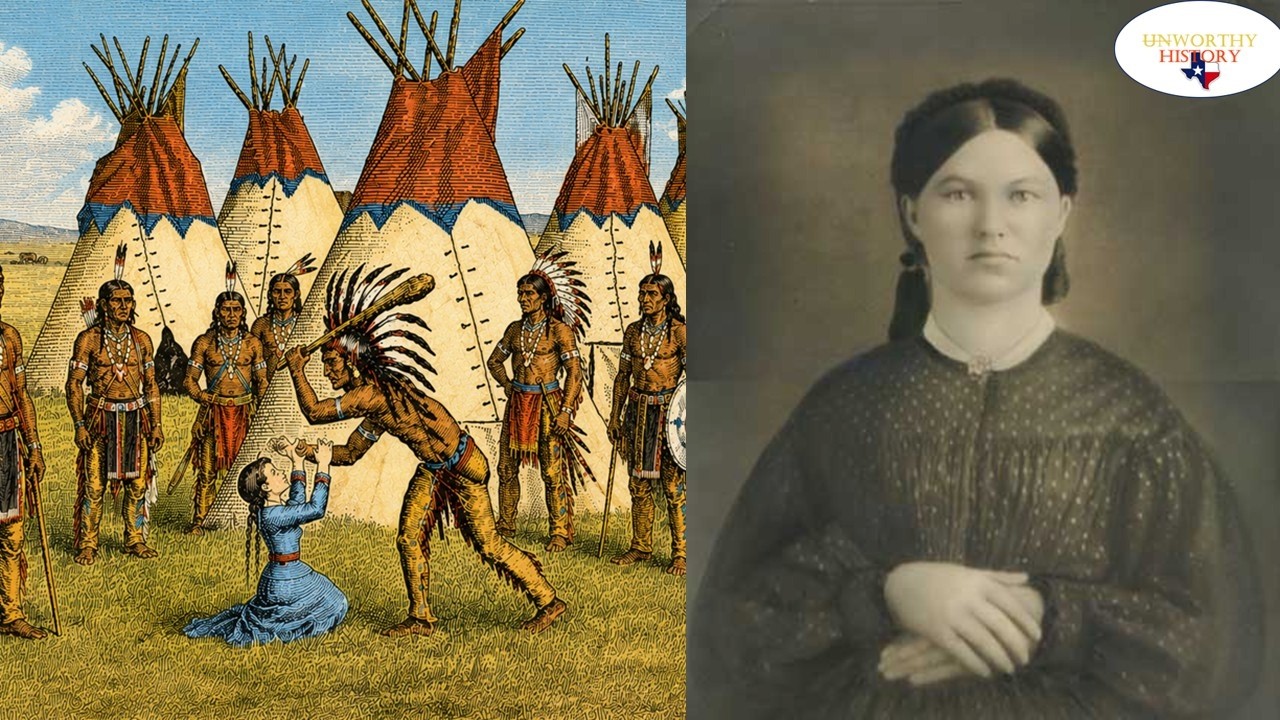
government’s response, with some using the term “genocide” to describe the events. But the question remains: what exactly were the Sioux, or Dakota, accused of doing? More than 500 settlers were killed in brutal fashion during the attacks, and numerous women and children were taken captive, a fate some considered worse than death. Among those who survived was a young German immigrant named Mary Schwandt, whose harrowing account appears in the 1864 book “History of the Great Massacre by the Sioux Indians in Minnesota,” written by Charles Bryant and Abel Mersh shortly after the violence.
Born in Germany in 1848, Mary came to America in 1858 and settled with her family in Minnesota in 1862, just months before the attacks began. On the morning of August 18, 1862, Indians arrived at her parents’ home. They shot her father while he was covering the roof of the house and killed her mother and her sister Caroline in the yard. Several other family members and neighbors were killed inside or near the home.
Mary’s brother August was beaten and left for dead, but he regained consciousness and witnessed the killings while lying in the grass. Mary herself was not at home at the time, living about ten miles away with Joseph B. Reynolds at Redwood, near the Lower Sioux Agency. While fleeing toward Fort Ridgely, August found a five-year-old child and carried him for several miles.
Following the advice of an injured German woman he met along the way, he left the child at a house about 18 miles from the fort. She insisted the group could not survive carrying the boy, who would need to be carried the entire way. The group proceeded, leaving the child alone in bed. He was later found at Camp Release, severely injured and exhausted from exposure, and died shortly after reaching Fort Ridgely.
On that same morning of August 18, Mary set out toward New Ulm with Mady Williams, Mary Anderson, Mr. Battell, Mr. L. Davis, and a Frenchman.
At the home of John Moore, a mixed-race man, they were warned that the Indians were killing all white people at Beaver Creek and Sacred Hearts. They were advised to leave the road and follow Mr. Reynolds, who had gone ahead. Mr.
Battell, who believed he knew better, stayed on the road until they crossed the Redwood River, then left it, heading up through Redwood and camping in the open wilderness about eight miles from the waterway. An Indian on horseback stopped them and ordered them to return to Big Stone Lake and remain there until Tuesday, promising to come and tell them what the Indians intended to do. Battell refused to turn back and continued toward the Lower Agency, venturing into the wilderness to the right. They could see smoke from burning buildings, which they believed was at the agency.
If the Indians were indeed killing white people, the group was within two miles of the agency at one point and could see the buildings still standing. Soon after, they met an Indian armed with a bow and tomahawk, but no gun. Battell asked him if it was true that the Indians were killing white people at the agency and Beaver Creek. The Indian said he did not know.
Battell told him they had heard so and were fleeing to New Ulm. Upon hearing this, the Indian approached the horse ridden by the Frenchman, seized the bridle, and demanded the animal, claiming it was his. The Frenchman dismounted, and Battell got out of the wagon, telling the Indian the horse belonged to him. Angered, the Indian shot an arrow at the Frenchman but missed.
The Frenchman left the horse, jumped into the wagon, and the group fled as fast as possible, leaving the horse behind. The Indian ran after them on foot, shooting arrows as long as he had any, then turned back to retrieve the horse. The group assumed he crossed the river and sent other Indians to track them, as their captors later came from that direction. When they reached the side opposite the fort, Battell decided they could not cross the river without a ferry and continued on the New Ulm road.
The horses were tired, and the group frequently walked on foot. About eight miles from New Ulm, roughly 50 Indians approached in horse-drawn wagons loaded with barrels of flour, goods, and pictures looted from homes. They appeared drunk, were loud and entirely naked, and their bodies were completely painted. Two on horseback advanced ahead of the others and ordered the group to stop.
The wagon swerved off the road, and everyone jumped out except Battell. The Indians approached him and shot him, hitting him with four bullets. He fell from the wagon dead and was left lying there. The rest ran toward the woods and hid in a swamp among tall grass.
Both men were killed in the swamp. When they jumped from the wagon, Davis cried out, “We are lost. ” No one else said anything. The Frenchman ran in a different direction and was seen falling when shot.
Davis was with the group and was shot around the same time. Mary Anderson, who was behind them, was shot in her lower body, the bullet entering her hip and exiting her abdomen. She did not die, and the Indians likely moved her to a wagon. As the Indians approached the women, they screamed.
One grabbed Mady, tore off her head covering, and seized Mary, pulling them forcibly to the wagons. Mady was placed in a wagon with Mary Anderson. Mary was put in another wagon driven by a man named Godfrey. The wagon carrying Mady and Mary headed toward the agency, while Mary’s wagon went into the prairie.
Mary asked Godfrey what they intended to do with her. He said he did not know. He told her they had chased Mr. and Mrs.
Reynolds and thought they had killed them. About two or three miles into the prairie, they reached Indian women whom Godfrey said they were looking for. Everyone sat down and ate bread the women took from the wagons. The Indians arranged their hair and tied it with ribbons.
About an hour later, around 5 p. m. , they went to the house of Wacouta, a chief of the Wabasha band, about half a mile from the agency. There, Mary found Mrs.
W. D. Camp, who had been captured with her two children at the Lower Agency. It was about 8 p.
m. , and the buildings were still burning at the agency. An Indian whom Mrs. Camp thought was friendly, as he was a farming Indian, came to the house.
Fearing others would come and mistreat them, she asked him to stay. After a while, more Indians came, and after bothering her with their unpleasant attention, one forcefully put his hands on her. When she screamed, one of them struck her on the mouth, causing blood to flow heavily. She was then forcibly taken to an uninhabited tent near the house, where she suffered the most terrible and brutal violations.
These violations were repeated at various times during her captivity. The editors of the 1864 book noted that the details of the terrible treatment this poor girl endured were too disgusting to publish. Later that night, Mady and Mary Anderson arrived. The bullet was still in Mary Anderson’s body, and Wacouta tried to remove it but failed.
Mady took the knife from Wacouta’s hand and removed it herself. The group stayed there for about four days. Cold water was poured over corn flour for Mary to drink, but they had nothing to eat except potatoes dug from the garden during those four days. On the fourth day, they went to Little Crow’s camp.
Mary Anderson was taken along, but she died around 4 a. m. on August 22. They obtained some chickens, but there was no bread.
Mary ate some chicken and drank broth; it was the last thing she ever ate. Mary was with her when she died. It had rained heavily during part of the night, and water leaked into the tent, wetting the ground. Mary Anderson became wet and had no bedding to keep dry or warm.
She was very thirsty and asked for water constantly but otherwise did not complain and spoke very little. Mary kept watch while Mady slept, and Mady watched while she slept. She was awake when Mary Anderson died, and she passed so gently that she thought she was sleeping until Mady told her she had passed. Mary Anderson was a good girl, and before dying, she prayed in Swedish, though Mary could not understand what she said.
She had a ring on her finger that she wanted Mady to give to her mother if she died, but after her death her finger was so swollen they could not remove it, and it was buried with her. Joseph Campbell, a mixed-race man, helped bury her. Mary and Mady saw the Indians carry her to the grave, wrapped in an old piece of tent cloth, and place her in the ground near Little Crow’s house. Her grave was later dug up, Mary was told, and she was reburied at the Lower Sioux Agency.
They kept a picture of a young man she was supposed to marry and returned it to him. Her own picture was given to Mrs. Reynolds, who still keeps it. While at Wacouta’s, Mary Anderson badly wanted clothes, as hers were stained with blood.
Wacouta gave her a black silk dress and shawl, both undoubtedly stolen from a white woman. The Indian who captured Mary gave her to his niece, Winona, whom the whites called Maggie. Her husband’s name was Wakinyan Waste, or Good Thunder. Mary was forced to call them mother and father.
The group stayed at Little Crow’s village for about a week, then moved toward Yellow Medicine, camping about 15 miles above Crow village. The next morning, the Indians heard soldiers were coming, woke Mary, removed the squaw dress she had been forced to wear, and dressed her in her own clothes again. But the soldiers did not come, so they set off again toward Yellow Medicine, arriving around noon. After setting out again, they heard once more that soldiers were coming, and a scene of terrible confusion followed.
Some ran into the prairie and scattered in all directions, while others hurried their wagons at full speed. Once again, they were disappointed; no soldiers came. When they came within about four miles of Yellow Medicine, they forced Mary to get out of the wagon and walk. They stayed at Yellow Medicine for about three weeks.
They ate potatoes, beef, and sometimes a little bread. Mary was forced to fetch water and make bread. They usually got water from the nearest swamp. At first, they treated her kindly in some ways, waking her for breakfast and bringing her soap, water, and a towel to wash her face.
But this lasted only two weeks, after which they took away her clothes and dressed her in Indian women’s clothing. They told her the Sisseton bands were coming from Big Stone Lake and would kill her unless she wore women’s clothing. They wanted to paint her face and put rings in her ears, but she refused, and they did not insist. They finally left Yellow Medicine and moved day after day until they reached the place where Colonel Sibley’s forces rescued them, which has since been known as Camp Release.
The broader context of the attacks is important. The Sioux were more motivated than usual to attack because the U. S. government was late in paying them what was owed, largely due to the onset of the Civil War.
The war also drew many men of fighting age away and reduced the number of soldiers defending settlements. Mary Schwandt eventually married William Schmidt, and the couple had at least five children between 1871 and 1886. She lived to be 91 years old and died in New Prague, Minnesota, on July 26, 1939. One notable detail from her later life: when her first captor was angry with her and threatened to kill her, an Indian woman named Snana traded a mare for Mary and protected her until General Sibley recovered her at Camp Release.
More than 30 years later, in 1894, Snana wrote to Mary after seeing a newspaper story about her captivity. They began a regular correspondence and exchanged visits about once a year until Snana died in Nebraska in 1908. The question of how to characterize the events remains contested. Many modern historians argue that the punishment of the Sioux, including the execution of the 38 men, was excessive.
Some argue the events should be described not as a Sioux massacre but as genocide against the Dakota people, viewing them as the victims. Others claim the Dakota were executed for their role in a war of self-defense. However, the testimony of survivors like Mary Schwandt paints a different picture of the attacks, describing brutal killings of settlers and the capture and abuse of women and children.
The debate over the justice of the executions continues more than 160 years later.