The ghosts of Bastogne never released their grip on Richard Winters, a reality the famed Easy Company commander acknowledged with heartbreaking candor decades after the war’s end, admitting that the trauma of the frozen Ardennes forest still surfaces in daily flashbacks that he must silently endure.
In a rare and deeply personal interview conducted in the early 2000s, Major Winters, the man immortalized in the HBO miniseries Band of Brothers, revealed that the psychological scars from the Battle of the Bulge were not healed by time or victory. When asked about his transition back to civilian life, Winters’ response was a stark and unsettling confession: he has never fully adjusted. “Do you think this guy you’re looking at today has adjusted to this day?”
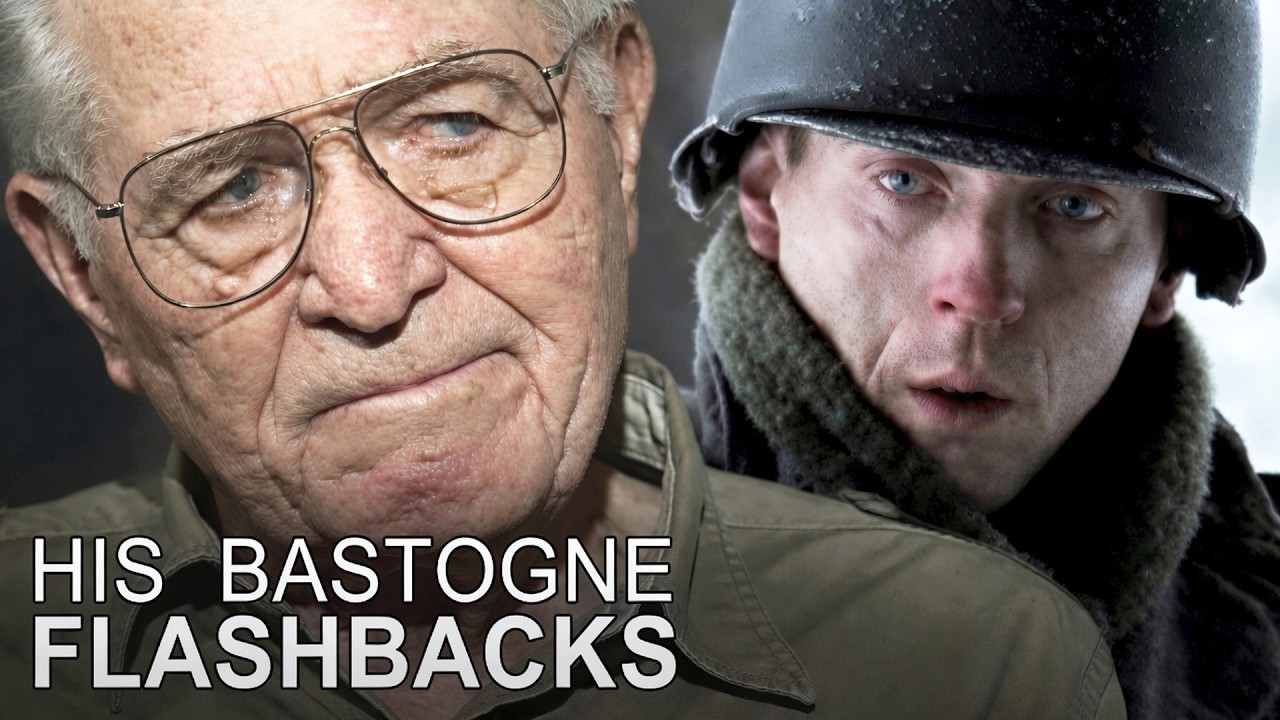 he asked his interviewer, PA State Representative John Payne, before explaining that the process of reintegration is a slow, unending struggle. “You relive this with flashbacks,” he said, a statement that cuts to the core of the unseen wounds carried by the Greatest Generation.
The interview transcript, now circulating widely, provides a harrowing glimpse into the mind of a man often hailed as a paragon of leadership under fire. Winters pinpointed the 9th of January as a date of particular horror, recalling the concentrated German artillery barrages that pounded his battalion. He noted that while he does not relive the entirety of the war every day, “there are segments that will pop up every day,” forcing him to confront the past in fragments.
Crucially, he added that these are battles he fights alone, stating, “You’re keeping it to yourself. You’re not going around talking about it.”
This admission from Winters offers a profound and sobering counterpoint to the heroic narrative often associated with World War II veterans. It underscores the reality that for many, the war never truly ended when the guns fell silent in 1945. The Battle of the Bulge, in particular, stood as the defining nightmare for Winters and his men.
He described the 30 days spent in the Bastogne area as “by far the worst” and “brutal,” a sentiment echoed by nearly every surviving member of Easy Company who was asked to name their most harrowing experience of the entire conflict.
The conditions that bred such lasting trauma were almost incomprehensible. The men of the 101st Airborne Division were rushed to the vital crossroads town of Bastogne on December 16, 1944, in response to Hitler’s final major offensive on the Western Front. They arrived ill-equipped for the brutal winter, lacking proper cold-weather gear, ammunition, and supplies.
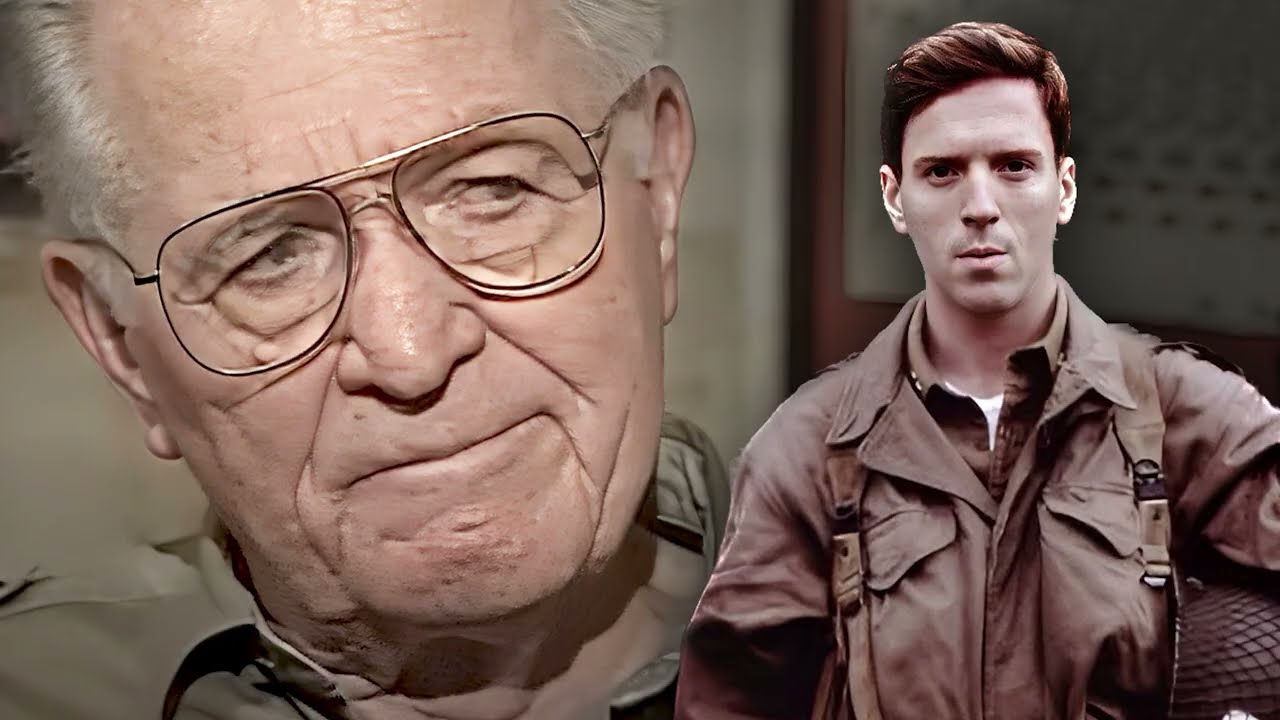 The Ardennes region was gripped by its coldest winter in three decades, with temperatures plummeting to -20 degrees Fahrenheit at night and wind chills making it feel even more extreme. “You can’t describe it,” Winters recalled of the bone-deep cold that claimed the limbs and lives of thousands.
The physical suffering was matched only by the psychological torment of relentless artillery bombardment. Winters wrote in his memoir that artillery “doesn’t only 𝓀𝒾𝓁𝓁, it maims and tears the body apart sending limbs in every direction,” and that surviving such an ordeal changes a man forever. The constant threat of death from above, coupled with the encirclement by German forces and the enemy’s demand for surrender, created a pressure cooker of fear and exhaustion.
The German commander’s threat to “shell you off the earth” was not an idle one, and Winters admitted there were moments when the men were unsure if they would survive.
The long-term effects of this ordeal were devastating and pervasive. While the series Band of Brothers famously depicted the breaking point of men like Buck Compton during the battle, it ended before showing the decades of silent struggle that followed. Don Malarkey, another Easy Company veteran, described how the memories of Bastogne haunted him for life.
He spoke of thrashing in his sleep from nightmares and waking up drenched in sweat, and he admitted to trying to drink away the memories. “There wasn’t a glass of scotch I brought to my lips that I wasn’t back in Bastogne,” he wrote, revealing that the town was a wave that constantly built over his shoulder, ready to crash down on him at any moment.
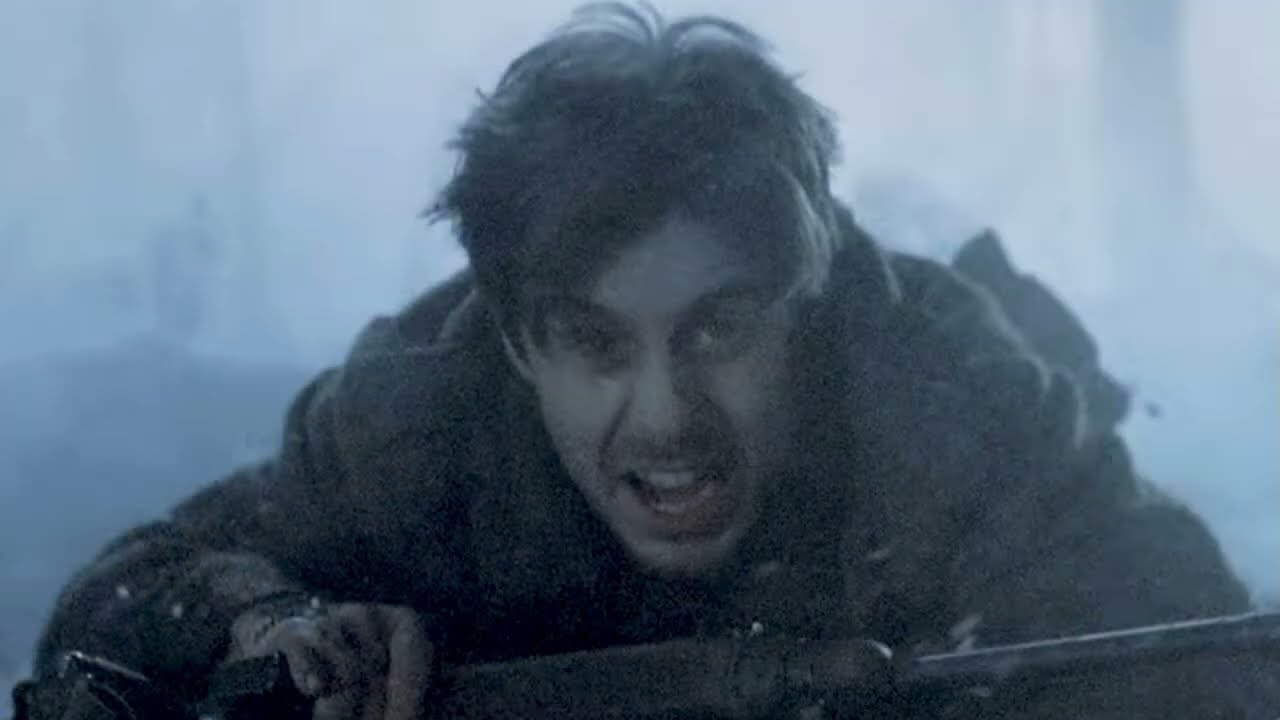 Winters’ own experience, as detailed in the interview, confirms that even the most stoic and effective leaders were not immune to the lasting psychological damage. His admission that he lives with the trauma every day, that segments of the war “pop up” unbidden, and that he has not fully adjusted to civilian life, shatters the myth that veterans simply moved on after the war. His statement is a powerful reminder that the cost of freedom is often paid in installments, with interest accruing over a lifetime.
The scale of this suffering is staggering when placed in the broader context of the Battle of the Bulge. It remains the largest and bloodiest battle ever fought by the United States Army, involving over 500,000 American soldiers. The casualty figures are numbing: more than 75,000 American casualties, including approximately 19,000 soldiers killed and 23,000 taken prisoner.
A further 15,000 men were evacuated due to cold-weather injuries like trench foot, frostbite, and pneumonia, which accounted for roughly 20% of all US casualties in the battle. Every single survivor of that hellish winter carried a piece of it back home with them.
These men, as Winters’ interview poignantly illustrates, did not return as unblemished heroes. They returned as mailmen, construction workers, teachers, and factory workers, often indistinguishable from their neighbors. But behind their ordinary facades, they were fighting a different kind of war, a private war against memories that refused to stay buried.
They were men who might startle at the sound of a car backfiring or a clap of thunder, men who woke in a cold sweat from dreams of frozen foxholes and screaming shells, men who, like Winters, kept their battles to themselves because the experiences were simply too vast and terrible to articulate.
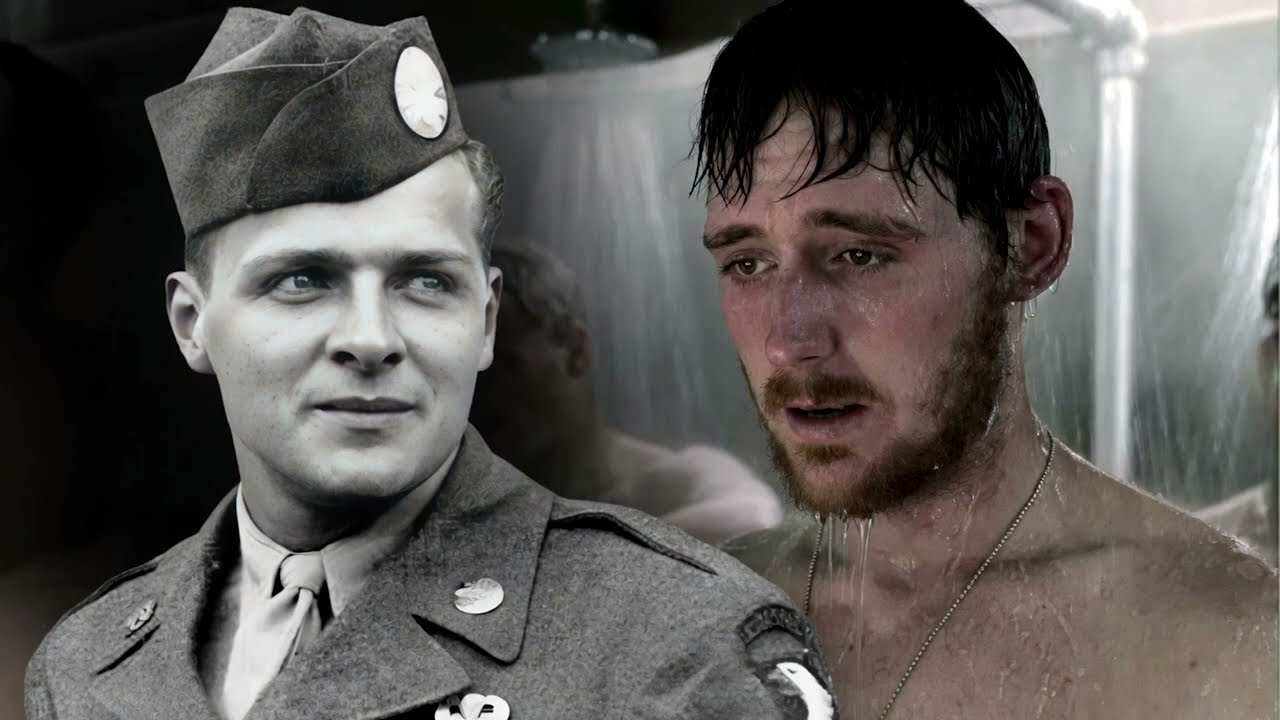 Winters’ decision to speak so openly about his struggles in the interview, even as he acknowledged he does not generally talk about it, serves as a vital historical document. It provides a raw, unfiltered look at the true cost of war that is often missing from official histories and commemorative ceremonies. His words, “You live this every day,” are a haunting echo from the past that resonates with new urgency today, as a new generation of veterans returns from conflicts in Iraq and Afghanistan facing similar battles with PTSD.
The legacy of Dick Winters and the men of Easy Company is not just one of tactical brilliance and battlefield courage. It is also a legacy of immense, quiet suffering borne with dignity. Their experiences in the frozen hell of Bastogne forged a bond between them, but it also left wounds that never fully healed.
Winters’ confession that he still has not adjusted, that he still relives the war in fragments, forces us to reconsider what we owe to those who serve. It is a call to remember not just the victories, but the veterans themselves, and to recognize the price they never stopped paying.
As the nation reflects on the sacrifices of its veterans, Winters’ words offer a sobering and essential truth. The battle for Bastogne was won, but the battle for peace of mind for those who fought there was a lifelong, often losing, struggle. The flashbacks that haunted Winters until his death in 2011 are a testament to the profound and enduring impact of combat.
They serve as a stark reminder that for many, the war never truly ends, and that the freedom we enjoy is secured by men and women who carry its heaviest burdens in silence, forever.