MOSCOW, March 6, 1953 – The Soviet Union awoke this morning to the stark, chilling reality that its iron-fisted ruler for nearly three decades, General Secretary Joseph Stalin, is dead. The 74-year-old dictator, whose name has been synonymous with absolute power, mass terror, and the triumphant defeat of Nazi Germany, passed away at 9:50 PM last night at his dacha in Kuntsevo, outside Moscow. The official announcement, delivered in a trembling voice over state radio, confirmed that the leader suffered a fatal cerebral hemorrhage, plunging the vast empire into a state of anxious uncertainty as the world watches to see who will seize the levers of power in the ensuing vacuum.
The final hours of the man who once commanded the loyalty of millions and the fear of countless others were marked by a harrowing physical collapse that belied his historical stature. According to accounts emerging from his inner circle, Stalin had retired to his private quarters late on the night of February 28th after a long evening of films and heavy drinking with his closest lieutenants, including Lavrentiy Beria, Georgy Malenkov, and Nikita Khrushchev. He had given strict orders not to be disturbed until he woke on his own, a command that would prove fatal.
 For nearly 24 hours, no sound emanated from his room, and it was only at 11 PM on March 1st that a vigilant housekeeper, breaking protocol, entered the chamber to find the dictator collapsed on the floor, unconscious, clad only in his nightclothes, and having lost control of his bodily functions.
Medical assistance was alarmingly slow to arrive, a delay that has already sparked intense speculation and suspicion. It was not until the early hours of March 2nd that a team of physicians, summoned under the watchful eye of the feared secret police chief Beria, finally examined the stricken leader. They found him paralyzed on his right side, with dangerously high blood pressure, and diagnosed a massive stroke caused by a hemorrhage in the left middle cerebral artery of his brain.
The dictator, who had survived assassination attempts, purges, and the greatest war in human history, was now utterly helpless, lying on a makeshift bed in the dining room of his dacha, his fate sealed by the very lifestyle of excess and paranoia that had defined his rule.
The subsequent days were a desperate, and ultimately futile, struggle to save the life of a man who had shown no mercy to his own people. Doctors, reportedly terrified that they would be blamed for his death, employed aggressive treatments to lower his blood pressure, which had spiked to a catastrophic 210 over 120. They applied ice packs to his head and neck in a bid to reduce the swelling, but the internal damage was irreversible.
Witnesses described the leader’s final agony as terrible, noting that he choked and gasped for air as the hemorrhage in his brain extended, causing respiratory failure. In his last moments, a man who had ordered the executions of hundreds of thousands showed a flicker of life, raising his left hand as if to point towards something, before falling silent forever.
 An autopsy conducted shortly after his death confirmed the devastating extent of his physical deterioration. Pathologists reported a large hemorrhage in the subcortical centers of the left cerebral hemisphere, which had destroyed vital areas of the brain. They also found significant hypertrophy of the left ventricle of his heart, numerous hemorrhages in the myocardium, stomach, and intestinal mucosa, all consistent with chronic, severe hypertension.
The report concluded that from the moment of the brain hemorrhage, the outcome was inevitable, and no treatment could have prevented the fatal end. This medical verdict, however, has done little to quell the rumors of foul play, particularly given the suspicious behavior of Lavrentiy Beria, the brutal head of the NKVD, who was observed to be unusually triumphant and who delayed medical treatment for Stalin.
Stalin’s health had been in a precipitous decline for years, a stark departure from the robust, forceful image he projected during the Second World War. A heavy smoker who suffered from atherosclerosis, he had experienced a mild stroke in May 1945, just before the victory parade celebrating the defeat of Germany. This was followed by a severe heart attack in October of the same year, which left him visibly weakened.
Despite doctors’ orders to reduce his workload and rest, Stalin’s paranoia grew, leading him to distrust his own physicians. In a final act of brutal tyranny, he ordered the arrest and torture of several prominent Kremlin doctors in January 1953, accusing them of plotting to 𝓀𝒾𝓁𝓁 him, a fabrication that would later be known as the “Doctors’ Plot.”
 In his final years, the once omnipotent leader became a shadow of his former self, retreating from public view and spending long periods at his dachas, often sinking into depression. He gave only three public speeches after 1946, and his last published work, “Economic Problems of Socialism in the USSR,” appeared in 1952. He increasingly relied on his inner circle, a group of men he simultaneously trusted and tormented, often repeating that they were “blind like kittens” without him.
This psychological manipulation, however, ultimately failed to protect him from his own mortality. The man who had risen from a poor peasant family to become one of the most powerful and feared figures of the 20th century died alone, save for the doctors who feared him and the lieutenants who coveted his throne.
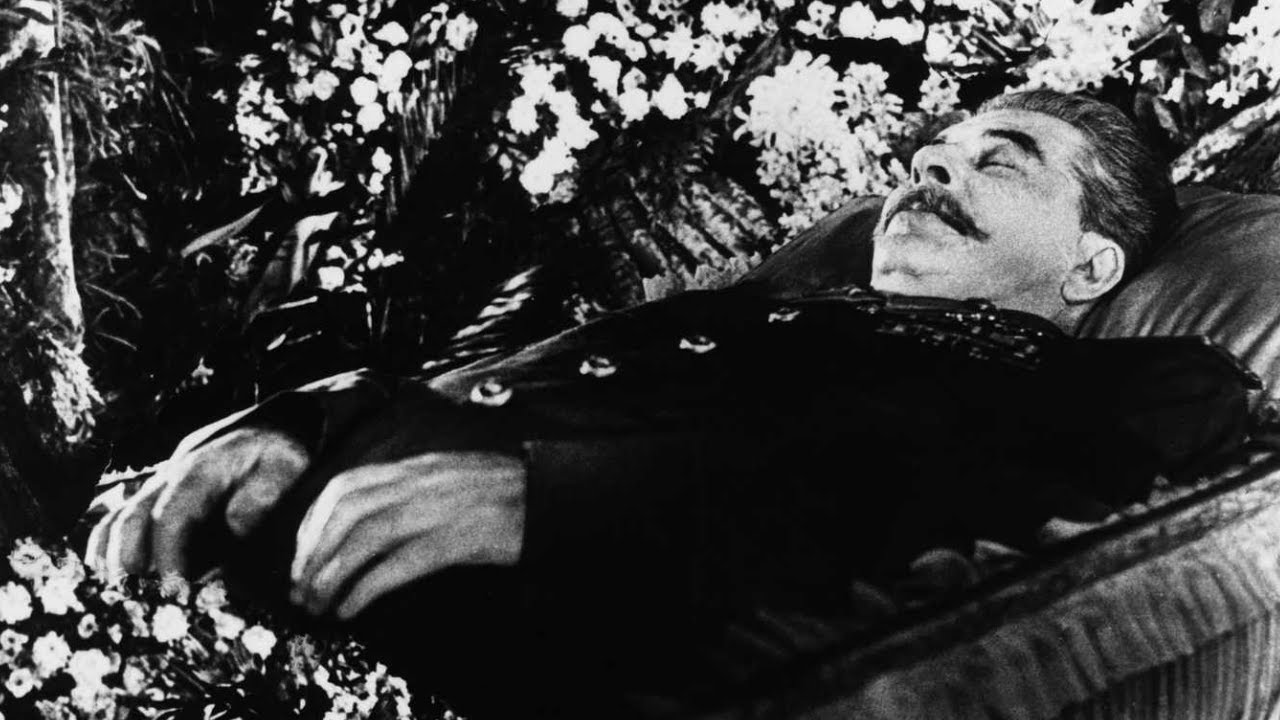
The news of his death has sent shockwaves through the capital, where a complex mixture of grief, fear, and relief is palpable. The official line is one of profound sorrow, with the state-controlled media portraying Stalin as a beloved champion of the working class and a brilliant military strategist. His body has been embalmed and will lie in state in the Hall of Columns in the House of the Unions for three days, allowing the public to pay their respects.
However, the transition of power is already fraught with danger. A new leadership structure has been hastily assembled, with Georgy Malenkov assuming the premiership, while Beria has taken control of a merged interior and security ministry, placing him in a position of immense and terrifying power.
 The funeral procession, scheduled for March 9th, is expected to draw massive crowds to Red Square, where Stalin’s body will be interred in Lenin’s Mausoleum, a final honor that places him alongside the founder of the Soviet state. Yet, even in death, the dictator’s legacy is one of immense suffering. The purges he orchestrated, the gulags he expanded, and the famines he allowed to devastate his own people have left a deep scar on the nation.
As the bells of the Kremlin tower chime and a 21-gun salute fires in his honor, the world is left to contemplate the brutal paradox of a man who defeated fascism abroad but terrorized his own citizens at home.
The immediate aftermath of the announcement has been marked by a palpable tension among the Soviet populace. While some genuinely mourn the loss of the man they saw as the architect of victory and a symbol of national strength, many others harbor a quiet, unspoken sense of relief. The secret police remain on high alert, and there are already reports of crowds gathering in silence, their faces a mask of uncertainty.
The coming days will be critical, as the rival factions within the Kremlin, led by the ambitious Beria and the more cautious Khrushchev, begin their maneuvering for ultimate supremacy. The world holds its breath, wondering if the terror that Stalin personified will outlive him or if a new, less brutal era can emerge from the shadow of his monumental and bloody rule.
As the Soviet Union begins its long march into an uncertain future, the figure of Joseph Stalin looms larger than ever. He was a man who consolidated power through a reign of terror, who industrialized a backward nation at a horrific human cost, and who ultimately led his country to victory in the most devastating conflict in history. His death marks the end of an era, but the institutions he built and the culture of fear he cultivated will not vanish overnight.
The question that now hangs over Moscow, and indeed the entire world, is whether his successors possess the will and the courage to dismantle the brutal system he created, or whether they will simply become its new masters. For now, the silence in the Kremlin is deafening, broken only by the echoes of a dictator’s final, painful breath.