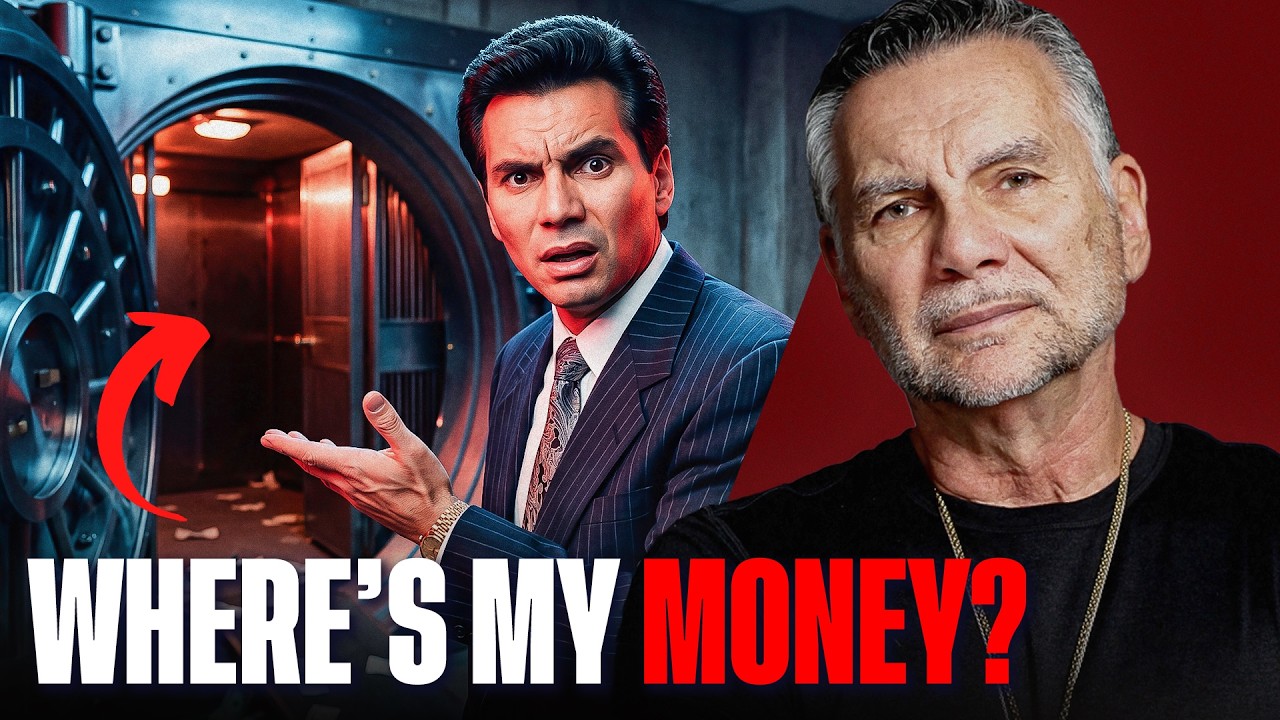
Michael Franzese, a former captain in the Colombo crime family, has spent years speaking to audiences around the world. During nearly every Q&A session, he says he gets the same three questions. People want to know where Jimmy Hoffa is buried. They ask whether he ever killed anyone. And they want to know where all his money went.
In a recent detailed account, Franzese finally addressed the money question. He explained that a significant portion of his fortune came from a massive gasoline bootlegging operation. He ran the scheme with his partner Larry Iorio, who later became a government witness against him.
The operation defrauded the government out of taxes on every gallon of gasoline sold. Franzese says they ran the business for seven or eight years and made enormous sums of money. The government later claimed the scheme cost taxpayers over $2 billion, a figure Franzese disputes. He admits it was a lot of money, but he does not believe it reached that level.
Franzese describes Iorio as a genius and a massive man, standing 6-foot-5 and weighing around 500 pounds. The two men grew extremely close. Their families spent time together, and Iorio’s children called Franzese “uncle.” At the height of the operation, Franzese says they were bringing in between $7 million and $8 million per week.
The trouble began when Iorio faced a separate tax case. Fearing prison, Iorio decided to flee. Franzese tried to talk him out of it, warning him that life as a fugitive would be worse than a short sentence. Iorio did not listen. He moved to Panama, where he thought he would be safe from extradition.
The U.S. government eventually made a deal with Panamanian leader Manuel Noriega. Agents raided Iorio’s home in the middle of the night, flew him back to Florida, and locked him up. According to Franzese, Iorio’s resolve collapsed almost immediately. When he saw the small prison bed, he realized he could not even sleep on it. He told authorities he would tell them everything about Franzese.
Franzese was facing a racketeering indictment in Brooklyn. Iorio was set to be the star witness. Before the trial, Iorio’s son approached Franzese with a wild plan. His father wanted Franzese to ambush the marshals transporting him to court, kill them if necessary, and get Iorio out of the country. Franzese refused, telling the son that his father had lost his mind.
Franzese was angry about the betrayal. He says some people around him suggested eliminating Iorio before he could testify. Franzese declined, citing their close friendship and family ties. He decided to fight Iorio in court instead.
Around the same time, Rudy Giuliani was prosecuting Franzese in a separate case in Manhattan. Giuliani brought Iorio in to testify there as well. But Iorio knew nothing about that case. Franzese’s defense team destroyed him on the witness stand, and Franzese was acquitted. Iorio’s value as a witness plummeted, and prosecutors threatened to kick him out of the witness protection program.
Desperate, Iorio revealed the existence of a secret bank account in Austria. The two men had been depositing the federal gasoline tax into the account for years. At the time, the federal tax was nine cents per gallon. Over time, they accumulated about $33 million in the account.

The Austrian bank used numbered accounts with a strict security system. Iorio held half of the account number, and Franzese held the other half. Neither man could access the funds without the other. The plan was to leave the money in the bank, earn interest, and eventually collect a much larger sum.
When Iorio turned informant, Franzese warned him through his son not to reveal the account. Iorio initially agreed. But after his failed testimony and the threat of losing witness protection, he told the government everything.
Federal agents flew to Austria with Iorio’s half of the number. Austrian officials refused to release the money without the full account number. The government tried to argue that the money belonged to organized crime. The Austrians responded by freezing the funds, but they made clear that whoever produced the complete number would get the money.
Franzese was negotiating a plea deal at the time. Prosecutors initially wanted 25 years in prison and a $100 million fine. Through negotiations, they reduced the offer to 10 years and $15 million in forfeitures and restitution. But the government made the Austrian account part of the deal. They demanded the other half of the account number.
Franzese says he had no real choice. He handed over his half of the number, and the government collected the $33 million. He never received any credit for it in his plea agreement. He says he has no idea where the money went. He hopes taxpayers benefited somehow, but he never heard anything about it again.

Franzese notes that the IRS later returned $2.5 million of that money to Iorio. It was part of his deal for testifying. Franzese says this fact came out during the discovery phase of his case.
After Franzese went to prison, Iorio left New York. He moved to Texas with his family. According to Franzese, Iorio went back into the gasoline business and started defrauding the government again. He was caught, and his entire family was arrested. Iorio tried to offer new information about Franzese, but prosecutors were not interested. Franzese was already serving his sentence.
Iorio was convicted and sentenced to 20 years in prison. He served 17. He died a few years after his release.
Franzese says he still loved Iorio despite the betrayal. He understood that the life they lived came with certain consequences. He knew Iorio was weak and would not hold up under pressure. But they had made a lot of money together and shared many good times. Franzese says he felt genuinely sad when Iorio died.
Looking back, Franzese says the story illustrates a simple truth. Everyone he got involved with in that life met a bad end. He warns young people that a criminal lifestyle always ends in failure. Someone close to you will eventually turn you in, or law enforcement will catch up with you. He says it is only a matter of time.
Franzese served eight years in prison. He lost millions in earnings during that time, paid $15 million in restitution, and gave up property through forfeiture. He says he made millions of dollars in his criminal career but has little to show for it. He believes he would have been far better off if he had put his energy into legitimate business.
He credits his wife, his children, and the people around him for helping him rebuild his life. He says being accountable to the right people is the key to staying on the right path. He goes to church and speaks with priests. He does not want to let down the people who look up to him.
Franzese says the lesson is simple. Earn your living the right way.