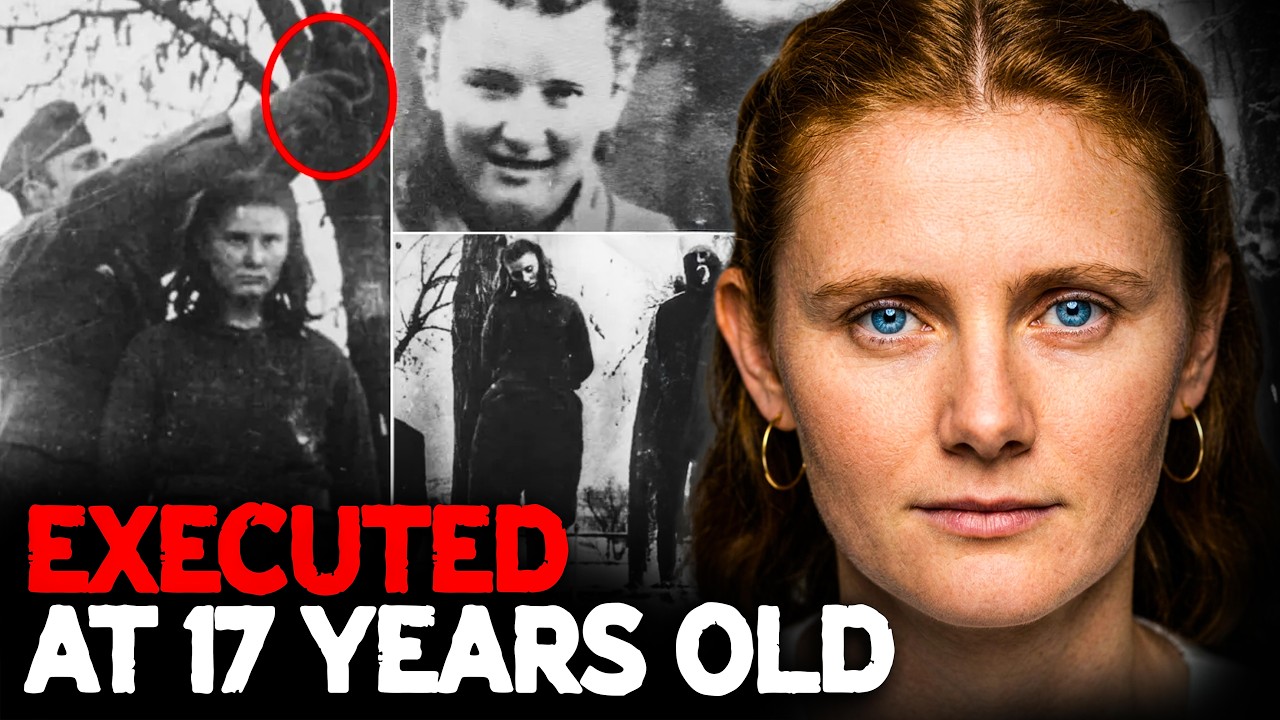
In the winter of 1943, a 17-year-old girl stood beneath a bare tree in the frozen Bosnian countryside. A noose was already around her neck, and her wrists were bound behind her back. German soldiers surrounded her as an officer stepped forward with one final offer: name her comrades, reveal the locations of her commanders, and she would live.
She looked him in the eye and refused. Moments later, the rope went taut. Lepa Radić, a teenage partisan fighter in the Yugoslav resistance, was dead. It was February 8th, 1943, and her story would echo through history for generations.
To understand what she did and why her death became a symbol that outlasted the war itself, it is necessary to go back to the beginning. The world she was born into was a young and complicated country called Yugoslavia.
Created after the First World War, it was a patchwork kingdom of Serbs, Croats, Slovenes, Bosnians, Macedonians, and Montenegrins. These peoples shared geography but often little else in terms of language, religion, tradition, and political ambition. The kingdom, known as the Kingdom of Yugoslavia from 1929, was held together by a monarchy that ruled with increasing authoritarianism.
Beneath the surface of this fragile unity, ethnic tensions simmered. Communist and nationalist movements competed for influence, and ordinary people struggled through the global economic depression of the 1930s.
Into this world, on December 19th, 1925, in the small village of Gornja Šipka near Bosanska Gradiška in what is today northwestern Bosnia and Herzegovina, a girl was born. Her parents named her Lepa, meaning beautiful one in Serbian. Her surname was Radić.
Her father, Dušan Radić, was a known communist activist who believed in a different kind of Yugoslavia. It was from him that Lepa absorbed her politics, her courage, and her conviction that the world could and should be changed.
Lepa grew up in a modest household. Village life in the Bosanska Krajina region was one of hard agricultural labor and close community. But Lepa was by all accounts extraordinary. She was bright, intensely curious, and possessed a charisma and self-possession that set her apart from her peers.
By her early teenage years, she had become a member of SKOJ, the League of Communist Youth of Yugoslavia. This was not a casual affiliation. Membership meant participation in underground networks, clandestine meetings, and constant risk of arrest. Lepa was not yet 15 years old when she committed herself to this path.
The catastrophic speed with which Yugoslavia’s fate changed in April 1941 cannot be overstated. War had been consuming Europe for nearly two years. Poland had fallen, France had collapsed, and the Nazi war machine appeared unstoppable.
On March 25th, 1941, under enormous pressure from Berlin, Yugoslavia’s Prime Minister signed the country into the Tripartite Pact, aligning it with Nazi Germany, Fascist Italy, and Imperial Japan. The reaction inside Yugoslavia was immediate and volcanic.
Within two days, a group of Serbian military officers staged a coup, removing the pro-German regents and tearing up the pact. Adolf Hitler was furious and ordered the immediate destruction of Yugoslavia.
The German invasion began on April 6th, 1941, with a devastating bombing of Belgrade. German aircraft appeared over the city without a formal declaration of war, targeting residential neighborhoods, government buildings, hospitals, and the National Library of Serbia.
Simultaneously, German, Italian, Hungarian, and Bulgarian forces poured across Yugoslavia’s borders. The Royal Yugoslav Army, poorly equipped and caught completely off guard, was overwhelmed in days. On April 17th, 1941, just 11 days after the invasion began, Yugoslavia’s military commanders signed an unconditional surrender.
What replaced the country was a nightmare. The Nazis and their allies carved Yugoslavia into pieces. Germany annexed large parts of Slovenia. Hungary took back regions it had lost after World War I. Bulgaria occupied Macedonia. Italy seized Dalmatia, Montenegro, and large swaths of the Adriatic coast.
In the heart of the former kingdom, the Germans created a new entity that would become one of the most horrific regimes of the entire Second World War: the Independent State of Croatia, known by its Croatian acronym NDH. This puppet state was handed to the Ustaša movement, a Croatian fascist organization led by Ante Pavelić.
The NDH encompassed Croatia, Bosnia and Herzegovina, and parts of Slavonia. Its population included large numbers of Serbs, Jews, and Roma, who the Ustaše immediately identified as racial and ideological enemies. What followed was one of the most concentrated campaigns of ethnic mass murder in European history.
Within months, the Ustaše had begun systematic massacres of Serb civilians. Villages were burned, entire communities were executed, sometimes with a brutality that shocked even hardened German military commanders. Women and children were not spared. Priests were killed. Churches were set alight with their congregations inside.
Estimates of the total number of people killed in the NDH during the war range from several hundred thousand to over a million. The most notorious site of mass murder was the Jasenovac concentration camp complex, established in 1941 on the banks of the Sava River.
The invasion and occupation did not break Yugoslav resistance. It ignited it. The Communist Party of Yugoslavia, which had been organizing underground for years under the leadership of a man who called himself Tito, moved quickly to channel the shock and rage of the population into armed resistance.
Josip Broz Tito was a Croatian-Slovenian communist of remarkable organizational genius. When Germany invaded the Soviet Union on June 22nd, 1941, Tito moved immediately to launch an uprising. On July 4th, 1941, the party’s leadership issued a call to armed resistance. The Yugoslav partisans were born.
In the early months, resistance was scattered, spontaneous, and desperately dangerous. Small groups of fighters attacked German and Ustaša positions, sabotaged railways, and tried to establish liberated zones in the mountains. The reprisals were immediate and catastrophic.
German policy in Yugoslavia was explicit. For every German soldier killed, 100 Yugoslav civilians would be shot. For every German soldier wounded, 50 would be executed. These were not empty threats.
In October 1941, following partisan attacks in Serbia, German forces conducted mass reprisals. In Kragujevac, approximately 2,800 men and boys, including school teachers and their students dragged from classrooms, were executed in a single day.
Despite the scale of German brutality, resistance grew rather than collapsed. People who might have remained passive were radicalized by the massacres. The partisan movement was not purely communist in its composition, though the party provided its organizational backbone. It included people of all ethnicities, all classes, and all religions.
It was into this burning, blood-soaked world that Lepa Radić entered as a partisan fighter. She was 15 years old when the invasion happened, 16 when the uprising began. In the Bosanska Krajina region where her family lived, the violence of the NDH fell with particular force.
In 1941, at the age of 15, Lepa took the step from political activism to armed resistance. She became a member of the partisan movement.
What did it mean practically to be a teenage partisan fighter in wartime Bosnia? It meant living in almost constant physical danger. It meant moving through forests and mountains, sleeping in the open or in farmhouses whose owners risked their own lives. It meant carrying messages between units, smuggling weapons and medical supplies, nursing wounded fighters, and occasionally participating directly in combat operations.
By 1942, Lepa had become an active and trusted member of her partisan unit. She was known for her courage, her intelligence, and her ability to maintain calm under pressure. She also continued her political work, operating as an organizer for SKOJ.
The winter of 1942 to 1943 brought one of the most dangerous periods of the entire war for the partisans. The German High Command launched a series of massive coordinated anti-partisan offensives. The fourth of these, known to the Germans as Operation Weiss, began in January 1943 and was the largest anti-partisan operation to that point.
The Germans committed over 90,000 troops to a massive encirclement operation aimed at destroying Tito’s main force. The partisans, numbering around 20,000 fighters plus thousands of wounded and civilian refugees, were caught in a brutal winter campaign in the mountains of western Bosnia.
It was during this period, in February 1943, that Lepa Radić was captured. She was taken prisoner by German forces in early February 1943, in the context of the massive sweeping operations across the Bosanska Krajina region. She was 17 years old.
Her captors knew she had information they wanted: the identities of other resistance members and the locations of partisan units. Lepa was interrogated. Torture was routine. The Germans made her an explicit offer: tell us what you know, give us names, give us locations, and you will live.
They were wrong. Lepa refused to reveal a single name. When pressed to identify her comrades and commanders, she reportedly told her interrogators that her comrades would reveal themselves when they finished the job that the Germans had started.
On February 8th, 1943, Lepa Radić was taken to a location near the village of Vraneš in the Bosanska Gradiška municipality. A noose was prepared. One final time, she was offered the chance to save her life by naming names. She refused.
According to multiple accounts, as the noose was placed around her neck, Lepa shouted her last words: “Long live the Communist Party of Yugoslavia. Long live the partisans. Long live Tito.”
She was hanged. She was 17 years, 1 month, and 20 days old.
The story of Lepa Radić did not die with her. It traveled through the partisan networks, passed from unit to unit, gathering the force of legend even before the war was over. In a movement that desperately needed symbols of resistance, her story was perfect in its terrible simplicity.
After the war, when Tito’s Yugoslavia was building its national mythology of resistance and liberation, Lepa Radić was elevated to the status of national hero. In 1951, she was posthumously awarded the Order of the People’s Hero of Yugoslavia. Schools, streets, and public buildings were named after her.
The Yugoslav partisan movement that Lepa Radić belonged to was one of the most remarkable resistance organizations produced anywhere in occupied Europe. By the war’s end, it had grown from a few thousand poorly armed fighters to a genuine army of over 800,000 soldiers.
The Germans were not alone in their brutality. The Italians conducted their own anti-partisan campaigns with considerable ferocity. And the Ustaše were in many ways the most savage of all.
The Ustaša movement under Ante Pavelić was a hybrid of Croatian nationalism and racial ideology. When the Germans handed him power in April 1941, he immediately set about constructing a racial state. His regime declared that the Serb, Jewish, and Roma populations had three options: conversion, expulsion, or death.
The Jasenovac concentration camp system, established in August 1941, was the centerpiece of the Ustaša’s industrialized murder. Its victims were worked to death, starved, tortured, and killed in a variety of methods that included mass shootings, knifing, drowning, and burning alive.
Among the young men and women who chose resistance, several stand out for the extraordinary circumstances of their lives and deaths. Stjepan Filipović, a Bosnian Croat communist and partisan fighter, produced what may be the single most iconic image of resistance in the entire Second World War.
On May 22nd, 1942, as Filipović stood on the scaffold with the noose around his neck, he raised both arms above his head, hands balled into fists, and shouted at the crowd: “Death to fascism! Freedom to the people!” That moment was captured in a photograph that became one of the most reproduced images of the war.
Another figure whose story belongs alongside Lepa Radić’s is Nada Dimić, born on June 5th, 1923, and executed by Italian fascist forces on June 4th, 1942, the day before her 19th birthday. Like Lepa, she refused to provide information about her network and was executed by hanging.
The pattern that emerges from these individual stories is not a coincidence. SKOJ specifically recruited and trained young people to maintain their ideological commitments under pressure. The political education was also fundamentally about preparing people for the possibility of capture and death.
The partisans were explicit about this. They knew their members would be captured. They trained their people to resist interrogation as a matter of military necessity. They also trained them to understand their own deaths, if it came to that, as meaningful rather than arbitrary.
The Germans who occupied Yugoslavia ranged from career soldiers to committed ideological Nazis. The most senior German commander with overall responsibility for the Balkans theater was General Alexander Löhr, the commander of Army Group E.
Löhr had commanded the air fleet that conducted the bombing of Belgrade on April 6th, 1941. Under his command, German forces carried out mass executions of hostages and civilian reprisals. The scale of civilian death resulting from these policies ran into hundreds of thousands of people.
What happened to Alexander Löhr after the war is one of the more satisfying chapters in the incomplete story of Balkan justice. He surrendered to Yugoslav forces rather than to the Americans or British. The Yugoslavs had no interest in lenient treatment.
Löhr was tried before a Yugoslav military court in Belgrade in early 1947. He was found guilty and sentenced to death. On February 26th, 1947, he was shot by a Yugoslav firing squad in Belgrade. He was 60 years old.
General Franz Böhme, who commanded German forces in Serbia in the critical early period, personally issued the order for the 100-to-1 reprisal ratio. Under his direct orders, the massacres at Kragujevac and Kraljevo were carried out. Böhme, however, committed suicide in his cell at Nuremberg in 1947 while awaiting trial.
The 7th SS Volunteer Mountain Division, Prinz Eugen, was one of the most notorious formations in the Balkans. Its record of atrocities against civilian populations was extensive. Villages suspected of harboring partisans were burned. Prisoners were executed routinely.
The division’s commander, SS-Gruppenführer August Schmidthuber, was captured by Yugoslav forces and executed in Belgrade in January 1947.
The anti-partisan offensives of 1942 and 1943 were characterized by a specific German military logic. The key principle was that partisan resistance could only be suppressed by destroying its social base: the civilian population that provided fighters, food, shelter, and intelligence.
Operation Weiss, which began in January 1943, was the most ambitious German anti-partisan operation to that point. The partisans were encircled, outnumbered, and fighting in appalling winter conditions. And yet, through a combination of tactical brilliance and extraordinary morale, they broke through and crossed the Neretva River.
It was in this context, during the sweeping operations of Operation Weiss, that Lepa Radić was captured and killed.
Among the most celebrated figures of the resistance was Sava Kovačević, a Montenegrin partisan commander of remarkable personal bravery. He rose to command the Third Shock Division and participated in the most critical battles of the resistance.
On June 13th, 1943, near the Sutjeska River, Kovačević was killed in combat while leading his division in a desperate breakout attempt. He was 37 years old. The partisans broke through regardless.
The question of what the young women of the partisan movement experienced deserves particular attention. Yugoslavia’s partisan movement was one of the first modern armed resistance movements to fully incorporate women as combat soldiers. Tens of thousands of women served as partisan fighters.
The experience of women in the movement was complex and contradictory. Women who were captured by enemy forces faced additional horrors beyond the interrogation and execution that faced their male counterparts. Rape and sexual torture were common in German, Italian, and Ustaša interrogations of female prisoners.
Against this background, the courage of women like Lepa Radić is all the more striking.
The story of the Battle of the Neretva illustrates with particular clarity the desperate conditions the partisans faced. By February 1943, the partisan main body was in an extraordinarily precarious position. To their south lay the Neretva River, swollen with winter snowmelt.
Tito made a decision that his commanders initially questioned. He ordered the destruction of the bridges across the Neretva, then launched an assault across the river. Partisan engineers worked under fire to construct a makeshift bridge. Fighters crossed under constant bombardment. The wounded were carried on stretchers.
In the last days of February and the first days of March 1943, the partisan main body crossed the Neretva and broke out of the encirclement. The fourth offensive had failed.
What happened to the German commanders most directly responsible for the failures of the anti-partisan offensives is varied and often unsatisfying from the perspective of justice. General Rudolf Lüters, who commanded German forces in the NDH, was not tried by Yugoslav courts. He was captured by American forces and released without facing trial. He died in West Germany in 1961.
General Walter Kuntze was tried at the Nuremberg Hostages Trial and found guilty of war crimes. He was sentenced to life imprisonment. But his sentence was commuted, and he was released in 1953. He died in 1959 in West Germany.
Field Marshal Wilhelm List was one of the most senior German officers to serve in the Balkans. It was under his overall command that the policy of executing civilian hostages was systematically implemented. The Kragujevac massacre occurred while List was the senior German commander.
List was found guilty at the Nuremberg Hostages Trial and sentenced to life imprisonment. In December 1952, his sentence was commuted. He was released and lived until 1971, dying at the age of 91.
Not all the German commanders escaped justice. General Paul Bader, the military commander of Serbia from December 1941 to August 1943, was captured by Yugoslav forces and executed.
The Ustaša leadership represents a different chapter in the story of post-war accountability. Ante Pavelić managed to escape Yugoslavia entirely. He fled to Argentina, where he lived for years. In 1957, a Serbian nationalist made an assassination attempt on him. He died on December 28th, 1959 in Madrid, never having been brought to trial.
Vjekoslav Luburić, the man responsible for overseeing the Jasenovac camp system, also escaped to Spain. He died on April 20th, 1969, when a bomb planted by what appeared to have been Yugoslav intelligence operatives exploded in his apartment.
The broader history of Yugoslav partisan suffering cannot be fully told without discussing the deliberate use of hunger as a weapon. The systematic seizure of food supplies from rural areas suspected of supporting the partisans could condemn entire communities to starvation.
And yet, the partisan medical services managed to achieve a great deal. The decision not to abandon wounded fighters required that the partisans build a working medical infrastructure in the field. During the Fourth Offensive, the effort to carry the wounded across the winter mountains while under fire was one of the defining images of the entire war.
The German approach to the partisan wounded was the inverse. When German forces overran partisan field hospitals, the occupants were routinely executed.
Among the younger partisan commanders who rose to prominence was Ivan Lola Ribar, born on June 25th, 1916 in Zagreb. He was one of Tito’s most trusted young commanders. In November 1943, he participated in the famous Jajce conference. Just weeks later, his aircraft was attacked by German fighters, and he was killed. He was 27 years old.
One of the most moving aspects of the partisan resistance is how young so many of its fighters were. The average age of partisan fighters in the early years was remarkably low. Many units contained fighters who were 16, 17, and 18 years old.
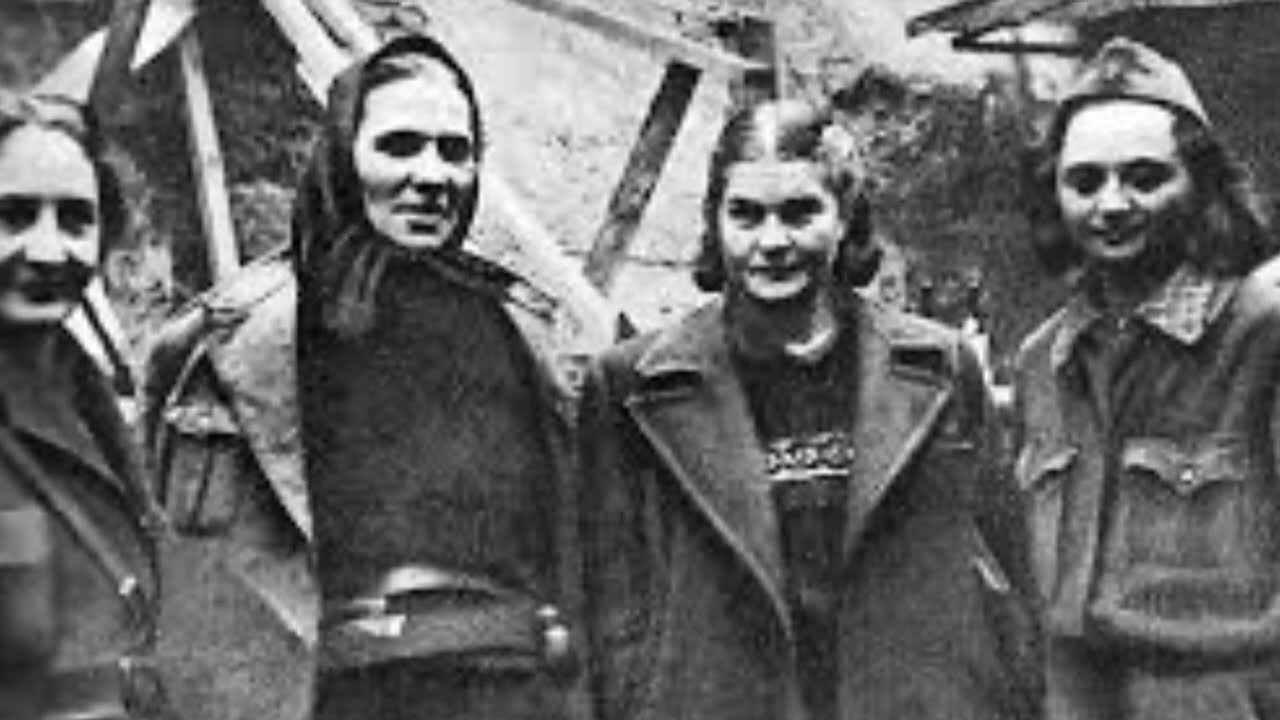
The story of Milunka Savić deserves a mention here, even though her story comes from an earlier war. She became one of the most decorated female combatants in the history of the First World War. When the partisan women of the Second World War were constructing their own sense of identity, the tradition of women like Savić was part of their cultural vocabulary.
The complexity of Yugoslav wartime history is also illustrated by the story of the Chetniks, the royalist resistance movement under General Draža Mihailović. The Chetniks and the partisans briefly cooperated, but the two movements were fundamentally incompatible.
The Chetniks began collaborating with Italian and German forces against the partisans. Chetnik units participated in the encirclement operations of the Fourth Enemy Offensive in early 1943. The same Chetnik forces that were officially described as resistance fighters were actually fighting alongside the Germans in the operations that caught and killed Lepa Radić.
Draža Mihailović was captured in March 1946 and tried before a Yugoslav military court. He was found guilty and executed by firing squad on July 17th, 1946.
The local collaborators who participated in operations against partisan sympathizers were often the ones who identified specific individuals for arrest or execution. The aftermath of the war for these collaborators was, in general, far harsher than for the German officers.
The Bosanska Krajina region where Lepa Radić lived and died was one of the most fought over areas of occupied Yugoslavia. The villages experienced successive waves of violence. The specific location where Lepa was executed is today marked with a memorial.
The commemorative monuments of socialist Yugoslavia served a specific function. Yugoslavia after 1945 had lost, by the most commonly cited estimates, over a million people. To rebuild a society on that foundation of grief required a shared narrative that gave the loss its meaning.
The communist Yugoslav government was not disinterested in this commemorative project. The celebration of the partisan resistance served obvious political purposes. But instrumentalization does not nullify the underlying reality. Lepa Radić was a real person who made a real choice, and the choice was genuinely heroic.
The dissolution of Yugoslavia in the late 1980s and early 1990s created a profound crisis for this commemorative culture. In the successor states, the question of whose heroes to honor became a deeply divisive political issue. Many of the monuments and street names were removed or renamed.
And yet, Lepa Radić’s story has survived. It has survived the dissolution of the country she died for. It has survived because the story itself has a quality that transcends its specific ideological context: the quality of a 17-year-old girl who chose death over betrayal.
The question of what made Lepa Radić’s courage possible is one that historians and philosophers have approached from many angles. Was it ideology? Was it youth? Was it character? Probably all of these factors were present in some combination.
There is also perhaps something else. Lepa Radić was not alone when she made the choices she made. She was part of a community. The knowledge that your sacrifice will be witnessed, understood, and honored by the people who matter to you may be a fundamental component of the courage it takes to make that sacrifice.
The story of how the Allied powers decided to support Tito’s partisans over Mihailović’s Chetniks had direct consequences for the ultimate outcome of the liberation struggle. In 1943, British liaison officer Fitzroy Maclean was parachuted into Tito’s headquarters. His assessment was unambiguous: the partisans were fighting an effective war and deserved full Allied support.
At the Tehran Conference in late 1943, the Allied leaders formally agreed to support Tito’s partisans. American and British supplies began flowing to the partisan movement in quantities that would prove decisive.
By the autumn of 1944, with Soviet forces advancing and the partisan army now numbering over 800,000 fighters, the liberation of Yugoslavia became a military reality. Belgrade was liberated in October 1944. By the time Germany surrendered in May 1945, Yugoslavia was free.
The liberation brought its own complicated violence. The settling of scores produced significant casualties and considerable moral ambiguity. The partisan movement that had demonstrated such extraordinary moral courage was not immune to committing its own violence once it held power.
Tito lived until 1980, dying on May 4th of that year at the age of 87. His death removed the single figure who had done more than anyone else to hold Yugoslavia together. Within a decade, the country he had built would begin its dissolution into the catastrophic wars of the 1990s.
What does it mean then for Lepa Radić to have died for a country and a cause that no longer exist? The simplest answer is that what she did was not, at its core, about ideology. It was about refusing to betray other people. It was about choosing solidarity over self-preservation.
Those are not communist values specifically. They are human values of a very deep kind, and they do not expire when the political structures that once celebrated them collapse.
The long shadow of the Second World War in Yugoslavia extends into the present. The wars of the 1990s were partly the product of specific political manipulations that deliberately mobilized the memories of wartime atrocities to create fear and justify new violence.
The international legal developments that followed the Yugoslav wars produced a significantly more developed framework of international humanitarian law. The International Criminal Tribunal for the Former Yugoslavia prosecuted dozens of individuals for war crimes.
In a strange way, the failure of post-war justice in Yugoslavia after the Second World War contributed to the development of better frameworks for the future.
This brings us, finally, back to the girl in the snow. Lepa Radić, 17 years old, standing under a tree in February 1943, being asked one last time to speak and choosing silence.
We know the end of her story, but we cannot know what was in her mind in those final moments. What we can know is what she did. And what it meant to the people who heard about it.
It meant that resistance was possible even in the worst circumstances. It meant that the occupiers could not make people betray each other simply by threatening death. It meant that there was something in human beings that was not subdued by force.
Lepa Radić was born on December 19th, 1925. She died on February 8th, 1943. She was a daughter, a communist, a partisan fighter, a teenager from a small Bosnian village. She refused to betray people she loved in order to save her own life. She died shouting about the things she believed in.
She was 17 years old. The Nazis who hanged her are, in all probability, completely forgotten by history. Lepa Radić is remembered. That is, in the end, a form of justice, too.