In 1959, the Chicago Outfit made a concerted effort to expand its influence over the American Mafia Commission, a move that was captured in FBI surveillance files. That year, the FBI recorded a conversation between two of Chicago’s most powerful mob figures: Anthony Accardo and Sam Giancana. At the time, Giancana was the nominal boss of the Chicago Outfit. However, it is widely believed that the real power behind the organization was Accardo, along with Paul Ricca, both of whom had stepped into semi-retirement but continued to pull the strings on major decisions.
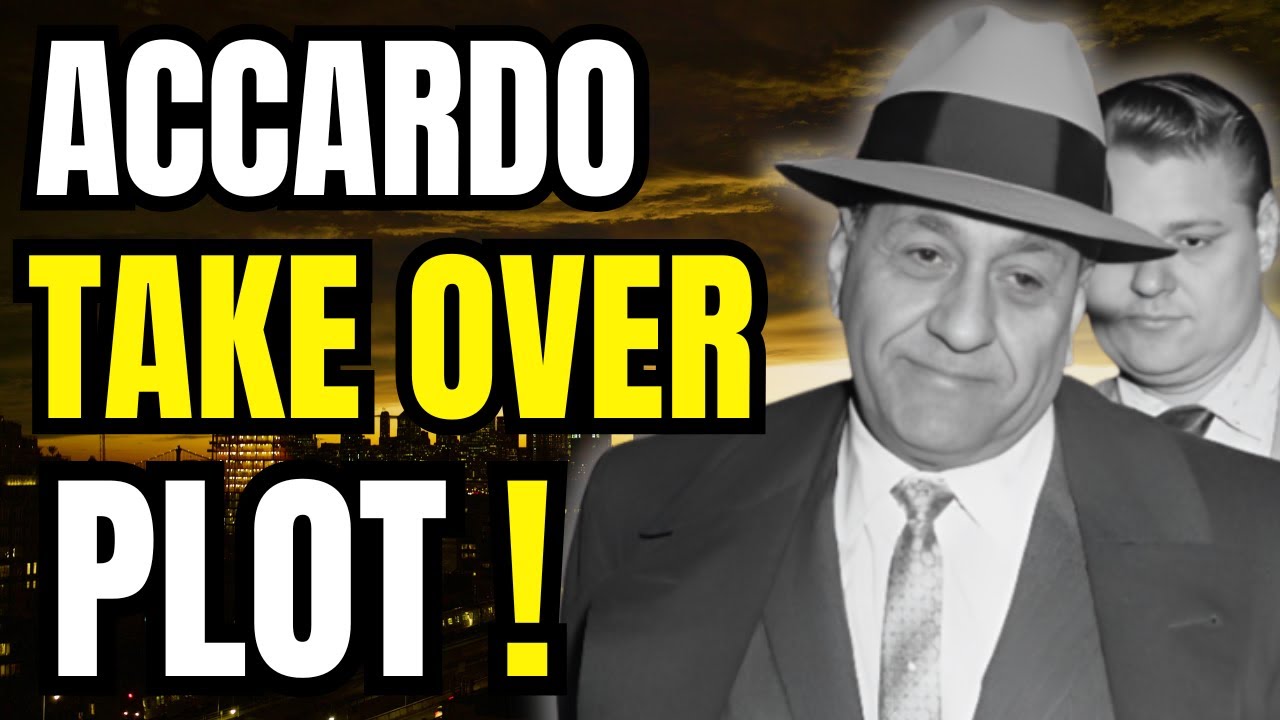
The recorded discussion centered on Giancana’s recent trip to the East Coast and Las Vegas, where he had met with New York family bosses Vito Genovese and Gaetano “Tommy Brown” Lucchese. The purpose of the trip was to push for the Chicago Outfit’s expansion into what were considered “open territories”—areas of the country where no single crime family had sole control. According to the FBI file, during his meeting with Vito Genovese, Giancana suggested that Chicago and the Genovese family should “get together and harmonize” on the issue. The suggestion reflected a long-standing relationship between the two organizations, which dated back to the late 1920s when Genovese’s predecessor, Joe Masseria, had made Al Capone a captain in his New York crime family.
The conversation between Accardo and Giancana also touched on the leadership of various cities. They identified John Larocca as the boss of Pittsburgh and Joe Ida as the boss of Philadelphia, though they noted that Philadelphia was in the process of getting a new boss. That new boss would eventually be Angelo Bruno, who took over the family after Larocca returned to Italy following a fight against deportation proceedings. One of the main obstacles for Chicago was its difficulty gaining power in Las Vegas and Tucson, Arizona—both considered open territories.
A significant problem in Arizona was the presence of Joseph Bonanno, the New York boss who owned a home there and spent much of his time in the state. Bonanno evidently considered Arizona his territory, even though the Commission had never officially assigned it to him. Accardo told Giancana that he would like to personally visit Bonanno in Arizona and confront him about his assumption of control in Tucson, where he had reportedly installed his son. The FBI file quotes Accardo as saying he would ask Bonanno “what he thought he was doing.
”
The two Chicago leaders then discussed how to build support within the Commission, which they described as a nine- or twelve-man body intended to mediate jurisdictional disputes in open territories. Accardo advised Giancana that he could count on votes from Vito Genovese, Joe Profaci, and Joe Bonanno of New York, as well as Joe Ida of Philadelphia, an unnamed representative from Buffalo, and Joe Zerilli of Detroit. With a twelve-man commission, Giancana would need seven votes for a majority and six for a standoff. In his autobiography, A Man of Honor, Joseph Bonanno later described Chicago’s unusual relationship with the Commission.
He wrote that Chicago’s representatives generally stayed aloof from Commission business unless it affected them directly, enjoying a quasi-independent status. Unlike New York, which had five families, Chicago had only one, which created less tension and allowed the Chicago people greater scope to solve their own problems. Bonanno also noted that it was not in Chicago’s interest to become involved in the perpetual discord that occupied much of the Commission’s attention in New York. In the FBI recording, Accardo also recounted his recollections of who sat on the Commission, naming Profaci, Steve and Pete Magaddino, Vito Genovese, Joe Ida, Zerilli, Tommy Brown, Joe Bonanno, and a representative from Boston—possibly Raymond Patriarca of Providence, Rhode Island.
Accardo’s comments about Albert Anastasia are more difficult to interpret. The FBI file states Accardo claimed that Bonanno “must have taken Albert Anastasia’s cut” after Anastasia was murdered in 1957. He then referenced putting three men on the Commission, including the father-in-law of Tommy Brown’s son. Giancana replied that “they don’t put him on because he was an official.
”
It remains unclear exactly what Accardo meant. One interpretation is that Bonanno held the proxy vote for Anastasia’s former family. Another is that Accardo was referring to how the Anastasia family was represented by three high-ranking individuals during a period of internal dispute. The father-in-law mentioned may have been Carlo Gambino, whose son Tommy married Lucchese’s daughter Frances.
Giancana’s comment about not putting him on because he was “an official” may have actually been a misstatement, with the pair meaning that Gambino was not yet confirmed officially as the family boss and was only serving in a provisional capacity. Despite the internal interpretations, the broader outcome is clear. The Chicago Outfit eventually succeeded in establishing itself as the dominant power in Las Vegas for the following two decades after 1959.