The world was stunned when news broke that Charlie Kirk, the controversial political commentator and founder of Turning Point USA, had been shot and killed during a public speaking event at Utah Valley University. At just 31 years old, Kirk’s death sent shockwaves through political circles, the media, and unexpectedly, Hollywood. Among the earliest and most surprising celebrity voices to react was actor Chris Pratt. Known for his roles in Guardians of the Galaxy and Jurassic World, Pratt took to social media with a heartfelt message that instantly made headlines.
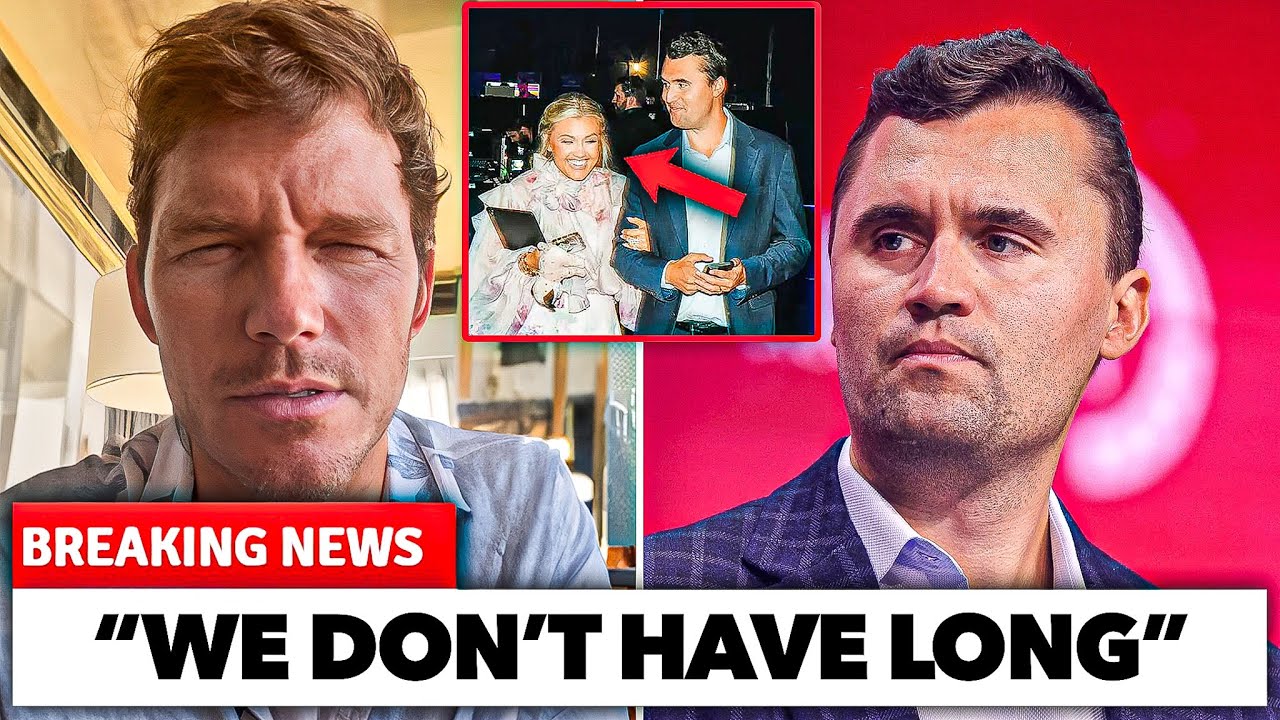
But what he said, and how he said it, ignited debate across the political spectrum. Within hours of the tragic news, Pratt posted a simple yet emotional message: “Praying for Charlie Kirk right now, for his wife and young children, for our country. We need God’s grace. God help us.
”
The message resonated far beyond the screen. Retweets and shares mounted, and comments poured in from all sides. Some offered support, while others dissected his words. The core of Pratt’s message wasn’t political—it was rooted in prayer, empathy, and a plea for healing.
Unlike statements laden with ideology or blame, Pratt’s post used universal language: family grief, national anguish, faith, and a call for grace. It acknowledged pain without pointing fingers. Media outlets quickly picked up the post, highlighting how a well-known Hollywood actor had chosen to lead with compassion rather than confrontation. Pratt’s response stood out for its brevity and tenderness.
He didn’t mention policy, ideology, or blame. He didn’t align himself with any side. He simply expressed grief, concern for Kirk’s family, and a yearning for divine mercy. The post triggered an avalanche of responses.
Supporters praised Pratt for leading with heart, with fans commenting that his words were “what we needed right now. ” Many noted the actor’s consistency in using his platform to promote unity and prayer in the face of tragedy. However, critics questioned the timing, the vagueness, and even the sincerity of the post. Some argued that referencing Kirk at all, given his political background, was a coded political statement, even though Pratt had made no mention of politics whatsoever.
Others misunderstood the message entirely, interpreting it as an endorsement of Kirk’s views. The reaction revealed the growing difficulty celebrities face when commenting on real-world tragedies, especially when the individual involved is politically polarizing. But Pratt never responded to the backlash. He didn’t delete or edit his post.
And perhaps that silence was intentional. While the internet dissected and debated, Pratt stayed true to the tone he had set. He wasn’t trying to debate policy or align himself with any political movement. He was mourning a loss and expressing concern for a grieving family.
As the shockwaves from Kirk’s sudden passing continued to ripple across social media, Pratt’s message became the quiet spark that pulled other voices into the storm. More public figures, many of whom rarely engage with political stories, began to weigh in—not necessarily about Kirk himself, but about the meaning of loss in turbulent times. Matthew McConaughey emphasized unity, posting a short message urging people to take a deep breath before judging one another. Tim Allen simply commented a praying hands emoji under Pratt’s original post.
Mark Wahlberg shared a post reminding people that loss isn’t a time to keep score. Candace Cameron Bure offered direct condolences to Kirk’s family while steering clear of political commentary. A handful of country musicians, including Jason Aldean and Morgan Wallen, shared quiet tributes focused not on policy but on the suddenness of losing someone so publicly recognizable. This wave of public mourning, distinctly nonpartisan, shaped a rare moment where Hollywood’s usual ideological divide seemed to take a step back—not to agree or disagree, but to observe the humanity in grief.
Pratt’s name trended for over 36 hours. Not because of a film, not for a press tour, and not for anything he said that was directly political. It trended because his choice to mourn someone like Kirk openly with grace and without agenda opened the door to a flood of speculation, backlash, and surprising support. Online, users split sharply.
Some thanked Pratt for being one of the few major Hollywood stars willing to humanize someone like Kirk in death. Others accused him of amplifying a polarizing figure. But lost in the noise was the simplicity of what he had actually said. Pratt did not offer a political endorsement.
He didn’t echo Kirk’s views or justify them. Instead, he acknowledged the loss of a father, a brother, a son, a human being. Still, the internet dissected every syllable. News outlets ran headlines like “Chris Pratt breaks Hollywood silence on Charlie Kirk death,” spinning a moment of mourning into a narrative battlefield.
Even within Hollywood, the response to Pratt’s post revealed invisible lines drawn between image and ideology. A few stars unfollowed him in quiet protest, but others sent private messages of support. One insider claimed several Marvel castmates privately reached out to commend him for staying grounded, though no names were made public. By refusing to engage in online arguments, Pratt’s stance seemed to become a statement in itself—that you could show compassion without needing to justify it to the world.
Behind the scenes, the entertainment industry found itself quietly reacting. For most major studios and production companies, the strategy was clear: silence is the safest statement. Press representatives reportedly advised Pratt to let the tribute stand on its own and avoid follow-up commentary or interviews. A source close to the Jurassic World set remarked that Pratt “didn’t come into work the same way.
The mood shifted. Some crew members asked if he was okay. He simply said, ‘I’m grieving. ‘”
Some of Pratt’s co-stars stepped forward privately, in more intimate ways than public posts.
One Marvel co-star who asked to remain anonymous shared, “We all got text messages from him, not PR talk, just a person asking how we were. ”
As far as bookings and endorsements, Pratt didn’t receive any public cancellations. His upcoming film promotions continued, albeit with slightly toned-down messaging. New supporters emerged, sending tributes and encouraging his integrity.
Pratt didn’t pivot or clarify. He didn’t release a second statement. He didn’t debate critics or talking points. That decision in itself became something resembling a policy—one that prioritized authenticity over damage control and compassion over trending discourse.
The post also lit a firestorm among fans of the Marvel universe, where Pratt plays a beloved character. Some applauded him for expressing compassion in a chaotic moment. Others questioned why he would acknowledge someone as controversial as Charlie Kirk. Marvel fans split sharply.
Many posted supportive messages saying things like “Good on you for praying and thinking of others. ” Others fired back: “Why now? What about all the other injustices? ”
In response to the volume of reactions, Pratt shared a Bible verse on his Instagram.
No name, no context, just scripture. He followed that with one more post: “Take a moment, go outside, call someone you haven’t spoken to. ”
A minority of fans reacted sharply, accusing Pratt of being tone-deaf or opportunistic. “You’re an actor.
Entertain us. Don’t politicize,” some wrote. Despite the turmoil, several of Pratt’s fellow actors, particularly within the Marvel crew, sent private messages of support. As the dust settled, a different kind of reaction emerged—from churches, Christian influencers, and faith leaders.
Pratt, long known for his outspoken belief in God, had unintentionally sparked a conversation that went far beyond Charlie Kirk. It became a flash point for the broader cultural role of faith itself. Mega pastors, YouTube pastors, and local faith communities began referencing Pratt’s simple prayer in their sermons and podcasts—not to praise Kirk, who remained divisive even in Christian circles, but to focus on the value of pausing to grieve, to pray, and to show compassion in polarized times. One pastor noted, “You don’t have to agree with someone’s politics to mourn their death.
Jesus wept for people who didn’t vote like him. ” Another said, “Chris Pratt reminded us that kindness doesn’t need approval. ”
Pratt didn’t follow up with a sermon of his own. He didn’t post again about the issue.
He didn’t defend his beliefs or try to capitalize on the spotlight. And maybe that’s what gave his message more power. It stood alone. A few viral clips began circulating on TikTok and Instagram, comparing Pratt’s post to older messages from celebrities like Denzel Washington or Keanu Reeves, who’ve also been praised for quiet empathy rather than political reaction.
In the days that followed, the conversation didn’t explode. It echoed—the kind of slow, steady hum that lingers when a stone is dropped in still water. There wasn’t a headline-grabbing debate or a viral backlash, just a strange reflective calm that settled over both fans and critics. His words continued to ripple through unexpected spaces.
A conservative student group at a university held a candlelight vigil not just for Kirk, but for respectful dialogue. A progressive podcast gave a rare nod of appreciation to Pratt—not for political alignment, but for dignity in the digital age. Even more curiously, celebrities who typically never wade into political waters began posting ambiguous tributes of their own—not to Kirk directly, but to the idea of grieving well even in conflict. The moment didn’t unify America.
But it revealed something important: that amid all the noise, there is still room for grace. Chris Pratt didn’t change the world or end division. But he reminded people that not every response has to be loud, that grief can exist without agenda, and that prayer doesn’t require permission from the internet.