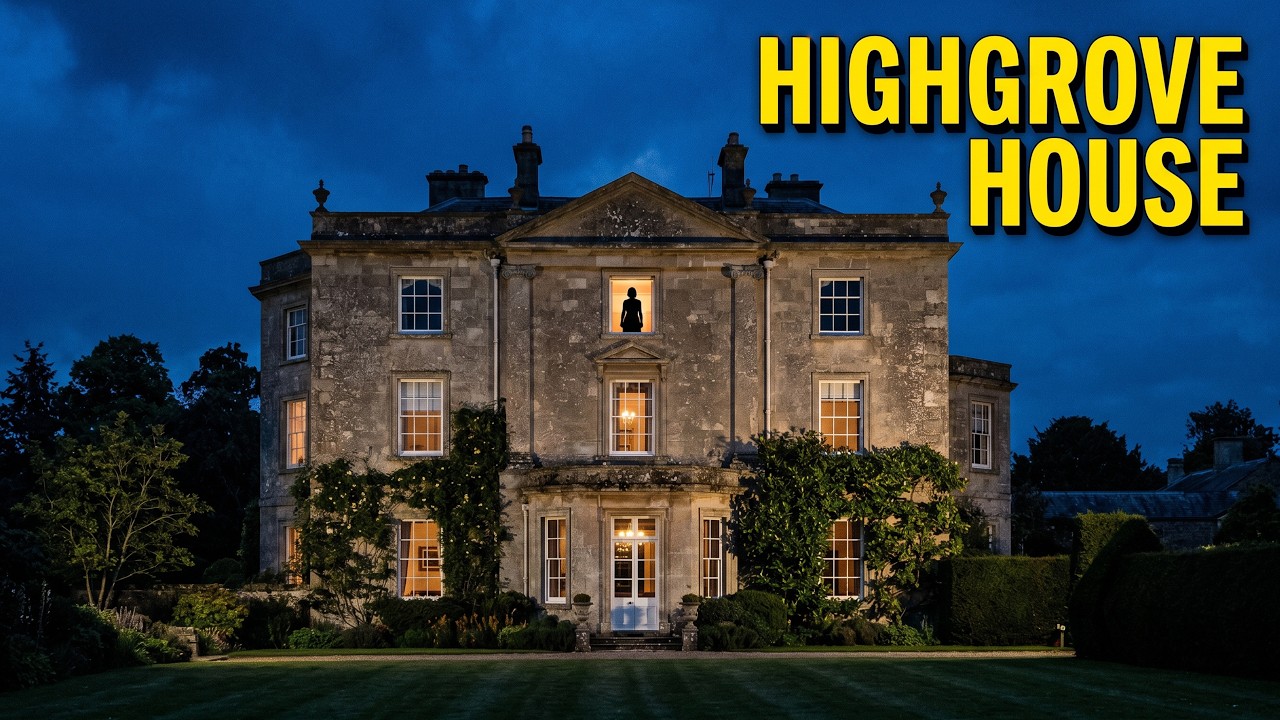
Every spring, 15,000 visitors pay £30 each to walk the gardens of Highgrove House in Gloucestershire. They admire the wildflower meadows, the time walk, and the stumpery built from 300 ancient oak roots. Guidebooks call it a living masterpiece. But on the first floor, there was once a room where Diana Spencer sat alone for entire weekends, listening to the phone ring in her husband’s study.
She knew exactly who was on the other end of the line. Camilla Parker Bowles lived 11 miles away. In the summer of 1980, Prince Charles was 31 years old, the most eligible bachelor in the Western world. The press followed his every date and rumor, but while they watched his romantic life, Charles was quietly shopping for a country estate.
He settled on Highgrove House, a nine-bedroom Georgian manor on 347 acres near Tetbury. Built between 1796 and 1798, it was handsome but not grand. The asking price was £865,000, and the seller was Maurice Macmillan, son of former Prime Minister Harold Macmillan. The Duchy of Cornwall handled the purchase.
Why Gloucestershire? Charles wanted a working estate where he could farm and experiment with organic agriculture. He had spent his 20s feeling displaced, and he wanted a place that was his. Highgrove needed work, and the gardens were neglected.
He could shape the land according to his vision. The neighborhood also suited him. Gloucestershire was home to the Beaufort Hunt and old families with old money. And living 11 miles down narrow Cotswold lanes were Andrew and Camilla Parker Bowles.
Charles and Camilla had met in 1971. Their relationship had been complicated by his Naval career and her marriage to Andrew Parker Bowles in 1973. By 1980, Camilla was settled into county life with two children. She and Charles remained close.
The distance between Highgrove and her home at Middlewick House was 11 miles, about 14 minutes by car. Diana was 20 years old when she first saw Highgrove. The wedding took place on July 29, 1981, at St. Paul’s Cathedral, watched by an estimated 750 million people.
Diana arrived at Highgrove as the most famous woman on the planet, but she walked into a house that already belonged to someone else emotionally. Charles had chosen it, and he had begun reshaping it. Diana hired South African interior designer Dudley Poplak to redecorate. She wanted chintz, color, family photographs, and warmth.
She wanted the house to feel like a home. But Charles had strong opinions about taste and architecture. The interior was Diana’s project, but the exterior—the gardens, the farm, the landscape—was Charles’s. In a marriage already struggling to find common ground, this division of territory was early evidence of separation.
Diana was a Londoner at heart. Highgrove was beautiful, but also remote. The nearest town, Tetbury, had a population of around 5,000. For a young woman whose social life had revolved around London, Gloucestershire felt like exile dressed up as paradise.
Prince William was born on June 21, 1982, at St. Mary’s Hospital in Paddington. Prince Harry arrived on September 15, 1984. For a few months, Highgrove felt as Diana had hoped—warm, full, and alive.
Staff later recalled that Diana was happiest during these years, engaged and purposeful. But while Diana filled the nursery, Charles was filling the garden. The transformation of Highgrove’s grounds began in earnest in the early 1980s. He sought out naturalist Miriam Rothschild, who advised him on wildflower meadows.
He consulted garden designer Rosemary Verey, who helped shape the formal areas closer to the house. The time walk, planted with dozens of varieties along a flagstone path, became one of Highgrove’s most celebrated features. Charles was obsessive about the gardens. He spent hours walking the grounds, notebook in hand.
The garden budget grew into something extraordinary, with rare plants sourced from specialist nurseries and investments running into millions of pounds, funded through the Duchy of Cornwall. Diana watched this unfold with boredom and resentment. Later, in conversations documented in Andrew Morton’s biography, she described the loneliness of watching her husband walk out every morning to spend the day in the garden while she sat inside with two toddlers. The social dynamics of Gloucestershire amplified Diana’s misery.
In London, Charles and Camilla could be discreet, but in the country, discretion was nearly impossible because it was unnecessary. Everyone in their circle knew about the relationship or suspected it. Camilla was a regular guest at dinners where Diana was also present. Diana was expected to socialize with the woman she believed was her husband’s lover.
In the world of Gloucestershire county life, affairs were understood and discretion was valued. Diana was not from that world. She felt things openly and expressed them directly. The distance from Highgrove to Middlewick House could be driven in 14 minutes, and Charles knew the route by memory.
Diana later told friends she understood the significance of Highgrove’s location before she fully understood the significance of Camilla. The house was not chosen only for its architecture or farmland, but because it placed Charles within easy reach of the woman he had never stopped caring about. Charles’s defenders point to practical reasons for choosing Gloucestershire, including the Duchy of Cornwall’s interests in the region and the Beaufort Hunt. Diana did not believe the proximity was incidental.
Charles spent more hours consulting with Miriam Rothschild about wildflower seeds than he ever spent consulting Diana about their marriage. He kept notebooks about his garden and wrote extensively about his plans for the landscape. In 1993, he published a book about the gardens at Highgrove. He wrote about earth, growth, and patience.
He did not write about Diana. By the mid-1980s, the garden had become a statement of identity. The wildflower meadows were an argument against industrial agriculture. The organic kitchen garden was a rebuke to chemical farming.
The hedgerows were a defense of biodiversity. Miriam Rothschild’s influence was profound. She was a scientist, an entomologist, a Fellow of the Royal Society, and a woman of fierce eccentricity who wore Wellington boots to formal dinners. Rosemary Verey worked with Charles on the formal areas, and the time walk was her masterpiece.
The stumpery, built in the late 1990s, used approximately 300 root stumps of ancient oaks. Each project consumed Charles’s attention for months or years. Diana saw a man who could love something deeply, passionately, with his whole self, as long as that something was not her. By the late 1980s, the gardens covered nine acres of intensively designed landscape, with 347 acres of wider parkland and farmland beyond.
The estate employed a full team of gardeners. The kitchen garden produced enough organic vegetables to supply the house and eventually contribute to what became Duchy Originals. Charles’s relationship with the gardens has often been framed as enlightened. He was decades ahead of the mainstream in organic farming and sustainable land management.
But achievement and intimacy are not the same thing. The garden bloomed while the marriage withered. In 1989, a conversation between Charles and Camilla was recorded. The details of how the recording was made remain disputed.
Some accounts attribute it to an amateur radio enthusiast, while others suggest deliberate surveillance. What is not disputed is the content. The conversation was intimate and affectionate. It was made while Charles was at Highgrove.
The recording was not published until January 1993, when transcripts appeared in the press. The “Camillagate” tapes, as they became known, confirmed what many had suspected and what Diana had known for years. Diana had described the experience of being in the house, hearing the phone ring in Charles’s study, knowing who was calling and what was being said. Few had fully believed her.
The tapes made them believe. Diana described this experience to Andrew Morton, whose biography “Diana: Her True Story” was published in 1992. The book, based on tape-recorded interviews with Diana herself, was an earthquake. It revealed the depth of Diana’s unhappiness, her struggles with bulimia, her feelings of isolation, and her knowledge of Charles’s relationship with Camilla.
The combination of Morton’s book in 1992 and the Camillagate tapes in 1993 created a public crisis the royal family could not contain. But inside Highgrove, the crisis had been ongoing for years. The phone calls were not a revelation. They were a routine.
Everyone knew, and knowing changed nothing. What the tapes destroyed was the pretense. They made it impossible to maintain the fiction that the marriage was merely going through a difficult patch. At some point in the late 1980s, Diana simply stopped going to Highgrove.
The withdrawal was gradual. She found reasons to stay in London—engagements, meetings, dinners with friends, the boys’ schools. Every excuse was reasonable and also a lie. Kensington Palace became her real home.
She decorated it to her taste without compromise. The weekends told the story. Charles stayed at Highgrove, and Diana stayed in London. Staff at Highgrove noticed the change long before the public did.
The entire domestic rhythm of the house shifted to accommodate a single occupant. Charles’s life at the estate improved when Diana stopped coming. The tension left the house. The arguments stopped.
He could walk his gardens, tend his farm, and have friends for dinner. He filled the space Diana left with routine, gardening, and correspondence. For Diana, the decision to stop visiting was both a surrender and an act of defiance. She was surrendering the idea that the marriage could be saved and refusing to continue performing.
In December 1992, Prime Minister John Major stood before Parliament and announced that the Prince and Princess of Wales had decided to separate. Highgrove was no longer a family home. It was a bachelor residence occupied by a man in his mid-40s whose marriage had publicly collapsed. William and Harry continued to visit for carefully managed weekends.
Charles built a treehouse for them and let them ride the farm vehicles. Highgrove may have failed as a marital home, but as a father’s weekend retreat, it functioned. Diana gave her Panorama interview in November 1995, watched by nearly 23 million viewers. She spoke about Charles’s relationship with Camilla and said there were three of them in the marriage.
The interview was filmed at Kensington Palace, not Highgrove. The divorce was finalized in August 1996. Diana received a settlement reported to be around £17 million plus an annual allowance of £400,000. Highgrove was not part of the settlement.
It had never been hers to claim. It was Duchy of Cornwall property, and it remained with Charles. Diana threw herself into charity work, particularly her campaign against landmines, which took her to Angola and Bosnia. She was finding a version of happiness that had eluded her during the marriage.
But the shadow of Highgrove never entirely lifted. On August 31, 1997, Diana died in a car crash in Paris. She was 36 years old. Charles was at Balmoral with William and Harry.
It was Charles who told his sons that their mother was dead. The public grief was oceanic. Flowers piled outside Kensington Palace in drifts that reached waist height. The funeral was held on September 6 at Westminster Abbey.
Earl Spencer’s eulogy was fierce and pointed. Elton John played a revised version of his song for Marilyn Monroe. After the funeral, Charles returned to Highgrove. The autumn plantings had to go in.
The meadows had to be cut. The gardens needed tending because gardens do not pause for grief. What Highgrove held after Diana’s death was not a memorial. It was an absence.
Today, walk through the house and you will find no portrait of Diana on the walls, no room preserved as she left it, no plaque, no dedication, no trace. Diana’s rooms were redecorated. Her choices were replaced. She is remembered in London, but not in Gloucestershire.
Today, the gardens open to visitors each spring and summer. Tickets cost £30 per person. The gift shop sells organic jams, biscuits, honey from the estate’s own hives, scented candles, garden tools, and books about the gardens. The Duchy Originals brand, now known as Waitrose Duchy Organic, grew directly from Highgrove’s kitchen garden.
The guided commentaries focus on horticulture, ecology, and Charles’s environmental vision. They do not mention Diana. The house itself is not part of the tour. Visitors see only the gardens.
On April 9, 2005, Charles married Camilla Parker Bowles at Windsor Guildhall. After the wedding, Camilla moved into Highgrove. The bedroom where Diana slept became Camilla’s bedroom. The drawing room where Diana sat alone became Camilla’s drawing room.
Camilla brought her own taste and her own furniture. She is, by all accounts, a woman of warm, unfussy style. In many ways, she is a better match for Highgrove than Diana ever was, because her temperament aligns with the house and the life it represents. When Charles became King on September 8, 2022, after the death of Queen Elizabeth II, Highgrove remained his personal retreat.
It is the only home he chose for himself, the only landscape he shaped with his own hands and vision. Camilla, now Queen, continues to use Highgrove as a country home. Highgrove has been carefully and thoroughly updated. Every surface has been touched, and every room has been reconsidered.
Diana’s fingerprints are nowhere. There is no room called Diana’s room, no wing associated with her memory, no corner of the garden planted in her honor. The gardens tell Charles’s story. Every planting is a chapter.
They are an autobiography written in chlorophyll and root systems. The 15,000 annual visitors feel the presence of the man who made them. They do not feel the presence of the woman who watched them being made from a window upstairs. Charles won Highgrove, not by conquest but by persistence.
He simply kept going. He kept planting, building, and walking the paths. His vision for the estate was stronger than his marriage, and the house shaped itself to its surviving owner. Diana exists at Highgrove only as an absence.
The gardens bloom more beautifully than ever, and somewhere in a room on the first floor, there is nothing left to tell you that a woman once sat there alone, listening to a phone ring in the next room, understanding at last that the house her husband built was never meant for her.