In February 1919, Hungary’s government was collapsing. The war was lost, the Allies were carving up the country, the army was gone, and the streets filled with workers demanding answers. The most powerful man in Hungary sat in a prison cell—and the government’s own ministers were coming to negotiate with him. That prisoner was Béla Kun, and he would dictate the terms.
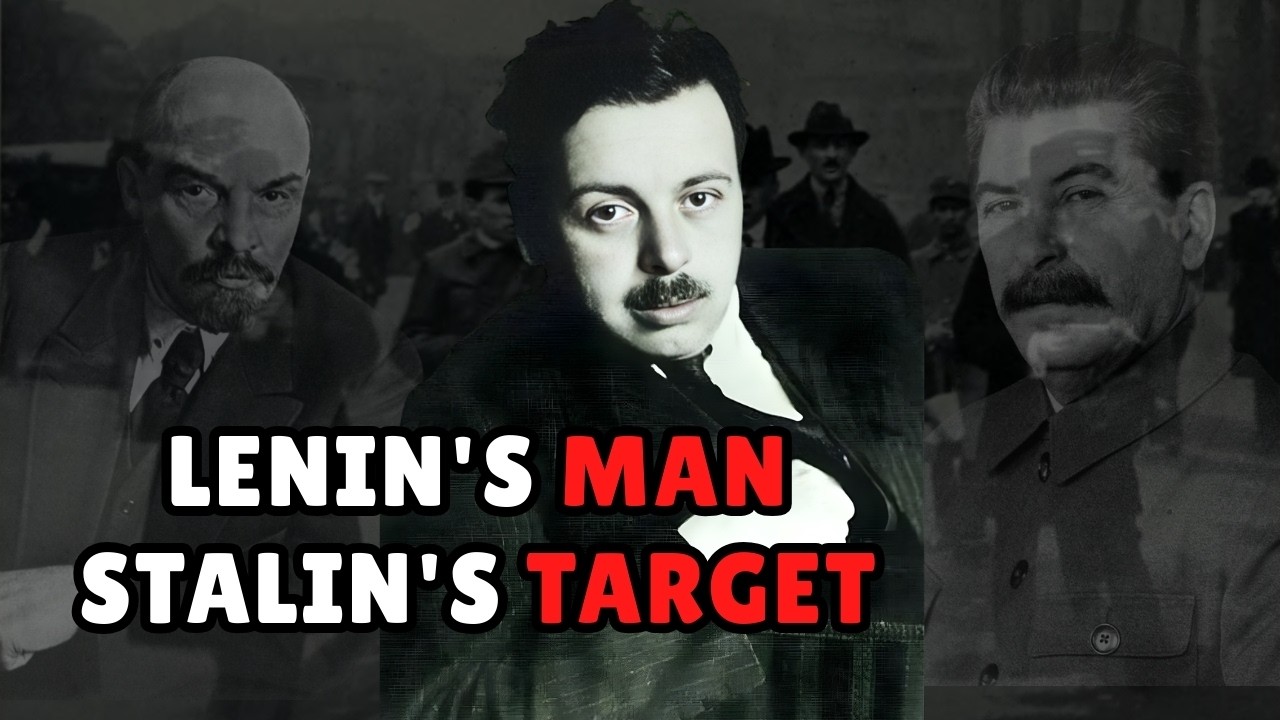
Born Béla Kohn on February 20, 1886, in the Transylvanian village of Léle, then part of the Austro-Hungarian Empire and now in Romania, Kun came from a Jewish family that had fully assimilated. His father was a village notary. In 1906, the young man changed his surname from Kohn to Kun. He studied law, abandoned it for journalism, and became an organizer for the workers’ movement in Transylvania.
In 1907, he was sentenced to six months in prison for writing a leaflet supporting a strike. Kun built a fiery reputation, known for both duels and politics. He was, by most accounts, difficult to be around and impossible to ignore. When Austria-Hungary entered the war, he was drafted and fought on the Russian front with the 21st Infantry Regiment of Kolozsvár.
In the summer of 1916, he was captured and sent to a prisoner of war camp in Tomsk, in western Siberia. He arrived as a social democrat. A year later, the Bolsheviks seized power in Petrograd. When the revolution reached Tomsk in December 1917, Kun walked out of the camp a convert.
He went to Petrograd, then Moscow. In March 1918, he founded the Hungarian Group of the Russian Communist Party, an organization of former Hungarian POWs who had embraced Bolshevism, recruiting them through the force of his speaking. Lenin noticed, but Kun was not Lenin’s man—he gravitated toward the ultra-radical faction that thought Lenin too cautious. Lenin called them “Kunerists,” and it was not a compliment.
Kun had aligned himself with Grigory Zinoviev, head of the Comintern and one of the most powerful figures in the early Soviet leadership. The two shared the same instinct: push harder, move faster, trust the revolution to carry everything. It was a bond that served Kun well for years and would eventually help kill him. Still, Lenin used him.
A man willing to export revolution to Hungary was too valuable to leave idle. In November 1918, the Austro-Hungarian Empire collapsed. Kun crossed back into Hungary with several hundred Hungarian communists and a large sum of Soviet money. His orders: build a revolutionary party and take power.
He arrived in Budapest on November 16. Eight days later, he founded the Communist Party of Hungary. Within three months, it had 30,000 to 40,000 members. From Moscow, Lenin watched every move by radio telegraph.
On March 21, 1919, Hungary became the second communist state in Europe. How it happened was extraordinary. Kun was in prison at the time, arrested weeks earlier after a demonstration ended in a shootout. The government’s mistake was allowing him visitors.
On some days, 400 people came to his cell. He directed the Communist Party from behind bars and became a martyr in the process. When the moderate government collapsed under Allied territorial demands, the Social Democrats—desperate for Soviet help against the Romanian army—came to negotiate with the prisoner. Kun dictated the terms.
He was released and sworn into office the same day his government was proclaimed. Two days after Kun took power, Lenin sent a direct order: purge the Social Democrats from the government; Hungary must become a genuine dictatorship of the proletariat. Kun obeyed every order from Moscow throughout the life of his government. He was not an independent leader.
He was a transmission point—the voice of Moscow speaking Hungarian. The republic lasted 133 days. Kun nationalized banks, factories, and estates. He refused to redistribute land to peasants, collectivizing it instead and keeping old landlords on as managers of state farms.
The peasantry, which had expected land, received nothing and turned against him. He unleashed special units known as the “Lenin boys” to suppress counterrevolution in the countryside. They operated without courts, without restraint, without mercy. The Soviet Red Army, which Kun had promised would come, never came.
It was fighting its own civil war. Hungary was alone. Romania invaded. The Hungarian Red Army fought and lost.
On August 1, 1919, Kun and his colleagues fled to Vienna, taking art treasures and the National Bank’s gold reserves with them. The White Terror that followed, unleashed against Hungarian Jews and communists, killed thousands and lasted years. In the summer of 1920, after nearly a year interned in Austria, Kun arrived in Soviet Russia. Stalin was not yet supreme leader; Lenin was still in power.
But the system Kun was entering was already taking shape. Kun was given command of the Crimean Revolutionary Committee. The White Army under General Wrangel had just been defeated, and the white soldiers had surrendered under a promise of amnesty. The promise was a lie.
Kun and his co-commander, Rozalia Zemlyachka, signed the order to execute the prisoners. Lenin approved it. What followed was one of the largest massacres of the civil war—tens of thousands of people who had laid down their arms were killed. The exact number is disputed and will likely never be fully known.
The scale is not. Victor Serge, a Bolshevik eyewitness who later became one of the revolution’s most honest critics, condemned Kun directly for what he called treachery toward the surrendered whites. For the next 15 years, Kun was one of Moscow’s most active operatives in Europe. In March 1921, he was sent to Germany to advise the Communist Party on revolutionary strategy.
He pushed them into what became known as the March Action, an aggressive offensive designed to seize power. It failed catastrophically. Lenin was furious. In a closed Comintern session, he used the French phrase “les bêtises de Béla Kun”—the stupidities of Béla Kun—and said publicly that the thesis behind the March Action was politically entirely false.
Kun survived. He was too useful to discard. Through the 1920s, he moved across Europe—Germany, Austria, Czechoslovakia—conducting undercover work for Moscow. In 1928, he was arrested in Vienna by Austrian police for traveling on a forged passport.
But the deeper problem was not the passport. It was Stalin. By the late 1920s, Stalin had destroyed Trotsky and was finishing off Zinoviev. Kun had been Zinoviev’s man in the Comintern for years.
When Stalin came for Zinoviev, every man connected to him became a question mark. Kun understood what that meant, and he did what the system rewarded. Back in Moscow, he began reporting fellow Hungarian communist émigrés to the OGPU, Stalin’s secret police—men whose removal served Stalin’s consolidation of the Comintern. Several of the men he named were arrested.
Some did not survive. Kun became a fanatical Stalinist, not reluctantly, not as a calculation, but with what appeared to be genuine conviction. He wrote that the strength of Soviet power lay first of all in the close organization of the party and its iron discipline. He believed every word.
He spent the early 1930s supporting Stalin’s “social fascism” line. He had personal reasons: the Hungarian Social Democrats had, in his view, betrayed him in 1919, and he could not forgive them. So he served Stalin’s line with the extra fury of a man whose ideology and grievances happened to align. For a time, it worked.
He remained a prominent Comintern figure. In 1935, Stalin changed course. The new line was the Popular Front—communists aligning with the very Social Democrats Kun had spent years attacking. Stalin had decided it, and the Comintern would implement it.
Kun was assigned to prepare the agenda for the Seventh Comintern Congress, where the change would be announced. Instead, he tried to sabotage it. This was not a policy disagreement. Stalin had given a direct instruction, and Kun had defied it openly—the one thing in 20 years of service Stalin would not absorb.
Kun was formally sanctioned for insubordination and dropped from the Comintern Presidium in July 1935. He tried to appeal directly to Stalin. Stalin refused to see him. That refusal was the verdict.
By September 1936, Zinoviev had already been shot. On September 5 of that year, Kun was summoned before the full Presidium of the Comintern. Dimitrov, Pieck, Gottwald, Togliatti, and Kuusinen were there—the most senior figures in international communism assembled in a room in Moscow. The accusation was delivered by Dmitri Manuilsky, Kun’s enemy within the Comintern, the man Kun had himself previously denounced to the NKVD as a Trotskyite.
Manuilsky had also reported Kun to the NKVD as a Trotskyite. Both accusations had gone to the same desk. Only one of those men would leave Moscow alive. Kun defended himself.
He said that in his circular letter, he had not meant to criticize Stalin, whom he considered one of the best existing communists. Nobody spoke in his defense. Dimitrov closed the session and referred the matter to a special commission. Kun was never examined by it.
According to Finnish communist Arvo Tuominen, who was present and recorded what he saw, Kun walked out of the meeting and was taken by three members of the security services. The formal arrest came on June 28, 1937. He was beaten at the point of arrest. The charges: leader of a counterrevolutionary terrorist organization and spy for Admiral Horthy’s Hungary.
The man who had helped build the Hungarian Soviet Republic, who had fled Hungary 20 years before because Horthy’s forces were trying to kill him, was charged with working for Horthy. He was tortured. Accounts describe him being forced to stand for 10 to 20 hours at a stretch until he fainted. When they brought him back to his cell, his legs were so swollen he could not stand.
He resisted for a long time. In the end, he confessed. He was tried before a judicial troika—three men, no defense, no appeal—found guilty and sentenced to death. The sentence was carried out the same day, August 29, 1938, at the Kommunarka shooting ground outside Moscow.
Ten of the 16 members of the first Central Committee of the Hungarian Communist Party were killed by Stalin. Eleven of the 20 people’s commissars of the 1919 Hungarian Soviet Republic were executed. The organization that had built the only communist state in Central Europe before the Second World War was almost entirely consumed. When Kun was posthumously rehabilitated in 1956, the Soviet Communist Party told its Hungarian counterpart that he had died in prison on November 30, 1939.
The date was a lie. He had been shot in August 1938, more than a year earlier. In 1989, 33 years after the false rehabilitation, the Soviet government finally acknowledged the truth. Moscow gave him his revolution, his orders, and the money to return to Hungary.
It gave him the ideology that told him violence was not a crime but a tool of liberation. He used it in Hungary. He used it in Crimea. He spent 20 years doing the work the system required.
And the system, when it had finished with him, did what systems do when they have finished with the people who built them. It erased him. Shot him. Lied about when.
Then, 30 years later, it named a street after him.