For seven weeks in the fall of 2004, one of the largest fortunes in the world put the first name of a young woman on a basketball arena in the middle of Missouri. The building cost $75 million and stood at the University of Missouri in Columbia, a city where the Walton family had roots far older than the retail empire the name would later call to mind. The name above the doors read “Paige. ” She was 22 years old, had graduated in May in Los Angeles, and had never attended a single class at the university whose arena carried her name.
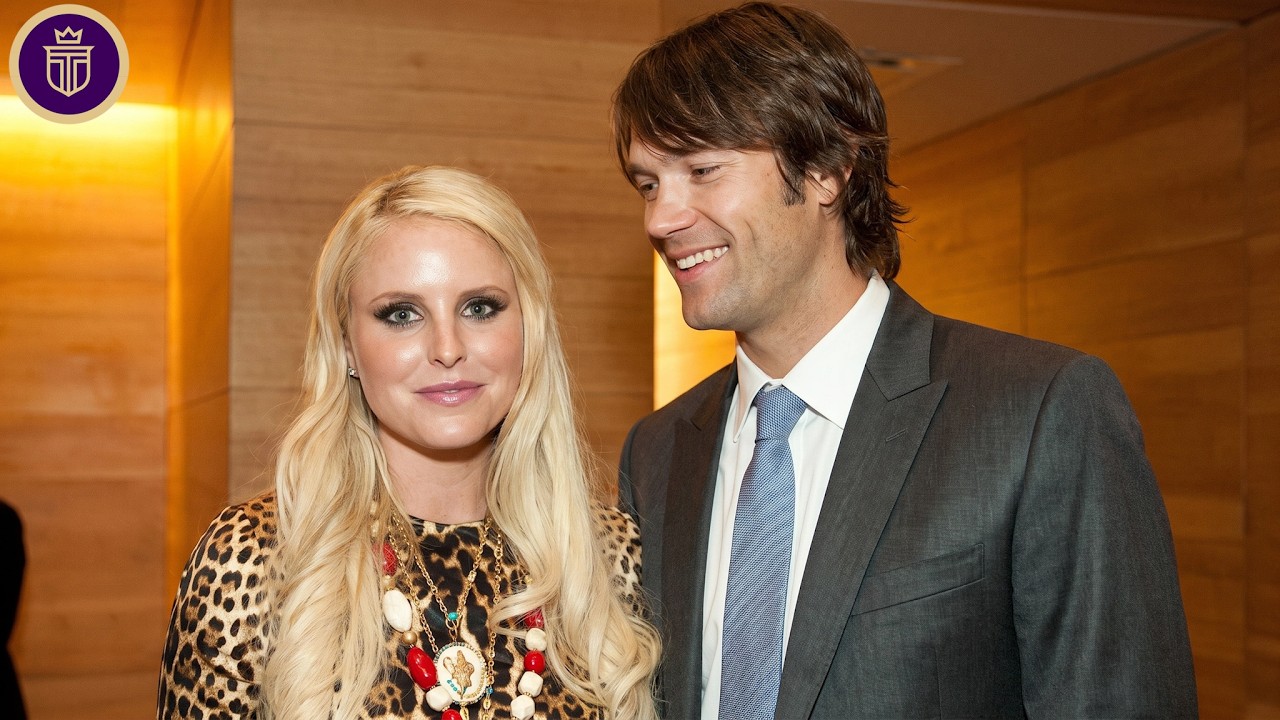
Her mother was the youngest daughter of James Lawrence Walton, known as “Bud,” the brother who helped Sam Walton turn an Arkansas variety store into the largest retail company on Earth. Her father was a former college basketball player who bought a National Hockey League franchise and named his family company after his daughter. Together, the couple gave $25 million to the arena, with the naming rights attached to the gift like a ribbon. Then a television crew found Elena Martinez, a former classmate at the University of Southern California, who said she had been writing Paige’s assignments for years.
What followed became one of the fastest reversals in the history of American college sports philanthropy. Almost none of it involved the daughter herself saying a single public word about any of it. The Walton fortune has always been unusual among American dynasties because it was built by two brothers who dressed like insurance adjusters and drove pickup trucks even after becoming billionaires. Sam Walton became the popular saint of the story, the man with the wallet and the bird dogs, while his brother Bud remained a margin note, which suited Bud perfectly.
Bud handled real estate and expansion, the unglamorous work of finding towns and buying land. The company surpassed 2,600 stores by the time he died in 1995. Half his fortune was split between his two daughters, Ann and Nancy, and it is Nancy’s branch that matters here. Nancy Walton married Bill Laurie, a Missouri man she had known since Versailles, the small central Missouri town where her father ran a store before the Arkansas empire began.
By the early 2000s, the couple owned a bank, a hockey team, a lease on an arena in downtown St. Louis, and enough aircraft and property to make a modest local tax assessor faint. Forbes has since ranked Nancy Walton Laurie among the 150 richest living people, with a fortune estimated in the tens of billions, and roughly $57 billion for the entire Bud Walton family branch. They had only one child, a daughter born in 1982, who grew up in Columbia, attended the local public high school, and was given the middle name “Paige,” the name the world would eventually know.
Nothing in 2001 suggested the Laurie family was heading toward a national scandal, because their public reputation in Missouri was that of generous locals who had succeeded and returned home to spend. They had donated to the veterinary medicine college, the athletics department, and the hospital appeals that every prominent Missouri family is expected to fund. The arena gift was meant to be the culmination of that record, a permanent thank-you carved into the busiest building on a leading campus. Sam Walton died in 1992, three years before his brother, and the shared fortune passed to children and grandchildren who had never worked a small-town cash register on a Saturday afternoon.
The second generation of that money behaved differently from the first, buying hockey teams, banks, and airplanes instead of land on the outskirts of towns nobody had heard of. In Columbia specifically, the Laurie name was tied to the ordinary machinery of a college town, appearing in veterinary medicine endowments and athletic fundraising drives throughout the 1990s. What the family appears not to have considered was whether Missouri would agree that this particular name deserved to be there. Bud Walton was born in Kingfisher, Oklahoma, in December 1921, the second son of a farm-mortgage man who moved the family wherever the mortgage work led.
The Waltons settled in Springfield when Bud was two, then Marshall, then Shelbina, and finally Columbia, a detail that makes the later arena story so strange. Bud attended Hickman High School in Columbia, played basketball there, and was elected class president his senior year, meaning the family’s Missouri roots were real, deep, and not merely decorative. He moved on to Wentworth Military Academy in Lexington, then joined the U. S.
Navy as a pilot during World War II, where he met and married a woman named Audrey during flight training. His two daughters, Ann and Nancy, were born into a family that had money the way small-town merchants have money, which is to say not much, all of it tied up in inventory. In 1962, Bud and Sam opened the first Walmart store in Rogers, Arkansas, and the arithmetic of American retail changed permanently. Sam was the evangelist and merchandise man, the one who walked store aisles at dawn asking cashiers what was selling.
Bud was the man who decided where the next store would go, and in a business built on distribution scale and cheap land, that judgment became a kind of alchemy. He kept a low profile, gave almost no interviews, and preferred to be described in company documents as his brother’s closest confidant. When Bud died in Miami in March 1995 at age 73 of an aneurysm, obituaries described him as the quiet founder of Walmart, almost exactly the obituary he had spent 40 years preparing for. Colleagues described him as relentlessly focused on where the company should be five years out, while his brother worked the sales floor of whatever store he happened to be in.
He was buried in Memorial Park Cemetery in Columbia, Missouri, half a mile from the campus from which his granddaughter’s name would later be erased. Two years before his death, the University of Arkansas opened a basketball arena in Fayetteville and named it after him. Bud Walton Arena still carries that name today without controversy of any kind. That building was named for a man who had funded it himself, grown up playing basketball in the region, and whose connection to the institution required no explanation for anyone.
His two daughters inherited his Walmart stake in 1995 and became overnight two of the wealthiest women in the United States. Ann married Stan Kroenke, whose family would later own professional sports franchises on an industrial scale. Nancy married Bill Laurie, and the two began transforming into Columbia’s most generous family. The inheritance came with an embedded lesson that the next generation appears to have read differently from how Bud had written it.
Nancy Walton and Bill Laurie met as young people in Versailles, and both later attended what was then Memphis State University. Bill played on the Memphis basketball team that reached the national championship final in 1973, a fact he rarely mentioned and his friends brought up constantly. He described himself for years afterward as a sports nut. After the inheritance, he had the means to satisfy that description on a scale almost unmatched in American sports.
The couple settled in Columbia and began assembling the kind of investment portfolio that quietly dominates a mid-sized state. They acquired Providence Bank, a Missouri lender, giving them a stake in the ordinary financial transactions of the towns where Walmart had made its first gains. They bought real estate in Missouri, California, and Nevada. They founded a family holding company and named it something that would later look like unfortunate evidence in itself: Paige Sports Entertainment, after their only child.
That naming choice in the 1990s tells you how completely their daughter occupied her parents’ imagination of themselves years before any university was asked to approve it. Their giving within the state was deep enough that by the late 1990s, any Missouri fundraiser hoping for a transformative grant would begin the conversation as a matter of course by asking whether anyone knew the Laurie family. In 1999, they bought the St. Louis Blues NHL franchise, along with the downtown arena lease where the team played, from a group of local investors in a deal estimated at $100 million.
They added the Worcester IceCats of the American Hockey League, the Blues’ development affiliate, because ownership in professional sports comes in stages. For a few years, Bill Laurie was among the most prominent sports figures in Missouri, a man who had moved from being a player on the Memphis State roster to a seat behind the glass at his own franchise. He also pursued larger goals, his name floated for years in connection with attempts to bring professional basketball back to St. Louis or buy an existing franchise outright.
None of those ambitions succeeded, and the hockey venture soon became one of the most expensive lessons in American sports ownership. In 2001, none of that was visible, and the family appeared to stand atop Missouri civic life. Meanwhile, the University of Missouri had spent years trying to replace the aging Hearnes Center with a modern basketball arena. It needed a lead donor willing to write the largest single check in athletics department history.
There was only one family in the state that everyone thought of first, and that family had a condition. Negotiations between the university and the Laurie family took a long time, and the sticking point was never the money. The family agreed to cover a third of the arena’s construction budget, a foundational gift of $25 million that allowed the rest of the funding to be raised. What they wanted in return was the name, and the name they wanted was not Bud Walton’s and not their own.
They wanted the building called Paige Sports Arena, after a daughter who was then a teenager preparing to leave the state for a private university in California. University officials agreed, thereby accepting a proposal that American higher education spent the next two decades learning to be cautious about. Putting the donor’s own name on a building at almost any campus is defensible because the gift and the honor fall in the same hands. A donor’s daughter’s name is a different deal entirely, because the honor transfers to someone who has done nothing to earn it except be born.
Missouri alumni understood that distinction immediately and without needing a seminar in philanthropic ethics to explain it. The announcement came in March 2004, months before the building was due to open, and the reaction in Missouri was immediate and unfriendly. The complaint was simple and repeated across newspaper letters columns, call-in radio shows, and athletics department correspondence through that spring and summer. Paige Laurie had never attended the University of Missouri, never played for it, never taught at it, and had no formal relationship with the institution of any kind.
Chris Carey, a Missouri graduate working for the Associated Press, described the arrangement as “a father buying the biggest dollhouse. ” The Columbia Missourian later wrote plainly, in a retrospective years afterward, that the Laurie family had used the leverage of their donation to put their daughter’s name on the building. Letters to Columbia papers made the point with the bluntness of Missouri alumni who had paid their own tuition, arguing that the arena belonged to the state, not to one family’s sense of occasion. The counterargument from the athletics department was practical and mostly unstated: a gift of this size had never come to Missouri athletics from any source, and donors of this magnitude are allowed some eccentricity.
Athletics officials absorbed the criticism, figured it would fade once the team started winning inside the new building, and proceeded with the signage. Through all of it, Paige said nothing publicly, and declined every interview request that came her way after the March announcement. Her silence in that period was read as ordinary privacy, and would soon be read as something else entirely. Paige Laurie’s path ran through Columbia and then straight out of it.
She attended Rock Bridge High School in the city, one of two large public high schools serving the college town, and by most accounts passed through local adolescence without incident or fame. She enrolled as an undergraduate at the University of Southern California in Los Angeles, an institution with a long tradition of not being shy about educating the children of the wealthy alongside the ferociously ambitious. She was assigned a first-year roommate named Elena Martinez, and that assignment is the hinge on which this entire story turns. Martinez came from Banning, California, an inland town far from the private-school pipelines that feed USC’s student body.
She had joined ROTC to help pay for her education, which tells you most of what needs saying about the financial gap between the two women sharing that room. According to the account Martinez later gave, the arrangement between them began as a simple favor, not a scheme. Paige needed help with one research paper during freshman year. Martinez wrote it and said she charged $25 for the work.
Martinez left USC because she could not afford the tuition, returned to Banning, and enrolled at Riverside Community College, the point at which an ordinary story of former roommates going separate ways usually ends. Instead, by her account, the work continued and expanded, and the money grew with it. According to what she said, Paige began mailing her textbooks and assignments for entire courses. She told journalists the work included research papers, oral presentations, and in some cases correspondence with professors.
Her account covered nearly every semester Paige attended, continuing for three and a half years by most reports’ estimate, or four years according to one report. She said her total compensation came to about $20,000. The specificity of that account is what made it dangerous, because it described logistical details rather than impressions, and logistical details can be verified. Nothing in the available records suggests anyone at USC noticed the pattern during those years, a fact that says as much about the institution’s attention as it does about either student.
In May 2004, Paige Laurie received a bachelor’s degree in communications from USC’s Annenberg School for Communication, and her family traveled to Los Angeles for the ceremony. Five months later, workers in Columbia were installing a sign for a building bearing her first name. The family that had funded a third of its construction cost had every reason to believe the summer of criticism was behind them. Somewhere in Riverside County, a young woman who had returned to community college watched the coverage of the sports arena and decided she was ready to talk about it publicly.
Paige Sports Arena opened in October 2004, and the Laurie family cut the ribbon. The building, by all accounts at the time, was a genuine improvement, a modern facility with sightlines and revenue-generating structure that Missouri’s athletics department had wanted since the 1980s. On November 4, Missouri’s men’s team beat Central Missouri in an exhibition game inside it, the first basketball game ever played there. The regular season followed, and the building hosted three games under the name the donors had chosen.
Three. That is the entire competitive lifespan of Paige Sports Arena as a name attached to an active college basketball program. It is the number that sets this story apart from other naming disputes in American sports. Buildings lose their names all the time, usually because a corporate sponsor goes bankrupt or a criminal conviction forces a university to act years after the fact.
Almost none lose their name within a month of opening, before the paint has fully dried. On the evening of Friday, November 19, Missouri’s men’s team played Davidson at home and lost, which was the least important thing that happened to the arena that night. At the same hour, ABC aired an episode of its news program 20/20 featuring a segment titled “Big Campus Cheaters. ” The segment examined academic fraud at American universities, and its centerpiece was a filmed interview with Martinez, identified as the former freshman roommate of the heiress whose name had just been put on Missouri’s new arena.
Martinez told the program she had written dozens of research papers for Paige Laurie and had been paid for the work over years. The timing carried an irony all its own: parents had bought a building to celebrate an academic achievement, and a television program chose opening week to question whether that achievement had happened at all. Within hours, callers to Columbia radio stations noted that the arena naming had been announced in March and the accusation came in November, an eight-month gap in which nobody had asked any questions. The Columbia Daily Tribune reported the next morning that the broadcast had landed hard in Columbia, which was an understatement in summary form.
By Saturday, the Columbia Missourian reported that as the basketball team collapsed against Davidson, the story of the arena’s namesake collapsed on prime-time television. The family issued one sentence through a spokesperson, the only public comment on the subject ever made by the Laurie side of the family. They said Paige Laurie’s college record is a private matter and that they would have no further comment. That sentence was meant to close the subject but instead worked as accelerant.
What Martinez described on national television was not a single act of academic dishonesty but an entire working relationship, and that difference is why the story spread the way it did. The first paper, by her description, was a favor, a small transaction between roommates for $25. What followed she described as a complete system, with textbooks arriving by mail, assignments sent out, deadlines managed across two time zones by a student who had left the institution in question. Her allegations included a specific number that has stuck to every telling of the story since: that she helped Paige maintain a 3.
5 grade point average. She said Paige would email critiques of submitted work, and quoted her as saying at one point, “This was awful. ” She described Paige as meticulous about assignments. She also described her own situation in words of unambiguous unhappiness, telling journalists she had thought of quitting many times but felt trapped, dealing with a figure of significant influence.
In another moment, she said the arrangement was in some way enjoyable because she was receiving the good education she had aspired to for herself and could no longer afford. That single remark did more damage in Missouri than any financial figure in the story, because it described the mechanics of American class in one sentence that a factory worker in Sedalia could understand instantly. One young woman had the money and did not care about the education. The other had the passion and did not have the money.
The arrangement, as alleged, moved the education from the person who wanted it to the academic record of the person who did not. Martinez said she eventually became uncomfortable enough to cooperate with a university investigation into the matter. Missourians who had objected to the naming on merit grounds found their objection transformed overnight into something closer to a moral cause. The arena had been built with money from a discount retail empire whose customers were the same kind of people who could not afford USC, and a young woman from that side of the equation had just described writing research papers for the family that owned the empire.
It is important to be precise about what was proven at this point, which is nothing. These were one-sided claims aired by a television program, never confronted by a counter-narrative because the other side declined to provide one. Donald McCabe, a Rutgers researcher who spent his career studying academic dishonesty in American higher education, told the Columbia Missourian he had never encountered an alleged case of this scope, noting that involving another student in cheating at that level carried considerable risk. The person most capable of rebutting the account remained completely silent.
Into the vacuum created by her silence, the state of Missouri began deciding the matter for itself. The weekend following the broadcast was a model of institutional paralysis. The University of Missouri, which owned a brand-new arena with a controversial name on its facade, declined to take a position on anything. Athletics director Mike Alden had no immediate comment on the 20/20 report.
Brad Fuller, the athletics department’s media relations director, said on Saturday that both he and Alden would not discuss the matter. Tim Devine, a Missouri faculty member concerned with academic integrity, declined to speak and suggested the university speak with one voice, which it was achieving at that point by not speaking at all. Edward Adelstein of the faculty council was more blunt, saying he did not expect the university to take any action at all. Their caution was legally logical and institutionally catastrophic, because in the absence of official comment, the story belonged entirely to the people in the stands.
Missouri alumni, who had spent eight months objecting to the name on principle, now had a sharper argument. Paul Welch, a 1968 graduate, gave the Associated Press the line that captured the general mood better than any editorial. He said, “If your daughter wrecks the car, you take the car away from her. ”
Students inside the building were already treating the name with a kind of sarcasm, and after the broadcast the sarcasm turned into something closer to civic insistence.
Local reports from that week describe mounting pressure from students and alumni on the athletics department and the university system to act. It should be stated plainly here that the widely repeated claim of a formal petition campaign with a documented number of signatures does not appear in the available contemporary reports, and this text will not affirm it. What the record shows is a university under sustained public pressure from its own alumni, a donor family under a level of scrutiny they had never experienced, and a basketball program trying to sell tickets to a building whose name had become a punchline on national television. Ticket holders were arriving at a new building for a season they had waited years to see, while the name printed on their tickets became a national joke in a single weekend.
The athletics department realized the situation would repeat at every home game for the next thirty years unless someone intervened, since the name was carved into the architecture, not printed on a banner. For their part, Missouri system officials had no legal path to remove a name granted under contract in exchange for a gift already spent on construction. Someone had to move, and the university had made clear it would not be the one. On the Tuesday following the broadcast, the phone call that resolved the matter came from the donor side, not the administration.
On November 23, 2004, four days after the broadcast, Bill and Nancy Laurie relinquished the naming rights they had purchased. This mechanism matters because it is routinely described inaccurately. The University of Missouri did not strip the name from the building over the family’s objections, and no board voted to override a donor’s wishes. The Lauries returned the naming rights voluntarily.
Only after that did the university proceed to choose a replacement name. Officials declined to explain why the family gave up the rights, and declined to disclose whether any portion of the foundational gift would be refunded. The family, true to its brief statement about privacy, offered no additional details. Three days later, on Friday, November 26, the Board of Curators of the University of Missouri system met by conference call.
System president Elson Floyd proposed a new name for the arena. The proposal was the least creative and most defensible option available to him: Mizzou Arena. The curators approved the name without opposition. The entire call lasted about three minutes, likely a record for renaming a major American sports facility.
The new name went up immediately, and by the following week signage crews returned to the building to remove work they had finished six weeks earlier, a task no contractor seeks to do twice. Then the university took a further step, in a way easily missed in archival records. Mention of Elizabeth Paige Laurie was almost entirely removed from the facility, retained only to the minimum degree required to acknowledge that the Laurie family had provided the grant that built it. The parents remained registered donors, recognized as such.
The daughter effectively vanished from a building that had carried her name across its facade at the start of the month. Elson Floyd had inherited the problem rather than created it, which may explain the efficiency with which he handled it. His choice also solved a business problem, because a name belonging to the institution rather than any individual would never need replacing again. Sports business commentators of that period noted the speed and decisiveness with something approaching admiration, noting that institutions of that size usually need years to reverse a decision of this visibility.
The Chronicle of Higher Education described the result in the dry language of business journalism, noting that Paige Sports Arena signs would be removed and replaced with a less controversial name. The phrase “less controversial” carried a great deal of meaning in that sentence, and everyone who read it in Missouri understood exactly what it was implying. One institution that had given Paige Laurie something remained, and it maintained a silence that lasted nearly a year. USC had opened an investigation almost immediately after the broadcast.
Michael Jackson, vice president for student affairs, offered the only recorded judgment USC issued during the entire affair, saying the matter was disappointing and struck at the heart of integrity. Then USC did what major private universities with huge donor bases and strong legal departments do: it did nothing concrete for a very long time. Eleven months passed. During those eleven months, the sports arena in Columbia settled into its new name.
Missouri’s basketball team played a full season inside it, and the national press moved on to other things. Martinez, who had cooperated with the investigation, faded from view and became unreachable to journalists via an unlisted phone number. Paige Laurie made no public statement of any kind. Then, on September 30, 2005, USC issued a three-sentence written statement that ended the matter for good.
It said: “Paige Laurie has voluntarily relinquished her degree and returned her diploma to the university. She is not a graduate of the University of Southern California. This concludes the university’s review of allegations regarding Ms. Laurie.
” The statement was dated at the end of September, was not widely distributed, and did not reach the general public until about October 19 and 20 after the university’s student newspaper published it and news agencies picked it up. The timing of its release invited suspicion, coming at the end of September, written without a press conference and without an official available to answer questions about how the conclusion was reached. A student newspaper, rather than the institution itself, effectively broke the news of a degree being returned by one of the most expensive universities in the country. The precise distinction within that statement is the most frequently distorted element of this entire story.
USC did not announce that a degree had been revoked. It did not publish a finding that Paige Laurie had cheated. It announced that she had returned the credential on her own initiative, and therefore its review had concluded. Whether that relinquishment was genuinely voluntary or a negotiated outcome that spared both parties an official ruling is a question the surviving records cannot answer.
Honest treatment of the story requires saying that rather than guessing. James Grant, a USC spokesman, told journalists the university had no further comment. The Los Angeles Times, The New York Times, NPR, and CBS News published the same three sentences within a day of one another. This was the second time in eleven months that an American university formally removed Elizabeth Paige Laurie’s name from something.
This time, what was removed was not a sign on a wall but a college diploma that had taken four years to nominally earn. The account the parents faced came on a slower timetable and in a different currency. Nine months before USC told the public anything, the Laurie family had begun looking for a way out of professional hockey. The St.
Louis Blues were put up for sale in June 2005, in the middle of a labor dispute that caused the cancellation of an entire NHL season and collapsed the franchise market. By the end of September, days before the USC statement was written, the family reached an agreement to sell the team and arena lease to SCP Worldwide, an investment group led by Dave Checketts, former president of Madison Square Garden. The deal closed on March 24, 2006, for an estimated $150 million. The league’s Board of Governors approved the sale that June.
On paper, the family had bought a hockey team for about $100 million and sold it at a profit of half that amount. In practice, the St. Louis Business Journal estimated that seven years of operating losses, arena obligations, and team spending left the Laurie family with a loss of about $285 million on the venture. They left St.
Louis sports quietly, without the farewell interviews owners of their stature usually give. The hockey losses were not connected to their daughter in any way, and it is worth clarifying that, since the two stories ran in the same news cycles and are often confused when retold. What the two stories shared was a lesson about the limits of buying standing within institutions that have their own histories, whether an NHL market or a prestigious state university. Their philanthropy in Missouri continued, though it shifted toward less visible forms of recognition.
The family funded a chair named for E. Paige Laurie at the equine center of the University of Missouri’s veterinary medicine college, placing their daughter’s name on an academic post rather than a scoreboard, where it attracted no public objection in the two decades that followed. The gift that built the arena was not publicly voided, and the university continued to recognize the Laurie family as donors. The couple eventually moved their primary residence to Nevada, settling near Henderson outside Las Vegas, several states away from Columbia and its opinions.
Meanwhile, Nancy Walton Laurie’s fortune did what large Walmart holdings have consistently done for four decades: grow without needing her attention. Forbes placed her at number 134 globally in 2026 with a fortune near $20 billion, and estimated the Bud Walton family branch fortune at $57 billion. In 2026, her name appeared in the sports pages again, this time as an interested party in a bid to bring an NBA expansion team to Las Vegas. The desire to own teams, it turned out, was hereditary and persistent.
For the young woman at the center of the case, the years after 2005 revolved around one core principle: refusal to be a public figure. She never gave an interview about the allegations, never issued a statement, never sued anyone over the coverage, and never appeared on a talk show to offer context or apology. In an era when the conventional response to scandal is manufactured rehabilitation tours, choosing silence for two decades is unusual, and it has been strategically effective in ways publicists rarely achieve for their clients. She married Patrick Bo Dube, known as “Bo,” a Missouri man she met in high school during an SAT prep course.
The wedding took place in Columbia and was described at the time as intensely private, surrounded by security that local journalists found odd for an event in her hometown. The couple moved west and were involved in real estate and business ventures in the Malibu area of Los Angeles County. In 2014, the marriage ended. It ended through legal documents rather than in silence.
Alongside the divorce filing, a civil lawsuit was filed alleging that her husband and a partner had diverted money from a shopping center project she had allowed him to manage. These claims were first reported through celebrity news site TMZ and then picked up by mainstream outlets. These allegations must be treated with considerable caution because they appeared in a civil complaint, and no public record has been found indicating the outcome of that case. What can be said is that a woman who spent a decade avoiding the press found herself back in gossip columns across two continents.
The Columbia Heartbeat, covering her hometown, ran the story under a headline about a fairy-tale wedding turning into a bitter fight. Her legal team handled the filings. Her name appeared in court records, and she gave no interviews about the dispute, which by that point was an established lifestyle rather than a passing decision. Reporters in Columbia noted that the divorce coverage was the first time in a decade her name had headlined anywhere.
She had by then established her own business, and her choice of enterprise was quietly interesting given her family history. Vintage Grocers, a gourmet grocery chain serving Malibu and other wealthy Southern California communities, was the venture she ran in subsequent years, placing the granddaughter of the founder of the discount retail model at the opposite end of the same sector. Her grandfather sold cheap goods to people who counted every dollar. She sold expensive goods to people who did not care about cost, finding a corner of the retail world where the Walton name carried no expectations at all.
The Vintage Grocers story ended less happily than the fortune behind it might suggest, itself a simple piece of evidence against the idea that inherited wealth makes commerce easy. The company operated stores in properties developed by commercial real estate developer Rick Caruso, whose open-air malls define a certain luxury character in Southern California. Trade and local coverage recorded the closing of the Pacific Palisades and Westlake Village locations on a Friday in mid-March, ending those locations’ operation under the company. Grocery retail is a brutal business at every price point, with thin margins that make volume the only real defense, a defense small chains do not have much of when competing against national operators.
Still, the project represented something the sports arena never did: a business she built and ran herself, rather than something purchased on her behalf. Her personal life continued in the same guarded fashion. Press reports in recent years describe a second marriage to a man named Alexander Ershov, at a ceremony in Paris attended by her parents and a circle of Los Angeles friends who are themselves notably absent from public life. These reports come from lifestyle and tabloid coverage, not from any statement issued by the couple.
They are presented here as press reports, not as confirmed personal history, because neither party has ever discussed the matter publicly. Incidentally, her father’s company still bears her name, as Paige Sports Entertainment was never rebranded after the arena’s demolition of the name. That detail seems strange compared to everything else, a family enterprise carrying a name a university removed from its walls. The pattern over 20 years is so consistent it resembles a policy.
No interviews, no significant social media presence, no memoirs, no attempts to polish the image, no engagement of any kind with the story that briefly made her famous. One explanation for this silence is uncharitable: a person with enough money never has to answer for anything and can simply outlast the news cycle. Another explanation, less often voiced, is that a 22-year-old became the public face of a scandal about her parents’ priorities, and was right to refuse the role of performing regret before a national audience. Both explanations can be argued from the same set of documented facts, which is unusual in such stories and worth pausing on.
What neither explanation changes is the sequence of events, and that sequence is what Missouri remembers. A gift was offered, a name was raised, an accusation was made, a family withdrew, a building was renamed with the most neutral syllables possible. The enduring question is what it all cost, and the answer is easier to calculate for some parties than others. Consider the accounts one by one.
The University of Missouri kept the gift, kept the building, and gained a name no scandal could damage, since “Mizzou Arena” is simply what the place had been called all along. The athletics department endured two rough weeks but emerged with the facility it had wanted for years and a lesson in donor naming it has applied ever since. The Laurie parents lost the recognition they had purchased, and lost it in the most public way imaginable before the state where they had grown up and remained its most prominent private donors. They kept their fortune, which was never at risk, and kept their standing in Missouri philanthropy, while USC maintained its donor relationships, resolved a difficult inquiry with three sentences acknowledging no institutional fault, and avoided publishing any findings about a student from a billionaire family.
Elena Martinez, who set all of this in motion with her account, returned to an unlisted phone number and a community college academic record, and the public record contains almost nothing about what became of her afterward. She told a national audience she had received the education she wanted while someone else got the degree, and there is no evidence her candor converted into any material value for her. Paige Laurie lost her degree from Annenberg, lost her name on a building in her hometown, and gained a permanent search result that precedes her in every future introduction. She kept her inheritance, her privacy, and her ability to live comfortably beyond the story’s reach.
The broader lesson landed on American universities generally, and it landed hard. The Columbia Missourian returned to the subject years later in a study of what universities gain and lose when they put individuals’ names on their places, and Mizzou Arena was the primary case in that accounting. The case proved how quickly a name on a wall becomes a liability when its owner becomes news, and how little protection a large gift provides against that. The Missouri experience became the model development offices cite when a donor asks to put a relative’s name on a building facade instead of their own.
The safest gifts, it turns out, are those honoring the person who wrote the check, because that person’s relationship to the money needs no justification. Meanwhile, Bud Walton’s name has remained on the sports arena in Fayetteville since 1993 without serious objection. The difference between the two buildings is not the value of the check or the wealth behind it. The difference is that one name belonged to a person the institution could explain, while the other belonged to a person it could not.
If you walk into Mizzou Arena today, you will find nothing worth noting. The building carries the university’s own nickname, and the banners hanging record the achievements of the teams that played there, while the recognition of the Laurie family’s gift sits in its usual place, written in the modest letters of donor recognition meant to record names rather than celebrate them. The students attending games in this building were born years after the events described here. Few of them know this place carried another name for seven weeks in 2004.
That name was erased so cleanly that the erasure itself became the most durable fact of the story, more durable even than the allegations that caused it. For the Walton family, the episode is a margin note in a fortune now estimated above $500 billion across its branches, an amount that makes the entire Missouri controversy a rounding error tied to a bad news cycle. For Missouri, that week was recorded as an occasion when the state told one of America’s wealthiest families that some things are not for sale, and got its way within seven days. For the two young women assigned to share a dorm room in Los Angeles, it was recorded as a moment when their futures diverged onto a path neither of them drew.
What is probable in this story is limited and deserves restating without ornament. A family gave $25 million and received naming rights. A former roommate made detailed allegations on national television. The family returned the naming rights after four days.
A board changed the building’s name in a three-minute call, and a university announced eleven months later that the degree had been voluntarily relinquished, closing its review. Everything beyond those outlines is inference, and the person who could turn inference into fact has declined to speak for more than 20 years, with every right to continue declining. That combination of documented sequence and permanent silence is what keeps the story alive online, where it is retold with additions the record does not support, including the wrong television network, an invented cancellation, and petitions nobody can produce. The simpler version is more interesting anyway.
A vast fortune tried to buy a monument to a young woman in the town where her grandfather grew up, and the monument lasted three basketball games. The concrete is still there, filling with a few thousand people twelve times a winter, doing exactly what it was built for. Only the name was removed, and the name was always the least important part to everyone except the family that chose it.