At 1 a. m. on August 7, 1944, a German tank battalion commander stood among his vehicles in a forest assembly area east of Mortain in Normandy, about 40 kilometers from the sea. He was carrying out the oldest task in his profession: assembling his force.
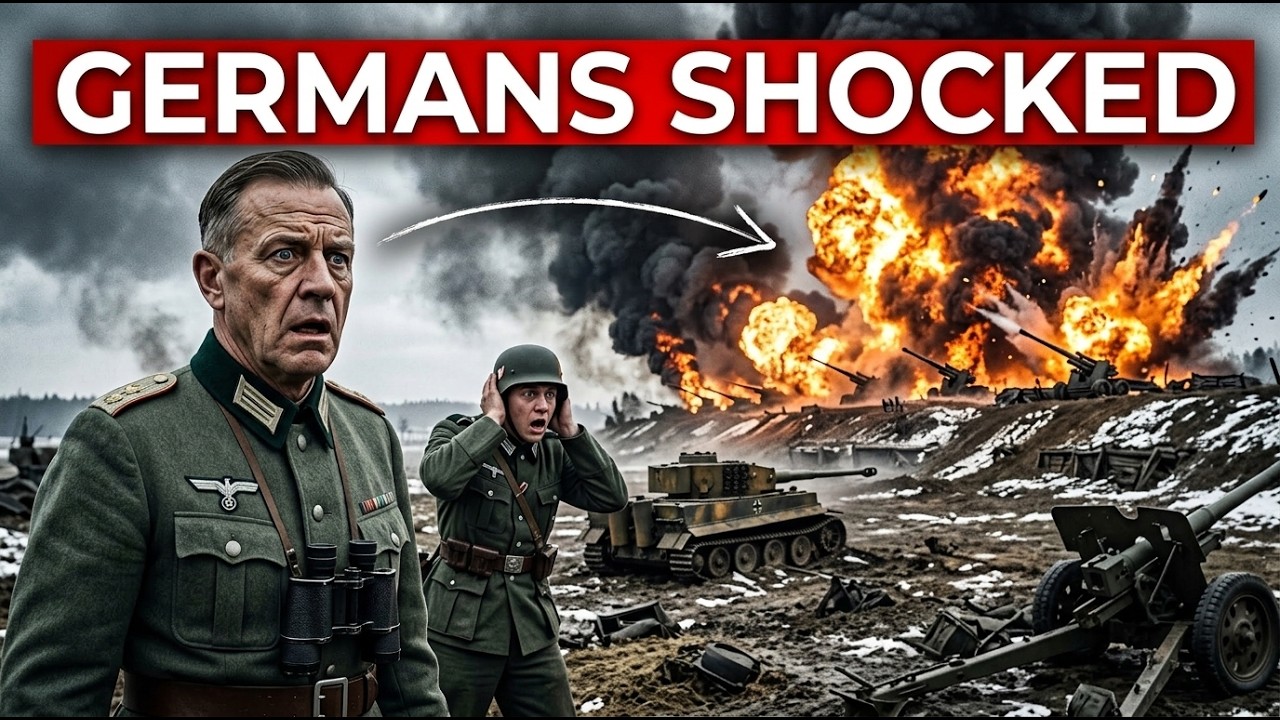
His tanks were positioned under the trees, his men were eating, his company commanders had their orders, and his artillery had its fire plan. Within hours, he would launch an operation that Adolf Hitler personally believed would split the American breakthrough in two, drive toward Avranches, and push the entire invasion back into the sea. Everything he did at that hour was correct according to his military manuals. It was what he had trained for and what he had done successfully in Russia and France.
Every step—positioning, refueling, the assembly point, the start line—came from the finest tactical traditions in Europe. And every step was also, by August 1944, a form of suicide, though he did not yet know it. An assembly area was a large number of men and vehicles standing still in a predictable place for hours. That had once been the definition of a decisive military moment.
In the summer of 1944, it had quietly become the definition of a target. Operation Lüttich, the Mortain counterattack, began in darkness and effectively ended as an offensive operation within about 36 hours. It did not fail because German soldiers lacked courage, and it did not fail because the American infantrymen in their path outmatched them. One American infantry division stood in the way of four panzer divisions.
It failed because the German army had lost, without officially noticing, the ability to concentrate its forces. The question examined here is narrower and more damaging than simply how much ammunition the Americans fired. What did American artillery actually strip from the Wehrmacht? The answer is not shells and not ground.
It was the counterattack itself—the single tactical instrument around which German doctrine had been built for 130 years. That was the thing that had allowed a numerically superior German army to hold a defensive line anywhere in Europe. Once it was gone, the Germans ceased to be an army capable of recovering anything. To understand what was removed, one must first understand what it was.
The German response to losing a position was never to accept the loss. This was a doctrine with two names, and the difference between them matters. The Gegenstoß, or immediate counterthrust, was a local, spontaneous attack launched by the nearest unit the moment the enemy seized a position, before it could consolidate. No orders from above, no planning cycle.
A company commander who saw a trench fall pushed his reserve platoon into it within minutes, because at that moment the attacker was disorganized, cut off from his artillery, unfamiliar with the ground he had taken, and at his most vulnerable. Behind that was the Gegenangriff, the deliberate counterattack planned with armor and artillery, aimed at restoring an entire sector rather than a single trench. This was not a footnote in German tactics. It was the load-bearing wall.
It was why a German battalion could hold a front that should have required a full regiment. Ground was not held by having enough men to occupy it. It was held by having a reserve behind it and a doctrine that said the reserve moves forward immediately, without waiting, the moment anything is lost. The system had worked in World War I, when flexible defense with counterattack divisions in depth was the German answer to Allied attacks that cost hundreds of thousands of men for a few kilometers.
It had worked in Russia, where German formations repeatedly restored their penetrated lines against Soviet forces several times their strength. It was the biggest reason for the Wehrmacht’s reputation for tactical flexibility. And it was expensive to face because it made every gain temporary. A battalion that seized an important hill in 1943 had not actually taken it.
It had rented it, and the rent was due about 20 minutes later. That is why the German officer in the forest outside Mortain trusted what he was doing. The counterattack had never failed him on this scale. His grandfather had used it before him, and his manuals were written around it.
It required exactly four things: concentrating forces in one place, moving them forward along a specific route, keeping them in an assembly point until the moment came, and attacking from a start line at a set time. Concentration, movement, assembly, timing. Each of those four things was a static, predictable, locatable event. For 130 years that had not mattered because no artillery on earth could respond fast enough to punish it.
By the summer of 1944, one could. American artillery did not defeat German attacks. It defeated German preparations, and it did so in the interval between the decision to counterattack and the moment the attack began. The mechanism was the core of the story.
An American observer—a lieutenant on a hill, a spotter in a light aircraft, or an infantry captain with a map and a radio—did not need to know exactly what he was seeing. He only needed to know his location, grid coordinates, six digits, vehicles in a forest, movement on a road, or men on a reverse slope. Those coordinates went to a fire direction center, where the American system did something the German system was structurally incapable of doing. It decided in one place, on behalf of every gun in range, what should happen to those coordinates.
Not just a single battery, but everything. An American fire direction center could mass an entire battalion’s fire on one set of coordinates in about three minutes from the call. It could also mass a full division’s artillery. Above that were corps artillery, heavy battalions, and the 155mm and 8-inch guns held at army and corps level specifically to be used against whatever target mattered most at that hour.
Compare this to the four requirements of a counterattack. Concentration: a panzer battalion in a forest was not a target that needed to be found. It was a target that needed to be expected. There were only a limited number of forests within range in any threatened sector.
American gunners had pre-registered them, given them numbers, and kept those numbers on the operations board. Movement: any road capable of carrying tanks forward was on the same board. The Germans could move at night, and they did. Roads were shelled at night without observation under harassment and interdiction plans, because one does not need to see a road to make using it expensive.
Assembly: this was the knockout blow. A rally point is a place where an attacking German force stands still in the open or under light cover, packed together for a set period, close to the front line. It was the most vulnerable formation any army could adopt, and German doctrine required it every time. Timing: this was what the fire direction center existed to destroy.
The German counterattack depended on hitting the enemy in the ninety minutes when he was disorganized. But the Americans could drop the equivalent of an entire division’s firepower on a forest in three minutes. The German planning cycle for a deliberate counterattack took hours. The Germans were bringing an instrument with a fuse burning for hours to a battlefield now decided in minutes.
The same pattern repeated from Normandy to the Rhineland. German counterattacks arrived late, weak, or beaten, because they had been engaged before they ever launched. Formations were drained in assembly areas. Command groups were killed at the start line.
Fuel and ammunition convoys burned during the approach march. The Americans were not fighting the counterattack. They were aborting it before it began. The effect on the German soldier was not trembling from the weight of the shells, though the weight was enormous.
It was trembling from the timing. He was stunned because fire fell on him while he was still forming in a place he had reached in darkness, on ground no one had registered. The men who experienced this had usually committed no error at all. They had followed correct orders precisely and were killed while standing in the right place at the right time.
There is another part of the story that almost no one discusses: why the German counterattack could not have been saved by German artillery. A counterattack was supposed to be supported by artillery. That was how it became sustainable. Batteries suppressed enemy positions, broke up defensive fire, and covered the approach route.
So why did that support keep fading in 1944? The reason was a category of American units with no fame at all: field artillery observation battalions. These were counter-battery units that did two things. The first was flash spotting.
Observation posts spread across the front, each equipped with precise instruments to detect the flash of German gun muzzles. Two posts spotted the same flash, took their angles of measurement, and where the two lines crossed on a map determined the battery’s location. The second was sound ranging, a genuinely ingenious system. A line of microphones was placed across the front and accurately surveyed.
When a German gun fired, the sound wave reached each microphone at a slightly different time. Those tiny arrival-time differences, recorded on a moving film strip, were enough to calculate the sound’s origin through hyperbolic intersection. This could be done from noise in darkness and in varying weather conditions. Add crater analysis—measuring the shape and axis of a shell hole to determine which direction it came from—and you had a system that located German batteries simply by the fact that they had fired.
That was the trap, and it closed around the entire Wehrmacht. To support any counterattack, German guns had to fire. Firing meant revealing position, usually within minutes. Revealing position meant receiving counter-battery fire from American heavy artillery far beyond what one German battery could withstand.
So German artillery learned to stay silent. It fired limited missions, moved constantly, conserved ammunition, and avoided engagement. That was the rational choice for a battery commander who wanted to survive the week. It meant German infantry advancing at Mortain, in the Hürtgen Forest, or in the Ardennes advanced under hesitant fire support.
Put the full picture together and one gets the sentence that explains why this is a story of battlefield change rather than merely a story of big guns. Artillery had become the primary killing instrument of land warfare. American and Allied medical surveys of wounds showed the vast majority of casualties—in some campaigns nearly three-quarters—were caused by shell and mortar fragments, not bullets. That statistic is the battlefield changing shape in real time.
Infantry combat in 1944 was no longer essentially a struggle of men shooting men. It was a struggle over who could be detected, because whoever was detected was shelled, and shelling was the way people died. An army whose core doctrine required gathering in one place and standing still had just been told that standing still in one place was certain destruction. Operation Lüttich launched before dawn on August 7 with four armored divisions against a front whose critical point was held by the American 30th Infantry Division.
The Germans achieved surprise. They controlled the ground. They cut off one battalion. The unit they surrounded was the 2nd Battalion of the 120th Infantry Regiment on a height east of Mortain, designated on maps as Hill 314.
Nearly 700 men were trapped on a bare hilltop, cut off from supplies for five days. Hill 314 was the highest vantage point in the sector. Among the men on it was Lieutenant Robert Weiss, a forward observer from the 230th Field Artillery Battalion, who wrote about it afterward. For five days, the trapped American observers on that hill watched the roads, assembly areas, and movements of a full German attack, and directed artillery fire onto it.
They were partially resupplied by air. At one point, artillery shells themselves were modified to carry medical supplies to the hill because there was no other way to get them there. The counterattack that was supposed to reach the sea in one night stalled within a day and a half, largely because a surrounded battalion held a hill that had a radio on it. There is genuine historical debate about who deserves the credit here.
At the time, Allied air forces, especially rocket-firing Typhoons, claimed they destroyed enormous numbers of German armored vehicles at Mortain. Wartime examination of wreckage later showed those claims were greatly exaggerated, and modern studies give far more credit to the artillery. An honest telling of the story includes the part where the first account was wrong. What is not in dispute is the shape of the final outcome.
The last serious German counterattack in Normandy was broken, and within two weeks the forces involved were inside the Falaise pocket. The German officer in the forest outside Mortain is not identified by name in the surviving records, and no name is invented here. There were dozens like him that night doing the same correct thing in different forests. The judgment is this: German soldiers were shocked by American artillery, and that shock was real and documented in records from Tunisia onward.
But the shock was not primarily about the size of the force. Presenting it that way lets everyone off too easily. It makes the story about American factories rather than American thinking. What happened in fact was that the United States built a system that could convert observation into an explosion of the equivalent of a division’s firepower faster than the German army could convert a decision into movement.
Once that became true, the German counterattack—the Gegenstoß, the thing that had made the Wehrmacht dangerous out of all proportion to its size, the reason a German battalion could hold a position that required a regiment—became a way to lose your reserves without ever reaching the enemy. That was what changed on the battlefield, not the noise. The initiative. An army that cannot concentrate cannot attack.
An army that cannot counterattack cannot really defend either. It can only be pushed and pushed and pushed. From the summer of 1944 onward, the Wehrmacht’s role in the west was reduced to holding the position it stood on until forced to leave it, then holding the next one. That is not a strategy.
It is a timetable. Two plain points must be made before the end. The first is that this was a double-edged sword. Artillery being the biggest killer in war meant American artillery killed American soldiers, and it did.
Short rounds were common, and every division kept records of such incidents. The highest-ranking American officer killed in Europe, Lieutenant General Leslie McNair, was killed by his own forces’ bombs at Saint-Lô. A different weapon, but the same brutal arithmetic of fire brought down near friendly troops. The second is that this was not a clean way to win.
Making artillery the decisive weapon meant turning the battlefield into a place where the prevailing experience of combat was being shelled from an earth hole by an enemy one never saw. That was true for men on both sides of the line. No one who lived through it described it as elegant. But the result stands.
The German soldier had been told that his army’s answer to any setback was to strike back immediately. For a century, that had been the right answer. It had worked from Prussia to the Dnieper. Then he stood in a forest outside Mortain at 1 a.
m. doing everything his manual required, and discovered that the manual had quietly become obsolete about a year earlier—and that the men who made it obsolete were sitting in a tent five kilometers away with a map board and a telephone. The men on Hill 314 were surrounded, without food, without water, without morphine—and they had the best view in Normandy. So they used it for five days.
That is the entire American way of war in a single sentence, and it was not built by generals. It was built by a lieutenant with a radio who refused to come down off the hill.