The marriage of Princess Margaret and Antony Armstrong-Jones was announced to the world in February 1960 as a fairy tale. She was the glamorous younger sister of the Queen, and he was a brilliant society photographer. Their wedding in May of that year was the first royal ceremony ever televised, watched by an estimated 300 million people around the globe.
The country saw a love story. Behind the walls of Kensington Palace, the reality was very different. For years, the man the public adored subjected his wife to a campaign of private cruelty that left her afraid to open her own drawers.
Margaret was born in 1930 as the second daughter of the Duke of York. She was a minor figure at the edge of the royal family until the abdication of her uncle, King Edward VIII, in 1936. Her shy, stammering father was pushed onto the throne, and her sister Elizabeth became heir. Margaret, at six years old, became the "spare"—a position of immense visibility and no purpose of her own.
She grew into a quick, theatrical, and striking young woman. By the 1950s, she was one of the most photographed women in Britain, a glittering figure in a gray, rationed country. But she had no official role, and the gap between her fame and her lack of purpose left a deep hunger underneath.
Before her marriage, there was Peter Townsend. He was a decorated Battle of Britain fighter pilot, 16 years older than her, who served as an equerry to her father. They fell quietly in love. At the coronation of her sister in 1953, a small gesture—Margaret brushing a fleck of fluff from his uniform—revealed their feelings to the world.
The establishment moved to stop them. Townsend was divorced, and the Church of England would not permit a royal to marry a divorced person. The memory of the abdication was still raw, and the family was determined not to repeat it. Townsend was posted abroad, and Margaret was told she could not have him.
At 25, she made a public statement, saying she was mindful of the church’s teaching and conscious of her duty to the Commonwealth. She gave up the man she loved to preserve the institution. She had learned the central lesson of her life: when her desires conflicted with the crown’s needs, she would be the one to give way.
The marriage to Armstrong-Jones was sold as her reward. He was everything Townsend was not: younger, untitled, an artist with no connection to the court. He moved through a bohemian world that fascinated her. He looked at her as a woman, not a constitutional problem.
Their courtship was carried on in near secrecy, which was part of the thrill. He was charming, clever, and magnetic. But beneath the bright surface was a darker man. His biographer would later describe him as a relentless playboy and an unashamed womanizer, a man who could be genuinely cruel.
They married on May 6, 1960, at Westminster Abbey. More than 2,000 guests filled the nave, and the ceremony was broadcast live to millions. The country fell in love with the image of the radiant bride. The wedding was not just Margaret’s; it was a story the nation told itself about second chances and modern romance.
The first years were genuinely happy. They shared a taste for wit and art and clever company. He photographed her endlessly, and she flourished under his attention. For a few years, they were the most glamorous couple in Britain.
In October 1961, the Queen created Armstrong-Jones the Earl of Snowdon. Their son, David, was born that November, and their daughter, Sarah, followed in May 1964. They moved into a grand apartment at Kensington Palace, renovated at public expense, and became the model of a modern royal family.
The apartment had a telling geography. Snowdon kept a studio in the basement, a private domain where he retreated for hours. The wife and the public life were above; the husband and his private world were below. The distance between the two levels mirrored the distance growing between the couple.
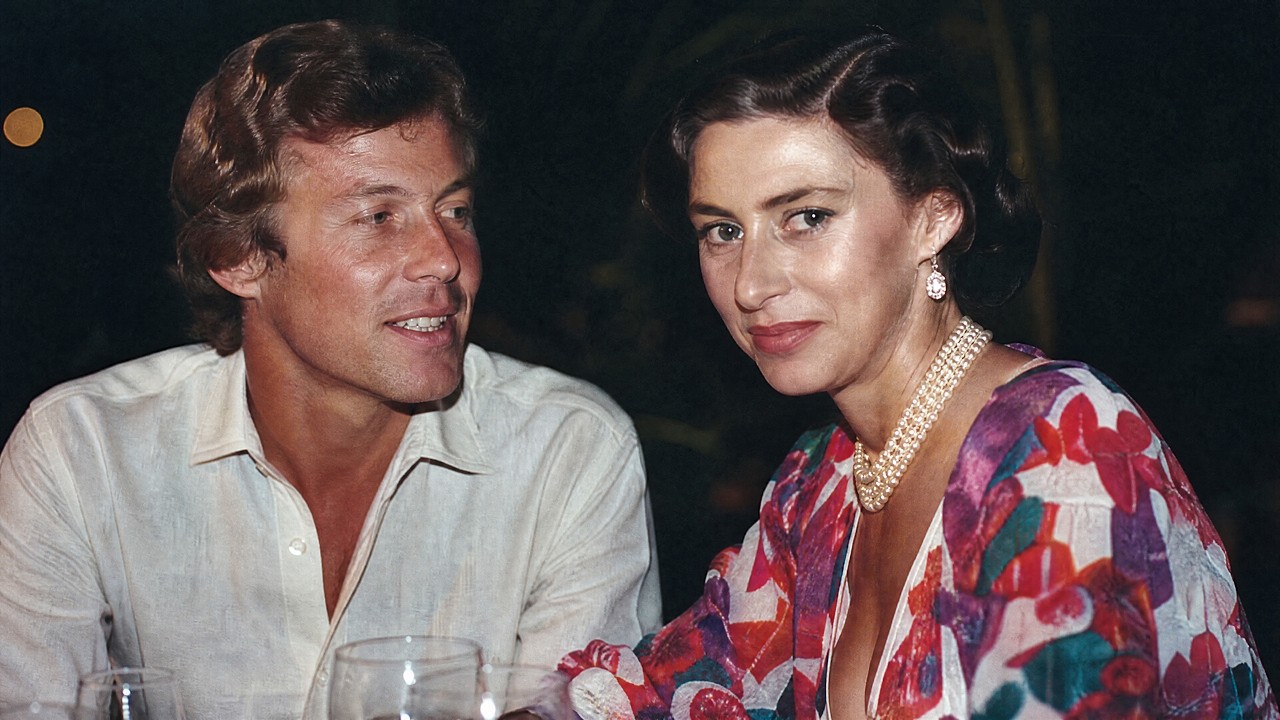
By the mid-1960s, the excitement had curdled into rivalry. The banter grew barbs, and the teasing grew teeth. Snowdon, by every serious account, was the more ruthless combatant. He began to withdraw, and the withdrawal was its own kind of cruelty.
The cruelty took a deliberate form. According to Margaret’s friend and lady-in-waiting, Lady Anne Glen-Conner, Snowdon developed a habit of writing cruel notes to his wife and hiding them for her to find. He would tuck them between the pages of a book she was reading or fold them among her handkerchiefs.
The notes were left so the blow would land when she was alone, with no one to see her face fall. One note reportedly told her she looked like a certain tradeswoman. Others took the form of lists of things he hated about her. The cruelty of the method mattered as much as the words. He composed them calmly, chose the hiding place, and imagined the moment she would find it.
The effect was devastating. Margaret eventually stopped opening her own chest of drawers. She could not bear the daily dread of finding another blade left for her. She asked her maid to open the drawers first, so that if there was a note, someone else’s hand would meet it first.
The most photographed woman in Britain was made afraid of her own furniture. The home, her one refuge from a life lived in public, had become the place where she was least safe. The danger came from the man asleep beside her, in handwriting she knew as well as her own.
This was not a story of one villain and one victim. Margaret had a famous temper and weapons of her own. She could be imperious and sharp. Both took lovers as the marriage failed. Snowden’s infidelities began earlier and ran deeper. But Margaret was not blameless.
The difference was in the nature of the cruelty. His was cold and designed, the note in the drawer, the list in the book. Hers was hotter and more open, the flash of a temper, the wounding remark across a dinner table. The honest account holds both in view.
The institution made escape nearly impossible. The monarchy could not permit a senior royal to divorce. The last time a member of the family had put private happiness first, a king had lost his throne. The entire pressure of the family ran toward endurance and the keeping up of appearances.
Britain in the 1970s was a country in real economic trouble. The public began to ask what the monarchy cost and what it was for. Margaret, glamorous and idle and visibly expensive, became a target. A member of Parliament named Willie Hamilton made a career of attacking royal spending, and he found in Margaret a perfect target.
She was drinking heavily and smoking heavily. She suffered from depression in an age with few kind words for it. Around the mid-1970s, she suffered what can only be called a breakdown. She took an overdose of sleeping pills. The lurid tabloid version of repeated attempts is not supported, but the crisis was real.
She had reached the bottom. The capacity to absorb that had been trained into her since childhood had a limit. She was almost completely alone inside it. She could not speak of the cruelty at home because the man inflicting it was one of the most admired figures in the country. She could not leave because leaving meant scandal.
In September 1973, in Scotland, she met a man of 25. His name was Roddy Llewellyn. He was the youngest son of Sir Harry Llewellyn, an Olympic gold medalist. Roddy was a landscape gardener, gentle and kind, 17 years her junior.
He was not competitive with her. He did not fence with her the way her husband did. He was soft where Snowdon was hard, admiring where Snowdon was contemptuous. To a woman who had spent a decade being wounded in her own home, a gentle young man who seemed glad to be near her must have felt like the first clean air in years.

She had done everything the institution had ever asked of her, and it had nearly killed her. She decided, perhaps never speaking it aloud, to take something she wanted. Roddy belonged to a world of gardens and growing things, a life measured in seasons rather than engagements. For a woman whose every hour was scheduled, that ordinariness was its own kind of romance.
There was a place where the affair could live. Colin Tennant, one of Margaret’s closest friends, had given her a plot of land on his private Caribbean island of Mustique as a wedding present. She built a house there called Les Jolies Eaux, completed around 1972. It was the one home she would ever truly own.
Everywhere else, she lived at the pleasure of the institution. Les Jolies Eaux was hers. It was the single place on earth where she was not the spare or the difficult sister, but simply the owner of a beautiful house by the sea. Roddy designed and planted the gardens there.
For two years, from 1974 into 1976, the affair lived in a strange, privileged state. It was common knowledge within her circle and completely invisible to the public. The people who knew kept the secret out of affection. They could see how unhappy the marriage had made her and how much the young man had given back.
The secret could not last. Someone passed the word to a newspaper. The News of the World sent a photographer named Ross Waby across the Atlantic to Mustique. He caught Margaret and Roddy on the beach in swimwear, sitting together at ease.
There was nothing explicit in the images. There was only proof that the Queen’s sister, still legally married, was on a private island with a man half a generation younger. In an age that knew how to read a photograph, that was enough.
On Sunday, February 22, 1976, the photographs ran across the front page. The effect was instant and enormous. The secret that a loving circle had guarded for two years belonged to everybody. The marriage that had begun with a wedding watched by millions was ending on a front page read by millions more.
The press framed it cruelly. Roddy was cast as the beach boy. Margaret was cast as the wanton, extravagant princess caught misbehaving while ordinary Britons struggled. Every resentment that had been building around her now had a single photograph to hang upon.
But look closely at what that photograph was. For years, Margaret’s life had been ruled by things hidden. Her husband’s cruelty always came to her concealed. Concealment was the instrument of her suffering. Now, on this front page, nothing was hidden. The photograph showed everything in the open.
The very exposure designed to shame her was also her liberation. The secret was out. The long performance was over. She could no longer be made to costume a dead marriage and walk it out before the cameras because the cameras had just seen the truth. The photograph that was supposed to be her ruin was also her release.
On March 19, 1976, the palace announced that the marriage was over. It was the first time in living memory that the palace had publicly acknowledged the collapse of a senior royal marriage. The photograph did not cause the collapse. The marriage had been dead for years. The photograph removed the last possibility of pretending.
Margaret let it end. She did not fight to keep the appearance alive. Offered the familiar chance to deny and patch the fairy tale back together, she declined it. After 16 years of absorbing and performing, she chose the truth over the performance. She chose herself.
The double standard was stark. Snowden’s infidelities had barely dented him. A single photograph nearly finished her. The press cast her as the villain of her own escape. The political attacks sharpened. She was the publicly funded princess sunning herself on a private island while ordinary families struggled.
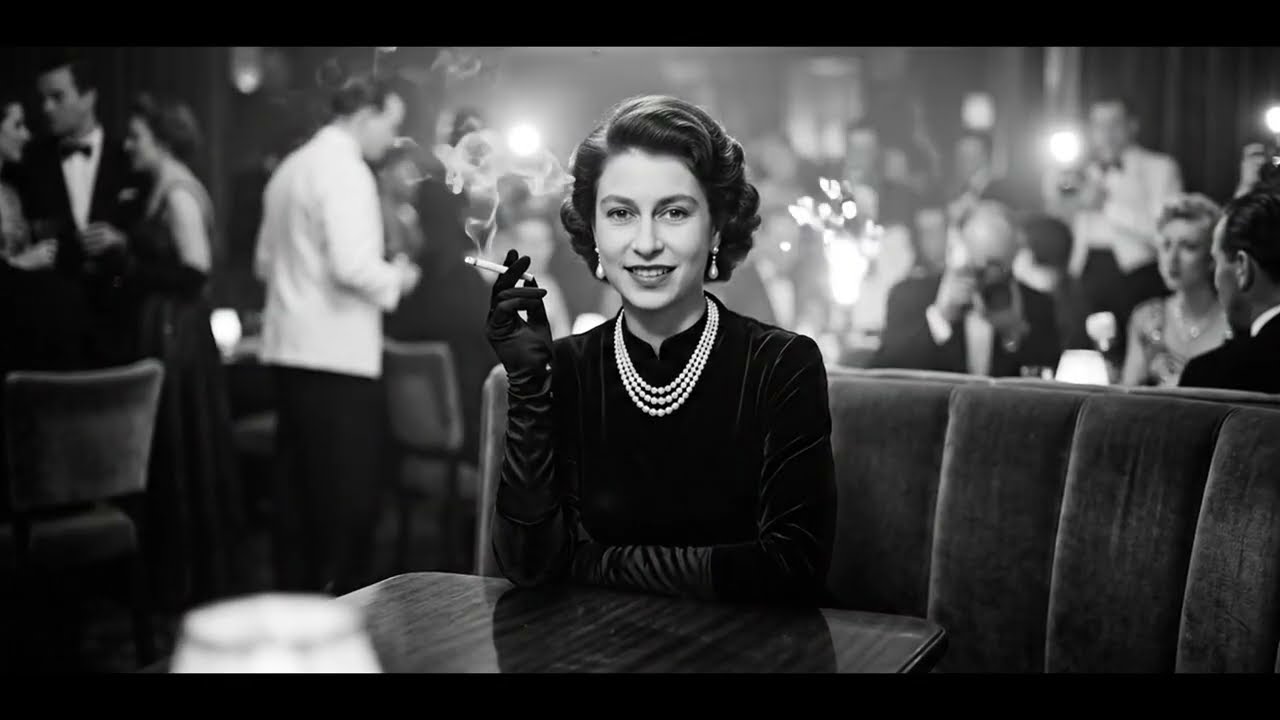
The decree nisi was granted on May 24, 1978. The decree absolute followed on July 11. Princess Margaret became the first senior member of the royal family to divorce since the 16th century. A door that had been sealed shut since the Tudors had been quietly opened.
Snowden moved on with striking speed. Within months, he married again. Margaret did not remarry. The relationship with Roddy continued for a few years and then gently faded. She lived out the rest of her life unmarried, on her own terms.
But Margaret had broken the spell. The monarchy had held as an article of faith that its senior members simply did not divorce. Once she showed that a senior royal could divorce and the sky would not fall, the unthinkable became merely difficult and then nearly ordinary. In the 1990s, the dam she had cracked gave way completely. Three of the Queen’s four children saw their marriages end.
She was the first crack in the dam. Every royal divorce that followed walked through the door she had been punished for opening. The institution had taken Peter Townsend from her in the name of a principle it would then quietly abandon within her own lifetime.
Roddy Llewellyn did not end in ruin. He married in 1981 and had three daughters. He built a real career as a distinguished garden designer and broadcaster. In 2009, he succeeded to the family baronetcy and became Sir Roddy Llewellyn. The scandalous nobody of 1976 ended his story as a knight of the realm.
He never sold her. He stayed quiet and lived his life with dignity. The beach boy turned out to be a gentleman.
Margaret’s own life was sliding into its long twilight. The decades of heavy smoking and drinking and strain were coming due. In January 1985, she had part of a lung removed. She suffered a stroke at Mustique in February 1998. In 1999, she scolded her feet badly in a bathroom there, damaging her mobility.
Further strokes came. The woman who had once commanded every room was reduced to a frail figure in a wheelchair. She gave up the Mustique house, the one home she had ever truly owned. She did not complain. She had always known how to suffer quietly.
She died on February 9, 2002, at King Edward VII’s Hospital in London after a final severe stroke. She was 71 years old. She was cremated, a highly unusual choice for a senior royal. The reason was tender. She wished her ashes to rest beside her father, King George VI, in the memorial chapel at Windsor. The space there was too small for a coffin, so she was cremated to fit.
She had spent her whole life in his shadow. She chose in death to return to his side. Seven weeks later, her mother, Queen Elizabeth the Queen Mother, died too.
Lord Snowdon lived on until January 13, 2017. He died at the age of 86, his reputation intact. The obituaries remembered him as a brilliant photographer and a charming, creative man. The public had only ever been introduced to the charming half of him.
The other half surfaced slowly, mostly after both of them were beyond the reach of consequence. In 2019, Lady Anne Glen-Conner published her memoir and set down at last the story of the hidden notes. The truth about Kensington Palace became public property only when the woman who suffered it and the man who inflicted it were both gone.
Margaret could have told the story herself. She never did. She carried the truth of that marriage to her grave. The woman the country called reckless turned out to be almost unbearably discreet.
Her entire life ran between two images. The first was the drawer she stopped opening, the maid’s hand reaching in first so that if there was a note, it would not be Margaret’s own fingers that found it. The second was the photograph on the beach, the woman in the sun with nothing hidden at all.
The hidden note was her cage. The public photograph was her key. The real scandal of her life was never the young gardener or the front page. The real scandal was how long a proud and formidable woman was expected to be humiliated in private before anyone would allow her to be free in public.
She was humiliated for years in secret by a man the whole world adored. And then, on an island and on a front page, she struck back in the only way that was ever truly open to her. She stopped hiding. She chose herself, and she let the whole watching world see her do it.