On May 23, 1934, Bonnie Parker and Clyde Barrow were ambushed on a rural road in Bienville Parish, Louisiana. Six lawmen opened fire on their Ford V8 sedan, unleashing more than 150 rounds in a matter of seconds. Bonnie was 23. Clyde was 25. The coroner later counted 26 wounds on Bonnie and 17 on Clyde, though some researchers believe the true number was far higher.
The shooting stopped quickly. The chaos did not.
Within minutes, a crowd gathered at the scene. These were not investigators or grieving family members. They were ordinary people who wanted a piece of the moment. One man approached the car, pulled out a pocketknife, and reached in to cut off Clyde Barrow’s ear. He did not want a gun or money. He wanted the ear as a souvenir.
Another man went for Clyde’s trigger finger. He tried to cut it off completely. A woman leaned in and clipped locks of Bonnie’s hair, which she had kept carefully curled even while on the run. Someone else cut pieces from her bloodstained dress to keep or sell. On the other side of the car, a man tried to pry a wedding ring from Bonnie’s hand.
All of this happened while the bodies were still in the front seat, still warm.
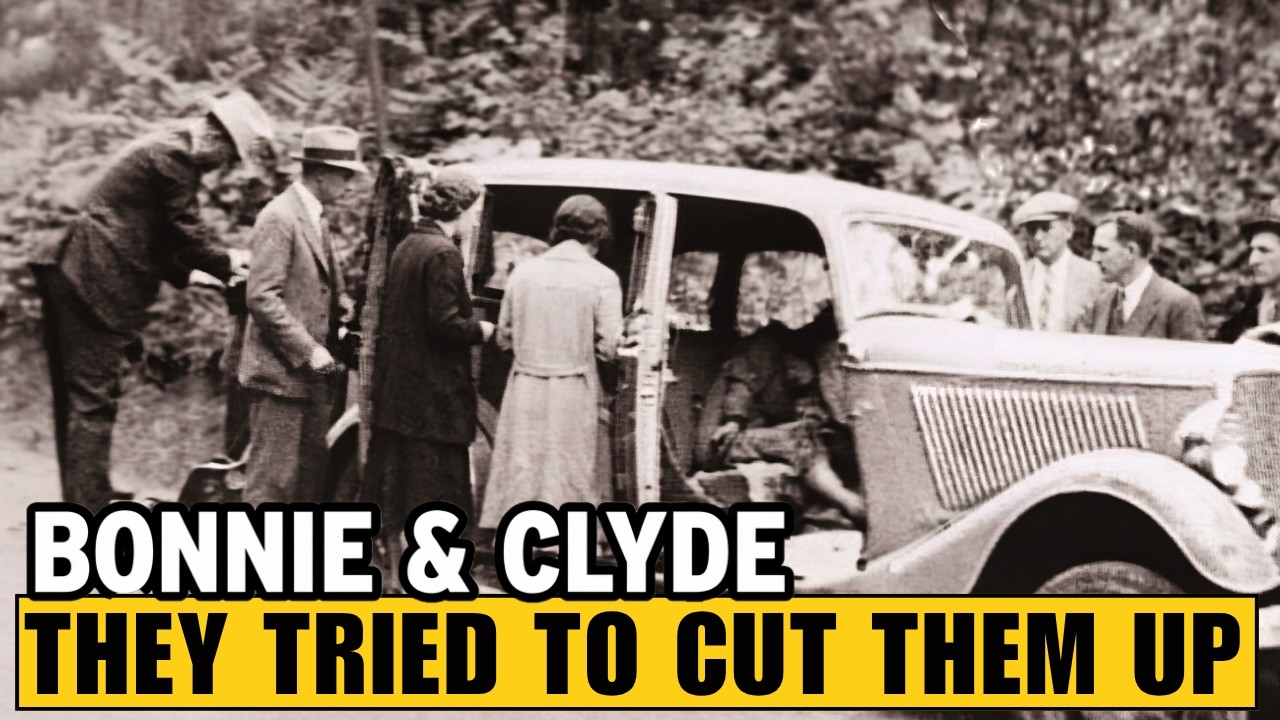
The lawmen had planned the ambush with precision. They had not planned for the crowd. Two officers were left to guard the car, but they were quickly overwhelmed. Dozens of strangers decided they deserved a piece of Clyde and Bonnie. They took whatever they could.
First, they went for the trees. They dug spent bullets out of the bark with their knives. They scooped shell casings off the ground. They pulled broken glass from the car windows as if it were treasure. When the wreckage was picked clean, they turned to the bodies.
When Clyde’s body was moved, cash fell from his pocket. Grown men dropped to their knees in the dirt, fighting over pennies because they had come from a dead outlaw’s pants.
Ted Hinton, a Dallas County sheriff who was part of the ambush, stepped away from the car for a moment. When he returned, he found a man bent over Clyde’s body with a knife, trying to cut off the trigger finger. Hinton had just helped kill Clyde Barrow, and even he was disgusted. He stopped the man.
The coroner later described the scene as a nightmare. Most people at the site were hiding something: shell casings, bloody clothing, or worse. She watched a man open a knife and head toward the car to cut off Clyde’s left ear. The only reason Clyde kept both ears was that the coroner grabbed Frank Hamer, the Texas Ranger who led the ambush, and together they regained control of what she bluntly called a circus.

Hinton never described that morning with pride. He sounded like a man haunted by it. He remembered Bonnie falling from the open car door. Her hair was still styled carefully. He never forgot the strange, horrible mix of her light perfume cutting through the smell of gunpowder and blood. He carried that image for more than forty years before writing it all down in a book called “Ambush.”
The bodies still had to be moved. There was no safe place to put them without the crowd following. They could not remove the bodies from the car properly, so they towed the entire car, Bonnie and Clyde still inside, to Arcadia, Louisiana.
Arcadia was a small town of about two thousand people. By the time word spread, nearly sixteen thousand people had flooded in. Eight times the town’s population. All of them pushing to see two bodies in a wrecked Ford.
The car was taken to Conger’s Furniture Store and Funeral Home. In a town that size, the man who sells you the sofa is also the man who buries you. The crowd outside the building went out of control. The undertaker had to spray people with embalming fluid from a hose just to keep them away from the bodies. It was 1934, and a mortician was standing outside his funeral home hosing down a mob with chemicals as if watering a garden.
When Bonnie and Clyde were finally placed on tables, the undertaker hit another problem. Their bodies were so full of bullet holes that embalming fluid pumped in one side flowed right out the other. You cannot keep fluids in a body that has been turned into a sieve.

The crime scene photos were so graphic that two members of a jury later felt sick just looking at them. These were not sensitive people. This was Louisiana in the 1930s, where folks slaughtered their own hogs. The photos still turned their stomachs.
The bodies were eventually taken to Dallas. Bonnie and Clyde were supposed to be buried in peace among family. That did not happen either. Crowds followed them to Texas.
Bonnie’s mother, Emma Parker, had her home surrounded day and night. The pressure was so intense that she changed the funeral plans. Bonnie had written a poem asking to be buried next to Clyde. Her family refused. Partly out of grief and anger. Emma Parker reportedly said Clyde had been with her daughter for two years and then took her. Look what he did to her. But it was also logistics. The crowds made the funeral a nightmare.
More than twenty thousand people attended Bonnie Parker’s funeral. Her family needed police escorts to reach the grave because they could not safely pass through the crowds of onlookers who came to see a 23-year-old woman’s body like a carnival exhibit.
The funeral home did its work carefully. They styled Bonnie’s hair back into its neat, familiar waves. The same hair that souvenir hunters had touched on that Louisiana road. They trimmed her nails. It did not matter to the crowds that she was no longer a person. She was a display.
The circus did not end there. The car, the Ford V8 with 167 bullet holes and two people’s blood soaked into the seats, went on tour. For years, it traveled from place to place like a traveling show. People paid money to see where Bonnie and Clyde died. The car can still be visited today. It sits in a casino called Whiskey Pete’s in Primm, Nevada, displayed near the slot machines.
They also display the shirt Clyde Barrow was wearing when he was shot. His sister had written his name on the collar before the shooting. The souvenir hunt never stopped. It just became commercial. They built a gift shop around the car.
The ambush took seconds. The aftermath lasted decades. The crowd that showed up after the gunfire ended did something harder to accept than the ambush itself. They carved up two bodies for keepsakes. And they have been selling the pieces ever since.