On a warm May morning in 1836, nine-year-old Cynthia Anne Parker was playing near the walls of her family’s small stockade in central Texas. The horizon suddenly turned strange. A line of dust appeared, then a line of horses, then a line of men painted for war.
Within 15 minutes, five members of her family were dead. Her uncle was lanced and scalped in front of her mother. Her aunt was dragged away screaming. And Cynthia Anne, the freckled, blue-eyed girl gathering eggs moments earlier, was tied across the back of a Comanche warhorse and carried into a world so different from her own that within a few years, she would forget how to speak English. She would forget the sound of her own name.
The Comanche were the tribe the Spanish called the Lords of the Plains. Every other tribe on the southern plains feared them. In 15 minutes on a prairie morning, they could erase a family, a homestead, and a life, then vanish back into a country the size of a European empire.
Twenty-four years after that morning, Texas Rangers found a white woman in a Comanche camp. She was filthy, sunburned, had three children of her own, and could remember only a few words of English. She told them her name was Nadua. It took days for them to understand they were looking at Cynthia Anne Parker, the little girl from Fort Parker. She did not want to come home.
Silas Parker did not think of himself as a man building a homestead on the edge of an empire. He thought of himself as a Baptist elder, a farmer, a father, and in the spring of 1836, a very tired man. Texas had just torn itself out of Mexico six weeks earlier. The Alamo had fallen in March. San Jacinto had been fought and won in April. Silas thought the killing was over.
He did not know that the two most feared groups on that continent were on a collision course, and that his family stood exactly on the line where they would meet.
The Comanche did not have a capital. They had no written laws and no permanent villages. Yet at their peak, they controlled roughly 240,000 square miles of the American interior. The Spanish called it Comancheria. It ran from what is now Kansas down through Oklahoma, West Texas, and into northern Mexico. That is larger than modern France.
They had taken it from every tribe unfortunate enough to hold it before them. The Apache, the Tonkawa, the Wichita. They held it against three empires: Spain, Mexico, and the United States. They were not just a tribe. They were an army on horseback.
Here is a detail that should stop you. The Comanche did not even have horses until roughly 1700. In four generations, they went from a small band of foothills hunters to the most powerful mounted force in North America. No other people in modern history mastered a technology that quickly or weaponized it that completely.
The men in those raiding parties were not demons out of a nightmare. They were fathers, sons, and brothers. Many had watched their own villages burned by Spanish, Mexican, or Texan expeditions. Many carried the faces of their own dead children in their memory. The Comanche took captives partly for revenge, partly for ransom, and partly to replace the dead, because their own children died young and their own women died in childbirth on a landscape that punished everyone.
That does not excuse what they did to captives. It only means the story has two sides, and both of them bleed.
The Parker family had come to Texas from Illinois in 1833. They were a Baptist clan, extended, stubborn, and unusually large. By the spring of 1836, around 34 of them lived at Fort Parker, a stockade of split cedar timbers set on the headwaters of the Navasota River in what is now Limestone County.
The fort had one weakness the family joked about but never fixed. The front gate. It was heavy. It was hard to shut. On warm mornings, they left it open.
Elder John Parker, the family patriarch in his 70s and a preacher, believed God protected the righteous. His sons Benjamin and Silas were not so sure, but they were outvoted.
Rachel Plummer, 17 years old, was Silas’s niece. She was married, pregnant with her second child, and holding her toddler son James Pratt on her hip on the morning the riders came.
A Comanche warrior began riding before he could walk unassisted. By age six, he could handle a bow. By 12, he was hunting buffalo. By 16, he had counted coup or he had not survived trying. The bow he carried was short, around three feet, designed to be fired from horseback. In skilled hands, it could put an arrow through a buffalo, entering behind the ribs and exiting through the far shoulder.
Here is the number that broke the frontier. In the time it took a Texas settler to load, aim, fire, and reload a single-shot black powder rifle, roughly 20 seconds under ideal conditions, a Comanche warrior on a moving horse could put 20 arrows in the air. Twenty arrows to one shot. Every gunfight on the southern plains from about 1750 to the 1840s was a math problem the settlers were losing.
They could ride at full gallop hanging from one stirrup, their bodies shielded behind the horse’s flank, firing arrows from beneath the animal’s neck. Spanish and Mexican soldiers who fought them for two centuries called them the finest light cavalry in the world. That was not flattery. That was survival math.
Those same warriors in camp played with their children and doted on their infants. Comanche fathers were, by every honest account, some of the most affectionate parents any observer had ever seen. The tribe the frontier called demons went home at night and rocked their babies to sleep.
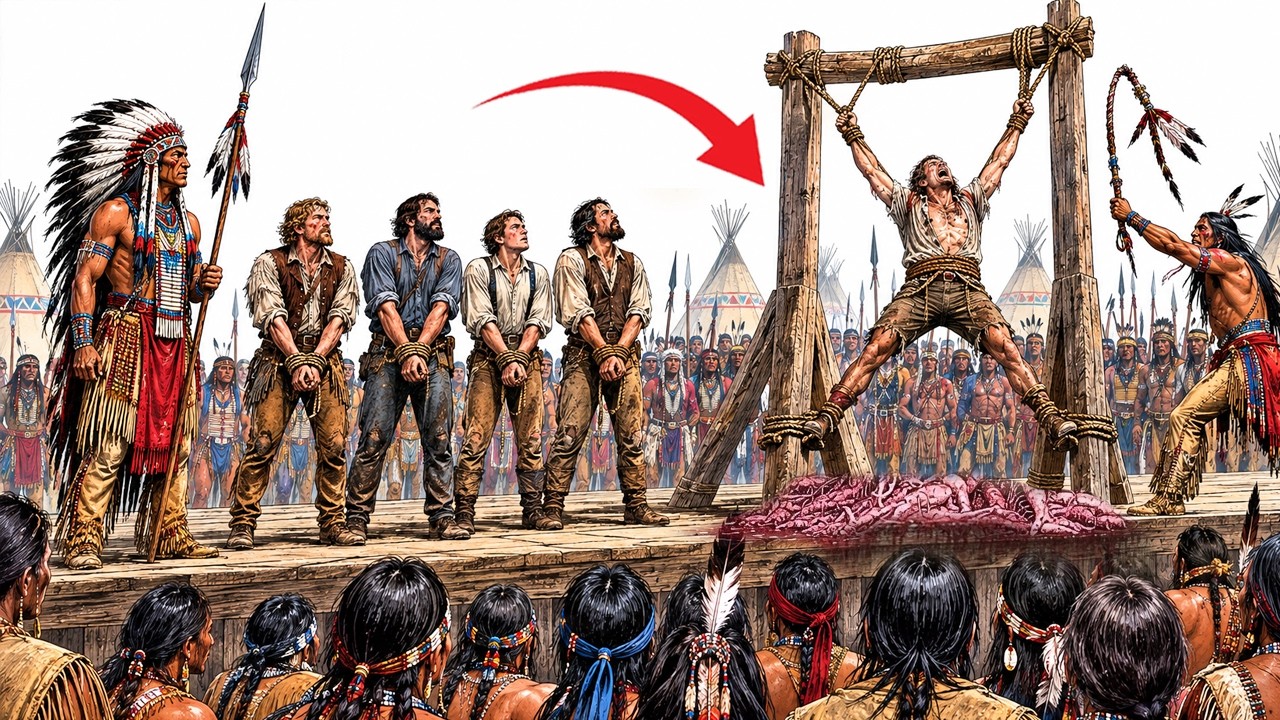
On the evening of May 18, 1836, the night before the raid, the Parker men had a decision to make, and they made the wrong one. Word had reached the fort that Comanche and Kiowa raiders had been seen north of the settlement. A rider from a neighboring homestead had come through, agitated, warning them.
Benjamin Parker, 36 years old, steady and quiet, argued that they should send the women and children south to Fort Houston, 40 miles away, and that the men should stay behind with the livestock. Elder John Parker refused. God, he said, had brought them to this land. God would keep them in it. The gate would stay as it was.
When the sun came up on May 19, the men rode out into the fields to work the corn. The women stayed near the cabins. The children were sent to fetch water and eggs. The front gate of Fort Parker was left standing open.
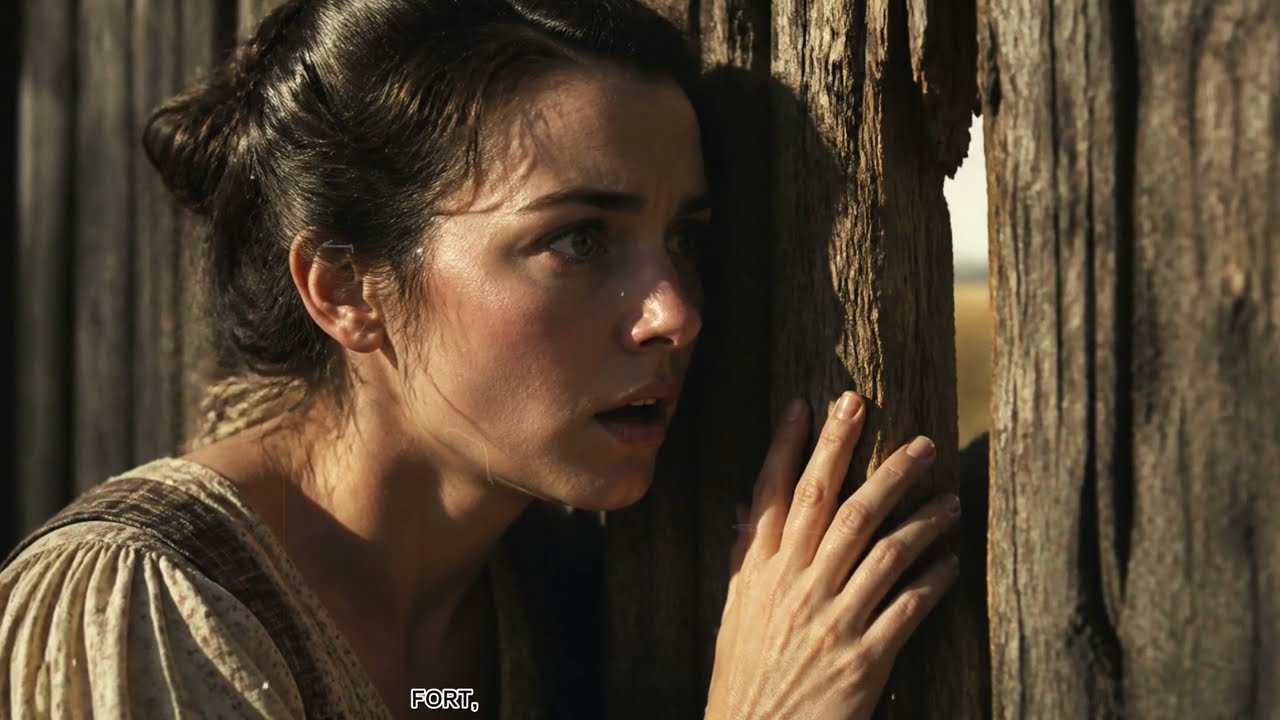
By mid-morning, the men were half a mile from the walls, bent over the cornrows with their backs to the north. The women were washing, cooking, tending the small children. Rachel Plummer was inside one of the cabins. Cynthia Anne and her little brother John were near the front gate. A mile to the north, a raiding party of somewhere between 100 and 200 Comanche and Kiowa warriors, painted and armed, had already seen the open gate.
Benjamin Parker saw them first. He looked up from the corn and saw a line of horsemen carrying a white flag. It was a piece of dirty cloth on a lance, and the Comanche had used the trick before. Approach under a false flag, gauge the defenders, then strike.
Benjamin knew what the flag meant. He ran back to the fort. He told his brother Silas to run to the fields and gather the men. He told the women to get inside the cabins. Then he walked back out through that open gate alone, unarmed, to try to buy them a few minutes by pretending to parley.
Everything that followed happened in less than 15 minutes.
The warriors surrounded Benjamin the moment he stepped through the gate. Rachel Plummer, watching from inside the fort, later wrote what she saw next. “They thrust their lances into him, and while he was yet struggling for life, they scalped him and killed him where he lay.”
The warriors poured through the gate. Elder John Parker, the patriarch, was stripped, scalped, and killed. His wife Sarah was stabbed and left for dead. Silas Parker, Cynthia Anne’s father, was cut down in the field trying to reach his children.
Rachel was seized, dragged from the cabin, and beaten. Her toddler son James Pratt was torn from her hands. Elizabeth Kellogg, another Parker aunt, was seized as well. Near the gate, a warrior swept up a small blue-eyed girl and her little brother onto the back of a horse. Cynthia Anne Parker, nine years old and gathering eggs moments before, was tied to a saddle, watching her family burn behind her.
Rachel later wrote of that moment. “They now took me by the hair and dragged me over the palisade fence. I made no resistance.” She was 17. She was pregnant. She had just watched her uncle be scalped alive. There was no resistance to make.
The men in the cornfield heard the screaming. By the time they reached the fort, it was over. Benjamin was dead. Elder John was dead. Silas was dead. Five members of the family were dead. Five were carried off. The horizon to the north was empty except for a fading cloud of dust.
The raiders rode until well after dark. They did not stop. They did not eat. They pushed the horses to the point of foundering because they knew the first hours were the most dangerous. Distance was survival.
When they finally stopped deep on the open prairie, they turned to the captives. Rachel Plummer later wrote of this night in language so plain it is worse than any embellishment. The captives were stripped. They were beaten with bows and quirts. They were tied face down to the ground, spread-eagled between stakes driven into the prairie earth.
Around them, the warriors celebrated. Scalps taken that day were shown and danced with. Rachel could see in the firelight the hair of her own uncle. She wrote, “They tied a platted thong around my wrists and drew my hands behind my back so tight that the scars are yet plainly to be seen.”
Cynthia Anne, nine years old, was not beaten as badly. Children were not typically beaten on the first night. Children were valuable. Children could be assimilated. Adults were another matter.
By dawn they were riding again, north and west, deeper into Comancheria. Behind them, the fields of Fort Parker were burning. Ahead lay a country no white person in that captured group had ever seen. A rolling ocean of grass broken by red canyons, without landmark, without road, without map.
The march lasted roughly six days. For an adult captive, those six days were worse than the raid itself. Rachel Plummer was 17, pregnant, and had just watched her family be killed. She was tied to a horse’s back with her wrists behind her, riding at a trot that broke her hips and bruised her ribs. Every night she was retied to the ground. Every morning she was untied and thrown back onto a horse.
Her feet, unshod, were split by prairie thorns. Her lips cracked and her tongue swelled. She wrote later of trying to sleep and finding that the ropes on her wrists had cut so deeply the blood had glued her hands together.
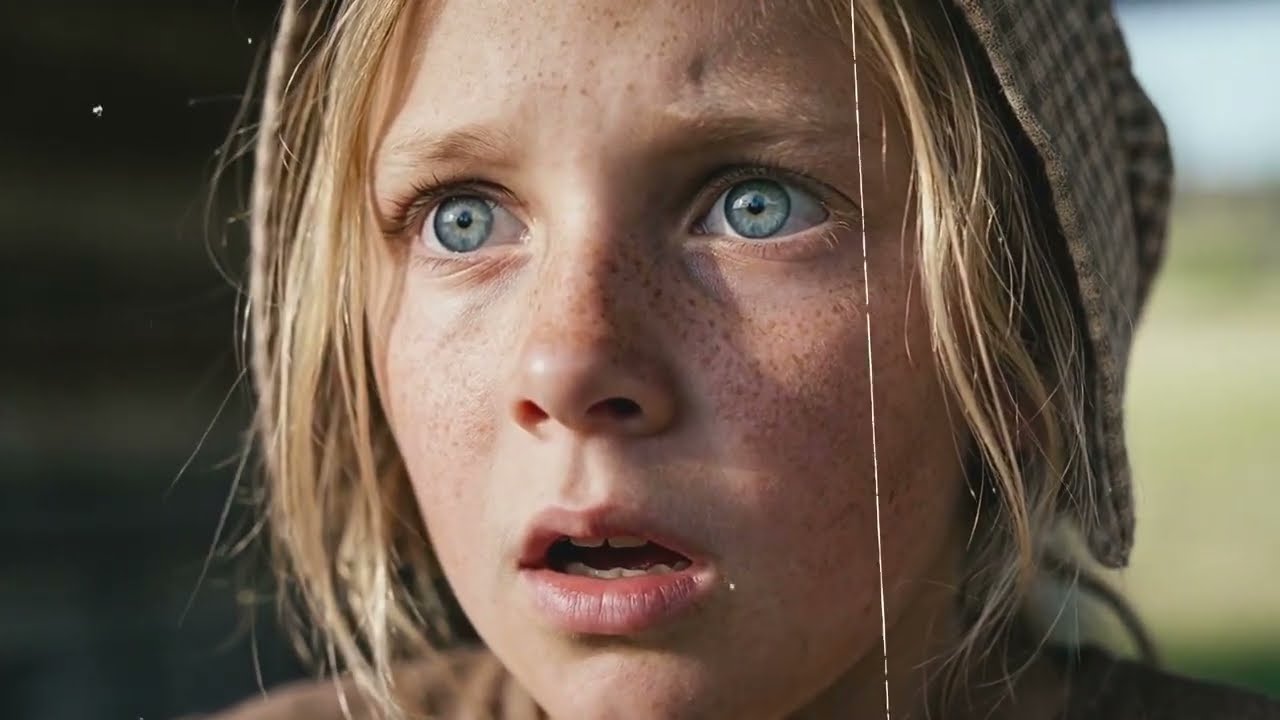
From her saddle, she could see her son James Pratt riding somewhere in the column in the arms of another warrior, crying until he had no cry left. She could hear him. She could not reach him.
Cynthia Anne, riding elsewhere in the column, was already being spoken to in Comanche. Not tenderly, not yet, but not with the violence being used on the adults. Comanche warriors had a system refined over generations. Children under about 10 were future Comanches. Adults were commodities.
By the end of the six-day march, the party crossed into what is now the Texas panhandle and stopped at a large camp, probably somewhere on the Canadian River. There the captives were separated. Rachel Plummer was given to one band, Elizabeth Kellogg to another, James Pratt to a third, Cynthia Anne and her little brother John to a fourth. They would never all see each other again.
Rachel wrote of that separation with stunned brevity. “They took my little James Pratt from me, and I saw him no more for 6 years.” She was 17. She was still pregnant. Now she was alone.
Rachel’s band was, by the account she left behind, one of the harder ones. She was made a slave to an older Comanche woman. She dug roots. She scraped hides. She hauled water. She was beaten routinely with fists, sticks, and bow staves for offenses she often could not identify because she could not yet speak the language.
In the winter of 1836, still a captive and still enslaved, she gave birth alone on the prairie floor of a Comanche lodge. The child was a boy. She kept the baby for about six weeks. Then, according to her account, the women of the band decided the infant was slowing her work. They took the child from her. They tied a rope around its neck. They dragged it behind a horse until it was still.
When they gave the body back to her, she held it long enough to see that it was truly gone, then wrapped it and buried it herself. She wrote, “I muse over my little boy’s grave till I almost forget myself.”
She survived. That is the astonishing thing. She survived another 18 months. She was beaten, starved, and worked. When she finally fought back, physically fighting an older Comanche woman who was beating her, she won. Her status in the band actually rose. The Comanche respected physical courage even in captives.
She was traded eventually to Comancheros, Mexican traders who moved between the tribes and the New Mexican settlements, and ransomed by an American named William Donaho for about $150. She reached her father in Independence, Missouri in early 1838. She weighed, by one account, less than 80 pounds. She wrote her narrative that year and published it in 1839. In early 1839, she died. She was 20. Her body, the doctors said, had simply given out.
In April of 1855, a party of Texas Rangers on a livestock drive in western Texas was ambushed by a Comanche war party. Most were killed on the spot. Three were taken alive. Two of those three were tortured to death over the following days. The third man, Nelson Lee, should have died on the second day. He did not.
Nelson Lee owned a pocket watch. It was a cheap windup brass-cased alarm watch that could be set to ring at a chosen hour. When the Comanche stripped him and searched his pockets on the first evening, the watch was ticking. One of the warriors held it up to his ear and froze. The others gathered. The chief was called.
When Nelson Lee, terrified and wounded, set the alarm and let it go off in the chief’s hand, the entire war party fell into stunned silence. They believed the watch was alive, or that a spirit lived inside it, or that Lee himself was some kind of holy man. Whatever they believed, they decided he was not to be killed.
Nelson Lee lived among the Comanche for three years. He was the personal property first of one chief, then another. He was made to wind the watch every morning and demonstrate the alarm at feasts. He was, in his own words, a curiosity, a slave, and a living idol all at once.
He watched in those three years everything a captive could watch. Buffalo hunts, raids into Mexico, the internal politics of the bands, and the treatment of other captives, most of them children, who were being turned slowly into Comanche. He escaped in 1858 after nearly three years. He walked alone to a Mexican settlement and from there back to Texas. He wrote a narrative in 1859, “Three Years Among the Comanches.”
Cynthia Anne Parker did not escape. She was not ransomed. She did what most white captives under the age of 10 eventually did. She became Comanche.
Adults, if they survived the first weeks, were slaves. Teenagers were often traded away or killed. But small children were adopted. They were placed with families who had lost their own children. They were given new names. They were taught the language. Within a year, most could no longer speak English. Within two, they could no longer remember it.
For Cynthia Anne, the Comanche name was Nadua. It meant roughly “someone found.” She was raised in the band of Peta Nocona, a rising war chief. As she grew, she became not just a member of the band but a full Comanche woman. She tanned hides. She raised lodges. She cooked. She rode. She married Peta Nocona in her teens and bore him three children. The eldest was a boy she named Quanah, “the fragrant one.”
By 1860, when Texas Rangers stumbled onto her camp at the Battle of Pease River, she had lived among the Comanche for 24 years. She was 33 years old. She was sunburned nearly as dark as the women around her. Her hair was cut short in the Comanche mourning style because she believed her husband had just been killed in the raid. She spoke perhaps a few halting words of English.
When they carried her back to the Parker family in East Texas, they treated it as a rescue. She treated it as a second kidnapping. She tried repeatedly to escape. She stopped speaking. She refused at times to eat. She held her infant daughter Prairie Flower, the only one of her three children she had been able to keep, and waited for her sons to come and take her home.
They never did. Her older sons, including Quanah, remained on the plains riding with the last free bands of Comanche. Prairie Flower died of influenza in 1864. Cynthia Anne, the little girl captured at nine, who had become Nadua, who had raised the boy who would become the last chief of the Comanche, turned her face to the wall in a white man’s house and refused food and water until she followed her daughter.
On December 18, 1860, a company of Texas Rangers under Captain Sul Ross attacked a small Comanche encampment on the Pease River. It was a cold morning. The camp was mostly women and children. The warriors were away hunting. The rangers charged.
One of the rangers noticed in the chaos a woman on a horse trying to ride away with a small child clutched to her chest. He gave chase. He raised his pistol to shoot her. As he came alongside, she turned her face to him. She was crying out in Comanche. Her eyes were blue.
They did not know in that moment who she was. It would be days, some accounts say weeks, before they realized what they had done. When they finally brought her to her uncle Isaac Parker and he heard her murmur the word “Nadua,” he asked her gently if she remembered her name from before. She did not. But when he said the name Cynthia Anne, her face broke and she began to cry.
She was 33 years old. She had been gone since she was nine. She was holding her infant daughter Prairie Flower, and she was trying through tears to tell them that she wanted to go home, meaning back to the plains.
Consider the full accounting of Fort Parker. Five dead, five taken. Of those five taken, two were ransomed within a year: Elizabeth Kellogg and Rachel Plummer. James Pratt, Rachel’s son, was ransomed after six years at the age of about eight and never fully readjusted. John Parker, Cynthia Anne’s little brother, was captured at six, raised as Comanche, and when finally recovered in his teens, chose to return to the plains and vanish back into the tribe.
And Cynthia Anne herself, the one everyone had searched for the longest, was the one who did not want to be found.
There were hundreds of raids like this one between roughly 1830 and 1875. Historians estimate the Comanche took thousands of captives across that period. Perhaps a majority did not survive the first month. Of those who did, perhaps a third became fully assimilated. Of those who became fully assimilated, only a small fraction were ever recovered. And of those recovered, a striking number either fled back to the tribe or never came home in the way that mattered.
The Comanche did not just take people. They rewrote them.
Rachel Plummer reached her father in early 1838. She had lost her uncle, her cousins, her son, her infant, her health, and by her own account, her sense of who she was. She wrote her narrative. She died in 1839, weeks after publication. She was 20. Her son James Pratt was ransomed the following year and returned to a family he did not remember, to a country he did not know, and to a mother who was already in the ground.
Nelson Lee returned to Texas in 1858 and lived out his life as a minor ranger celebrity. His book sold moderately. He never rode into Comancheria again. He is said to have kept the watch, the ticking watch that bought a man three years of life, until his death.
Cynthia Anne Parker was taken to her uncle Isaac’s home in East Texas, then to her cousins, then to her brother Silas Junior’s. She was watched constantly because she tried repeatedly to walk out of the house and back toward the plains. When Prairie Flower died of influenza and pneumonia in the spring of 1864, Cynthia Anne stopped speaking almost entirely. She refused food. She refused water. She died sometime in 1870 or 1871, in a room in a house that was not her home, in a country that was not her country.
She did not know when she died what her son would become. She did not know that Quanah Parker, the boy she had named “the fragrant one,” would rise in the decade after her death to become the last great war chief of the Comanche. She did not know that in 1875, five years after she gave up, Quanah would ride into Fort Sill on his own terms, the final free Comanche chief to come in.
And she did not know that for the rest of his life, Quanah would carry in every treaty room, every train car, and every governor’s office one photograph. It was of her.
For most of the last 150 years, the captivity narratives of the Comanche have been told one way: as horror, as savagery, as proof of a civilizational gap. There is truth in that telling. Rachel Plummer’s baby was killed. Benjamin Parker was scalped alive. Nelson Lee watched his companions tortured to death. These are not exaggerations. These are the record.
But there is another truth. Cynthia Anne Parker’s son Quanah became one of the most consequential Native American leaders of the 19th century. After the Comanche military collapse in 1875, Quanah, the child of a white captive and a Comanche war chief, did not vanish. He learned English. He learned law. He learned real estate. He became a rancher, a judge on the tribal court, and a shrewd negotiator with the United States government.
He hosted President Theodore Roosevelt on a wolf hunt. He fought in courtrooms and in Washington offices for the remaining rights of his people, and he won more of those fights than anyone had a right to expect.
Quanah Parker, the last free chief of the most feared tribe on the American plains, was by blood half white. He was the son of the little girl who had been kidnapped from the open gate at Fort Parker in 1836. The boy she raised became the last free Comanche chief. The very captivity the frontier called its greatest horror had produced, one generation later, the man who negotiated the Comanche future.
Return one more time to that Texas morning. To the nine-year-old at the open gate. To the 15 minutes that took her family apart. To the horizon and the dust and the line of riders.
She was not simply taken. She was rewritten. The people who took her were not simply savages. They were a nation at the height of its power, defending an empire that stretched from Kansas to Mexico and grieving losses of their own.
Her uncle’s death was real. Her aunt’s ordeal was real. Rachel’s baby, the one born in captivity, was real. And so was Nadua, the woman Cynthia Anne became. A Comanche wife. A Comanche mother. And in the end, a woman who starved herself to death in a white man’s house rather than live in the country her captors had come to burn.
That is what it was really like to be taken by the Comanche. It was not one story. It was two peoples tearing pieces out of each other on a prairie neither of them was going to keep. And the people caught in the middle, the captives, the children who forgot their own names, carried for the rest of their lives the marks of both.