The reality of the Old West was far from the polished image Hollywood often presents. Cowboys on long cattle drives lived for months in the middle of nowhere, without refrigeration or access to a general store. Their meals were a matter of survival, not choice. Historians have found diaries and records describing dishes that would turn most modern stomachs. Here are 25 of the most bizarre foods people actually ate in the Wild West.
When cattle died on the trail, nothing was wasted. Cowboys made a stew they called the "pot of courage," throwing the heart, liver, kidneys, and guts into a pot with whatever potatoes and onions were left. The smell was strong, and the taste was worse. Hunger killed more cowhands than outlaw bullets, so choking it down was a necessity. While they ate, they told stories of fights and death to turn desperation into something they could live with.
Cowboys carried a living sourdough starter in a leather pouch tied to the saddle. The heat of the horse's body kept it fermenting during days of travel. When they stopped, they mixed the sour paste with flour and water and fried it in old pork fat. Some cowboys treated the starter like a pet, naming it and passing it down through generations. They poured molasses on top, not for taste, but so they could swallow it without making a face.
Beans were the fuel that kept cowhands going. The camp cook would throw dried beans into a kettle with chunks of salty bacon and boil it for hours until it became a thick mush. The same pot stayed on the fire for days. The men joked that strong beans gave extra energy, but the real problem was gas and cramps so bad they sometimes stopped the whole herd.
Cowboy coffee was something no modern American could swallow. Cooks boiled the same grounds over and over all week, adding more water each morning. To make the grounds sink, they cracked in eggshells or tossed in a pinch of salt. The result was a thick liquid dark as motor oil that tasted like burnt dirt. Some cowhands would rather go without food than without their morning sludge.
When a bull was slaughtered, the testicles were considered a delicacy. Cowboys called them prairie oysters. They were sliced, breaded, and fried in hot grease. The dish became a courage test for new hands. Refusing meant you didn't have the stomach for hard work. Eating it without making a face got you instant respect.
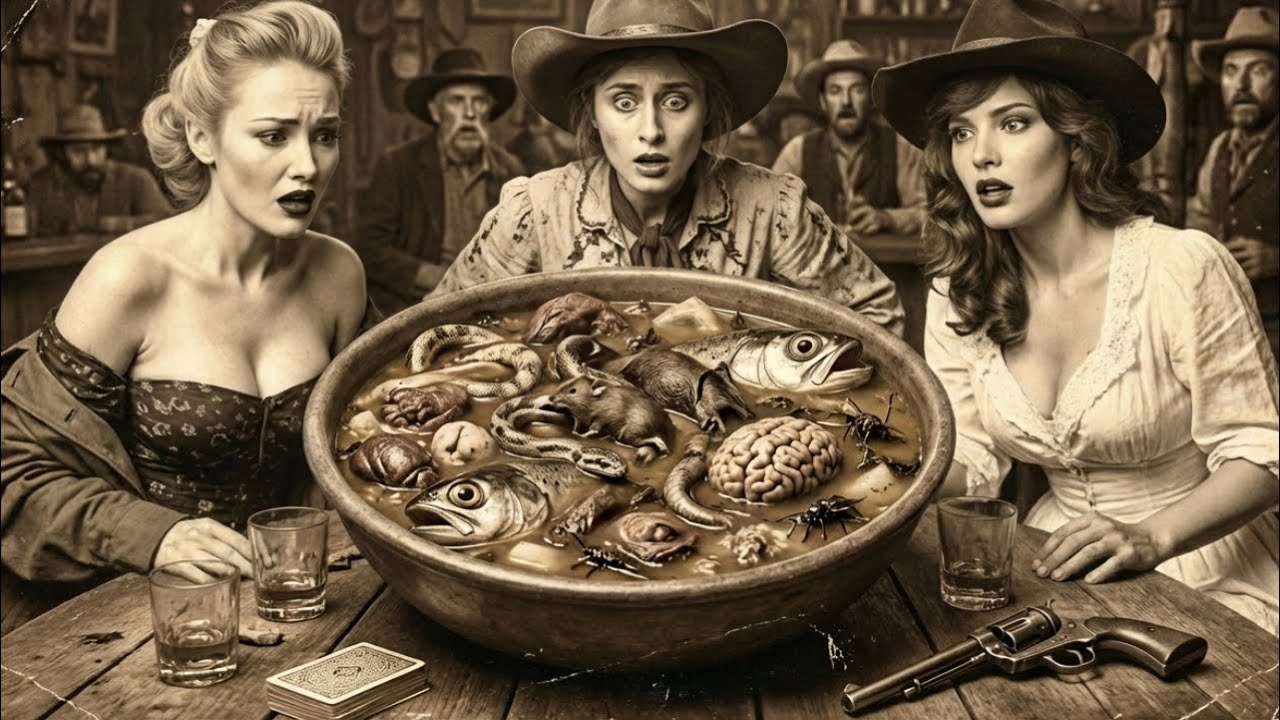
Fresh meat was rare on long treks, so wasting any part of an animal was not an option. When a rabbit was killed, the whole thing went into the pot with potatoes and herbs. The organs were considered the most nutritious part. Men would gnaw on the bones to get at the marrow. A single rabbit could feed a man for two days if he knew how to use it right.
Squirrels were easy to catch and everywhere. Camp cooks cleaned them and threw them in a pot with onions. The stew cooked for hours until the meat fell off the bone. Behind saloons, steaming pots of squirrel stew were common. For a few cents, workers who didn't have money for a steak could fill their bellies.
Cornmeal mixed with water and salt was fried in old lard to make hard little cakes called corn dodgers. This food didn't spoil. A cowboy could carry the cakes in his saddlebags for weeks or even months. When hunger hit, he would break off a piece and chew it slow, often drizzling molasses on top to make it taste better.
Saloon counters often held a glass jar with eggs floating in a cloudy liquid. These pickled eggs sat in vinegar with salt and spices for weeks. Cowboys would order a whiskey and grab an egg straight from the jar with dirty hands. It was cheap protein that didn't spoil in a time with no refrigerator. The habit didn't die, and you can still find those jars in old bars in the countryside today.
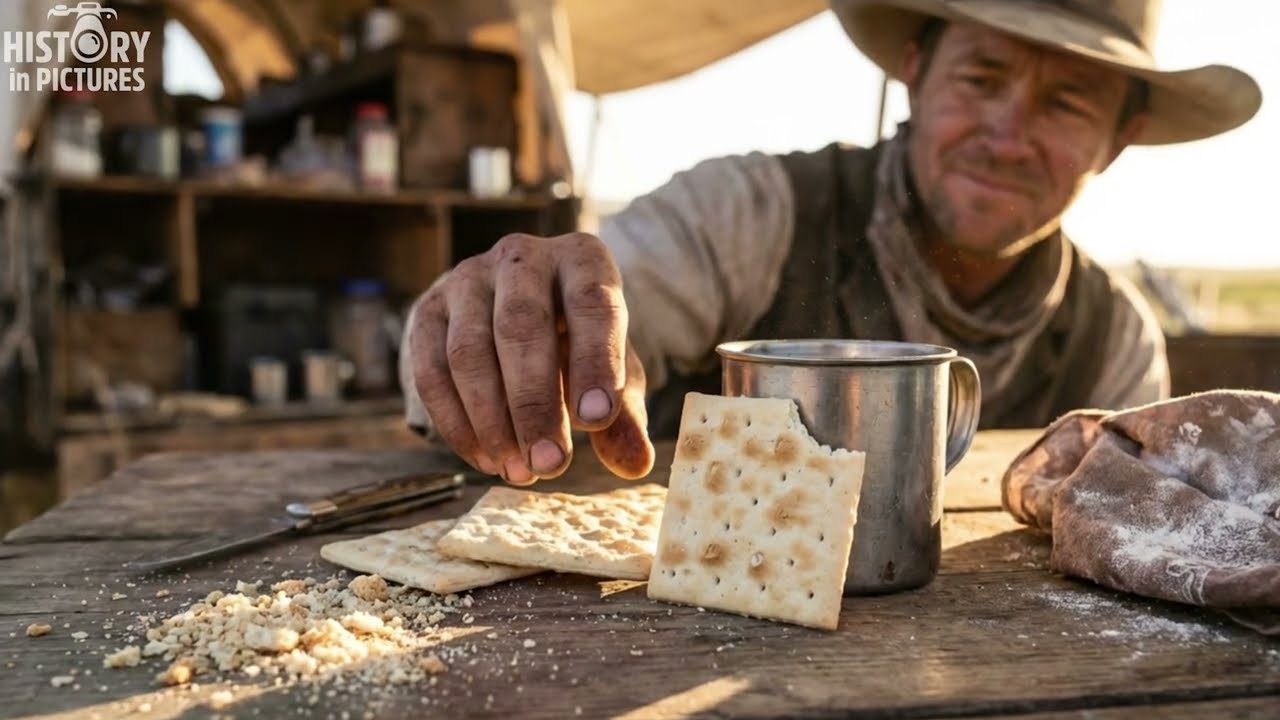
Hardtack was a cracker so hard guys would break a tooth biting into it. Cowboys smashed it with a rock or knife handle and tossed it into boiling broth with meat. It softened into a thick stew that stuck to your ribs. The cracker could last for years without going bad because it had zero moisture.
The buffalo hump was considered the most valuable cut on the animal. Hunters would leave tons of meat rotting in the sun and take only that part. The fat concentrated there melted in your mouth like butter. Cowboys roasted it in the coals and ate it with their hands. This habit came at a high price, as millions of buffalo were slaughtered in just a few years, nearly driving the species to extinction.

Scrapple was a grayish block born on Pennsylvania farms, created by German settlers who didn't waste any part of the pig. The head, liver, heart, and even feet went into the kettle. Everything cooked for hours until it became a paste, mixed with cornmeal and seasoned with sage. The mixture cooled in molds and became a gray brick. In the morning, they sliced it thick and fried it in lard until crispy.
In the 1880s, even the brain of a slaughtered steer went into the pan. Cooks cut the fresh brains and tossed them into a skillet with butter that had already gone off. The dish was creamy on the inside and crispy on the outside. Cowboys ate it mixed with scrambled eggs before sunrise. Some restaurants in Texas still serve this dish as a regional specialty.
Jerky saved lives, but it came with a price. Cowboys cut meat into thin strips, covered it with coarse salt, and left it to dry in the sun for days. The result was tough as a boot sole. Men kept pieces in their pants pockets along with dust and sweat. A lot of them lost teeth trying to bite it.
Pickled pigs feet sat in huge jars on saloon counters right next to the whiskey. Cowhands would grab a foot straight out of the jar with their hand. The vinegar kept the meat for months without a refrigerator. Guys would chew the cartilage and tendons slow, sometimes for hours, while they played cards or closed cattle deals.
When food ran out and there was no game nearby, cowboys turned to the hooves of dead horses or butchered cattle. The hooves would boil in water for two or three straight days until they broke down into a thick goo. The taste was described as something between old leather and rancid fat.
Milk that went sour became food. Cowboys mixed the thick, sour milk with hard bread to make it through the day. The smell was strong, but hunger was stronger. This habit wasn't just American. People in Mongolia and Eastern Europe had been doing this for centuries. What looked like spoiled food was actually natural fermentation full of good bacteria.
Porcupine was an unexpected lifesaver when food ran out. Cowboys tossed the animal straight into the coals, quills and all. The fire burned off the protective layer and left the meat ready to eat. They called it pine meat because the quills looked like pine needles. It tasted like wild pork.
When cattle disappeared from stagecoach routes in the late 1800s, saloon owners improvised with wild turkey. Local hunters brought in the birds, and the cook made them with dough dumplings boiled right in the broth. This dish put everyone on the same bench, from the cowboy to the miner to the gambler.
Fresh apples were hard to come by on wagon trains. What survived were dried slices kept in sacks. When they reached frontier towns, the cook would soak them until they swelled up. Then came water with sugar, cinnamon, and nutmeg, simmering in an iron pot. The crust was made with flour and pork lard. This pie became a symbol of home in a place where almost nothing was comfortable.
Johnny Cakes were a simple cornmeal dough that became basic fuel for people pushing into America. Soldiers carried them in their packs, hunters kept them in their pockets, and roadside taverns had them on the counter. The recipe came from Native Americans: coarse cornmeal, hot water, a pinch of salt, and on lucky days, a little pork fat.
Beef tongue was for special customers in Old West saloons. The owner saved it for the ones who paid on time. It took hours to cook in a deep pot with onions and garlic. After cooking, it went onto the hot griddle to brown. The leftover bits became a thick gravy thickened with flour. It was food for people with money.
Stale bread, leftover cake, and yesterday's cornbread all got chopped up, mixed with milk, eggs, and sugar, and left to sit. In the oven, it became firm around the edges and soft in the middle. On top went a hot sauce of butter, brown sugar, and a generous splash of whiskey. That was bread pudding.
Fresh fish was a rare luxury before refrigerators. Anyone traveling dusty trails knew that stopping near a creek meant a chance to eat something besides jerky and beans. Cooks took a just-caught trout and dredged it in a mix of cornmeal with salt and pepper. Hot pork fat did the rest. In a few minutes, the golden crust would crackle on the first bite.
German immigrants in Pennsylvania had a philosophy about raising pigs: nothing went to waste. When the animal was slaughtered, leftover meat scraps and fat went into a big pot of boiling water with cornmeal and seasonings. It cooked down into a thick mash poured into rectangular molds. In the morning, someone sliced off slabs and threw them on the hot griddle. The result was a golden crust on the outside and a dense center that stuck to your ribs.