The sweet, thick stench of death hit the relief column first, a cloying wave of decay that stopped horses in their tracks and sent hardened cavalrymen retching into the Montana dust. It was June 27th, 1876, and the soldiers under General Alfred Terry had crested the ridge expecting to find George Armstrong Custer and the 7th Cavalry triumphant. Instead, they found a field of white boulders scattered across the hillside.
They were not boulders. They were men, stripped naked, their skin bleached bone-white by two days of brutal June sun, their limbs contorted into angles that defied human anatomy. The full, horrifying scale of the disaster was only beginning to unfold.
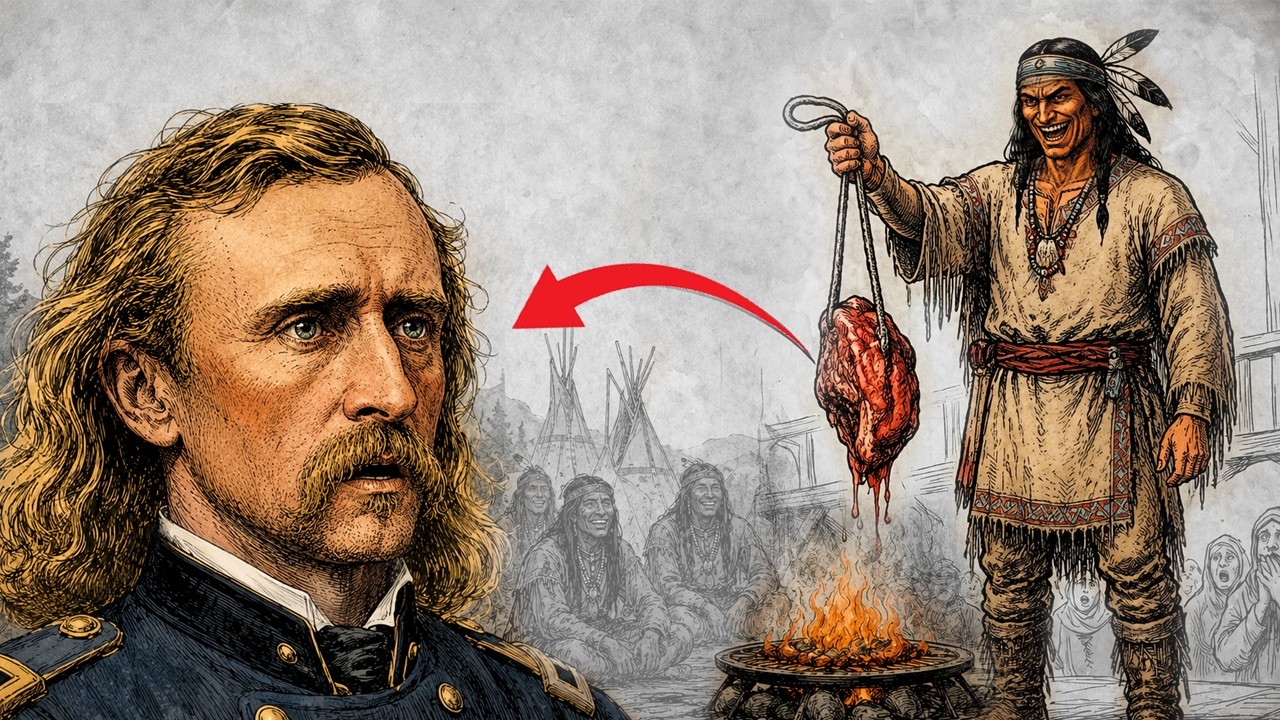 The initial reports from the scouts were fragmented, choked with disbelief. What they described was not a battle field but an abattoir. Bodies lay in clusters, some headless, some missing hands, with arrows protruding from empty eye sockets.
Faces had been crushed by stone war clubs into concave ruins where human features had once been. The burial details, men who had served alongside these troopers for years, found themselves unable to identify their own comrades. Of the more than 200 men who rode with Custer into that valley, only 56 could be named.
The rest were too destroyed to recognize, their identities lost to the violence that had been visited upon them.
The official narrative of a heroic “Last Stand” began to crumble almost immediately under the weight of the archaeological and forensic evidence. The cartridge casings scattered across the ridges tell a story of a line that held for mere minutes before shattering. The men did not die in a tight, defensive ring as the famous paintings depict.
They died running, scattered across the grass in small, desperate clusters, their single-shot Springfield carbines jammed with overheated copper casings that they desperately tried to pry out with pocket knives. The warriors they faced, armed with Winchester repeating rifles, held a devastating technological advantage that rendered the Army’s assumed superiority a lethal illusion.
The battle itself was a catastrophic tactical blunder born of arrogance. Custer, a man desperate to reclaim his faded glory and perhaps eyeing a presidential nomination, had been warned by his own scouts that the village was immense. The Crow and Arikara scouts, men who had read the landscape their entire lives, gestured that there were enough Sioux to fight for two or three days.
He ignored them. He had declined the offer of Gatling guns, claiming they would slow his march. He had declined additional cavalry companies.
He split his regiment into three battalions and rode his 210 men directly at a village of up to 8,000 people, including nearly 2,000 warriors.
The attack on the village’s southern end, led by Major Marcus Reno, was a disaster from the start. The warriors did not flee in panic; they erupted from the lodges with terrifying speed and organization. The Hunkpapa leader Gall, who had just lost two wives and three children to Reno’s opening volleys, rallied the warriors with a fury that was both personal and devastating.
Reno’s skirmish line collapsed, and his retreat became a rout, a desperate, bloody scramble across the river that left dozens of men dead in the water. The survivors clawed their way up the bluffs, shattered and leaderless, where they were joined by Captain Frederick Benteen, who had received Custer’s final, frantic message: “Come on. Big village.
 Be quick. Bring packs.”
Benteen made the decision that would haunt military historians for a century. He looked at the chaos on the bluffs, the wounded, the panicked horses, and chose to stay with Reno’s shattered command rather than ride north to find Custer. Whether this was a prudent act of salvage or a damning abandonment remains one of the great unanswerable questions of the battle.
While they dug in and endured a siege, four miles to the north, Custer’s command was being systematically annihilated. The warriors, led by the legendary Crazy Horse, flowed through the ravines and coulees, surrounding the five companies and cutting them down in a cascade of destruction that lasted less than an hour.
The final moments were not a noble stand but a hunt. The right flank broke first, collapsing in a stampede toward a rise now known as Last Stand Hill. But the archaeology shows the men on that hill were not in a perimeter; they were scattered, dying in pairs or alone, overwhelmed by close-range attacks with clubs, hatchets, and lances.
The last survivors, 28 men, were found at the bottom of a steep ravine, cut off from escape, shot down from the rim above as they tried to reach the river. They were the last to die, not on a hill, but in an anonymous cut in the earth, their desperate bid for survival ending in a dirt grave.
But the horror did not end with the last gunshot. The Lakota and Cheyenne women and children moved onto the field, and what they did to the dead is the part of the story that has been sanitized for 150 years. The bodies were stripped and mutilated, but this was not random savagery.
It was a deliberate, spiritual act of warfare. In Lakota and Cheyenne belief, a man killed in battle who was left whole could fight again in the afterlife. Mutilation was the disarmament of the enemy’s soul.
Cutting off a hand meant he could not hold a weapon in the next world. Crushing a face meant he could not see. Severing a leg meant he could not walk.
It was theology, born of a fury that was deeply personal, a response to an attack on a village full of women and children.
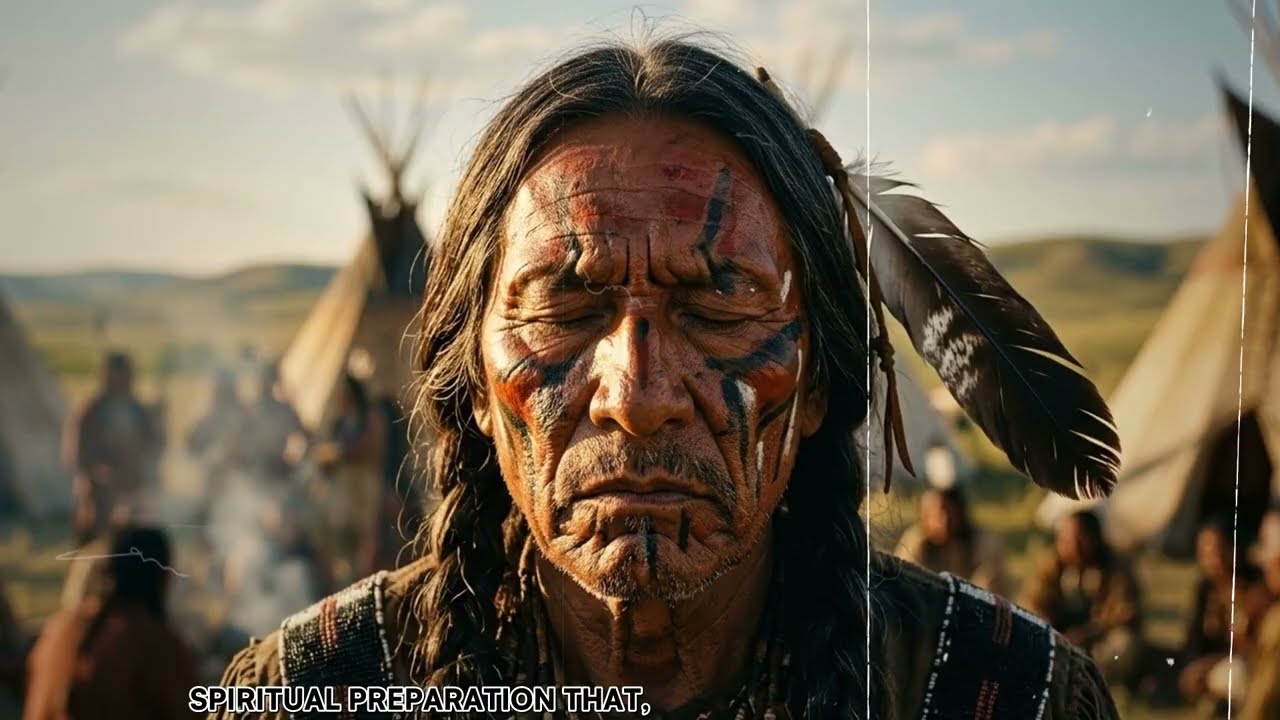 The desecration was extensive. Tom Custer, a two-time Medal of Honor recipient, was identified only by a tattoo on his arm because his face no longer existed. Fingers were scattered on the grass like dropped coins.
Skulls were emptied. Chests were split open. The burial parties worked for days with few shovels and no coffins, interring the dead in shallow graves exactly where they fell.
Within months, the wind and rain had 𝓮𝔁𝓹𝓸𝓼𝓮𝓭 many of the bodies, leaving the battlefield a grim, neglected place for years. The myth of the heroic last stand was a necessary lie, a comfortable story laid over something far more disturbing, far more human, and far more complicated.
The identity of the man who killed Custer himself remains a mystery, shrouded in a legend that did not surface publicly until 2005. A Northern Cheyenne oral tradition holds that the fatal blow was struck not by a famous warrior, but by a woman named Buffalo Calf Road Woman. According to the account, she rode onto the field and struck Custer with a club.
Days earlier, she had gained renown for riding into gunfire to rescue her brother at the Battle of the Rosebud, an act so remarkable the Cheyenne named the subsequent battle in her honor. While historians debate the verifiability of this account, for the Northern Cheyenne, it has never been in doubt.
Custer’s body was found near the top of the hill, stripped naked but, remarkably, not mutilated. He bore two fatal bullet wounds, one in the temple and one in the chest. Some interpret the lack of desecration as a sign of respect from warriors who recognized him.
Others argue he was not identified, as he had cut his famous golden hair short before the campaign. The mystery adds another layer to a battle already defined by ambiguity and conflicting truths. The victory at Little Bighorn changed nothing for the Lakota and Cheyenne in the long term.
The battle provoked a massive military response that hunted them down, starved them, and forced them onto reservations.
The news of the disaster reached the East during the nation’s centennial celebration on July 4th, 1876, sending a shockwave through the country. The government, which had declared the Lakota conquered, was forced to confront the reality that they had been defeated in a stunning, humiliating fashion. The response was to turn Custer into a martyr and the Lakota into monsters.
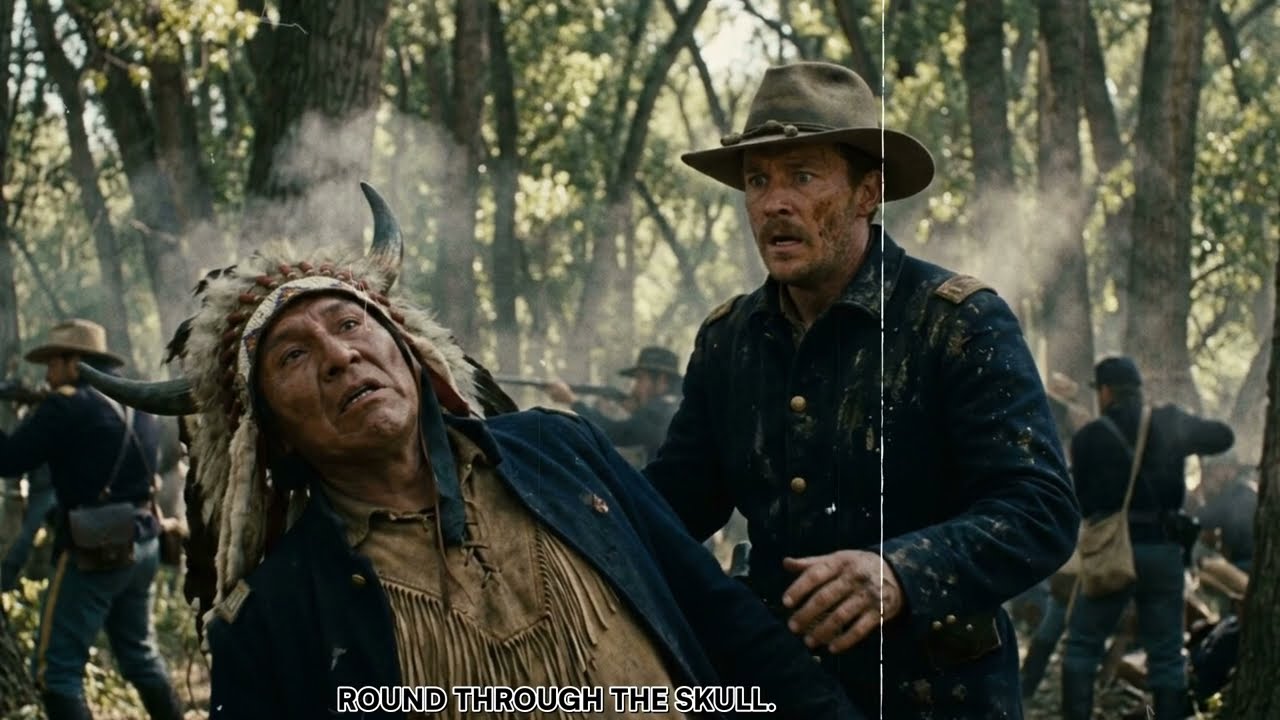 The paintings of a heroic last stand were pure propaganda, designed to obscure the truth of a reckless commander who led his men into a trap. The battlefield was renamed the Custer Battlefield National Monument, and for over a century, there were no markers for the Lakota, the Cheyenne, or the Arapaho who won the fight.
It was not until 1991 that the site was renamed the Little Bighorn Battlefield National Monument, and not until 2003, 127 years after the battle, that an Indian memorial was added. The erasure of the victors from the site of their greatest victory is a testament to the power of narrative. The story of the Little Bighorn is not a simple tale of good versus evil, of civilization versus savagery.
It is a story of betrayal, of broken treaties, of a man’s ambition leading to the destruction of his own command, and of a people fighting to defend their homes and families against an encroaching empire. The truth is far more disturbing and far more human than the myth.
The aftermath was a tragedy for all involved. Reno descended into alcoholism and obscurity, his reputation destroyed despite being exonerated by a court of inquiry. Sitting Bull fled to Canada, only to return and be killed by reservation police in 1890.
Crazy Horse surrendered and was bayoneted by a guard at Fort Robinson in 1877. The Black Hills gold that Custer himself had found, the catalyst for the entire conflict, was never returned to the Lakota. The land that was sacred to them, guaranteed by treaty, was taken.
The victory at the Little Bighorn was a fleeting moment of triumph against an inevitable, crushing tide of American expansion.
The scene on that ridge on June 27th, 1876, the smell, the silence, the scattered white shapes of the dead, is the true legacy of the battle. It is a reminder that history is not a clean narrative of heroes and villains, but a messy, brutal tapestry of human choices and their consequences. The 28 men in the ravine, the horse Comanche standing alone among the dead with an empty saddle, the woman who may have struck the killing blow, these are the details that the paintings leave out.
They are the truth of what happened when a man with something to prove rode into a valley he did not understand, and a people fought back with everything they had.