On a late November afternoon in 1980, two women drove a black Peugeot into the mountains of central Italy. They were never seen alive again. The case would become one of Italy’s most enduring mysteries, tangled for decades in theories involving the Rothschild name, Vatican bankers, and Sardinian kidnappers.
The story begins far from Italy, in wartime England. Ellen Dorothy Jeannette Bishop was born on January 3, 1940, on the Isle of Sheppey in Kent. Her father, a Royal Air Force sergeant specializing in bomb disposal, was killed during the Blitz months after her birth. Her mother, Susan, worked as a hairdresser to keep the family afloat.
Unable to manage both work and childcare alone, Susan made the painful decision to send young Jeannette to a Catholic convent boarding school in Sittingbourne when she was four. There, the girl found ballet and dance, disciplines that taught her poise and the art of making great effort look effortless.
At sixteen, Jeannette left school and bet her future on beauty and charm rather than qualifications. The gamble paid off immediately. Her photographs appeared in Vogue magazine. She appeared in television commercials and landed a presenting role on the ITV quiz show “Spot the Tune.” By 1961, she had established herself in a fashionable London address in Marylebone and was building a career in antiques and interior design.
On September 30, 1966, in Arlington, Virginia, Jeannette Bishop married Sir Evelyn Robert Adrian de Rothschild. The daughter of a Kent hairdresser had entered one of Europe’s most famous banking families. Evelyn was about ten years her senior, a wealthy bachelor who had spent his youth traveling, playing polo, and racing cars before joining the family bank.
Friends rejected the notion that Jeannette was a fortune hunter, insisting it was a love match. She moved into Ascott House, a grand Tudor-Gothic estate in Buckinghamshire, and mingled with figures like Imelda Marcos and Henry Ford II. But within five years, she chose to leave it all behind.
The marriage ended in divorce in 1971. Jeannette’s settlement was modest by Rothschild standards: £25,000, invested by Evelyn on her behalf, plus a house in Chelsea. She had asked for remarkably little. The couple remained friendly, and Evelyn allowed her to continue using the Rothschild name, which she carried in her passport and hotel registrations for the rest of her life.
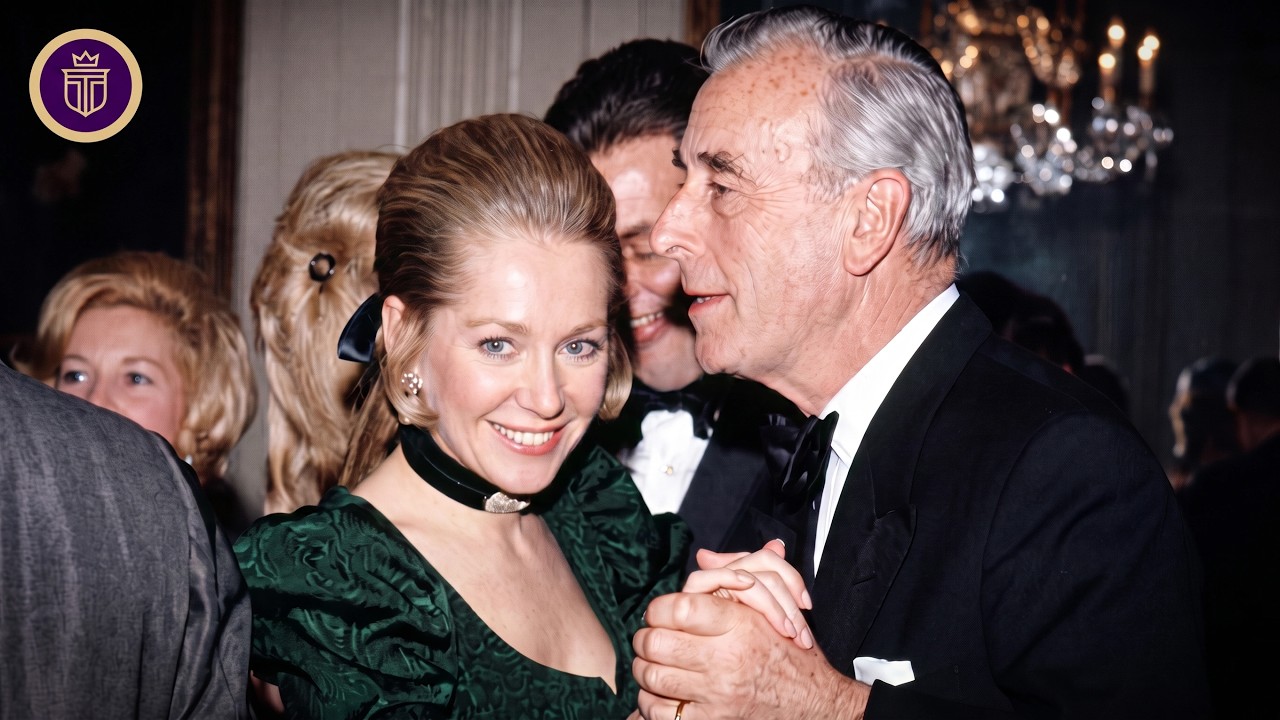
By the time she disappeared in 1980, Jeannette had been divorced from Rothschild for nine years and had remarried. Her second husband was Stephen May, a personnel director at the John Lewis Partnership department store chain. They had purchased a 300-year-old stone farmhouse near Sarnano in the Marche region, and Jeannette was overseeing its restoration.
The second woman in the story was Gabriella Guerin, born September 27, 1941, in the small town of Ronces in northeastern Italy. She had first entered the Rothschild circle as a cook in the household, but over the years she became far more than staff. She became Jeannette’s secretary, translator, and closest friend. Jeannette later became godmother to Guerin’s children.
On Saturday, November 29, 1980, Jeannette met her architect, Nazareno Venanzi, for a drink to discuss progress on the farmhouse. She showed him a door she admired and asked him to join her and Guerin on a sightseeing drive through the Sibillini Mountains that evening. Venanzi refused, warning her that snow was expected and telling her to be careful not to go into the mountains.
Jeannette then missed a 2 p.m. appointment with the previous owner of the farmhouse, something witnesses described as uncharacteristic for a woman known for her punctuality. Around 4 p.m., she received a phone call at a building supply store. She spoke in English throughout the call and appeared visibly upset when she hung up.
Witnesses placed the women in town around 5 p.m. and again in the main square around 7 p.m., suggesting they may have returned briefly before heading out again. A hotel owner near the Sassotetto ski resort reported seeing the two women with a man while driving in heavy snowfall. Another driver recalled passing a man in a distinctive white coat standing by the roadside, waiting, near where the Peugeot would later be found.
The women eventually drove their black Peugeot 104 Siena toward the mountain village of Sassotetto and became caught in a snowstorm that continued through the next day. They never returned to their hotel.
A search was launched the next morning, but nearly three meters of fresh snow had covered the mountains. Seventeen days later, a hiker accidentally struck the roof of a snow-covered car with his walking stick. The Peugeot was found buried in snow at an altitude of about 900 meters.

The condition of the car deepened the mystery. It was locked, parked neatly on the side of the road rather than having skidded off it, and showed no signs of struggle. A woolen scarf was found folded inside the locked car, and the women’s snow boots were untouched on the back seat. Anyone fleeing into a blizzard would have taken every warm item available.
Search dogs led investigators to an abandoned stone hut used by shepherds as a summer shelter. Inside, they found the charred remains of a fire built from broken pieces of the hut’s wooden furniture, along with dirty dishes. The women had taken shelter there, built a fire, and waited to be found. They never were.
A new magistrate, Alessandro Iacopone, reopened the case and discovered traces of soil still stuck under the Peugeot’s tires. This suggested the car had been deliberately turned and parked in a controlled manner, not abandoned in panic. One elderly resident of Sarnano later said no one in their right mind would drive up into remote mountains after dark in worsening weather.
Fourteen months later, on January 27, 1982, hunters found the remains of two women scattered across an area of about 200 square meters near Lake Fiastra. The site was roughly five kilometers from where the car had been found, a distance investigators deemed nearly impossible for two women to cover on foot through three meters of snow wearing ordinary shoes.
The bodies had severely deteriorated after more than a year exposed to the elements. Wild animals, likely wild boar, had damaged the skeletons, and some bones were missing entirely. The autopsy concluded the women had died near where their remains were found, possibly about a month after their disappearance, not during the November storm itself.
Then came the detail that haunted the case more than any other. The women’s wristwatches had stopped on different days, a full week apart, yet both were frozen at exactly the same time: 6:54. This seemingly impossible coincidence suggested to investigators that someone had deliberately reset or tampered with one of the watches to stage the scene.
In December 1982, Iacopone officially opened a murder file. Stephen May, who had offered a $28,000 reward for information, refused to accept the initial conclusion of death by hypothermia. Theories multiplied rapidly.

A telegram addressed to Jeannette arrived at her hotel a week after May reached Italy, containing five words: “I am waiting for you.” Investigators traced it to a Rome address already linked to a burglary at Christie’s auction house that occurred the day after the women disappeared. The connection excited investigators but was eventually dismissed as a hoax and coincidence.
In November 1982, two Sunday Times journalists published a report concluding the women were victims of a hired kidnapping. They noted that Evelyn de Rothschild had never received a ransom demand. From that theory, the case branched into darker territory involving an antique dealer found stabbed to death, the Vatican, and the mysterious death of banker Roberto Calvi.
In 2013, a photographer claimed a shadowy network had considered recruiting Jeannette for a blackmail scheme targeting the Vatican, but insisted she was never contacted and her disappearance was unrelated. In 1985, when police arrested a mafia figure at the same Rome address linked to the telegram, a columnist could only call it strange.
On September 25, 1989, a magistrate formally overturned the original death by hypothermia verdict, concluding the deaths were a double murder by unknown means and unknown perpetrators. The key evidence was the geographical impossibility of the women covering the distance between the car and their remains in such conditions. Another judge later agreed murder was plausible but could not be proven to the standard required for charges against any specific person. The file was archived among Italy’s unsolved criminal cases.
The case lay dormant for 35 years, occasionally stirred by journalists and true crime programs. In November 2024, an Italian crime magazine revealed that the public prosecutor in Macerata, Giovanni Fabrizio Narboni, had quietly reopened the file. Investigators arranged hearings with more than twenty witnesses, focusing on elderly local residents who might remember details of the women’s final hours.
A retired general who had been a lead investigator in the original case said there were many investigative elements that did not fit the hypothesis that the women died of cold. A resident of Sarnano told the Telegraph simply: “No one here ever believed it was an accident or bad luck. After 40 years, there is something else.”
Stephen May, by then in his nineties, declined to comment directly, but sources close to him described decades of kidnapping, Vatican, and mafia theories as ridiculous and unfounded. A journalist who visited him offered his own assessment: none of the theories made much sense then, and they did not make sense now. It remains a mystery, he said, and he believed it always would.
The name that opened every door in Jeannette Bishop’s life has, so far, kept every door to the truth about her death firmly closed.