Kula Abbey, a 60-room mansion in Derbyshire, was once the proud seat of the Harpur-Crewe family. Today, it is preserved not as a restored monument to aristocratic grandeur, but as a striking monument to decay, hoarding, and isolation. The house is kept exactly as it was when the family stopped maintaining it—peeling wallpaper, crumbling ceilings, and rooms frozen in time now draw tens of thousands of visitors each year. The story begins in 1622 when Sir Henry Harpur acquired the remote estate through marriage, shrewd financial maneuvering, and mercantile wealth.
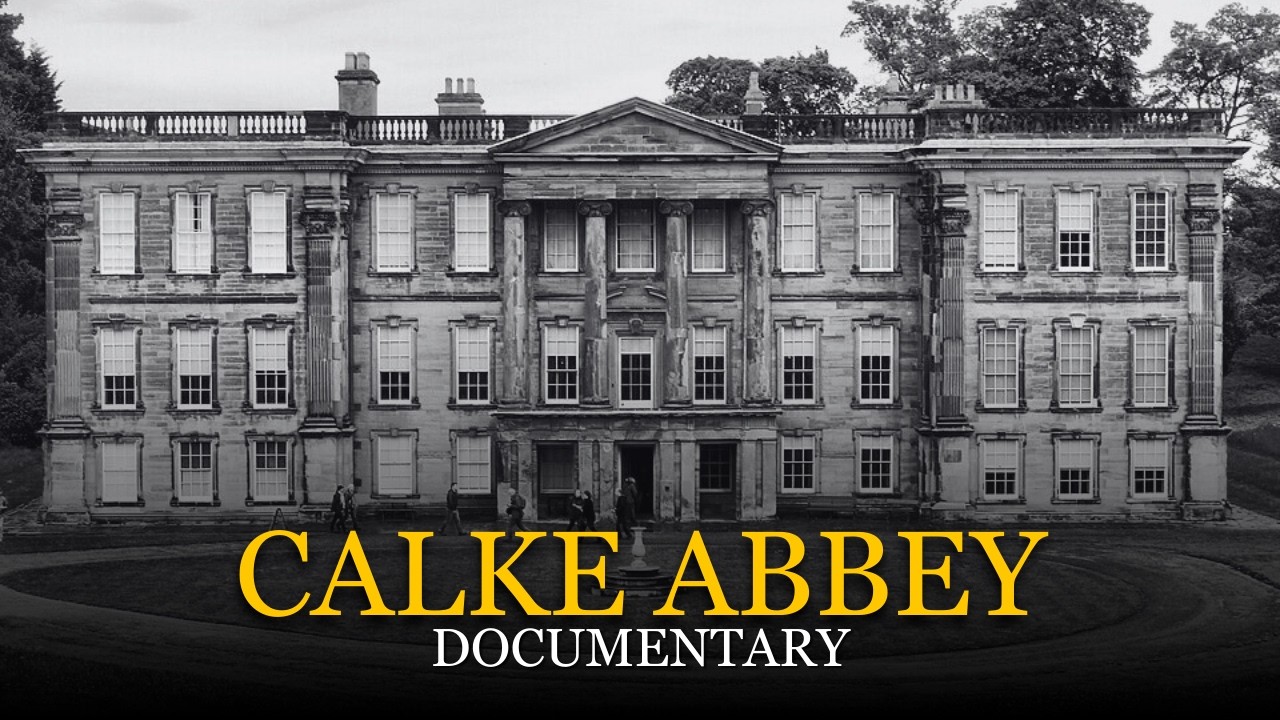
Construction of the grand Baroque mansion began in 1633, costing over £3,000—roughly £700,000 today. Sir Henry envisioned the house as a testament to his family’s rise from the merchant class into the landed gentry, a symbol of their ambition to transform money into legacy. For over a century, the formula worked. Each generation expanded the estate’s holdings, collecting art, furniture, taxidermy, books, and natural history specimens from around the British Empire.
The house became a private museum of cultured living. By the late 1700s, the family had merged with the Crewe line through marriage, becoming the Harpur-Crewes, a double-barreled name that signaled their elevated status. Yet, even in this golden age, the seeds of future decay were being planted. The family’s love of collecting began to outpace their ability to organize it.
Specimens accumulated in hallways and attics, and the family began to withdraw from the world. Unlike other aristocratic families who maintained London residences and participated in the social season, the Harpur-Crewes increasingly remained at Kula, hosting fewer guests and attending fewer events. The shift toward isolation became more pronounced in the 19th century. Sir George Crewe, the eighth baronet, inherited the estate in 1819 and viewed the industrial world beyond his gates with suspicion.
He stopped traveling to London and declined invitations, spending his days cataloging specimens and avoiding human contact. His son, Sir John, took this withdrawal further, developing a hoarding obsession that went beyond scientific collecting. He saved everything—old newspapers, broken furniture, decades of letters—and the house began to transform from a venue for entertaining into a storage space. By the mid-1800s, the pattern was firmly established: each baronet became more reclusive than the last.
Sir Vauncey Harpur-Crewe, who inherited in 1886, expanded the hoarding to industrial scale, keeping every letter, newspaper, and broken chair with equal fervor. He let the house decay, reasoning that to repair would mean to change, and to change would mean admitting the present was different from the past. Under his watch, the roof leaked in 17 places, wallpaper peeled in great sheets, and the family relied on gas lighting and chamber pots while the rest of the country modernized. Sir Vauncey married late, at 52, to Georgiana, who developed her own obsessive habit—collecting thousands of bird eggs.
They maintained separate bedrooms, rarely spoke, and presided over a house that was slowly eating itself. By the time he died in 1924, following 40 years of genteel decline, the estate was wealthy on paper but crumbling in reality. His son, also named Sir Vauncey, inherited a losing battle. Of the house’s 60 rooms, only about 15 were regularly used.
The remaining 45 existed in various states of abandonment, many locked for decades. The blue bedroom had not been occupied since 1870, yet its bed was still made, toiletries sat on the dressing table, and a dress hung in the wardrobe. The state bedroom, the finest in the house, remained in permanent readiness for important guests who never arrived. It had not hosted a visitor since Queen Victoria’s reign.
Rather than confront the deterioration, the younger Sir Vauncey simply locked doors. When the roof over the east wing developed serious leaks in 1928, he covered the furniture with sheets, locked the doors, and forgot the keys. By 1935, over half the house was effectively uninhabitable. The family moved through an ever-shrinking circuit of rooms, like a dying organism withdrawing from its extremities.
This period also revealed the family’s psychological unraveling. The younger Sir Vauncey refused to acknowledge the current decade, referencing events from decades past as though they had just occurred. He spoke of tenants who had been dead for 50 years as though they still farmed the land. He would have the formal dining table set with full silver service for one person, invoking footmen who no longer existed.
His wife retreated into her own wing, creating elaborate taxidermy dioramas, including a Victorian tea party featuring a badger in a dress pouring imaginary tea while rabbits in waistcoats occupied the chairs. Their daughter, Hilda, born in 1921, grew up in this environment of baroque dysfunction. Educated at home by governesses who rarely stayed long, she developed an obsessive bond with the bird specimens in the natural history collection, conducting one-sided conversations with them that echoed through empty corridors. The financial situation continued its steady decline.
Agricultural rents fell to nearly nothing, coal revenues disappeared, and death duties consumed most of the liquid capital. In 1958, Hilda approached the National Trust about acquiring the estate. Their survey was devastating: the roof needed complete replacement, the walls suffered from rising damp, and the house contained over 10,000 objects jumbled together—valuable paintings mixed with worthless broken furniture. The National Trust declined, suggesting Hilda sell items from the collection to fund repairs.
She could not bring herself to do it. By the 1970s, the house had crossed from deterioration into danger. The roof timbers were hollowed shells, and a structural engineer’s report estimated £350,000 just to make the building safe. Hilda received the news with tired acceptance.
She had known, because anyone who lived there knew. The National Trust was approached again, and this time, the surveyors saw something extraordinary. Because the family had changed nothing for over a century, the house contained a complete, accidental record of aristocratic life across multiple eras. One historian described it as a three-dimensional museum of English country house life.
The taxidermy collection alone held over a thousand specimens, some of species now rare or extinct. In 1977, Hilda agreed to the National Trust’s unconventional terms. They would not restore the house to its former glory; they would stabilize it in its current state of decline, preserving the decay itself. They would maintain the hoarded accumulations and present the house as a monument to what happened when the money ran out.
Hilda would remain in residence until her death. When stabilization work began in 1978, the approach was radical. Scaffolding held up dangerous ceilings, but the ceilings remained cracked and stained. Windows were made weatherproof, but the peeling paint was untouched.
The house became a new category of historic site—neither ruin nor restoration, but something in between, arrested mid-collapse. The natural history collection, crammed onto shelves and stacked in corners, was presented as evidence of obsession rather than scholarship. Visitors reported feeling genuinely disturbed by the raw evidence of psychological disorder, the smell of mildew, and the silent, glass-eyed specimens. The National Trust also discovered that the family had papered over existing wallpaper rather than removing it.
By carefully separating layers in select locations, conservators could read the house’s decorative history backwards through time. In the main bedroom, they identified 17 distinct layers spanning from 1740 to 1920—each layer a moment when the family had tried briefly to update, and each marking the moment they gave up and simply covered the old rather than removing it. Hilda Harpur-Crewe died in 1989 at age 68, in her bedroom surrounded by her natural history specimens. She had lived her entire life at Kula Abbey and maintained no life outside its walls.
Her will was simple: everything to the National Trust, with a small provision for the two elderly staff members. There were no personal bequests because there were no people in her life to bequeath to. After her death, the trust completed its cataloging of the house’s contents. The final inventory ran to over 7,000 pages and documented over 10,000 objects—furniture from every period since the 1600s, artwork, taxidermy, books, clothes, letters, broken tools, and empty bottles.
The inventory read like an autopsy of aristocratic life, revealing an inability to let go of anything. The Harpur-Crewe family’s defining characteristic was the absence of decisive action. They never chose restoration, demolition, sale, or modernization. They chose only inaction, and inaction chose everything else for them.
The moment of no return came so gradually that nobody noticed it passing, but it could be traced to the early 1900s when Sir Vauncey inherited a struggling estate and chose to retreat further into fantasy rather than engage with reality. Today, Kula Abbey is presented as a cautionary tale rather than a celebration. The family wanted to be remembered for their collections, their taste, and their place in society. Instead, they are remembered as hoarders, case studies in dysfunction, and exemplars of how tradition can become a prison.
Students of psychology examine their hoarding behaviors. Historians use them to illustrate aristocratic decline. The very compulsion that contributed to their downfall now enables detailed study of it. The house itself offers something more valuable than the usual heritage narrative of triumph.
It offers an honest accounting of what happens when preservation becomes paralysis, when fear of loss leads to total loss, and when a dream that demands everything leaves only silence behind.