German generals who fought against the Allies during World War II held a wide range of opinions about their opponents. These views were shaped by battlefield experiences, personal encounters, and ideological biases. Some Allied commanders earned grudging respect, while others were dismissed outright. Examining these perspectives offers insight into the strategic thinking that influenced the war.
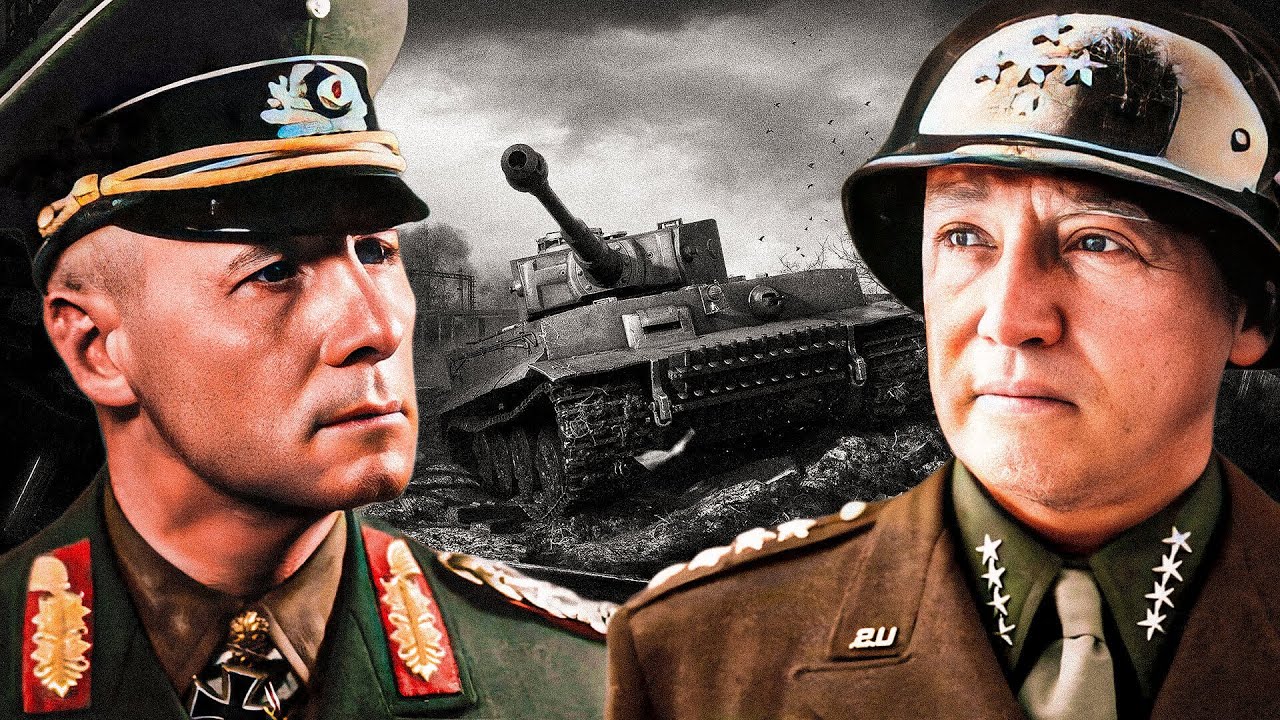
Among all the Allied generals, one figure stood out in the eyes of the German High Command: General George Patton. His aggressive style and relentless pursuit of victory earned him a unique form of respect from his enemies. Some German officers even considered him the most German of the Allied commanders.
Patton’s approach to warfare closely matched German military philosophy. He believed in constant movement, rapid advances, and overwhelming force. This style was familiar to German generals, as it resembled their own blitzkrieg tactics. Patton also had a well-known disdain for static warfare, preferring to keep his forces on the move.
General Heinz Guderian, the architect of Germany’s blitzkrieg strategy, admired Patton’s tactical skill. Guderian reportedly said that Patton conducted a good campaign and acted as he would have done in his place. General Gerhard von Schwerin, a key planner in the invasions of France and Poland, described Patton as the most aggressive panzer general of the Allies. He noted that Patton’s operations impressed the Germans enormously because he came closest to their concept of a classical military commander.
Patton’s command style also drew parallels with the German concept of mission-type orders, which emphasized giving broad directives and allowing subordinates to use their initiative. Patton himself once said that leaders should tell people what to do, not how to do it, and let them surprise you with their ingenuity.
However, the German view of Patton was not universally positive. Some commanders saw him as a tactical genius rather than a strategic mastermind. Others felt his rapid advance in Sicily was driven more by personal glory than strategic necessity. Military historian Harry Yeide described Patton’s rush to Messina as a display of empty glory.
German generals were also aware that Allied victories often relied on material superiority. The sheer scale of American resources led some to believe that Allied successes were due more to industrial might than individual skill. Patton was respected for his aggressive tactics, but he was also seen as a beneficiary of America’s vast production capacity.
The German view of British leadership was different. German generals held a surprising level of respect for British forces, particularly their resilience and professionalism. General Siegfried Westphal remarked that the hardest and most persistent divisions in attack and defense were the British. German military assessments consistently highlighted the uniformity of British personnel and their lack of failures in key battles.

Despite this admiration for British troops, German commanders often viewed British leadership as overly cautious. In the fast-paced world of mechanized warfare, hesitation could be deadly. Field Marshal Erwin Rommel expressed frustration when he told captured British officers after the siege of Tobruk that they had fought like lions and been led by donkeys.
Hitler’s view of Britain was more complicated. He saw the British as potential natural allies, fellow Aryans who should be working with Germany rather than against it. Hitler believed that Jews were manipulating the British and turning them against Germany. This worldview affected German strategy, as the respect for British resilience meant German commanders prepared for tough, prolonged engagements when facing British forces.
The perception of cautious British leadership also led to tactical choices. German commanders sometimes took risks, betting that their British counterparts would react slowly. This approach occasionally paid off but could backfire when British forces proved more skillful than expected.
German respect for British capabilities was also evident in the air war. Hermann Göring, head of the Luftwaffe, grudgingly acknowledged British technological expertise. He expressed frustration at the British Mosquito aircraft, noting that the British had built a beautiful wooden aircraft with high speed. This admiration for British engineering influenced German aircraft development throughout the war.

The German perception of the Soviet military underwent a dramatic transformation. Initially, many German commanders underestimated the Soviets, viewing them as a less competent adversary. At the start of Operation Barbarossa, many believed the Soviet Union would be an easy target. Nazi racial theories painted Slavic peoples as subhuman, leading many German officers to think Soviet soldiers would crumble under German strength.
As the war progressed, this view shifted dramatically. German forces encountered unexpectedly fierce resistance. The Red Army proved its resilience and determination, forcing German commanders to reassess their views. Field Marshal Paul Ludwig Ewald von Kleist stated that from the very beginning, the Russians proved themselves first-class warriors. He noted that after gaining combat experience, the Russians became first-class soldiers who fought with exceptional perseverance and astounding endurance.
The Battle of Stalingrad marked a turning point in German perceptions. The Red Army’s ability to encircle and destroy an entire German army shattered any remaining illusions of Soviet inferiority. As Soviet counter-offensives gained momentum, German commanders faced an opponent that was not only numerous but also increasingly skilled and well equipped.
General Franz Halder, chief of staff of the Army High Command, noted that Soviet troops were fighting with the greatest tenacity and severity. He observed that the enemy was making every effort to hold the front line and prevent German advances. The confidence that characterized the early stages of Operation Barbarossa gave way to a more cautious approach as German commanders realized they faced an enemy capable of matching and even surpassing their own military strength.
This shift in perception was not universal or immediate. Some German officers clung to their ideological biases longer than others. However, by the time Soviet forces were driving toward Berlin, even the most ardent believers in Nazi racial theories had to confront the reality of Soviet military power.
The German viewpoints on Allied forces did not fade after the war. They continue to influence modern military strategy. Insights collected from German generals regarding their adversaries provide lessons that remain relevant today. The admiration for British resilience has led many modern armies to prioritize troop morale and endurance. Concerns about Soviet numerical strength drove NATO to invest heavily in technological advancements. The effectiveness of Patton’s bold tactics has also left a lasting mark on mechanized warfare doctrine.