For two decades, Andrew Parker Bowles had lived inside a marriage the whole of Britain felt free to gossip about. On the evening of June 29, 1994, the future king of England broke the silence Andrew had kept for all of those years. Charles, the Prince of Wales, told interviewer Jonathan Dimbleby on live television that he had been faithful to Princess Diana until the marriage had “irretrievably broken down. ” The next morning, the front pages reduced two hours of television to a single word: confession.
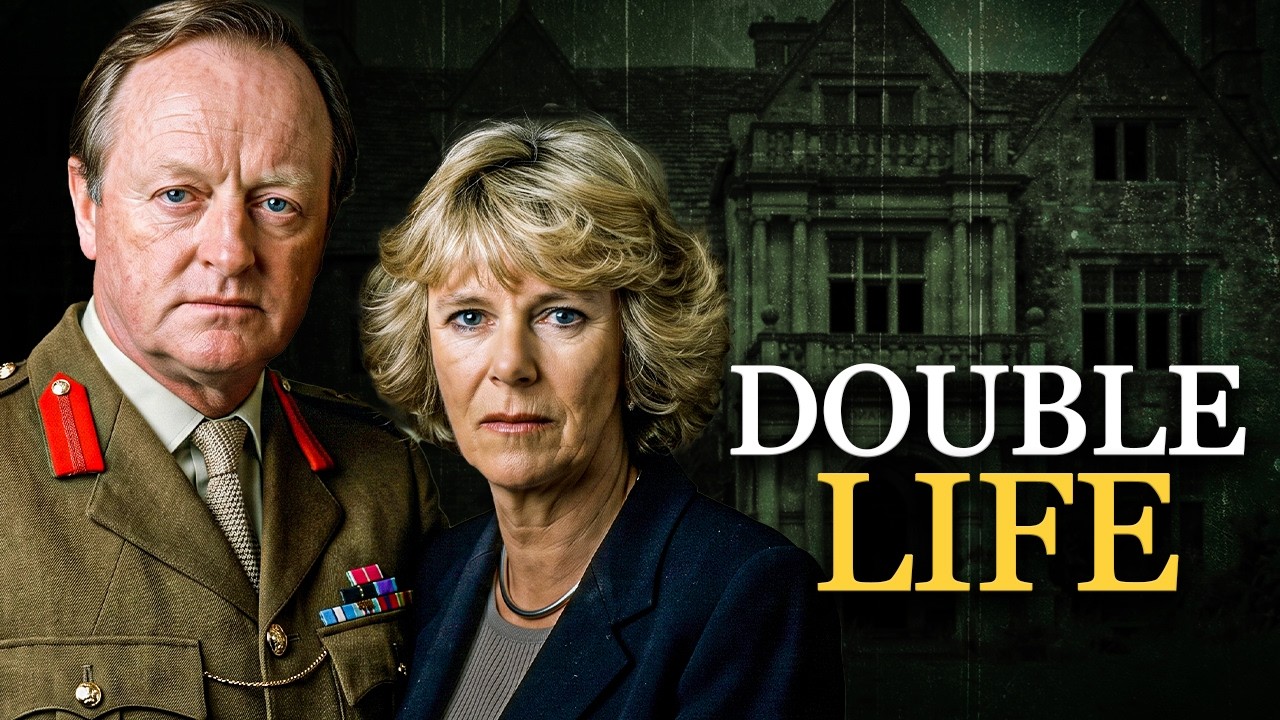
Andrew Parker Bowles was never in that studio. His name was never spoken aloud on air. And yet the answer Charles gave belonged to him more than to anyone. It confirmed what the public had long suspected—that the heir to the throne had committed adultery with Andrew’s wife, Camilla.
The whole country was now licensed to understand Camilla Parker Bowles as the woman at the center of the royal marriage’s collapse. But Andrew Parker Bowles was not the ordinary husband humiliated by an extraordinary family. He was born into that family’s orbit. He was raised inside it, decorated by it, and bound to it by ties of blood, faith, soldiering, and horses that reached back to earliest childhood.
The story of how Camilla’s first husband kept his silence is not the story of a bystander. It is the story of a man who belonged to the same closed world as the people who complicated his marriage. Born on December 27, 1939, Andrew Henry Parker Bowles entered a family stitched into the English establishment at nearly every seam. His maternal grandfather, Sir Humphrey de Trafford, was a wealthy racehorse owner.
That detail mattered more than it might seem—horses remained the through-line of Andrew’s entire life, connecting him to the army, the aristocracy, and eventually the royal family itself. Educated at Ampleforth College and then the Royal Military Academy at Sandhurst, this was a boy being formed deliberately for service, discipline, and a particular kind of belonging. His proximity to the crown was there almost from infancy. In 1953, at age 13, Andrew served as a page at the coronation of Queen Elizabeth II.
Before he was a soldier or a husband, he was a boy in ceremonial dress inside Westminster Abbey. Seven years later, he entered the Royal Horse Guards, beginning a military career that would eventually carry him to the rank of brigadier. The crown was never an abstract institution intruding on his private life—royal service, military duty, friendship, faith, and horses were the single landscape he had lived in since childhood. By his late 20s, Andrew was handsome, athletic, and entirely at home in the equestrian and social circles of the English upper class.
He played polo and rode in the 1969 Grand National. His long, on-again, off-again courtship with Camilla Shand was repeatedly interrupted by other women—sometimes from within her own circle. In the world he came from, charm and unfaithfulness were not thought to be in serious contradiction. One relationship mattered more than the rest because of who the woman was.
In June 1970, Andrew was romantically involved with Princess Anne, the Queen’s 20-year-old daughter. It was a real but brief romance that ran into the immovable obstacle of Andrew’s Roman Catholicism, which made him an impossible prospect for marriage into the royal family under the constitutional rules of the time. The romance did not curdle into estrangement—it softened into a lifelong friendship. Decades later, Andrew would stand as godfather to Anne’s daughter, Zara.
Camilla Rosemary Shand was born on July 17, 1947, to Major Bruce Shand and Rosalind Cubitt. Her father was a decorated cavalry officer; her mother descended from the Barons Ashcombe. What almost every account of her youth insists upon is that Camilla did not want grandeur. She wanted the country house life she associated with horses, dogs, friends, marriage, children, and the familiar rhythms of the world she had grown up in.
And she had already, years before Prince Charles entered the picture, begun an intermittent relationship with Andrew, one made unstable by his reluctance to settle down. In the early 1970s, Charles, Prince of Wales, entered the circle. Where Andrew moved with the ease of a man who owed nothing, Charles moved under suffocating observation. When Charles and Camilla became involved, there was a warmth between them Charles seemed never to have found before.
But the chronology has been distorted by later dramatizations. Sally Bedell Smith, who has studied these lives closely, specifically disputes that Anne’s romance with Andrew and Charles’s relationship with Camilla moved in strategic simultaneity. Anne’s romance had largely run its course before Charles and Camilla developed their relationship. There was no four-cornered conspiracy—only people moving through a small world, colliding in ordinary ways.
What is not in dispute is what happened after Charles left on naval service in early 1973. In his absence, Camilla became engaged to Andrew. One influential account, again from Bedell Smith, holds that the engagement was pushed into being by the couple’s own fathers, who sent the announcement to the Times before Andrew had formally proposed. It is a biographer’s account, not an independently proven fact.
What is certain is the outcome: Camila chose Andrew. On July 4, 1973, 25-year-old Camilla married 33-year-old Captain Andrew Parker Bowles at the Guards Chapel in London. Roughly 800 guests attended. The Queen Mother, Princess Anne, and Princess Margaret were there.
When the couple emerged, they walked beneath an arch of raised military swords. By every indication, it was a marriage both genuinely wanted. Camilla had married the man she kept returning to; Andrew had finally married the woman he kept returning to. They built the life they had wanted in Wiltshire, first at Bolehyde Manor and later at Middlewick House.
Their days ran on the familiar machinery of the upper-class sporting world—army postings, hunting, polo, racing, dinner parties. And Prince Charles did not disappear from that world when Camilla married. Within months of the wedding, he was writing to her again, and before long he was a guest at the Parker Bowles’ weekend house parties. The future king was not lurking at the edges of this marriage—he was inside the house.
Their son, Thomas Henry Parker Bowles, was born on December 18, 1974, and Charles became one of his godfathers. Their daughter, Laura Rose Parker Bowles, followed on January 1, 1978. For a time, the marriage worked. Camilla became the country wife and mother she always wanted to be.
Andrew advanced in his career. Friends remembered them as popular and companionable. One later profile described the marriage as “affectionate and effectively open. ” By the standards of that world, it was a successful home.
Andrew was also becoming a genuinely distinguished soldier. His career took him through some of the hardest postings of the era—military service during the Troubles in Northern Ireland and work during Rhodesia’s fraught transition into Zimbabwe. In 1980, he received the Queen’s Commendation for Bravery and was appointed an Officer of the Order of the British Empire. He commanded the Household Cavalry Mounted Regiment and would in time become Silver Stick in Waiting to the Queen.
One morning shows who Andrew was when it counted. On July 20, 1982, soldiers of the Household Cavalry set out in ceremonial dress for the Changing of the Guard. At 10:43 a. m.
, an IRA car bomb detonated in Hyde Park as the mounted column passed. Soldiers were killed and many wounded. Horses were killed outright or so badly injured they had to be destroyed. Andrew, then commanding the mounted regiment, was among those who responded, later recalling that he ran toward the smoke.
One horse, Sefton, was struck by shrapnel in dozens of places but survived, becoming a symbol of endurance for a grieving public. Restraint under fire was not a metaphor for Andrew Parker Bowles—it was a documented fact of his professional life. Beneath the construction, cracks were always there. Andrew’s own infidelity remained a constant feature of the marriage; the best accounts describe him as a man who had many affairs.
The pattern changes the picture entirely. This was never the simple tale of a faithful husband secretly betrayed. It was a marriage in which both people understood from the beginning that fidelity and loyalty were not the same thing, and that keeping appearances mattered far more than fidelity ever had. In this rarified set, adultery could be absorbed, tolerated, quietly known, and never spoken of—so long as everyone involved preserved the surface.
While this unfolded in Wiltshire, the most scrutinized romance in the world played out in front of cameras. On July 29, 1981, Charles married Lady Diana Spencer at St. Paul’s Cathedral. But Diana came to understand that Camilla Parker Bowles was not a discarded former girlfriend—she was a continuing presence.
By the accounts used in Charles’s own authorized biography, the sexual relationship between Charles and Camilla resumed around 1986, though some biographers place earlier episodes in the late 1970s. This chronology is genuinely contested. What is not contested is the shape of things: two marriages were now quietly entangled, one of them belonging to the man who would one day be king. Then, in the winter of 1989, a private conversation became a physical object.
On the night of December 17, 1989, Charles and Camilla spoke on the telephone; some accounts date the recording itself to the following day. An amateur radio enthusiast with a scanner picked up the signal and recorded it. For three years, nothing happened. Then in January 1993, the transcript surfaced, first abroad, then in Britain.
The intimacy of the future king and a married woman became overnight mass entertainment. The humiliation fell most visibly on Charles and Camilla, but it fell on Andrew too. For the first time, the arrangement he had lived inside could no longer be protected by discretion—discretion was over. And still, Andrew did not retaliate.
Camilla was vilified in the press. Charles’s fitness to be king was being debated. Andrew Parker Bowles, the man with more public reason for grievance than anyone, largely said nothing. Friends had reportedly taken to calling him “Ernest,” after Ernest Simpson, the discarded husband of Wallis Simpson.
The couple’s children had no say in any of it. Tom was 18, Laura was 15. Later accounts say Tom found the publicity almost unbearable and stopped reading the coverage altogether. Their private lives had been converted into newsprint, and there was no converting it back.
In 1994, the very year of the televised confession and the very year his marriage entered its final months, Andrew retired from the army after more than three decades of service. In the newspapers he was a punchline; in reality he was a decorated brigadier with a commendation for bravery. The gap between the public Andrew and the private Andrew had never been wider. That same year, Camilla’s mother died at age 72 after suffering from osteoporosis.
At the precise moment Camilla had become the human focus of a national scandal, she was privately burying her mother and watching her own marriage reach its quiet end. She could not grieve privately because nothing about her was private anymore. On January 10, 1995, lawyers announced that Andrew and Camilla Parker Bowles would divorce after 21 years of marriage. The statement they released was startling in its restraint.
The decision was joint. They had lived apart for two years. Beyond their two children and a continuing friendship, they had little remaining in common. There was no accusation, no attack on Charles, no revenge against Camilla.
After 21 years—the affairs, the relationship with the Prince of Wales, the leaked tape, the global ridicule, the confession—there was no public grievance expressed. Nine days later, on January 19, 1995, a decree nisi was granted in London. The proceeding lasted only a few minutes. The Parker Bowles case was processed alongside dozens of other failed marriages, one more entry on a routine court list.
The law dispatched it without ceremony, as though it were nothing more than what it technically was: two people who no longer wished to be married. The divorce became final that March. Andrew married Rosemary Pitman in 1996. Rosemary was not exiled from Camilla’s life—when Charles and Camilla finally married years later, Andrew and Rosemary were there as guests.
The first husband sat in the pews watching the second marriage. This was a class that did not produce enemies out of former lovers and former spouses—it absorbed them and called them family. Rosemary remained Andrew’s wife until she died of cancer in 2010. Camilla’s road back was far harder.
On August 31, 1997, Diana died in a car crash in Paris. Camilla became for millions the woman on the other side of that story. Whatever tentative progress toward her acceptance existed vanished overnight. When the work of rehabilitation resumed, it moved one small public step at a time.
On January 28, 1999, Charles and Camilla left a party at the Ritz Hotel in London together, walking into a wall of waiting photographers. It was the calculated beginning of their public life together. The engagement was announced on February 10, 2005. The wedding was set for April 8, but Pope John Paul II died that week and his funeral fell on the same day.
Charles moved the wedding back 24 hours. On April 9, 2005, Charles and Camilla married in a civil ceremony at Windsor Guildhall, followed by a service of prayer and dedication at St. George’s Chapel. Andrew Parker Bowles was among the guests.
Queen Elizabeth II died on September 8, 2022, and Charles became king. Camilla became queen. At the coronation in May 2023, Andrew Parker Bowles was once again on the guest list—the boy who had been a page at Elizabeth II’s coronation in 1953 was there, more than 70 years later, to watch his former wife crowned beside the new king. Both of Andrew and Camilla’s children built lives deliberately outside the formal machinery of royalty.
Tom became a food writer and restaurant critic, publishing books on his own merit, repeatedly saying he and his sister were not royal. Laura became an art historian and married Harry Lopes in 2006, keeping a public profile so low that most people who could name her mother could not name her. Andrew remained godfather to Princess Anne’s daughter Zara. In early 2026, at age 86, he represented Anne at a memorial service for Field Marshal Lord Guthrie at the Guards Chapel—the same chapel where he had married Camilla 53 years before.
Weeks later, he stood in for Anne again at a service for racehorse trainer Ian Balding. A family does not send just anyone to stand in its place at the funerals of its friends—it sends the people it trusts most completely. Late in his life, Andrew found a new companionship with former television presenter Anne Robinson, who confirmed in 2024 that they were in a relationship. Camilla was reportedly entirely at ease with it, even joking about the four of them going out together.
In time, the tabloid caricature of the compliant husband gave way to a fuller picture. Biographers found not a weak man but a disciplined one—a decorated soldier who made a choice about how to carry an impossible situation and held to it for 30 years. The joke curdled into something closer to respect. The clearest picture of what that marriage had really been came from a reception at horse trials in Gloucestershire in May 2026.
Queen Camilla moved through the event greeting the familiar faces of the equestrian world. And among them, without ceremony or awkwardness, she greeted Andrew Parker Bowles—the Queen of the United Kingdom greeting the husband she had divorced 31 years earlier. There was no wound to reopen, no bitterness to photograph. There was only an old friendship still intact in a field full of horses.
Andrew Parker Bowles is 86 years old now—a retired brigadier, widowed since Rosemary’s death, still a familiar presence in the world of racing, still turning up at memorials. He never gave the interviews he could have given. He never wrote the book he could have written. In an age when almost everyone adjacent to the royal family found a way to convert proximity into money or attention, Andrew Parker Bowles converted it into nothing at all.
Perhaps the truest image of him is not the man walking out of a three-minute courtroom in 1995, but the old man three decades later greeting a queen across a field of horses—still standing inside the world that had complicated his life from the beginning, and never once saying a word about it.