The persecution of the Jews by Nazi Germany remains one of the most consequential questions in modern history. It was not the result of a single decision or a single cause. Instead, it emerged from centuries of European prejudice, the psychological radicalization of one man, and the political exploitation of national trauma.
To understand why Hitler persecuted the Jews, one must look back long before his birth. Anti-Semitism was deeply embedded in European Christian culture for centuries. During the Middle Ages, Jews were often barred from owning land, excluded from guilds, and forced into ghettos. They were frequently required to wear distinctive clothing to mark them as separate from the Christian population.
The theological basis for this hostility was the accusation of deicide, the charge that the Jewish people bore collective responsibility for the death of Jesus Christ. This belief generated centuries of preaching and art that portrayed Jews in demonic terms. Horrifying myths, such as the blood libel, the false claim that Jews murdered Christian children for ritual purposes, emerged in the 12th century and spread across the continent, triggering massacres and expulsions.
During the Black Death in the 14th century, Jews were blamed for poisoning wells, and entire communities were wiped out in retaliatory massacres. The Protestant Reformation did not improve matters. Martin Luther, the founder of German Protestantism, wrote virulently anti-Semitic texts in the 16th century, including a pamphlet that called for the burning of synagogues and the destruction of Jewish homes. These documents would later be cited enthusiastically by Nazi propagandists.
By the 19th century, the nature of anti-Semitism shifted. The Enlightenment and the French Revolution brought formal legal emancipation to Jewish communities across much of Western Europe. For the first time, Jewish people could attend universities, enter professions, and rise in economic and cultural standing. This rapid rise in visibility paradoxically intensified resentment among those who opposed the change.
This period saw the emergence of racial anti-Semitism, a new and more dangerous form of the old hatred. Where medieval prejudice had been primarily theological, racial anti-Semitism argued that Jewishness was a biological condition that could not be changed, even by conversion. This ideology drew on pseudoscientific theories of race and social Darwinism. Thinkers like Arthur de Gobineau and Houston Stewart Chamberlain argued that history was a story of racial conflict, with the so-called Aryan race locked in an eternal struggle against inferior races, with the Jews at the top of the list of enemies.
This racial theory gave anti-Semitism a new intellectual veneer. It transformed Jews from religious outsiders into an existential threat to the survival of the German nation. Because Jewishness was now defined as racial, the escape route of conversion was no longer available.
Adolf Hitler was born on April 20, 1889, in the small Austrian town of Braunau am Inn. His early life did not immediately suggest the monster he would become. He was the fourth of six children born to Alois Hitler, a customs official, and his wife Klara. Hitler dreamed of becoming an artist, clashing bitterly with his father, who wanted him to enter the civil service. His father died suddenly in 1903, and his mother, whom he adored, died of breast cancer in December 1907.
Hitler’s radicalization into anti-Semitism accelerated during his years in Vienna. He arrived there in 1907 hoping to be admitted to the Academy of Fine Arts but was rejected twice. With his artistic dreams crushed and no profession to fall back on, he spent years drifting in Vienna, living in homeless shelters and surviving on the occasional sale of watercolor paintings.
Vienna at the time was a boiling cauldron of nationalist and racial ideologies. It was also home to a large and highly visible Jewish population. The city’s mayor, Karl Lueger, had built his career on a platform of Christian social populism and virulent anti-Semitism. Hitler attended Lueger’s speeches and was deeply impressed by his political style. He also immersed himself in the anti-Semitic press and pamphlet literature that circulated freely in the city.
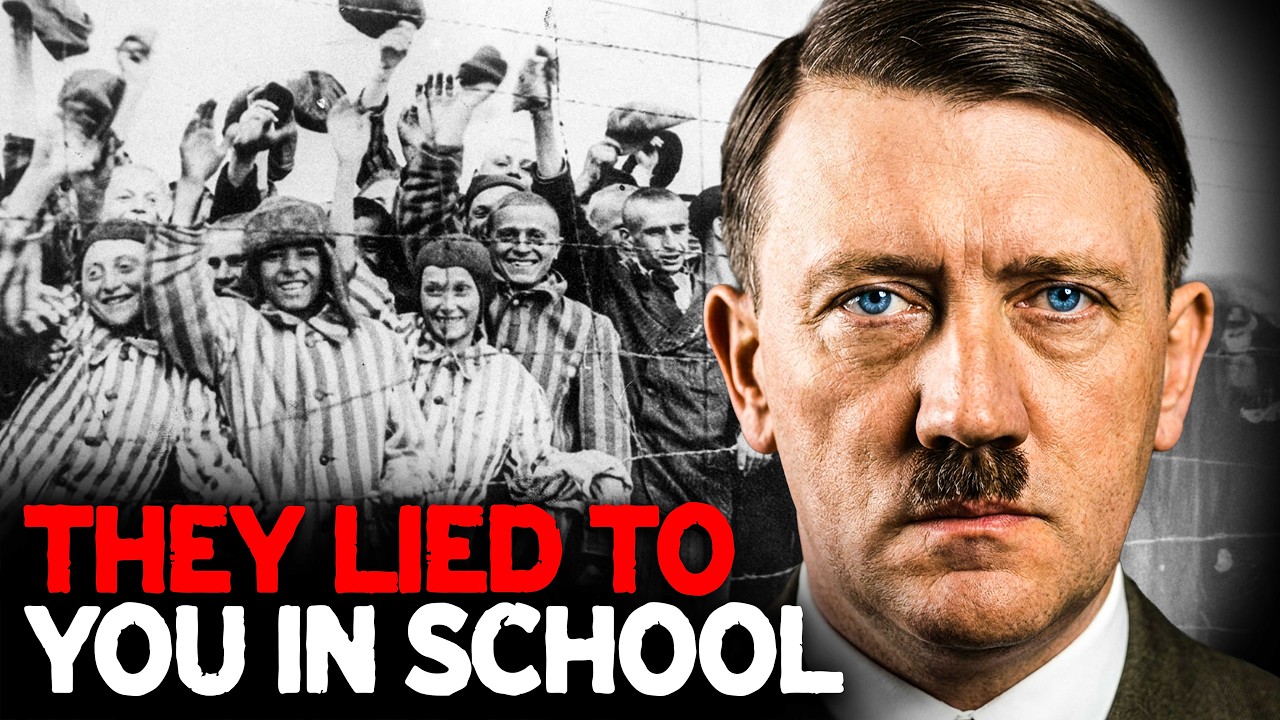
By the time he left Vienna for Munich in 1913, Hitler was already developing the core elements of the worldview he would later expound in *Mein Kampf*. His anti-Semitism was genuine, rooted in real psychological conviction. At the same time, he was a supremely calculating politician who understood precisely how anti-Semitism could function as a mobilizing tool and a scapegoat mechanism.
The catastrophic context of Germany’s defeat in World War I was crucial. Germany’s collapse in November 1918 was genuinely traumatic for millions of citizens. Within days of the armistice, the German military establishment began promoting the stab-in-the-back myth, the claim that Germany had not been defeated on the battlefield but had been betrayed from within by socialists, communists, and Jews. This myth had essentially no basis in historical reality, but it spread like wildfire through nationalist circles.
Jewish Germans had served in the German military in disproportionately high numbers during the war, with over 100,000 Jewish soldiers serving and 12,000 dying for their country. Nevertheless, in the paranoid logic of the narrative, the visible success of Jewish people in journalism, banking, and trade was reframed as evidence of sinister manipulation.
Hitler absorbed this mythology completely. When he joined the tiny German Workers Party in Munich in 1919, soon renamed the National Socialist German Workers Party, or Nazis, he found a political home that shared his obsessions. His speaking ability was extraordinary. In speech after speech, he portrayed the Jews as the invisible hand behind Germany’s defeat, the weakness of the Weimar Republic, hyperinflation, unemployment, and the humiliation of the Treaty of Versailles.
In November 1923, Hitler attempted to seize power in Munich in the Beer Hall Putsch. It failed completely. Hitler was arrested, tried for treason, and sentenced to five years in prison, though he served only nine months. During his time in prison, he dictated *Mein Kampf*, a rambling combination of autobiography, political manifesto, and paranoid racial fantasy.
The book’s central thesis was straightforward and terrifying. Hitler believed that history was fundamentally a struggle between races and that the German people faced an existential threat from what he described as the Jewish race. He portrayed Jews as a parasitic entity, a biological threat to the racial purity of the Aryan host. He was explicit that the removal of Jewish influence from German life was a biological necessity for the survival of civilization.
The ideology laid out in *Mein Kampf* had several interlocking components. The first was the concept of racial purity. The second was the conspiracy theory, the belief in a unified, globally coordinated Jewish conspiracy working to undermine Aryan civilization. The third was the existential framing that transformed persecution from a choice into a necessity. The fourth was the concept of *Lebensraum*, or living space, the idea that Germany needed to expand eastward to acquire land and resources, with the Jewish populations of Eastern Europe viewed as obstacles to be removed.
Hitler was appointed chancellor of Germany on January 30, 1933. The first phase of Nazi persecution, roughly from 1933 to 1935, was characterized by legal and economic measures designed to exclude Jewish people from German public life.
On April 1, 1933, the Nazi party organized a nationwide boycott of Jewish-owned businesses. Stormtroopers stood outside Jewish shops with signs reading "Do not buy from Jews." One week later, the government passed the Law for the Restoration of the Professional Civil Service, which provided the legal basis for dismissing Jews from government jobs. Jewish lawyers were disbarred, journalists were fired, professors were removed from universities, and doctors were expelled from the national health insurance system.
Between 1933 and 1938, approximately 150,000 Jews left Germany, roughly a quarter of the pre-Nazi Jewish population of around 525,000 people. Those who stayed often believed that things could not possibly get worse. They were profoundly wrong.

The year 1935 marked a significant escalation with the promulgation of the Nuremberg Laws. These laws formalized the exclusion of Jews from German citizenship and prohibited marriage and sexual relations between Jews and non-Jewish Germans. A supplementary decree defined who exactly was a Jew for legal purposes, establishing a complex classification system based on the number of Jewish grandparents a person had.
The Nuremberg Laws were a turning point. They encoded racial anti-Semitism into German law and drew a hard biological boundary around the Jewish community. For tens of thousands of Germans who had converted from Judaism generations earlier, or who had only one Jewish grandparent, the laws were a brutal shock. They were now defined not by their beliefs or their service to Germany, but by their blood.
Throughout this period, the propaganda machine built by Joseph Goebbels worked continuously to reshape the consciousness of ordinary Germans. Films like *The Eternal Jew* presented grotesquely dehumanizing caricatures of Jewish people, comparing them to rats and insects. Children’s books taught young Germans that Jews were dangerous and evil. School curricula were redesigned to incorporate racial theory as a fundamental subject.
The year 1938 brought the first major explosion of organized violence. On the night of November 9 and 10, 1938, Nazi stormtroopers attacked Jewish communities across Germany and Austria. Synagogues were burned, Jewish businesses were smashed and looted, and around 100 Jewish people were killed. Around 30,000 Jewish men were arrested and sent to concentration camps. The event became known as Kristallnacht, the Night of Broken Glass, named for the shattered shop windows that littered the streets.
Kristallnacht was a watershed. It demonstrated that the regime was willing to use large-scale organized violence. The Jewish community was then fined 1 billion Reichsmarks supposedly to pay for the damage caused by the pogrom. In the 12 months following, over 100,000 Jews left Germany and Austria.
The invasion of Poland in September 1939 brought approximately 3 million Polish Jews under German control. The initial German response was to concentrate the Jewish population into sealed urban ghettos. The largest was the Warsaw Ghetto, established in late 1940, which by 1942 held over 400,000 people in an area of about 1.3 square miles. Conditions were deliberately designed to be lethal. Starvation, disease, and cold killed tens of thousands each year.
The invasion of the Soviet Union in June 1941 represented a catastrophic escalation. The war in the east was conceived from the beginning as a war of racial annihilation. Following closely behind the advancing German armies were special mobile killing units called Einsatzgruppen. Their mandate was the systematic shooting of Jews, Soviet officials, Roma people, and anyone else designated as an enemy of the Reich.
By the end of 1941, within six months of the invasion’s beginning, the Einsatzgruppen had murdered approximately 500,000 people, the vast majority of them Jews. The most notorious single massacre occurred at Babi Yar, a ravine on the outskirts of Kiev. Between September 29 and 30, 1941, members of Einsatzgruppe C shot 33,771 Jews, the entire remaining Jewish population of the city.
The sheer scale of the killing confronted the SS leadership with what they described as operational challenges, primarily the psychological cost to the executioners and the inefficiency of shooting hundreds of thousands of people one by one. This led to the decision to build dedicated extermination facilities using poison gas.
The Wannsee Conference, held on January 20, 1942, was an administrative coordination meeting at which senior SS and government officials met to coordinate the implementation of the "Final Solution." The meeting was chaired by Reinhard Heydrich. Adolf Eichmann prepared the minutes. The conference discussed the scope of the operation, which Heydrich identified as encompassing 11 million Jews in Europe. The minutes discussed the mass killing of millions of people in the calm, antiseptic language of bureaucratic administration.
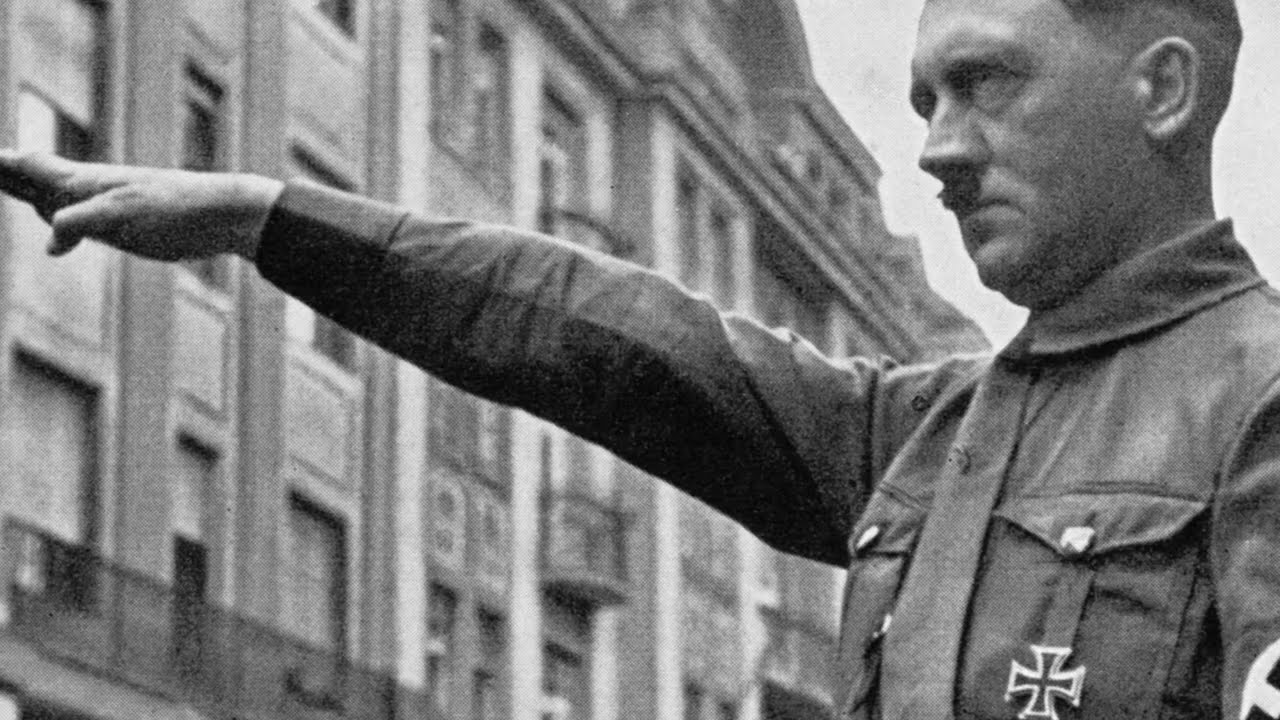
The extermination program relied primarily on a network of six dedicated extermination camps built in occupied Poland: Auschwitz-Birkenau, Treblinka, Sobibor, Belzec, Chelmno, and Majdanek. These were built for one purpose: to kill people as quickly as possible. At Auschwitz-Birkenau, the largest and most notorious, the gas chambers could kill 2,000 people at a time in a matter of minutes. At the peak of the killing program in the summer of 1944, Auschwitz was murdering over 10,000 people per day.
The total number killed in the Holocaust is estimated at approximately 6 million Jews, representing roughly two-thirds of the pre-war Jewish population of Europe, along with 5 to 6 million non-Jewish victims, including Roma, Slavic civilians, Soviet prisoners of war, political prisoners, homosexuals, and people with disabilities.
The myth that ordinary Germans knew nothing about the mass murder was substantially demolished by historical research. The Einsatzgruppen shootings involved tens of thousands of executioners, witnesses, and support personnel. Letters home from soldiers described the massacres. The deportation of Jews from cities across Germany was conducted publicly, with Jews assembled in town squares and loaded onto trains in plain sight of their neighbors.
Jewish resistance to the Nazis took many forms. Armed resistance occurred in the Warsaw Ghetto Uprising of April and May 1943, when the surviving inhabitants rose up with improvised weapons against the German forces sent to liquidate the ghetto. They held out for nearly a month. Armed uprisings also occurred in the extermination camps themselves, including at Treblinka in August 1943 and Sobibor in October 1943.
There was also non-armed resistance of many kinds, including maintaining cultural and religious life underground and keeping secret archives. One of the most important acts of resistance was the work of Emanuel Ringelblum, who organized a team to document Jewish life under Nazi occupation. The archive survived, buried in metal containers under the ghetto, and became an irreplaceable historical record.
The international response to the persecution was inadequate. In July 1938, 32 nations gathered at a conference in Evian, France, to discuss the refugee crisis. Country after country found reasons to severely limit Jewish immigration. The most notorious example of this failure was the case of the MS St. Louis, a German ocean liner carrying 937 Jewish refugees. Cuba refused to honor their papers, the United States refused entry, and Canada refused as well. The ship was forced to return to Europe, where an estimated 254 of the passengers were eventually murdered in the Holocaust.
The role of Heinrich Himmler, the head of the SS, was central to the execution of the Holocaust. He built the bureaucratic and military apparatus through which the mass murder was carried out. In a famous speech delivered to senior SS officers in October 1943, Himmler explicitly acknowledged that the Jews were being exterminated, describing it as "a difficult page in our history" that could never be written. He praised the psychological strength of the SS men who had carried out the killings while remaining "decent."
The liberation of the camps in the spring of 1945 revealed the full horror of what had been done. General Dwight Eisenhower, who visited a newly liberated camp, ordered that film cameras record everything because he anticipated that the world might someday refuse to believe what had happened.
The Nuremberg trials, conducted between November 1945 and October 1946, were the most important judicial response to the crimes of the Nazi era. The trials established important legal precedents, including the principle that there was no defense of following orders for crimes against humanity. Twelve defendants were sentenced to death and executed.
Not all perpetrators were caught or punished. Thousands of former Nazis managed to escape justice through various means, some with the assistance of governments more interested in recruiting their expertise than in prosecuting their crimes. The case of Klaus Barbie, the Gestapo chief of Lyon, who was recruited by American intelligence and helped escape to Bolivia, is particularly egregious. He was not finally brought to trial until 1987.
Germany today has gone further than perhaps any other country in history in its formal acknowledgement of its crimes. Holocaust education is mandatory in German schools. Holocaust denial is a criminal offense. German leaders have made repeated formal statements of acknowledgement and apology.
The question of why Hitler persecuted the Jews has many answers, and none of them are simple. It is rooted in centuries of anti-Semitism, shaped by racial pseudoscience, catalyzed by Germany’s defeat in World War I, systematized by Hitler’s ideology, implemented through the machinery of the Nazi state, enabled by the failure of the churches and the international community, and carried out by a combination of fanatical true believers and ordinary people who found themselves doing extraordinary evil through the mechanisms of bureaucracy, conformity, and the gradual normalization of cruelty.
Understanding these answers as fully and as honestly as we can is perhaps the most important intellectual and moral obligation that the Holocaust places on those of us who live in its shadow.