Warm Springs, Georgia. April 12, 1945. The president collapsed in his chair. A woman held his hand, then left quietly before the doctors arrived.
The Little White House was calm, and the spring sun cast long shadows on the floor. He complained of a severe headache before losing consciousness during a portrait session. To avoid a national scandal, her closest advisers suggested she leave immediately, before reporters or the First Lady arrived.
She packed quietly, got into a waiting black sedan, and disappeared into the Georgia dust. Eleanor Roosevelt was already traveling from Washington, but she would arrive too late to see the departing guest.
She was the secret that protected the presidency. For decades, the American people believed Eleanor Roosevelt stood alone beside his legacy. But the truth lay in the shadows. Official accounts rarely mentioned her. Her presence vanished from public memory because power demands absolute discretion.
She accepted the price and stepped out of the historical frame so the leader of the free world could stand alone. The nation mourned a hero, while the woman who secretly loved him slipped away, carrying the burden alone.
Who was this woman? And why did she have to flee the deathbed of the most powerful man in America? To understand her disappearance, we have to go back to a bundle of letters that nearly destroyed a future presidency.
In the spring of 1945, the war in Europe was nearing its end, and victory seemed inevitable. Franklin Roosevelt was the architect of that global victory, but his physical strength was fading quickly under the pressure. He traveled south to the warm pine forests of Georgia, seeking temporary relief from political burdens.
He was surrounded by close advisers, but he was also looking for a gentler presence that gave him real comfort. A presence officially banned from his life 27 years earlier in New York. They had built a private world in the shadows, far from the cameras and lights of Washington. Now, facing his final hours, that private world was about to collide with the demands of legacy.
This is the story of the woman who was beside the president.
The spring woods of Warm Springs had been a refuge for Roosevelt since 1924. Locals watched the president’s guests but kept absolute silence to protect his privacy. On that fateful April day, the Secret Service coordinated her quiet departure before the local police chief arrived. She sat in the back seat, watching the pine trees fade into the afternoon haze. Her hands were clasped tightly.
Washington, D.C., 1914. The capital was a stage for lavish wealth and wild political ambition. A young woman arrived in the city trying to survive after her family suffered a devastating financial collapse. She worked managing the social calendars of the city’s wealthy families, showing a quiet grace that drew people to her.
She did not belong to political dynasties, but she worked in their salons, watching their private lives. Her father, Carroll Mercer, lost his entire fortune in failed investments and slipped into alcoholism. In the capital’s rigid hierarchy, poverty was considered a social failure that barred families from attending major events.
Lucy had to earn a living to support her mother, and she learned from a young age to value absolute secrecy above all else. She was hired as a social secretary for Eleanor Roosevelt, whose home was bustling with five young children. Lucy brought order to the chaotic household, managing invitations and social schedules with quiet efficiency.
Eleanor grew to trust her completely, considering her a reliable companion in her increasingly busy political life. Her name was Lucy Mercer, and she was 23 years old when she entered the Roosevelt home.
Franklin D. Roosevelt was Assistant Secretary of the Navy, a tall, energetic rising star in Washington. He was an attractive politician, but behind his public smile, observers noted, he felt increasingly isolated within his formal marriage. Franklin noticed Lucy’s quiet elegance, and their daily conversations soon shifted from schedules to his personal dreams.
Lucy soon found herself riding in his open touring car through the Maryland hills, escaping the pressures of the capital. They enjoyed a simple warmth from a bond they found nowhere else, exchanging ideas they had been hiding. They were walking a tightrope, unaware of the lifelong commitment they had just begun.
The Roosevelt family spent summers on Campobello Island, leaving Franklin alone in Washington for long periods. His Navy Department office oversaw thousands of employees, but he found real rest only in her company. They spent hours sorting official correspondence, a task that gradually turned into shared secrets.
Lucy had a gift for listening without judgment, a rare quality in a city full of fierce ambition. For Franklin, she was a calm refuge in a troubled world. For Lucy, he was a generous protector. They wandered through Rock Creek Gardens, looking for quiet places where they could talk without being seen by reporters.
The trips through the Maryland hills grew longer, and the line between secretary and partner began to blur. She did not want to threaten his family, but the affection between them was growing harder to contain.
Lucy’s mother, Minnie Mercer, had to rent out rooms in their home to earn a meager income. This social decline made Lucy highly sensitive to the judgments of the Washington elite she served. Eleanor had hired her for her competence and her lack of involvement in the capital’s hostile gossip.
Their shared car rides through the Maryland hills were their only moments of true freedom away from public roles. Lucy’s grandfather had been a distinguished Union Army officer, which added pressure to her lineage. The Mercer family’s social decline was complete when their historic properties were sold at public auction.
At formal dinner parties, Lucy arranged seating, placing the most influential guests near the assistant secretary. Franklin watched her navigate the complex social hierarchy with a calm authority that contrasted with Eleanor’s seriousness. Eleanor’s focus had shifted to public service and the welfare of settlement house families.
That left a quiet space in Franklin’s social life, a space Lucy filled with a playful spirit he had not known since childhood. They shared a sense of humor, exchanging private jokes while attending crowded receptions during the Washington season. Lucy was not demanding, and she did not pressure him with his mother Sara’s heavy expectations.
In the late hours after guests left, they sat on the porch of the R Street house to review the day’s mail. These work sessions gradually became the foundation of a deeper partnership built in the quiet corners of the home. Lucy recognized the vulnerability beneath Franklin’s outward confidence, a secret he hid from his political opponents.
Their drives in the open car to the Virginia hills provided a brief escape from the scrutinizing eyes of the capital’s elite. Lucy wrote a polite letter to Eleanor, thanking her for the opportunity to work in such a warm home. Eleanor responded by introducing Lucy to Sara Delano, who admired the young woman’s quiet, respectful manner.
During her first weeks, Lucy organized the large pantry and carefully cataloged the family silver. Franklin often passed by her office in the hallway, asking about minor updates to his daily schedule just to start a conversation. He was impressed by her calm during the frantic preparations for the annual Navy dinner hosted by the assistant secretary.
The dinner was a great success, and Franklin publicly praised Lucy for her flawless coordination of the evening. Their shared interest in naval history became another bridge in the relationship, with Lucy spending hours organizing his collection of historical books. Eleanor often traveled to New York, leaving Franklin and Lucy to dine together in the quiet R Street house.
Minnie Mercer had trained her daughter in watercolor painting and classical piano, hoping she would maintain her social standing despite their debts. Franklin gave Lucy a small leather-bound volume of Keats’s poems, their first personal gift. Lucy loved collecting small wildflowers along Maryland’s country roads, pressing them carefully inside her poetry books.

Years later, their silent connection deepened into a secret love affair away from Washington’s prying eyes. Franklin found in Lucy a warmth he lacked at home, while she found a protector who gave her security. They created a private world isolated from the demands of public duty and social expectations.
A bundle of letters became the physical vessel of their secret, tied with a simple blue ribbon. In one letter, Franklin wrote: “You are the only one who truly understands my thoughts without asking anything of me.”
Why did they not stop? Both knew the relationship threatened his career and her public reputation. A political scandal would destroy the Roosevelt family’s growing ambitions in the Democratic Party. Yet the emotional pull was too strong to resist. They chose the risk, believing their refuge was worth it.
The public watched Franklin host naval receptions. In secret, they met in train compartments under assumed names. The sharp whistle of the steam engine in the dark was their only companion as they traveled along the East Coast. Lucy agreed to stay out of the spotlight, preferring a bright name over a private love she could never declare.
She became his emotional lifeline, the only person who never asked him for political favors or positions. But their secret refuge was about to be suddenly exposed, changing the lives of three people forever.
They used the Congressional Express train to travel between Washington and New York, escaping the capital’s bustle. They registered under false names in small hotels, building temporary lives away from public view. Franklin wrote to her almost daily, pouring out his Navy frustrations and political battles into his letters.
Lucy kept these letters in a locked metal box, a precious treasure she read again and again in her quiet room. She knew she would never be his wife, but she accepted it because the love was worth the sacrifice. The Democratic Party was preparing for a crucial election, and Franklin was under the watch of party leaders.
Any rumor of infidelity would end his career before it began, a risk they both understood. Still, they continued arranging meetings, using friends as intermediaries to carry messages between the Navy Department and her home. Their relationship deepened, built on shared secrets and the constant fear of exposure, which only bound them closer.
Franklin spent his evenings at formal dinners, but his thoughts were with the young secretary who kept his letters. They believed they could keep it secret forever, but their letters would eventually reveal the truth. Washington’s social circle was tight and cruel, and any rumor of improper behavior could lead to immediate exile.
Franklin’s political allies were already planning his Senate run, making his personal conduct a matter of national importance. They arranged secret meetings in the homes of close friends who agreed to protect their privacy from the gossip press. Franklin bought Lucy small gifts, including a silver necklace she hid under her high-collared dresses.
He expressed his private thoughts on naval expansion and the danger of war in letters sent to her private address. In one letter, Lucy wrote: “Your words are my only comfort in these long weeks we must remain apart.” They met in quiet corners of Virginia, enjoying long countryside walks, far from the capital’s prying eyes.
They believed they could manage the risks, keeping their private romance while performing their demanding public roles in Washington. But the double life was exhausting, and the fear of exposure hung over every quiet moment they spent together. They spent afternoons walking through the wooded trails of Rock Creek Park, away from the capital’s gossip.
Franklin arranged for her to receive private invitations to events where they could talk without public scrutiny. In New York, they used a secret entrance to a brownstone apartment owned by a relative who supported their privacy. Lucy kept the ribbon-tied letters inside a small mahogany box locked in the bottom drawer of her desk.
They believed their love could continue in parallel with his career, in a secret space untouched by political realities. Franklin’s cousin, Laura Delano, served as their main courier, hand-delivering letters to avoid the public mail system. Lucy spent her evenings reading his letters, finding comfort in his descriptions of a future where they did not have to hide.
The risk was enormous, but quiet weekends in Virginia provided a temporary refuge from Washington’s social pressures. They walked together through Virginia’s autumn woods, fallen leaves hiding their path from view. Franklin tucked a small handwritten note into her coat pocket, containing only the date and place of their next meeting.
Lucy kept the note inside her silver necklace, a small secret she carried everywhere. Their friends noticed a new lightness in Franklin’s step, but no one dared mention the secretary’s name aloud. Lucy went to the local post office under cover of darkness, sending her letters directly to avoid family servants’ curiosity.
They relied on an antique brass pocket watch to synchronize their arrivals at train stations, preventing any accidental public meetings. Eventually, Franklin returned from a naval inspection tour in Europe, seriously ill with double pneumonia. He was carried into his New York home, too weak to manage his heavy luggage.
As the war entered its final weeks, Eleanor Roosevelt opened his heavy leather bag to help him settle in and discovered the bundle of letters. The blue ribbon slipped away, revealing years of intimate correspondence between her husband and her secretary. The discovery shattered Eleanor’s trust.
She later wrote: “I will never forgive, even if I forget.” She had trusted Lucy not just as an employee, but as a friend. One discovery destroyed both relationships at once. Eleanor was raising six children, building her public identity, and trying to save a marriage she believed was worth saving.
Eleanor confronted Franklin and offered him a divorce, refusing to live a lie for the sake of his career. It was a moment of real crisis, forcing him to choose between his private love and his political future. His mother, Sara Delano Roosevelt, threatened to cut off his inheritance if he divorced Eleanor.
His adviser, Louis Howe, warned him that a public divorce would destroy his presidential dreams forever. Franklin agreed to cut all ties with Lucy, drawing a hard line that changed three lives forever. Lucy was cast out of Washington’s high society and promised never to contact him again.
The door closed, and silence fell.
Eleanor was not just a passive victim of their affair. She was a fiercely independent woman with sharp intelligence. The letters revealed that the betrayal happened in her own home, under her own roof, with a woman she trusted. She demanded Franklin commit to his marriage and family, or leave her entirely to make her own way.
Divorce in 1918 carried an enormous social stigma capable of destroying a family’s reputation for generations. Sara Delano held the keys to the family estate in Hyde Park and was determined to protect the Roosevelt name. Louis Howe worked behind the scenes, reminding Franklin of the political calculations that governed the capital.
Franklin made a harsh calculation and chose the path of power over the call of his heart. He promised Eleanor he would never see Lucy Mercer again, a promise recorded in their private agreement. Lucy was left to face the consequences of his decision.
She had to leave Washington and find a way to live on her own. The letters were returned to Franklin, who hid them away, a silent witness to the love he had given up. The Spanish flu was ravaging New York, and Franklin’s pneumonia made his recovery uncertain.
Eleanor spent her days caring for him and organizing his affairs, playing the role of the loyal wife of a government official. The discovery of the letters was not just a betrayal of her marriage; it was the destruction of her personal trust. For Eleanor, the letters were not just evidence of betrayal; they shattered the future she thought she had built.
Sara Delano Roosevelt threatened to withdraw financial support from Franklin’s political campaigns if he divorced. Louis convinced Franklin that the American voter would never elect a divorced man to high office. Eleanor sat in her quiet office holding the letters that documented a relationship she had never suspected.

Franklin spent the rest of his life trying to keep two promises: the one he made to Eleanor, and the one he never stopped making to Lucy. Franklin sat alone in his room, staring at the letters that had cost him the warmth of his marriage. He knew the decision was final, but the memory of the Maryland hills could not be erased by political agreements.
Sara Delano presided over family meetings, enforcing the family decree that preserved the public image at any cost. Eleanor’s trust was replaced by cold respect, and a shared understanding that their alliance was now purely political. Lucy received her dismissal notice quietly, packed her bags, and left the capital without a word.
Franklin wrote a long letter to Eleanor apologizing for the pain he had caused and begging her to reconsider the divorce. He promised to end the relationship and said Lucy would leave the house immediately. Eleanor read the letter in silence. Her decision to stay was not based on forgiveness, but on shared responsibility for their children.
Lucy moved to a small apartment in Maryland, where her mother’s family provided a refuge from the capital’s gossip. She spent the winter months in isolation, her correspondence with Franklin officially ended by mutual agreement. Eleanor spent two weeks alone in Hyde Park reflecting on her future before returning to Washington to formalize the agreement.
Eleanor wrote to her closest childhood friend, explaining the breakdown of her family’s peace without mentioning Lucy’s name. The Roosevelt marriage was rebuilt as a cold political partnership focused entirely on their shared public goals. The warmth disappeared, replaced by a contract to conquer Washington that would redefine the modern presidency.
Franklin saved his political career. Eleanor lost her husband’s intimacy. And America preserved a political myth. The great partnership that led the nation through the Depression and the war was built on the ruins of personal happiness. Lucy was left alone in the wreckage of the discovery, facing social exile and the need to find financial security.
In 1920, Lucy married Winthrop Rutherfurd, a wealthy widower 29 years her senior from New York. It was a purely social marriage, aimed at protection. The prestigious Rutherfurd name became her shield from gossip. His estate in South Carolina became her safe haven, far from Washington’s political storms.
She managed the household and raised his children quietly, but she kept the letters in her desk drawer. Winthrop owned Rutherfurd House, a vast property in New Jersey, where Lucy took on the role of stepmother. She was responsible for five children and found distraction in her busy daily routine.
She performed her social duties with the same grace she had shown in the Roosevelt home, earning the respect of her new family. She had traded emotion for the security of a prestigious name, a deal Washington society understood. But the silence was not the end of the relationship, just a pause in a story that refused to end.
The 1918 agreement set the pattern for the rest of their public and private lives. They agreed to maintain the public appearance of a cohesive family while living separate emotional lives behind closed doors. Eleanor channeled her energy into social activism and political organizing, building her own base of influence.
The Rutherfurd family had amassed its wealth through real estate, owning thousands of acres in New York and New Jersey. Lucy’s marriage to Winthrop was celebrated in a simple ceremony attended only by close family members. Lucy built a quiet life at Rutherfurd House, focusing her energy on managing the vast estate.
The Rutherfurd estate in New Jersey spanned thousands of acres of quiet woods. Lucy adapted to the quiet life of a wealthy stepmother, her name protected from Washington gossip within Rutherfurd House. She spent her days overseeing the vast gardens and organizing formal dinners for local high society.
Lucy was a devoted stepmother, winning the love of Winthrop’s children, who had lost their own mother at a young age. Yet the memory of the capital remained, like a hidden thread beneath her daily duties. When Winthrop suffered a stroke in 1938, Lucy spent years caring for him, managing the household with absolute devotion.
She understood the weight of physical illness, an experience that prepared her for her later meetings with Franklin. During the long winter months in South Carolina, Lucy organized charitable works for the local community, leaving her quiet legacy. Winthrop owned a private collection of classical European paintings, and Lucy spent hours cataloging them to distract herself from her isolation.
The Rutherford House library was vast, containing over a thousand leather-bound volumes, which Lucy quietly organized during the cold winters. Throughout the early 1920s, they lived separate lives, divided by duty and a wall of silence. Lucy played the role of society wife, while Franklin rebuilt his political standing in New York.
But neither found peace in their comfortable exile. The memory of 1918 haunted Franklin Roosevelt. He was struck by polio, leaving his legs paralyzed and threatening to end his political career. Franklin, confined to a wooden chair, faced years of physical pain and political isolation.
Eleanor supported his return to public life, advocating for him politically while also being an activist herself. Yet the emotional distance between them remained. Eleanor was his loyal partner in power, but they no longer shared a quiet intimacy.
After nearly a decade, the letters quietly returned, breaking a long silence from her isolation in the shadows. Lucy wrote to him: “I have watched your great courage from afar. It is a light to us all.” Warm Springs became his rehabilitation center, and the safest place for Lucy’s letters to find him again.
Franklin’s paralysis left him unable to stand or walk without heavy steel braces attached to his legs. The sound of his heavy wheelchair on wooden floors was a constant reminder of his physical limits. Eleanor traveled the country to keep his political name alive, acting as his proxy at major conventions and rallies.
Franklin spent winter months in the warm springs or on his porch in Florida, seeking treatment in the waters. His correspondence with Lucy resumed through his private secretary, Missy LeHand, who managed the secret mail. The letters carried stories of their families and the mutual support that sustained them through their physical struggles.
Franklin spent years in physical therapy at Warm Springs, trying to regain use of his legs through exercise. Missy LeHand handled all personal correspondence, ensuring Eleanor never saw the South Carolina letters. Lucy’s letters arrived in plain envelopes addressed to a post office box in Warm Springs.
Franklin spent long hours in the warm waters of Warm Springs, seeking a healing that never came. During the long winter nights in Georgia, Franklin read her words by the fireplace, finding a warm connection that eased his chill. Lucy sent her letters to a private post office box in Warm Springs, bypassing the White House’s official mailroom entirely.
This secret correspondence became their shared refuge, a private space where the president did not have to wear his public mask. When news of Franklin’s paralysis reached her in 1921, Lucy sent a quiet condolence message through Missy LeHand. She did not expect a reply, but the gesture broke the silence that had separated them for three years.
Franklin kept the letter inside his personal Bible, a small sign of the loyalty still present in secret. In his private notes, Franklin recorded how much he missed her laughter during those difficult first months of physical therapy. Franklin insisted on crawling across the living room carpet every morning, trying to rebuild his leg muscles through sheer willpower.
Franklin was elected president in 1932 and arranged for Lucy to attend his inauguration in a private limousine. Secret Service agents managed the secret visits, allowing her to watch his speeches from behind tinted glass. Franklin’s daughter, Anna Roosevelt, made the difficult decision to facilitate their secret visits to the White House.
Anna preferred her father’s exhausted spirit over her mother’s confidence, opening doors for him in Eleanor’s absence. The world watched President Roosevelt lead a global war alliance, while Lucy saw only an exhausted companion named Franklin. The public listened to his confident radio addresses, while she watched his health decline and his hands tremble.
She wrote to her daughter: “He is so exhausted, and there is no rest for him in Washington.” Winthrop Rutherfurd died in 1944, leaving Lucy a widow as Franklin’s health entered its final stages of decline. Lucy became free to travel, and Franklin entered his last year of life, his heart failing.
Their meetings became more frequent, arranged in the quiet White House office or during his trips to Georgia. Anna accepted the risk of her mother discovering these visits, but she saw how Franklin’s face lit up when Lucy entered the room. It was a quiet conspiracy of comfort, designed to support a leader carrying the burden of a world war.
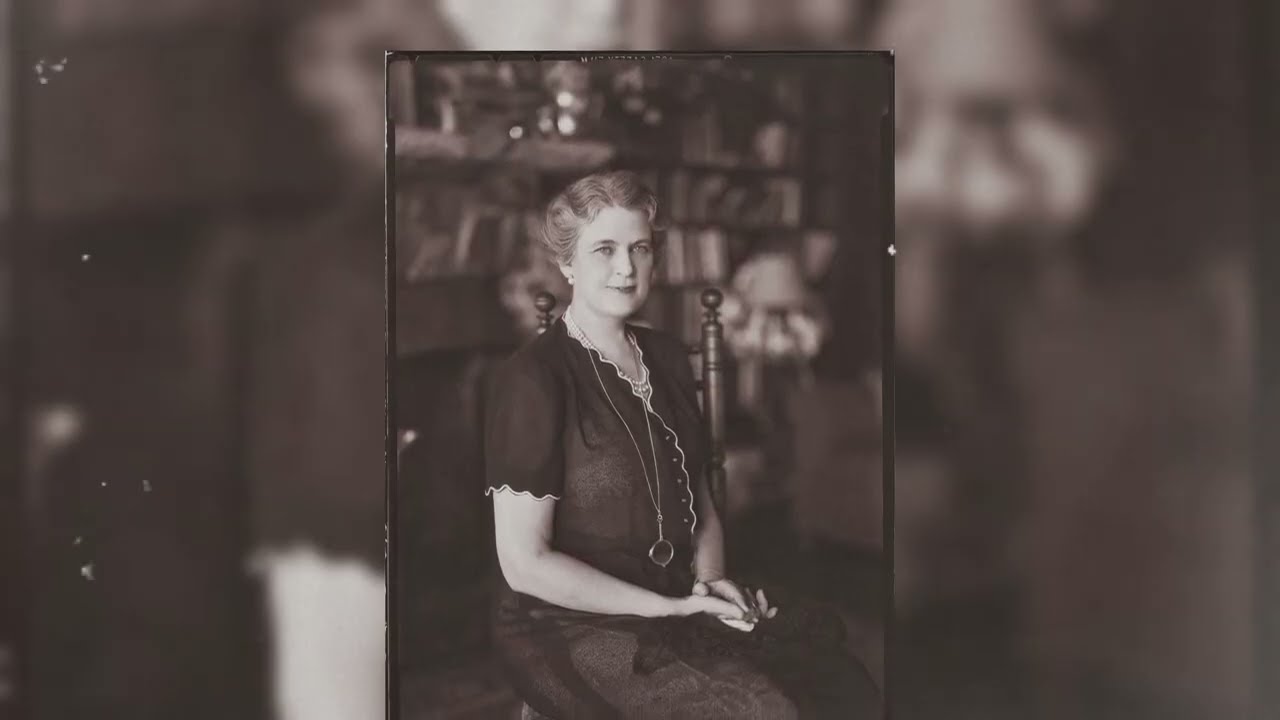
Franklin Roosevelt was elected to an unprecedented fourth term in 1944, while his health deteriorated rapidly due to heart disease. His daughter Anna noticed his extreme fatigue and realized he needed the company of someone who did not demand political work from him. Contemporary records rarely mentioned Lucy’s presence, keeping her name off the official visitor logs of the mansion.
They spent quiet evenings in the president’s study, talking about the war’s progress and his plans for peace. Lucy reassured him that Eleanor’s political activities did not allow him a quiet space to rest without expectations. Franklin’s blood pressure was dangerously high, and his doctors advised complete rest from political duties.
Anna coordinated appointments with the White House gate officer, ensuring Lucy arrived during Eleanor’s trips to the Pacific. They sat in the second-floor study, the president sipping tea while Lucy read to him from the morning papers. Staff followed a protocol of silence, serving meals without asking questions about the guest.
Secret Service agents watched her arrival from the South Portico and facilitated her entry through the private elevator. Franklin sat in his favorite leather chair, his legs on a footrest, while they discussed his hopes for the post-war world. Lucy shared news of the New Jersey gardens, a world far removed from the global conflicts he managed.
For his 60th birthday, Lucy gave Franklin a pair of antique silver cufflinks, which he wore to his next Cabinet meeting. The trusted head butler, sworn to absolute secrecy, served them dinners in the private quarters without leaving any written record.
April 1945, Warm Springs, Georgia. The Little White House provided a quiet refuge away from Washington. Warm spring sunlight filtered through the pine trees, and the air was filled with the scent of damp southern clay. Franklin had gone there to rest from the strain of the Yalta Conference, and Lucy had secretly joined him to keep him company.
For a few days, they found a quiet haven, talking on the porch and enjoying the calm southern spring. The artist Elizabeth Shoumatoff sat nearby, painting a watercolor of the president in his gray suit. The parlor was silent except for the rustle of the pencil and the faint smell of watercolors on paper.
Lucy watched the artist capture the deep exhaustion on Franklin’s face, wishing she could erase the burdens of war. Suddenly, Franklin raised his hand to his temple and whispered: “I have a terrible headache.” He collapsed in his chair, unconscious from a fatal cerebral hemorrhage.
The quiet parlor turned to panic, and staff rushed to give him medication. The president’s advisers recognized the political danger of her presence and suggested she leave Warm Springs immediately. She packed her bags with trembling hands, forced to disappear from his deathbed to protect his public image.
Lucy left quietly through the back door. Eleanor entered through the front door hours later, arriving from Washington. Eleanor learned that Lucy had been there that afternoon, but she maintained her dignity, standing silently beside the coffin. Neither woman spoke about that day to the press, and the myth of the unified presidential family remained intact.
It is strange to imagine that the final defense of a great president’s legacy was built on her willingness to disappear.
Lucy had traveled to Georgia with Elizabeth Shoumatoff and her daughter Barbara Rutherfurd. They spent their mornings on a driving tour through the countryside, with Franklin enjoying the warm southern breeze in his open car. In the sitting room, a fire was lit to ward off the evening chill, and the scent of burning wood filled the room.
Franklin sat for his portrait, wearing a gray tie and his favorite double-breasted suit to appear strong. He was in good spirits, joking with the artist about the progress of the watercolor. Lucy stood beside his chair, holding his hand as his breathing grew heavy and his eyes closed forever.
She knew she could not stay. The presence of the secret woman at the deathbed would have shaken wartime unity. Secret Service agents and advisers hurried her out of the house, making sure her car was ready before the press arrived. Official visitor logs did not record her name that day, preserving the secrecy of her presence.
She watched the Little White House disappear in the rearview mirror, knowing she had said goodbye to her husband for the last time, in secret. Eleanor arrived at midnight to find her husband’s body and the traces of the secret visits that had eased his final days. The discovery was a silent shock, but Eleanor chose to protect the name, leading the nation through the funeral with full dignity.
The two women never met, never spoke, and never shared their memories of the man they had each loved in their own way.
Elizabeth Shoumatoff was a Russian-born artist commissioned by Franklin’s cousin to paint the portrait. The painting began in the morning, with Franklin sitting patiently in his favorite gray double-breasted suit. Lucy stood near the door, watching him smile at the artist despite his physical weakness.
Franklin’s blue open car sat in the driveway, its engine cold for the first time in weeks. Elizabeth finished sketching the outline of his shoulders, but his face remained unfinished in watercolor. Lucy held his hand until the doctors arrived, her tears falling onto the gray wool of his sleeve.
She drove away in her sedan, bypassing the main roads to avoid the news trucks coming in. Eleanor found his personal effects on the table beside the bed, including a small silver key that opened the city post office box. The local police chief coordinated traffic, keeping reporters off the private roads until Lucy’s car was safe.
Laura Delano, Franklin’s cousin, stood at the door, watching the sedan disappear into the pine forest with a heavy heart. The kitchen staff cleared the teacups from the table, leaving only the unfinished watercolor on its wooden easel. Franklin’s heavy oak wheelchair stood in the corner of the sitting room, a silent reminder of his physical suffering.
Franklin’s blue open car was equipped with a custom wool blanket, which Lucy had carefully wrapped around his cold legs before the portrait session began.
Eleanor Roosevelt’s name was immortalized in history, while Lucy Mercer’s page was folded out of the official records. Lucy died of leukemia on July 31, 1948, carrying the secrets of their relationship to her grave. The 1918 bag served as the archival box that returned in 2011, when her family finally revealed the letters.
The letters that once threatened to destroy a presidency became historical artifacts, proving a love that power tried to erase. The unfinished watercolor still hangs in Warm Springs, a portrait of a man whose body fades into a blank page. The white space at the bottom is a monument to their secret, showing how power can hide private truth.
Lucy Mercer Rutherfurd was buried in the Rutherfurd family cemetery in New Jersey, her headstone bearing only her married name. She had burned many of Franklin’s letters before her death, trying to ensure the secret remained safe forever. But her daughter Barbara kept the remaining letters in a locked metal box, preserving them with the same care.
When she donated them to the Franklin Roosevelt Presidential Library, they revealed a devotion that lasted fifty years, surviving polio, marriage, and war. The unfinished painting still hangs in the reception room at Warm Springs, its empty spaces bearing witness to the woman who stepped out of the frame.
In the end, the myth survived, but the unfinished painting is a silent witness to the truth.
The Franklin Roosevelt Presidential Library in Hyde Park was founded in 1941 and holds thousands of private documents. But Lucy Mercer’s story was not revealed until the family published the letters in 2011. Lucy spent her final years in a quiet cottage in South Carolina, rarely speaking to visitors about her Washington years.
She burned most of her personal diaries, determined to keep the promises she made in 1918. The letters remained in the locked wooden box, inherited by her daughter, who kept them hidden for sixty years. Barbara refused numerous interview requests from historians, preserving the silence her mother had chosen.
Eventually, library staff cataloged the letters, noting the excellent condition of the blue ribbons. The unfinished painting remains the only physical record of those final days, its empty edges a reminder of what was lost. The Rutherfurd family respected her choices and never discussed her relationship with the president in any public interviews.
The unfinished painting has inspired many historical novels, each seeking to reconstruct the quiet affection that brought them together in secret. Power protected a presidency, history protected a myth, and silence protected everyone except Lucy.