A federal indictment unsealed in New York in 2026 alleges that Iván Archivaldo Guzmán Salazar, the oldest son of convicted drug lord Joaquín “El Chapo” Guzmán, helped engineer the election of a governor in the Mexican state of Sinaloa by force. Prosecutors say cartel gunmen acting on his orders stole ballot boxes on election day in June 2021 as part of a coordinated plan to put a political ally into office. The allegations are contained in a sweeping case against ten Mexican officials, including the sitting governor of Sinaloa, Rubén Rocha Moya, a senator, the mayor of Culiacán, and senior police and prosecution figures. Guzmán Salazar is not a defendant in that case, but his name appears throughout the document as a central figure in the alleged scheme.
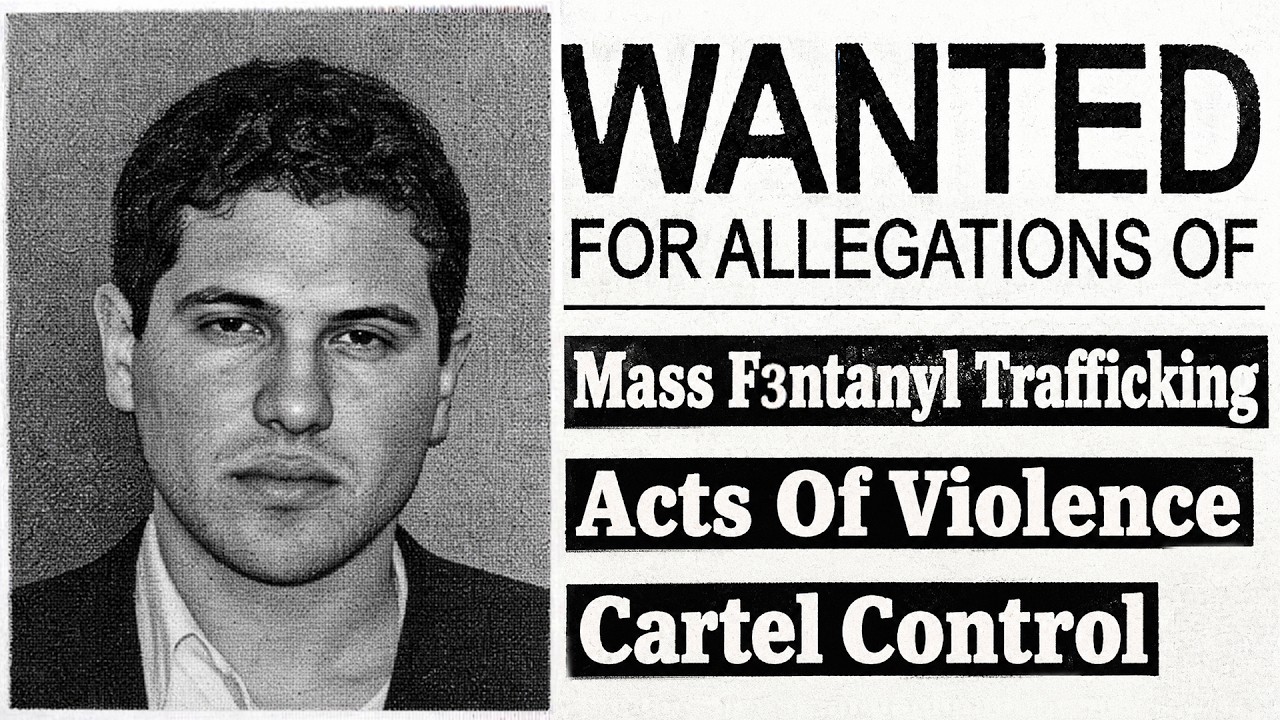
For years, the public story of Iván Archivaldo Guzmán Salazar, widely known as El Chapito, centered on drugs, money, and violence. The newer court files go much further, describing alleged control over state institutions, the kidnapping and killing of a government informant, and a ranch where prosecutors say victims were interrogated and some were allegedly fed to tigers. Most of the allegations remain untested in court. Guzmán Salazar has never stood trial in the United States, and he and his brothers have denied the worst of the claims against them.
The oldest file in the stack dates to 2004, when gunmen opened fire outside a nightclub in Zapopan, near Guadalajara, killing a Canadian exchange student and a young Mexican man. Iván was 20 at the time, and press reports from that period named him as a suspect. A judge in Jalisco issued an arrest warrant on aggravated homicide charges in connection with the killings, but he was never convicted in that case. In February 2005, police in Zapopan arrested Guzmán Salazar while he was sitting in a vehicle with two associates.
The Associated Press later reported that he was detained as he was allegedly preparing to have a man killed over a lost drug shipment in Texas. He was sent to federal prison, and a Mexican journalist reported that while jailed, he asked his father to send warmer clothes because of the cold. In 2008, a court found him guilty of money laundering and sentenced him to five years in prison along with a fine of nearly $19,000. That same year, he was released after the charges did not hold up.
The double homicide case never produced a conviction, leaving the families of the two victims without an answer in a courtroom. On August 15, 2016, Guzmán Salazar was celebrating his birthday at an upscale restaurant in Puerto Vallarta with his younger brother, Jesús Alfredo Guzmán Salazar. In the early hours of the morning, an armed group stormed the restaurant and took six men from the party, including the two brothers. Mexican authorities and later accounts attributed the abduction to the Jalisco New Generation Cartel, the fiercest rival of the Sinaloa cartel.
A former Sinaloa cartel insider, Dámaso López Serrano, known as Mini Lic, has said the men were picked up to be killed. According to accounts from El Mayo Zambada, El Chapo’s longtime partner, Ismael “El Mayo” Zambada got on the phone to open a line to the other side. El Chapo, who was in a Mexican prison awaiting extradition, reportedly sent a message that he would return El Mencho’s son the same way his own sons were returned. A reconstruction published by the newspaper Milenio said the deal also included $2 million and a load of drugs.
Four days later, the brothers were released alive. In late September 2026, Mexico’s former national security commissioner, Renato Sales, went on a podcast and described the moment El Chapo learned his sons had been taken. Sales said El Chapo was in anguish and sent word up the chain, even offering to give information about how the Sinaloa cartel operated if the government would help get his boys back. The offer reportedly never led to a formal statement, but the account shows the lengths Iván’s father was willing to go to secure his release.
On October 17, 2019, the city of Culiacán, the capital of Sinaloa, became the scene of a full-scale confrontation. Mexican forces moved on a house and detained Ovidio Guzmán López, Iván’s half-brother. Within minutes, convoys of gunmen flooded the streets, set vehicles on fire to block roads, and opened fire in broad daylight while families hid inside stores and under restaurant tables. U.
S. authorities have described Iván Archivaldo as having a central role in that response, and analysts at InSight Crime described government forces being overwhelmed by the group under his leadership. The government released Ovidio to avoid more bloodshed, a decision then-President Andrés Manuel López Obrador said he made himself. Footage released afterward showed Ovidio standing outside the house with a phone to his ear, telling his people to stop.
Mexican outlets have reported the person on the other end of the call was his older brother. People died that day, inmates broke out of the local prison, and reports said gunmen surrounded housing where soldiers’ families lived. Ovidio was recaptured in January 2023 and later extradited to the United States. On April 14, 2023, the U.
S. Attorney General announced charges against 28 members of the Sinaloa cartel, with El Chapo’s sons at the top of the list. The Justice Department described their network as the largest and most violent fentanyl trafficking operation on the planet. The indictment alleged the brothers rebuilt their father’s business around fentanyl chemicals shipped in from China, with labs in Sinaloa and product moved north by plane, boat, submarine, rail, and through border tunnels.
The most shocking part of that case concerned a ranch in Navolato, Sinaloa. Prosecutors alleged that rival traffickers, members of other cartel factions, and even law enforcement officers were brought there for interrogation. The indictment listed methods including electrocution and waterboarding, and alleged that once the questioning was over, many victims were killed, some shot and others, in the words of the indictment, fed dead or alive to tigers belonging to the brothers. Federal officials also said the group tested the strength of its fentanyl on prisoners, and one indictment said cooks in labs controlled by the brothers died from testing the product.
A few weeks later, a letter from the brothers became public. In it, they denied all of the allegations, said they had never produced or sold fentanyl, denied leading the Sinaloa cartel, called themselves scapegoats, and said they do not even own tigers. The charges remain allegations that have not been tested before a jury with Iván sitting at the defense table. Two of his half-brothers, Ovidio and Joaquín Guzmán López, have since pleaded guilty to drug trafficking charges in American courts.
On July 25, 2024, a small plane landed in Santa Teresa, New Mexico. Two men stepped off and into the hands of American agents: Joaquín Guzmán López and Ismael “El Mayo” Zambada, a co-founder of the Sinaloa cartel who had spent around half a century in the drug trade and had never spent a day in prison. Zambada said he was lured to a meeting outside Culiacán, ambushed, and forced onto the plane. When Joaquín Guzmán López pleaded guilty, he admitted his role in the abduction, admitting he lured Zambada to that meeting.
Mexican outlets summarizing a Los Angeles Times investigation said sources point to Iván Archivaldo as the one who organized the operation, though the paper noted it was not clear whether he would ever face charges tied to it. What is not in dispute is what followed. On September 9, 2024, the two factions of the Sinaloa cartel, the Chapitos and the followers of Zambada, went to war in Culiacán and surrounding towns. According to figures from Sinaloa’s state prosecutors, the first year of the war left more than 1,800 people killed and well over a thousand more reported missing.
June 2025 was the deadliest month the state had seen in a decade. In one scene on the edge of Culiacán, 20 bodies were found together. More than 14,000 federal troops and security agents were sent in, thousands of cars were taken at gunpoint, and at least six content creators and musicians were killed after their faces appeared on flyers accusing them of working with the Chapitos. The New York Times reported, citing four sources, that the Chapitos were squeezed so hard they made an alliance with the Jalisco cartel, the same organization that, according to Mini Lic, grabbed Iván in 2016 with orders to kill him.
El Mayo Zambada was sentenced to life in an American prison in July 2026. He is never going home. On April 29, 2026, federal prosecutors in the Southern District of New York unsealed an indictment charging ten defendants, none of them cartel gunmen. The defendants include the sitting governor of Sinaloa, Rubén Rocha Moya, a sitting Mexican senator, the mayor of Culiacán, the state’s deputy attorney general, a former state secretary of public security, former heads of the state investigative police, and a police commander.
Running through the document again and again is one name that is not on the list of defendants: Iván. Prosecutors allege that in early 2021, Rocha Moya, then a candidate for governor, sat down with the leaders of the Chapitos, including Iván and Ovidio Guzmán López. The indictment mentions machine guns and other weapons at that meeting, and prosecutors say Iván and Ovidio promised Rocha Moya he would win if, in return, he put people friendly to their business into positions of power. The indictment then says one of Rocha Moya’s allies, a man who would later run the state’s finances, handed the Chapitos a list of the names of Rocha Moya’s political opponents and their home addresses.
Prosecutors say opponents were kidnapped and intimidated until they dropped out of the race, that an order went out for people to vote for Rocha Moya, and that on election day, gunmen acting on Iván’s orders stole ballots and ballot boxes. Rocha Moya won the election and took office on November 1, 2021. The indictment says the cartel got what it was promised: the state’s deputy attorney general allegedly received about $11,000 a month from the Chapitos in exchange for protecting their people from arrest and warning them about U. S.
-backed operations. A high-level commander in the Culiacán city police allegedly took around $1,600 a month in exchange for giving the Chapitos open access to the police force, which prosecutors say was used for arrests, kidnappings, and murder. The most disturbing page in the new file involves an informant. In October 2023, according to the indictment, the Chapitos suspected a certain person was feeding information to American investigators.
That person was a confidential source for the DEA. Prosecutors alleged that the police commander helped the Chapitos kidnap that source and also a relative, a family member. Both, the indictment says, were tortured and killed. Rocha Moya has flatly denied all of the allegations.
He publicly rejected them, saying there is no truth and no basis to any of them, and he stepped away from the governor’s office within days of the indictment going public. All ten defendants are presumed innocent unless proven in court, and the Justice Department itself notes that an indictment is only an accusation. The unsealing raised a question many in Mexico began asking immediately: how would American prosecutors know what was said in a private meeting in early 2021 between a candidate for governor and the sons of El Chapo? Someone who was in that room had to tell them, and there were not many people in that room.
In May 2026, the Los Angeles Times reported, citing two sources familiar with the cases, that Iván Archivaldo and his brother Jesús Alfredo have been in contact with United States authorities for about a year, exploring a negotiated surrender. One source told the paper the brothers wanted to see how things played out in court for Ovidio and Joaquín before making a move. According to the same reporting, the leaders of the Chapitos may have passed along information that helped build the case against the governor. Neither the Justice Department nor the brothers’ lawyers have confirmed any of that reporting.
No deal has been announced. It is source reporting, not a signed agreement. Looking at the broader picture, Ovidio Guzmán López pleaded guilty, and court documents indicate he is cooperating. Joaquín Guzmán López also pleaded guilty.
A pilot who admitted moving drugs and weapons for Iván pleaded guilty in the United States. In December 2025, a man described as one of Iván’s most trusted people was shot dead inside a restaurant in Mexico City. Two days later, federal forces arrested Iván’s father-in-law and brother-in-law, and prosecutors accused them of being his financial operators. Iván has been on ICE’s top ten most wanted list since August 2025, described as armed and dangerous.
After El Mencho was killed in 2026, Mexican outlets began calling Iván the most wanted trafficker in the country. In April, a Chicago court moved his case and his brother’s case to the same judge who handled the two brothers who already pleaded guilty. In July, Homeland Security Investigations posted a message about El Chapo’s sons: “Two down and two to go. ”
As of the latest reporting, Iván Archivaldo Guzmán Salazar is still a fugitive.
In the eyes of the law, he is still innocent until proven guilty, and according to United States authorities, he is still running what is left of his father’s empire. What disturbs observers, however, is not only what the files say he did. It is that the person with the most to answer for might also be the person with the most to offer. The families in Culiacán, the family of that informant, and the families of two young people outside a nightclub in 2004 do not get a seat at that table.
The central question now is whether Iván will turn himself in and start naming names, or end up like others before him.