In December 1864, Ulysses S. Grant was on the verge of dismissing the only general on either side of the Civil War who had never lost a battle he commanded. The order was drafted, sealed, and sent west in the pocket of Major General John A. Logan, with instructions to relieve George Henry Thomas of command upon arrival in Nashville.
Grant was not acting out of malice. He was acting out of certainty. From 800 miles away, he read the telegrams coming out of Tennessee and saw a general who would not move. He saw a commander who studied, waited, and responded to direct orders to attack with reasons to delay another day. Grant saw hesitation.
What he was actually seeing was the most complete military mind in the Union Army doing what it had always done, refusing to sacrifice men until the outcome was no longer in doubt. Grant never fully understood this man. Few did.
Thomas was from Virginia. The same state as Robert E. Lee. The same academy on the Hudson River. The same blue coat worn for decades under the same flag. In the spring of 1861, when the country split in two, the two Virginians made opposite choices. Lee resigned and became the Confederacy’s greatest general. Thomas stayed.
The price was immediate. His sister stopped speaking his name. Relatives burned his letters. One family member turned his portrait to face the wall and left it that way for the rest of their lives. To the South, he was a traitor. To much of the North, he was a Virginian no one fully trusted while he aimed his rifle at his own neighbors.
To Grant, he became something almost worse. A mystery. A subordinate whose victories kept arriving, but never on time, and never in the way Grant understood as fighting.
Thomas’s entire doctrine could be summed up in five words: fight when the odds favor you. Grant believed momentum itself was a weapon. Speed forgave many sins as long as it kept the enemy off balance and dying faster than your own men. Strike first, sort out the details later. Thomas believed the opposite. Haste creates widows.
In January 1862, at Mill Springs in eastern Kentucky, Thomas faced his first real test. Confederate General Felix Zollicoffer held strong ground near the Cumberland River, and days of rain had turned every road to mud. Thomas did what he would always do. He gathered his scattered units, made sure ammunition actually arrived, and waited.
The Confederates made the mistake of attacking before dawn through fog so thick that regiments collided at the distance of seeing faces. Thomas read the field instead of panicking. The Confederate line overextended itself in the wet woods. He pushed fresh brigades precisely where pressure was greatest. Zollicoffer rode into Union lines blind in the fog and died within moments. The Confederate command collapsed.
Mill Springs became one of the first real Union victories in the western theater. Washington noticed. Thomas did not celebrate. He reviewed the reports and asked what could have been done better.
By September 1863, the Army of the Cumberland marched south through northern Georgia. At Chickamauga, the fighting was so dense that officers could not see the brigade next to them. On the morning of September 20, a misunderstood order shattered the army. Confederate General James Longstreet launched the largest attack of his career through a half-mile gap. Union troops fled by the thousands. General Rosecrans himself was swept away in the panic, riding all the way to Chattanooga convinced his army was finished.
George Thomas did not move. He commanded the left wing, the only part of the line not yet broken. Fugitives streamed toward his position from behind. He did not waste breath asking which units they belonged to. He merged them on the spot. Within an hour, the army was one again, and his calm spread faster than the panic.
Thomas chose Horseshoe Ridge and Snodgrass Hill for his final stand. Longstreet threw attack after attack at the hill all afternoon. At one point, a colonel reported his regiment had only a few rounds per man and asked what they should do when ammunition ran out. Thomas did not raise his voice. Fix bayonets and hold.
Reserves ran out. The hill would fall before sunset. Then from the north, dust appeared. General Gordon Granger, commanding a reserve corps miles away, had been listening to the gunfire all day while obeying orders to stay put. He decided the sound of battle outweighed written orders and moved toward it. His division climbed Snodgrass Hill in midafternoon carrying what the hill was dying for: fresh infantry and ammunition.
The line held because a subordinate disobeyed orders to save it. Among the defenders was the 21st Ohio Infantry, armed with Colt revolving rifles instead of standard muzzle-loaders. The volume of fire from that hill convinced Confederate survivors they faced three regiments, not one. By nightfall, Thomas withdrew his lines in order. A disciplined retreat saved the army because one commander refused to panic after everyone else had.
The newspapers gave him a name within days: the Rock of Chickamauga. Lincoln read the reports and suspected that such heroism and skill had rarely been matched in the world. Chickamauga went into the books as Rosecrans’s defeat. The ground Thomas held was the ground that never broke, and everyone from Lincoln down understood the difference.
The survivors staggered into Chattanooga, alive but besieged. Bragg controlled the heights on both sides. Lookout Mountain on one flank, Missionary Ridge on the other. Hunger became the real weapon of the siege. Rations shrank daily. Soldiers later described crawling through frozen mud at night to recover corn kernels dropped by hungry mules.
Grant arrived, took overall command, and the confrontation at the heart of this story happened face to face for the first time. Grant studied the map and saw opportunity. Thomas studied supply reports and saw empty granaries. Thomas insisted that victory belonged first to the supply officers. Open the supply line, bring back bread, let the horses recover, and only then would he consider battle.
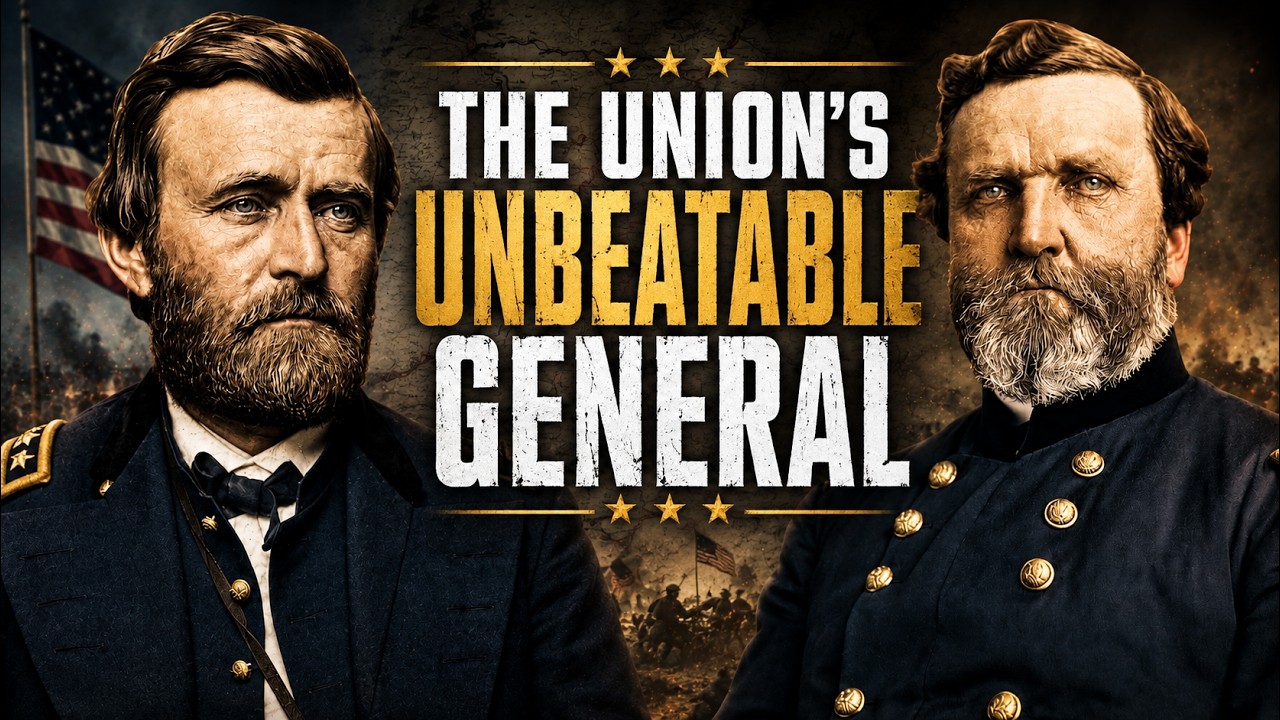
On November 25, 1863, Grant had a plan to break the siege. In that plan, the Army of the Cumberland played a supporting role. Grant did not fully trust these men. They were the army that collapsed at Chickamauga, as he saw it. Sherman got the main effort against the northern end of Missionary Ridge. Hooker got Lookout Mountain. Thomas’s men were assigned a demonstration: advance toward the Confederate trenches at the base of the ridge, take them, then stop.
Sherman’s attack stalled. Hooker was late. In late afternoon, Grant released Thomas’s men toward the trenches. About 20,000 soldiers of the Army of the Cumberland surged forward and took the first line exactly as ordered. Then they discovered the problem. The trenches sat at the bottom of a 500-foot slope, and every Confederate gun on the crest now fired down at them. Staying meant slaughter. Retreating meant retreating under fire in front of the entire army.
So they went up. No order came from Grant. No order came from Thomas. Regiment by regiment, the men who had starved in Chattanooga, the men carrying the stigma of Chickamauga, began climbing the slope of Missionary Ridge on their own. The flags went forward. The slope was so steep that Confederate gunners could not lower their pieces enough to hit them.
At Orchard Knob, Grant watched through his field glasses and turned to the generals beside him. Who ordered those men up the ridge? Thomas said he did not know. The order had not come from him. Grant muttered that someone would pay if the attack failed. It did not fail. The blue lines broke the crest at half a dozen points simultaneously. The Confederate center collapsed, and Bragg’s army fled south in the dark.
The siege of Chattanooga ended in about an hour, executed by an army carrying out an attack no one had ordered. Grant stood on that ridge watching Thomas’s men do something he had considered impossible. The victory went into the books under Grant’s name. He was the commanding general and the papers wrote it that way. The army that actually broke the line became, in Grant’s records, the slow army.
A year later, that gap between what Thomas’s army did and what Grant believed about him nearly cost Thomas his command in the middle of the war’s best campaign. Not once. Three times in one week.
By the winter of 1864, Thomas had already saved a Union army from destruction. Now he was asked to save a campaign. John Bell Hood’s Army of Tennessee lurked outside Nashville after a bloody gamble northward, exhausted severely at Franklin. The pressure on Thomas did not begin with Grant. It began above Grant. On December 2, Secretary of War Stanton telegraphed City Point that President Lincoln himself was worried about Thomas’s caution.
The entire chain of command read the same terse telegrams and reached the same wrong conclusion. What none of them could see through the wires was what Thomas was actually working with. His force was a cobbled-together team of the two weakest corps of Sherman’s old army, garrison troops, and a cavalry corps still dismounting while waiting for horses to arrive by train.
Thomas said it plainly in his telegrams east. Give him a few more days and he could fight Hood. To Grant, that sentence had a familiar, maddening quality. It was the sentence Thomas had been sending in one form or another for three years. To Grant, delay was danger. Every hour was another chance for Hood to slip past Nashville, cross the Ohio River, and drag the war north again.
To Thomas, delay was preparation. Grant read the risk correctly. He simply misread the man.
On December 6, Grant stopped asking. Attack Hood at once, he telegraphed, and do not wait any longer for cavalry horses. Thomas’s reply may be the most characteristic sentence of his entire war. He would comply as soon as possible, he wrote, with deep regret, since the attack would have to be made under every unfavorable circumstance. No anger. No insult. Just a man formally recording that he would obey the order, and that the blood shed would not be his responsibility.
On December 8, the weather picked a side. Temperatures dropped over middle Tennessee, and freezing rain fell on Nashville all night. By morning, every hill south of the city was a sheet of glass. On this ground, horses could not keep their footing. Soldiers assigned to guard duty slid down hills past their posts. Thomas could not attack through these conditions. Not would not. Could not.
Eight hundred miles east, Grant could not see the ice. On December 8, he told Halleck that if Thomas had not attacked, he should be ordered to turn over command to General Schofield. On December 9, the order of relief was actually drafted. Then weather reports finally reached the east, and Grant reluctantly suspended the order to see if Thomas would do something.
Thomas had nearly lost his army within hours because of ice Grant could not see, days before any battle was even possible. That was the first attempt at removal. Note the name in that order: Schofield. Thomas’s own corps commander, a man with a tangled history with Thomas dating back two decades to a West Point hearing where the cadet Schofield faced expulsion and where, as the story always went, instructor Thomas testified against him.
The weather grew colder. On December 11, the temperature in Nashville dropped to ten degrees below zero. Grant’s next telegram arrived anyway. Do not delay any longer on account of weather or reinforcements.
On December 12, Thomas did something quietly extraordinary. Instead of hiding the pressure, he put it on the table. During dinner at the St. Cloud Hotel in Nashville, he showed his senior commanders the telegrams from the east and polled them one by one. Could this army execute the operation now? Wilson, no. Wood, no. Smith, no. Steedman, the same man who had climbed Snodgrass Hill with Granger, no. The roads were impossible. Artillery could not deploy. Cavalry could barely stay mounted.
The only ambiguous voice in the room, as witnesses would remember, was Schofield, who stayed silent or agreed faintly. Remember that silence. If a 20-year-old West Point grudge seems a thin motive, a colder one lies in the chain of command. Schofield was the senior officer after Thomas. If Thomas were removed that week, the army and the victory about to be won would fall to him. He did not need to hate his commander. He only needed his commander to look slow at the moment the most powerful men in the country were reading telegrams and asking whether Thomas was slow.
That night, the Rock of Granite cracked. Once, in private. Thomas took the young cavalry commander aside, and Wilson would remember his words for the rest of his life. The authorities in Washington treat me like a boy, as if I were incapable of fighting a battle. It is the only glimpse left of what that December actually cost him. Then the crack closed. What he said next sounds like the old Thomas again. If they would only leave me alone, I would show them what we can do.

By December 12, the same day his generals voted no around that table, Grant decided telegrams were not enough. Major General John A. Logan received sealed orders in his pocket. If he reached Nashville before Thomas attacked, he was to relieve Thomas immediately and take command himself. Grant was preparing to remove the only Union general who had never lost a battle for the second time in four days.
When that seemed too slow as well, Grant did something he did for no other subordinate in the entire war. He began traveling himself. East to Washington first, then to Nashville with the intention of commanding the army personally. Thomas knew nothing of this. He kept inspecting the army while the weather gradually improved.
On December 14, warm rain finally fell on middle Tennessee. The ice broke. Frozen tracks softened. Horses found footing again, and artillery began to move. Thomas did not wait one second longer than necessary. Orders prepared in advance at his headquarters flowed out the moment conditions improved, scheduling the attack for the next morning. His subordinates were not surprised. They had watched him prepare every detail of this for two straight weeks. Nothing in the plan was improvised.
He telegraphed Washington that the attack would be tomorrow morning. Then the telegraph line to Nashville went dead. For the next twenty-four hours, the capital heard nothing from Tennessee. Not one word. Washington was left with a promise and silence, and for the men reading those telegrams, silence could only mean one thing about George Thomas.
Logan was on his way to Nashville carrying the paper that would end Thomas’s career. Grant was on his way east to go west and execute the order himself. The only telegram that could explain everything was broken. The race was no longer between two generals. It was between an army, an envelope, and a severed line.
At dawn on December 15, the Union army moved. Hood had prepared for a direct attack on his fortified lines. Thomas planned something entirely different. Most commanders attack where the enemy looks weakest. Thomas created the weak point first. Thousands of Union infantry advanced noisily against Hood’s right, with continuous artillery fire, rising dust, and officers shouting loudly enough for Confederate observers to hear clearly. It was theater.
Hood reacted exactly as expected, pulling brigades from his left to reinforce a threat that was not real. While attention stayed fixed on that noise, Major General James Wilson quietly moved about 12,000 horsemen armed with repeating rifles around Hood’s exposed left. This was not the broken cavalry Thomas had at Chattanooga a year earlier. Months of rebuilding had made it one of the strongest mounted forces in the Union Army, and Thomas had been waiting for this exact moment.
Wilson’s cavalry disappeared behind rolling hills and reappeared far beyond the Confederate flank, leaving dust that stretched for miles. Union infantry surged alongside them, and Hood’s left began to bend backward like a door coming off its hinges. By nightfall, the Confederate position was critically threatened.
Eight hundred miles east at that hour, the third attempt to remove him was happening in Washington, and no one in that room knew the battle had already begun. It was the evening of December 15. The Nashville line was still dead. The capital had heard nothing following Thomas’s promise, then a day of silence. Grant, having reached Washington on his way west, entered the War Department and told Lincoln, Stanton, and Halleck that he wanted to relieve Thomas and put Schofield in command. A third order was drafted. This one was real, signed, and ready to send.
The order reached the office of the chief telegraph officer in the War Department, Major Thomas Eckert. Eckert, a telegraph man and not a general, looked at that order, thought about the promise that had come over the wire before it went dead, and made a decision he had no authority to make. He put the order in his pocket and waited. If Thomas lost, Eckert had ignored a direct order from the commanding general during a military catastrophe, and his career would end that night, possibly worse.
Then the lines came back to life. The first telegrams from Nashville poured in. Hood’s left flank had been crushed, the forts had fallen, and the enemy had been driven back for miles. Eckert carried the victory telegrams and the unsent order to Stanton together. The Secretary of War looked at both and told him: the result shows you did the right thing.
Count them now. December 9, drafted and suspended because of a report about ice. December 12, kept secret in Logan’s pocket. December 15, signed and stopped by the courage of a telegraph clerk while the battle that would have cut its head off was already being won.
The battle was not over. The morning of December 16 dawned foggy. Confederate soldiers had spent the night digging a shorter, tighter line, hoping to hold. Thomas studied it and found the center strong, the left flank still exposed. Wilson’s cavalry was already moving. The second attack pressed the entire front at once. Every attack forced Hood to commit another reserve, and every committed reserve opened a gap somewhere else.
Then Wilson struck the left flank with overwhelming weight. Some cavalrymen dismounted to fire repeating rifles at a rate Confederate infantry could not match. Others stayed mounted and swept the flank faster than exhausted defenders could respond. The left flank collapsed, and everything behind it began to come apart. Thomas ordered a general attack. Confederate formations turned into a retreat. The retreat turned into panic, with units abandoning their guns on the road.
One of the Confederacy’s principal field armies simply stopped functioning as a military force. Thomas refused to let it go after that. He unleashed Wilson’s cavalry in pursuit, and every bridge and crossroads became another opportunity to gather prisoners, artillery, and wagons for days on end. By the time Hood staggered into Mississippi, his army was incapable of fighting any battle.
Thomas had not just defeated a Confederate army. He had shattered it, in a destruction more complete than either side had inflicted on the other in an open battle. Armies surrender at Vicksburg and Appomattox, but they surrender besieged and starving, cornered after a long pursuit. Nashville was the decisive battle after which the losing army simply ceased to exist.
The ending chapters unfold through connecting telegrams. Logan reached Louisville before the reconnected line caught up with the news. He turned around and went home, the envelope unopened. Grant, reading the telegrams in Washington, canceled his trip in a telegram that quietly buried every order he had been about to send. He wrote that he was on his way to Nashville but would go no farther. Press the enemy now and give him no rest.
And Thomas? In the field watching the Confederate army vanish before him, he allowed himself one sentence of celebration. He rode his horse toward Wilson, the same officer he had confided his pain to three nights earlier, and said: damn the luck, Wilson. Didn’t I tell you we could beat them?

The destruction of Hood’s army should have settled every argument about George Thomas. He had done what no other Union commander could do in four years of open battle: broken a Confederate field army so completely it never mounted another campaign. For a brief moment, that was enough. Congress praised him. His soldiers adored him. Even Grant sent public congratulations alongside the relief orders quietly buried and never mentioned.
Then the guns fell silent and a different kind of war began. This war was fought with ink, and Thomas did not show up for it. Because war is written twice, once on the ground and once on paper.
Watch what other men did with their pages. Sherman began early, drafting his own narrative while memories were still fresh. Grant waited two decades, then wrote under a death sentence, throat cancer diagnosed in 1884. Picture him on a porch in upstate New York, wrapped in blankets, unable to speak, filling page after page in his own hand, racing the disease to finish two volumes, and winning by days. The country read those memoirs like scripture. Politicians quoted them. Officers studied them for a hundred years.
What did the dying man say about George Thomas? Open those two volumes and the December telegrams are discussed one final time. Grant gives Thomas his due as a defender. Nothing in the world could move him from ground he was ordered to defend. Then, twenty years and a shattered Confederate army later, he writes the old verdict anyway. Thomas was slow.
Thomas’s near-removal at Nashville, in Grant’s telling, was not a mistake to regret. It was a reasonable precaution that events made unnecessary. The war’s most complete victory changed nothing about the diagnosis. Grant never understood him at the beginning. He never understood him at the end. The difference is that the end was published.
Now watch Thomas. Publishers came to him again and again. Old soldiers begged him to put his side on paper. He refused them all without exception. He did not want his life sold in print, displayed as entertainment for the curious. The professional soldier does his duty. He does not sell tickets to it afterward.
His private records vanished too. His personal papers were burned, some by his own hand, the rest after his death, respecting his wishes. Everything he actually thought about Grant, about the telegrams, about that frozen December went into the fire. The silence he chose in life was sealed permanently after it. His official reports exist, so one would think. His combat record exists. Surely that is enough to stand alone.
It is not enough. No one reads official reports before bed. Memoirs are what get read. No one needed to lie about Thomas to diminish him. Listen to Sherman’s full verdict on his old friend and classmate. One sentence does exactly what this chapter describes. He was never a genius, but he was always calm, reliable, and steady. Perhaps a little slow. That is not an attack. It is a compliment with a trap inside it. Say it enough times across enough pages, and the word reliable quietly becomes the ceiling of a man’s reputation while a little slow becomes its floor.
Grant’s record is stranger because Grant leaves behind two records that cannot both be true. His official report admits Nashville was so complete a victory that it stands as vindication of Thomas’s judgment. His private letter to Sherman says the opposite, that Thomas was inexcusably slow, and that he deliberately weakened Thomas’s army because of it. That last part is not just talk. Within weeks of the Union’s greatest victory in the western war, Grant stripped Thomas’s command of most of its core fighting strength. The public record praises him. The private record holds a grudge against him. The organizational structure punishes him.
Look at where everyone stood as the ink dried. By 1869, Grant was in the White House. Sherman was commanding general of the entire United States Army. Officers who served in their circles continued to rise behind them, promoted, appointed, remembered. Schofield, the man Grant had twice sought to replace Thomas with, rose with them, eventually commanding the entire army himself.
And Thomas? Thomas was in San Francisco, commanding a division at the far edge of the continent, doing what he had always done, inspecting garrisons, finishing paperwork, and avoiding political maneuvering with the same discipline he had once used to avoid reckless battles, 3,000 miles from where the war’s story was being written.
The year 1861 never stopped following him at home either. His sisters never spoke to him again. When his relatives in Virginia fell on hard times after the war and he sent them money, they refused it because it came from him. The portrait of Thomas in the family home was never returned to its place. Robert E. Lee lost the war, yet he was immortalized in marble. His face rose on monuments across half the South within a generation. Thomas won the war, but he belonged nowhere in particular. Too Southern for much of the North, too loyal to the Union for those below the Potomac, and now too silent for the history books.
So the record drifted away. Missionary Ridge, which his men stormed without orders, settled into public memory under Grant’s name. The Battle of Nashville, still studied by professional soldiers as one of the war’s finest operational designs, is rarely mentioned alongside Gettysburg or the March through Georgia. The campaign that nearly erased a Confederate army from the map slid into becoming a footnote. Not because it was less important, but because there was no one on those pages insisting it mattered at all.
This drift may have cost more than one man’s reputation. Armies learn from the books that get read, and Thomas left no book. So the next century of American officers grew up on the model the memoirs enshrined: momentum, pressure, acceptable losses. Grant’s calculations. Did the second writing only choose winners, or did it quietly train for the next war? No one can prove it either way. What is certain is smaller and sadder. The man who proved there was another way to fight left no school behind. Because a school needs a teacher willing to write.
Now, the silence around that dinner table. After the war, General James Steedman, one of the key commanders who voted no around that table, went public with an accusation and repeated it for the rest of his life. During those frozen December days, telegrams were leaving Nashville to Grant’s headquarters behind Thomas’s back, criticizing their commander’s slowness. Steedman claimed one was intercepted at the Nashville telegraph office and brought directly to Thomas, a telegram bearing Schofield’s name. The man the relief orders kept mentioning. The man who was supposed to inherit the army the moment Thomas fell.
Steedman said the telegram mentioned that many officers considered their commanding general far too slow. The account says Thomas read it twice and asked almost quietly: is it conceivable that Schofield would send such a telegram? He treated it as an accusation, not a final judgment.
Schofield denied it until his death, and Steedman had his own grudges. In Schofield’s defense, the record cuts both ways. Two weeks before Nashville, he fought a delaying battle at Franklin that bled Hood’s army before it reached the city, the victory on which Thomas’s triumph was built. If the commanding general telegraphed asking his opinion, answering honestly is not a conspiracy. But no one disputes this much: Schofield’s name was on all three relief orders. He spent his postwar decades criticizing Thomas through the press while rising to the top of the army. And the officers who stood with Thomas that December believed in the betrayal until the end of their lives.
Which brings us to a morning in March 1870, five years after Appomattox. A newspaper arrived at Thomas’s office in San Francisco carrying another public attack on his Nashville record. An anonymous article in the New York Tribune signed by someone who fought at Nashville. Years later, it would emerge that the author was Schofield’s own aide, writing to defend his commander.
For the only time, the first and the last, the silent man picked up his pen to respond. He never finished it. In the middle of the reply, he suffered a severe stroke at his desk. Whatever three decades of silence had been about to say remains unwritten forever. He was fifty-three years old, mid-sentence, the pen still in his hand.
George H. Thomas had spent the war outside the inner circle of Ulysses S. Grant. The men inside that circle wrote the version of the war most Americans carry today.