Carolyn Bessette was 29 years old when she married John F. Kennedy Jr. on Cumberland Island, Georgia, in September 1996. The photograph from that day shows her in a simple ivory silk slip dress, her hair pulled back, her face composed. She was not smiling in the way people smile for photographs. She was holding something back, or holding something in.
The photographers who saw that image described her as radiant, calm, perfect. What they did not describe was what her face was actually doing. There was a quality in that photograph that was easy to miss if you were looking at the dress or the setting or the man beside her. It was the quality of someone who had already understood something about where she was, about what this moment would become, about the distance between what was happening and how it would be reported.
This is a story about Carolyn Bessette, not Carolyn Bessette Kennedy, though that name is the one that followed her and eventually consumed her. She grew up in a suburb of Connecticut, worked in fashion, and was described by almost everyone who knew her as intensely intelligent, fiercely private, and deeply funny. None of those qualities made it into the public record in any sustained way. What made it in was the image. The coat, the sunglasses, the dress, the composed and unreadable face became the only version of her that most people ever knew.
Carolyn Lee Bessette was born on January 7, 1966, in White Plains, New York. Her parents, William Bessette and Ann Marie Messina, divorced when she was young. Her mother remarried Richard Freeman, an orthopedic surgeon, and moved the family to Greenwich, Connecticut. It was a step upward in the social register, or at least a step into a world where the social register mattered.
Greenwich in the 1970s was old money in its bones. It was organized around a set of assumptions so deeply embedded they didn't need to be stated. The right schools, the right clubs, the right families, the right way of presenting yourself in public. That meant restraint, composure, and the appearance of not wanting anything too visibly. For a girl who had come into this world through a stepfather rather than by birth, the architecture was legible. You understood fairly early that you were adjacent to a certain kind of belonging, but not quite inside it. You learned to read rooms. You learned to dress correctly. You learned that composure was not just a personality trait. It was a form of armor.
Carolyn attended Saint Mary High School in Greenwich. She was remembered by teachers and classmates as someone who stood out without appearing to try. She was tall, eventually 5 foot 10, blond, and possessed of a quality that people reached for words to describe. Magnetic was the word that came up most often, but magnetic suggests something active, something projected outward. What her classmates seemed to be describing was something more like gravitational. An ability to draw attention without soliciting it.
Her mother, Ann Marie, was described by those who knew the family as a strong and organized woman, pragmatic, attentive to detail, concerned with doing things correctly. The Freeman household ran on a certain kind of discipline. Carolyn and her sisters were expected to present well, to behave well, to be articulate and composed in social situations. This produced over time a young woman who was exceptionally skilled at managing how she was perceived, and somewhat less practiced at expressing what she actually felt.
She graduated from Saint Mary in 1983 and enrolled at Boston University, choosing education as her major with a focus on elementary education. It was a choice that surprised some people who knew her. But there was something in it that fit. Teaching, especially at the elementary level, requires reading people, understanding what someone needs, adjusting your approach, managing a room. It was not entirely unlike what she had been doing her whole life.
In her junior year at Boston University, she began working at a small clothing boutique called Determinism. The work suited her. She had an eye. She understood the relationship between clothing and presentation in a way that went beyond aesthetics. She understood it socially, almost anthropologically. What people wear tells you what they want to be seen as. What they choose and how they carry it tells you what they actually believe about themselves.
She graduated in 1988. The degree in education was never used professionally. Instead, she moved toward the world of image, of fashion, of the careful management of surfaces. It was the world she was most skilled at navigating. It was also, though she could not know this yet, the world that would eventually make it almost impossible for anyone to see past what she looked like to what she was.
She took a job at Calvin Klein in New York, working in the PR and sales division on the showroom floor. The job was, at its core, about moving product. But in the Calvin Klein operation of the late 1980s and early 1990s, moving product and embodying the brand were not entirely separable activities. The aesthetic was minimalist in its surfaces and intense underneath. The clothes were simple, clean lines, neutral colors, a studied absence of decoration. But the effect they were meant to produce was anything but simple. They were designed to communicate a certain kind of effortless authority.
Carolyn was exceptionally good at this. She knew how to move through a room. She knew how to make a client feel attended to without making them feel managed. She rose quickly within the company, eventually reaching the position of director of press and publicity. One former colleague described her as someone who noticed everything and said less than she knew.
By the early 1990s, Carolyn was in her mid-20s, working at one of the most visible fashion houses in America, dressed impeccably, known in the industry as someone with a genuine eye and a reliable instinct for what would work. She was also increasingly organized around managing something. Her image, her privacy, the distance between her public surface and her interior life.
It was in this state, controlled, watchful, skilled at surfaces, that she met John F. Kennedy Jr. sometime in 1992. He was 31. She was 26. He had been, since the moment of his birth, one of the most publicly observed human beings in America.
John Kennedy Jr. was the son of an assassinated president. He was the boy who saluted the coffin. He was the man who, in 1988, was declared by People magazine to be the sexiest man alive. He had grown up inside a mythology so large and so public that his own personality, his own preferences, his own interior life had always had to exist in relation to it. People who knew him personally described someone who was warm, unpretentious, and self-deprecating about the Kennedy weight in ways that were genuine rather than performed. He had failed the New York bar exam twice before passing on the third attempt. He had gone on to work as an assistant district attorney before eventually founding George, a political magazine, in 1995.
Carolyn and John moved in the same social circles for a period before what friends described as a more serious connection developed. Multiple people who observed them together in the early period described a dynamic in which John's attention was obvious and deliberate. Carolyn's response was characteristically more measured, more watchful, harder to read. Most people, when John Kennedy Jr. directed his attention at them, responded in ways that were predictable. Flattered, overwhelmed, eager. Carolyn did not appear to have responded this way. At least not visibly.
Their relationship developed through 1992 and into 1993. The tabloid press was aware of Carolyn before most of his personal friends had been formally introduced to her. She was photographed leaving his apartment. She was photographed with him in the street. She was identified, named, described. Her job, her age, her appearance cataloged and distributed to a public that had a decade's long investment in who John Kennedy Jr. would end up with.
Carolyn did not give interviews. She did not comment. She maintained the composure she had always maintained, which the tabloid press interpreted variously as mystery, as coolness, as arrogance, as playing hard to get. None of these interpretations were interested in what she might actually be doing, which was trying to remain a private person inside a situation that had structurally eliminated the possibility of privacy.
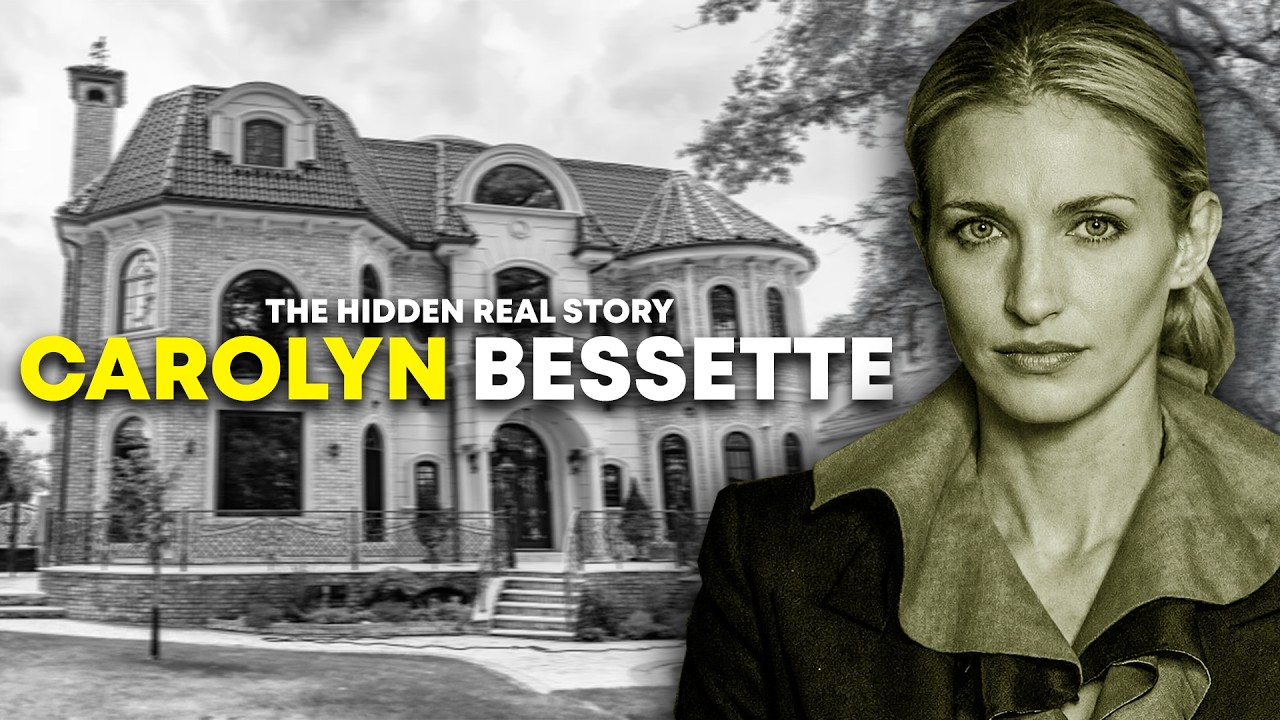
By 1994, the photographs were a daily fact of life. Carolyn left John's apartment on North Moore Street in TriBeCa, and there was someone waiting. She walked to work, and there was someone following at a distance that was close enough to be deliberate. She met a friend for lunch, and the table was noted, the restaurant reported, the outfit described in print within 24 hours. This was not the experience of ordinary fame. This was something more specific. A surveillance so consistent and so depersonalized that it began to function less like attention and more like weather.
John had lived inside this condition his entire life. He had developed over decades a set of strategies for managing it. Carolyn had had approximately two years, and the exposure she was receiving was of a different character than what most people who enter public life through relationship, rather than achievement, receive. She was known because of who she was standing next to. She was described primarily in terms of her appearance. Her clothes were cataloged. Her weight was monitored. Her facial expressions in candid photographs were analyzed for what they might reveal about the relationship.
People who knew her during this period described someone who was increasingly careful in public spaces. Not stiff, not visibly uncomfortable, but watchful in a way that went beyond her baseline watchfulness. She began to develop a particular public face, composed, slightly cool, unreadable. The sunglasses became a regular feature. The neutral expression became consistent. She was building in real time a public persona that functioned as a barrier. Not between herself and John, but between herself and the apparatus that was consuming her image daily and returning it to the world flattened and simplified.
In 1995, John launched George magazine. The magazine attracted attention, generated coverage, and put John back at the center of a public conversation in a role that was his own. For Carolyn, the launch of George had a specific consequence. John was now not simply famous by inheritance. He was publicly active, professionally visible. The social demands on their life together increased. She appeared alongside him at launches, at dinners, at the kinds of public functions that exist in the overlap between media and politics and social New York. She was photographed at all of them. She was photographed and she was almost never quoted.
By 1995, the relationship between Carolyn and John had been together for three years. It was by all accounts genuine in its emotional core. It was also under a pressure that was not easing. The question of marriage was in the air. The tabloid industry had been speculating about it since approximately the second month of their relationship.
For Carolyn, the question of marrying John was not separable from the question of what marrying John meant. What it cost. What it required. What version of herself she would need to become to exist inside that life sustainably. For John, the question was simpler in some ways and more complicated in others. He loved her. He was, by accounts of people who knew him, genuinely certain about her in a way he had not been certain about previous relationships.
Jackie Kennedy Onassis died in May 1994. Her absence removed the one person who had, throughout John's life, managed the intersection between his private self and his public obligations with any real skill. She had been a guide for how to be a Kennedy in public without being consumed by it. That guidance was gone now. And the woman John was asking to step into a life that required exactly that kind of navigation was someone who was already quietly showing signs of what sustained exposure without adequate support actually does to a person.
They married on September 21, 1996, on Cumberland Island, a barrier island off the coast of Georgia accessible only by ferry. The ceremony took place at the First African Baptist Church, a small white wooden structure built in 1893 by formally enslaved people and their descendants. There were approximately 40 guests. No press was invited. No announcement was made in advance. The secrecy was so complete that the story did not break until several days after the ceremony, when a single photograph began to circulate.
The dress was made by Narciso Rodriguez, a young designer who was a friend of hers from the fashion world. It was a narrow bias cut silk crepe gown, understated and precise. The kind of garment that requires a specific kind of confidence to wear because there's nowhere in it to hide. It fit perfectly.
After the wedding, they returned to New York. The apartment on North Moore Street in TriBeCa became their shared home. Carolyn stopped working at Calvin Klein. She had been there for approximately eight years. She had risen to a senior position. The work had been, by all accounts, genuinely engaging for her. It used her intelligence, her eye, her social skill in ways that she found meaningful. She left it.
The reasons given in various accounts were several and overlapping. The demands of John's public life made maintaining a full-time senior position logistically complicated. The press attention on her commute, her lunch breaks, her arrivals and departures from the office had made the simple act of going to work a daily negotiation with surveillance. Whatever the combination of reasons, the result was that Carolyn, at 30 years old, newly married, moved out of a professional identity that had been central to how she understood herself for nearly a decade.
Over the course of late 1996 and into 1997, the pattern shifted. The appearances became less frequent. The social engagements were more often declined than accepted. Friends who called described difficulty making plans, conversations that trailed off, a quality of unavailability that was different from ordinary business.
Carolyn was struggling. The nature of the struggle was multiple. There was the immediate practical reality of her life having been reorganized around John's schedule and obligations in a way that left her without the structure she had had for nearly a decade. The Calvin Klein job provided rhythm, specific places to be at specific times, specific problems to solve. That rhythm was gone, and nothing had replaced it with equivalent weight.
There was also the question of identity in a more fundamental sense. The people she was expected to spend time with were people who knew John before they knew her, whose loyalty and attention were organized around him. She was new to this world in a way that she was not new to any world she had inhabited since adolescence. And she was new to it without the professional identity that had always given her an independent footing in any room.
The Kennedy family dimension of this was specific. John's family did not have simple edges. There were loyalties and protocols and a shared understanding of what it meant to be a Kennedy in public that was not written down anywhere and was not taught explicitly, but was nonetheless very much present and very much expected to be understood. Carolyn had not grown up with this. She was entering it as an adult, as someone who had already formed herself, and the adjustment required was not small.
John's cousin Anthony Radziwill and his wife Carole were closer to them. Carole Radziwill, who would later write about this period in her memoir, described Carolyn with evident warmth and a directness that was largely absent from other accounts. She described a woman who was funny and sharp and loyal, who was also under a pressure that was not always visible from the outside, who was working very hard to exist inside a life that was not designed with her particular needs or nature in mind.
Anthony Radziwill was during this period seriously ill, diagnosed with a form of soft tissue cancer that would eventually kill him in August 1999, weeks after the plane crash. This illness was a sustained presence in the lives of both John and Carolyn throughout their marriage. Carolyn was present for this alongside John, and it was a bond between them, a shared private weight that was not visible in the photographs.
The apartment through 1997 became something particular. Friends described calling and finding Carolyn home at hours when she might be expected to be out. They described a quality of flatness in her voice on certain days that was new. They described a woman who was still herself, still funny when she wanted to be, still capable of the warmth and sharpness that had always defined her in private. But who was also, on other days, somewhere else. Present in the room, but at a remove from it.

John was at the George offices during the day. He was at events in the evenings. He was busy in the specific way of someone who has a great deal to do. The asymmetry was quiet, but it was there and it was growing.
The tabloid coverage of this period told a different story. The photographs published in the celebrity press throughout 1997 and 1998 showed a woman who was impeccably dressed, composed, attending events on the arm of one of the most famous men in America. The captions described her as stylish, as enigmatic, occasionally as difficult. That last word began to appear with increasing frequency in gossip columns attached to stories that were sourced anonymously and described her as temperamental, as unpredictable, as a problem for John in ways that were never specified with any precision.
The word difficult, when applied to women in public life, is rarely a neutral descriptor. It carries within it an accusation that is preformed. That there is a correct way for a woman in her position to behave, and that she is not behaving that way. What the correct behavior would look like was never stated because stating it would reveal how arbitrary the standard is. It would require saying, she should smile more in photographs. She should give interviews. She should appear grateful. She should make the press feel that their attention is welcome.
Carolyn did none of these things. She continued not to give interviews. She continued to wear the sunglasses, to hold the neutral expression, to move through public spaces in a way that gave the cameras as little as possible. This was, from one angle, a reasonable response to an unreasonable situation. From the angle of the tabloid press, it was evidence of a character flaw.
In March of 1996, several months before the wedding, a video was taken in a park in Lower Manhattan. The footage was grainy, shot from a distance, and lasted approximately three minutes. In it, John and Carolyn were arguing. The argument was physical in the way that arguments between people who are very close can become physical. Not violent, but involving the kind of contact that belongs to intimacy turned against itself. At one point, John took Carolyn's hand and she pulled it away. At another point, she was on the ground and he was crouching beside her.
The video was sold to a tabloid and published in early 1997 after the wedding. Its publication was a specific kind of event. Not simply the exposure of a private moment, but the transformation of that moment into a public document that would be consulted and reinterpreted for years afterward. The footage became evidence in the tabloid narrative of a troubled relationship. It became evidence in a different reading of the cruelty of a press apparatus that would sell footage of two people's worst private moment to the largest possible audience.
The effect of the video's publication on Carolyn was described by friends as significant and specific. She was not someone who expressed distress about press coverage in terms of hurt feelings. She was too controlled for that. But the video was different from a photograph taken on the street. The video was a moment she could not explain away, could not contextualize, could not answer with composure and neutral expression. It simply existed, available for any person with access to a television or a newspaper to watch as many times as they wanted, to form whatever conclusions they chose.
By 1998, the friends who were watching were doing so with a quality of attention that had changed in character. They were no longer simply observing a friend navigating a difficult transition. They were watching someone they love in a situation that was not improving.
In the spring of 1999, there were signs that something in Carolyn's situation was beginning slowly to shift. The accounts from people close to her during this period described a quality of tentative forward motion. Not a resolution of the difficulties of the previous two years, but something like an emerging sense that the next phase might be different from the phase she was in. There were conversations about projects. There was talk of work. Something of her own, separate from the Kennedy world, possibly in fashion, possibly something adjacent to it.
John and Carolyn were also, in the spring of 1999, discussing the possibility of starting a family. This was reported in several accounts with varying degrees of specificity. Some described it as active planning, others as early stage conversation. What was consistent was that the question was present between them. And that Carolyn's response to it in the accounts of people she spoke to about it was complicated. She wanted children in the accounts of close friends who discussed this with her. She also had questions about what having children inside the specific conditions of her life would mean. The surveillance, the Kennedy inheritance, the question of what kind of privacy a child of John Kennedy Jr. would be permitted to have that she herself had not been permitted.
George magazine in the spring of 1999 was in a precarious position. The advertising revenues had not stabilized in the way that would make the publication's future secure. John was in active conversation with potential investors and partners. He was 38 years old. The question of what his professional future looked like was not one he had resolved.
In July of 1999, John decided to fly his Piper Saratoga to Martha's Vineyard for the wedding of his cousin Rory Kennedy, scheduled for the weekend of July 17th. The plan was to take Carolyn and her sister Lauren Bessette, who was a vice president at Morgan Stanley. Lauren would be dropped at the Vineyard and then fly with John and Carolyn on to Hyannis Port.
John had been a licensed pilot since 1998, having obtained his instrument rating in April of that year. The instrument rating is what permits a pilot to fly in conditions of reduced visibility, to navigate by instruments rather than by visual reference to the ground and the horizon. He had been building hours since obtaining his private pilot license, and the people around him described him as a competent but still relatively inexperienced pilot who was developing confidence at a pace that occasionally outrushed his actual skill level.
In the days before July 16th, there were a series of decisions made that were each individually defensible, and that collectively created a set of conditions that mattered enormously. John had been dealing with a stress fracture in his ankle, the result of a paragliding accident earlier in the summer, and was wearing a cast. His flight instructor had offered to fly with him that evening. John declined.
Carolyn was, by multiple accounts, reluctant to make the flight. This was not the first time she had expressed discomfort with flying with John. He had been piloting for just over a year, and Carolyn, who was not someone who concealed her feelings about risk from people she trusted, had told friends that she was not entirely comfortable as a passenger on his flights.
On the evening of July 16th, the flight was delayed several times. The original departure time moved later into the evening. The haze over the water was not a secret. It was visible, and it was the kind of atmospheric condition that reduces visibility in ways that are particularly relevant to a pilot flying over water at night, where there is no horizon to orient against.
John made the decision to fly. He took off from Essex County Airport in Fairfield, New Jersey at approximately 8:38 in the evening. Carolyn was in the plane. Lauren Bessette was in the plane. The sun had set. The haze was present. The water below was invisible.
At 9:39 p.m., radar contact with the aircraft was lost approximately seven and a half miles from the Martha's Vineyard Airport. The plane had entered a rapid descent that aeronautical investigators would later describe as consistent with spatial disorientation. The condition in which a pilot, unable to trust their physical senses in the absence of a visible horizon, loses accurate perception of the aircraft's orientation in space.

The search began the following morning. The search took five days. The debris field, when it was eventually located, was approximately 116 feet below the surface. The wreckage was consistent with a high-speed impact. There were no survivors.
The bodies of John F. Kennedy Jr., Carolyn Bessette Kennedy, and Lauren Bessette were recovered by Navy divers on July 21st, 1999. They were buried at sea in accordance with wishes attributed to the Kennedy family in a ceremony conducted from the USS Briscoe. The decision to bury them at sea was made quickly, before any public service was held. It was a Kennedy decision made by the Kennedy family about the Kennedy son. Carolyn's family, her mother, her stepfather, her sisters, were present for what followed, but the decisions about what followed were not theirs to make.
In the days and weeks after the crash, the public mourning was organized almost entirely around John. The memorial service held at the Church of St. Thomas More on the Upper East Side of Manhattan on July 23rd was a Kennedy service. The eulogies spoke primarily of John. The coverage spoke primarily of John. Carolyn appeared in this coverage as John's wife. She was mentioned. She was not absent from the record, but the weight of the mourning was grief organized around him.
Ann Marie Freeman, Carolyn's mother, lost two daughters in the same crash. Lauren was also gone. The magnitude of this loss, a mother losing two children simultaneously, received a fraction of the coverage devoted to the Kennedy family's grief.
In the weeks after the crash, the tabloid press, the same apparatus that spent three years describing Carolyn as difficult, as cold, as a problematic presence in John's life, reversed its posture completely. She became, almost overnight, an icon. The photographs that were taken of her on the street without her consent and published alongside captions questioning her behavior and her temperament were now published alongside captions describing her beauty and her grace. The word difficult disappeared from the vocabulary applied to her. In its place came tragic, luminous, beloved.
The reversal was complete enough to be in its own way a form of violence. The woman who could not be described as a full person while she was alive, whose intelligence and humor and privacy and genuine complexity were consistently reduced to her appearance and her relationship to John F. Kennedy Jr., was now celebrated in precisely the terms she resisted in life. She was beautiful. She was tragic. She was an image. The image was exactly what she spent the last three years of her life trying to resist being reduced to.
The Bessette family in the months following the crash maintained a silence that was consistent with everything Carolyn valued in life. They did not give press conferences. They did not publish statements beyond the minimum required. They did not participate in the public narrative that was being constructed around their daughters' deaths. This silence was not interpreted in the press coverage as grief. It was interpreted with a consistency that was its own kind of commentary as aloofness. The family of a woman who was criticized throughout her public life for being too private was now criticized in the coverage of her death for the same quality.
In the years following July 1999, a particular version of Carolyn Bessette Kennedy solidified in the public record. It was made almost entirely of images. The ivory slip dress, the long coat and sunglasses on the streets of TriBeCa, the composed face outside the courthouse on Cumberland Island, the wedding photograph in which she was looking not quite at the camera, holding something back or holding something in.
The image has acquired, in the decades since her death, the quality of myth. She is described regularly, and with genuine feeling, by people who did not know her as the most stylish woman of her era, as a figure of ineffable grace, as someone who embodied a quality of composed elegance that no longer exists in the same form. These descriptions are not entirely wrong. The images do show someone with a remarkable relationship to her own presence. But the descriptions are organized entirely around what she looked like, which is precisely the reduction she spent her life trying to complicate.
There is a small body of record that exists outside the images. The accounts of friends who knew her, Carole Radziwill's memoir, the occasional interview given by someone from the Calvin Klein years or from Boston University. From these accounts, a different person emerges. Partial, imperfect, but more dimensional than the image allows. The person who emerges from these accounts is someone who was funny in a way that required paying attention, who had opinions about things that were not fashion, who read, who was capable of a loyalty that was specific and earned rather than general and performed, who was dealing in the last years of her life with a set of pressures that were making it increasingly difficult to be the person she had been before those pressures arrived.
This person is almost entirely absent from the public record. The absence is partly Carolyn's own doing. She did not give interviews, she did not write, she did not leave a documented interior life in any form that can be consulted. The privacy she guarded so carefully in life meant that the public in death has only what it had in life. The surface.
The difference is that in death the surface cannot be complicated by anything she might say or do. It is fixed, permanent, circulating. The image does not age, does not change, does not do anything that would require the public's understanding of her to adjust.
She was 33 years old when the plane went into the water. She had been publicly known for approximately seven years. In those seven years she gave no interviews, published nothing, and left no record of her interior life in any retrievable form. What the public has of her is what the cameras captured without her consent. It is a great deal of material. It tells a story. The story it tells is not hers.
There is a photograph taken of Carolyn sometime in 1998 at a private gathering by someone who knew her. It is not a professionally composed image. It is the kind of photograph that exists in personal collections rather than archives. In it, Carolyn is laughing. Not the managed slight smile that appears in the photographs taken of her on the street or at public events. Something fuller than that. Something that has gotten past the management. The people who have seen this photograph and described it say the same thing. That she looks in it entirely like herself. That it is the most accurate image of her they have encountered. It has never been widely published.
The public version and the private version existed in permanent tension. And the public version won every time. Not because it was more real, but because it had more distribution.
There is no archive of Carolyn Bessette's own words. No memoir, no published letters, no interviews in which she speaks at length about her life, her work, her marriage, or what any of it meant to her. The record that exists is the record that was made of her, not by her. She was publicly known for approximately seven years. In those seven years, the apparatus of celebrity documentation produced an enormous volume of material. Thousands of photographs, hundreds of articles, television segments, gossip columns, tabloid narratives, fashion retrospectives. All of it was made without her participation. Most of it was made against her explicit preference.
The volume of the material creates an impression of knowledge that the material itself does not support. We have a great deal of documentation of what she looked like. We have almost nothing of what she thought.
What the image leaves behind is a particular kind of absence. It is not the absence of someone who was never present. Carolyn was very present in the room she was in, in the lives of the people who actually knew her. It is the absence of a person from the record of their own life. The record exists. The person is missing from it.
The photographs continue to circulate. The ivory slip dress, the long coat, the sunglasses, the composed face that is not quite looking at the camera. They appear in fashion retrospectives and in cultural histories and on the screens of people who were not born when they were taken. The images are clean and permanent and entirely silent on everything that mattered about the woman they were taken of.
She was 33 years old. She had been publicly observed for seven years and privately known by the people who actually knew her as someone considerably more complicated and more interesting than the observation captured. The gap between the two versions was something she was aware of and could not close and lived inside and did not resolve and did not have enough time to resolve. The plane went into the water and the image stayed behind and the image is what remains. What it does not contain is her.