In the fall of 1923, a surveyor named Ambrose Vane was sent by a timber company to assess a tract of old-growth forest above Sorrel Hollow, on the slope of Calloway Mountain.
Before heading up, Vane stopped at a general store in the small town of Drennen to buy supplies. The storekeeper, an old man named Vester Combs, gave him a single piece of advice: be off the mountain before dark, every day, no matter what.
When pressed for an explanation, Combs grew vague. He said the folk who lived in the hollow were old people, and that they had a way of dealing with strangers caught after dark. But he would not finish that thought before sending Vane on his way.
Vane spent two days working the lower slopes. He found the timber to be enormous and valuable, exactly what his company wanted. He kept his word about coming down before dark, but the silence of the woods began to trouble him.
On the second evening, he noted that the birds and insects stopped all at once, as if the entire mountain had turned to listen to him. He wrote that the quiet did not feel like an absence of sound, but like a tension.
On the third day, Vane made a small mistake. He was close to finishing a line on a ridge and told himself he would do just one more reading before descending)Skip
The light failed quickly. A fog rose from the hollow in a way that Vane had never seen, climbing steadily and swallowing the trees as it came. He found his path gone and his compass spinning uselessly.
He decided to go downhill, reasoning that water runs downhill and would lead him to the creek)Skip
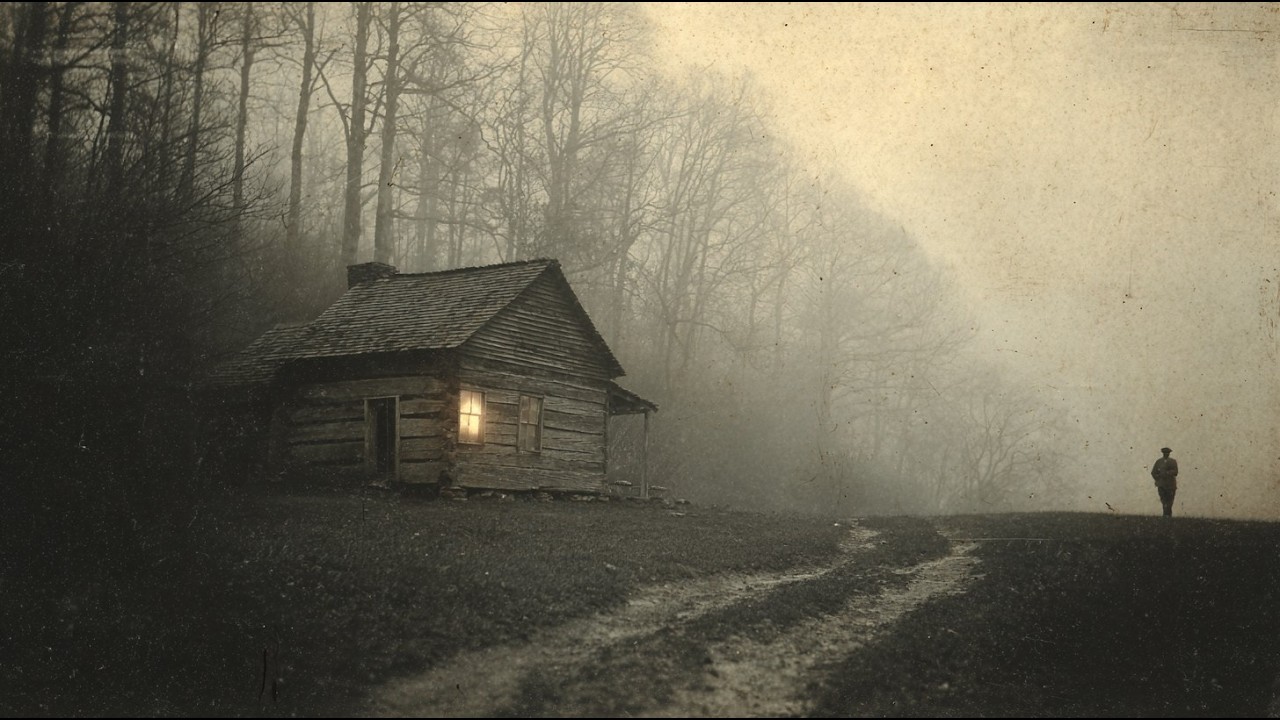
Instead, he came to Sorrel Hollow. He saw a single lit window in one of the low cabins. Before he could knock, the door opened and an old man named Garnet Mullins invited him inside,Skip
Garnet told him he could not go back out into the dark, insisting the mountain would not let him find the creek. In the cabin sat an elderly woman named Alafair, who seemed far older than any person Vane had ever encountered.
Garnet gave Vane a warning about Alafair: do what she says, when she says it.Skip
As the night deepened, Vane noticed the house had rules. The window was covered by a heavy shutter with a bar. The fire was kept low. Both the old man and the woman seemed to be listening to the clock, waiting for a specific hour.
Vane asked what the storekeeper in Drennen had been warning him about. Alafair said that what they did for strangers was simple: they kept them through the night, quiet and still. They did not answer. She said that was the whole of it.
At three in the morning, something came up the hollow. There were too many footsteps on the track to be natural, though only two feet could be heard,Skip
A voice came from outside the door. It spoke to Garnet by name, then to Alafair, with a warm and familiar tone. Neither of them answered,Skip
Then the voice spoke to Vane. It called him by name and used the voice of his dead brother, Asa. Asa had drowned years before, and Vane had been the one to pull him from the water too late,Skip

The voice said it was cold and asked Vane to open the door. Vane felt his body begin to move on its own, ready to answer,Skip
Alafair moved faster than anyone her age should have been able to. She rose from her chair, put her hands over Vane’s mouth, and stopped the breath that would have carried his brother’s name,Skip
When Vane did not answer, the voice outside changed. It grew patient, flat, and said it could wait until morning,Skip
The pressure left the room, and the fire stood back up. Vane and the old people sat through the rest of the night without sleeping,Skip
At dawn, Alafair explained the rule of the mountain. The thing that walked the hollow could not enter on its own. A door had to be opened, a name answered, or an eye met through the glass. It needed an invitation,Skip
The folk of the hollow were left alone, she said, because they belonged to the mountain now. But strangers were different. The thing wanted strangers more than anything else, and it would wear the voice of whoever they loved most and lost,Skip
Vane asked what happened to the strangers who answered,Skip
Alafair said they did not know. They only knew what was left behind in the morning, and it was not enough to bury,Skip

Garnet walked Vane down off the mountain that morning and told him not to come back, even if he convinced himself the night had not been real,Skip
Vane kept that rule for the rest of his life. He never took another job that would put him on a mountain after dark. He turned down good money to keep that promise,Skip
He married late and lived to old age, but he woke at three every morning for the rest of his life. His wife learned to put her hand over his mouth in the dark until the gray light came,Skip
The folk of Sorrel Hollow are gone now. A reservoir was built over the valley years ago. The hollow was never surveyed, so there were no deeds to buy, and the water simply rose over the cabins,Skip
The men who fish the reservoir say it is good water, but nobody fishing at night. They grow vague when asked why,Skip
Some say that late at night, when fog rises off the surface against all reason, a man alone in a boat might hear a voice out over the deep part, calling his name,Skip
And every one of them knows the same rule, older than the mountain, older than the dam. Do not answer,Skip
The story of Ambrose Vane and Sorrel Hollow is about the hardest, kindest, most terrible nothing in the world. The people of that hollow saved a stranger’s life by keeping him quiet through the night,Skip
Whether that mercy was only rent paid to the mountain is a question that was never answered,Skip
Ambrose Vane never learned if he was saved or merely lent back to the morning. He only knew what it cost to sit with his own grief on the other side of a thin door, and to keep his mouth shut,Skip