On June 5, 1986, at around 2:45 in the afternoon, Robert DiBernardo made a phone call from his gray Mercedes. He was calling his family to let them know where he was going. He had a brief meeting scheduled at a drywall company office in the Bensonhurst section of Brooklyn.
His name was Robert DiBernardo. He was 49 years old. For most of his adult life, he had been building the largest criminal pornography empire in the United States, running it with more commercial intelligence than most legitimate distributors could match.
He paid financial tribute directly to the boss of the Gambino crime family, bypassing the standard chain of command. He helped plan the most audacious mob murder of the 20th century. He was the man who carried the first message that set John Gotti’s rise in motion.
Six months after Paul Castellano died on a Midtown Manhattan sidewalk, DiBernardo was killed in a basement office. The story of how the man who helped make John Gotti was erased by John Gotti is one of the most precisely documented and consistently overlooked stories in the history of American organized crime.
By the spring of 1986, DiBernardo was living at 1101 Harbor Road in Hewlett Harbor on the South Shore of Long Island. The neighbors knew him as a quiet family man. He commuted each morning to an office at 418 Broome Street in Lower Manhattan, where he ran a distribution company.
He dressed like someone whose professional concerns were inventory and supply chains. He drove a gray Mercedes. He did not discuss his work with people who were not already inside his world.
What he was actually doing, and what the FBI had been documenting since 1968, was controlling the distribution of pornography across the United States on a scale no other single individual came close to matching. His company, Star Distributors, was the primary supplier of adult materials to businesses across New York City.
He had a working relationship with the largest pornography retailer in America. He had the organizational protection of the Gambino crime family standing behind every transaction.
His position inside the Gambino family was structurally unusual. He paid tribute directly to the boss, Paul Castellano, bypassing the captain structure that governed every other made man of comparable standing. He commanded no crew. He had no soldiers beneath him.
His weight came from money. In the structure he operated within, money was accepted as a substitute for soldiers as long as the man generating it remained essential to the people above him.
In the first months of 1986, a federal investigation was closing around him. Postal inspectors probing adult bookstores in Times Square had uncovered material depicting underage boys. The materials had been traced back to his distribution network.
In March of that year, investigators raided his Broome Street office and removed both physical evidence and his financial records. An FBI memorandum dated May 20, 1986, confirmed that a federal prosecutor was moving toward a formal indictment on child pornography charges.
He had survived one enormous federal pornography prosecution already, involving 44 other defendants and simultaneous arrests in 16 cities. He had walked away from that conviction because of a legal collapse so extraordinary that appellate courts spent years untangling the questions it created.
He had survived the transition from Paul Castellano to John Gotti. He had navigated that transition better than almost anyone because he had placed himself on the correct side of it from the very beginning.
What was moving toward him from the federal direction in the spring of 1986 was more serious than anything the government had previously assembled against him. He never appeared before any grand jury to answer for what the postal inspectors had found.
What killed him was a conversation he was never in the room to hear.
DiBernardo was born on May 31, 1937, in Hewlett, a community on the South Shore of Long Island. The specific details of his early life are not elaborated in the sources that eventually documented his criminal career.
By his early to middle 20s, he had identified the specific intersection of commercial opportunity and organized crime protection that would define the next three decades of his working life. His earliest formal organizational connection was to the DeCavalcante crime family, the New Jersey-based operation.
DiBernardo was identified in the early 1970s as a soldier affiliated with the DeCavalcante organization. He was not at that point a figure anyone in law enforcement had identified as particularly significant.
Times Square in the late 1960s was unlike any other single district in the country. The Supreme Court’s gradual liberalization of obscenity standards had created legal uncertainty about exactly where the regulatory line was drawn.
Peep show parlors, adult bookstores, and theaters selling explicit films crowded the area with a density that would have been unimaginable a decade earlier. What the law did not prohibit, commerce filled.
DiBernardo looked at that district and saw a market with growing national demand. He saw a supply chain that was fragmented enough to be consolidated by someone willing to provide reliability, organizational backing, and protection.
He had been arrested by the New York Police Department in 1968 for distributing an obscene magazine. The arrest was the beginning of a monitoring relationship between federal law enforcement and Robert DiBernardo that would run for 18 uninterrupted years.
In the late years of the 1960s, he acquired Star Distributors. The company had been a softcore pornography distribution business when DiBernardo took it over, operating out of 150 Lafayette Street in Lower Manhattan.
He changed it entirely. He moved the inventory from softcore into hardcore content of every variety and format available in that market. He built distribution relationships with adult businesses across New York’s five boroughs before extending those relationships outward across the country.
His formal business partner was Theodore Rothstein, who served as the company’s nominal president. DiBernardo held the title of vice president.
The mob connection to Star Distributors was not something DiBernardo articulated explicitly in any documented sales conversation. Men operating in the adult entertainment industry in New York in the 1970s understood what it meant to do business with a company backed by organized crime.
Al Goldstein, who published the adult magazine Screw for decades, described the situation with directness. He told the New York Times that he had no options regarding who he dealt with because no legitimate distributor would handle his publication.
DiBernardo built a national relationship with Reuben Sturman, who ran the largest pornography retail operation in the United States from a base in Cleveland. The FBI recorded DiBernardo telling another significant industry figure that the family was in charge of his businesses.
He commissioned adult films produced in New York during the period that industry historians describe as the commercial peak of explicit filmmaking. He co-opted rivals where co-option was possible and displaced them where it was not.
The man who brought him formally into the Gambino family was named Ettore Zappi, a capo based in South Florida. Zappi sponsored DiBernardo for formal membership, and by the early to middle 1970s, the transfer from the DeCavalcante family was complete.
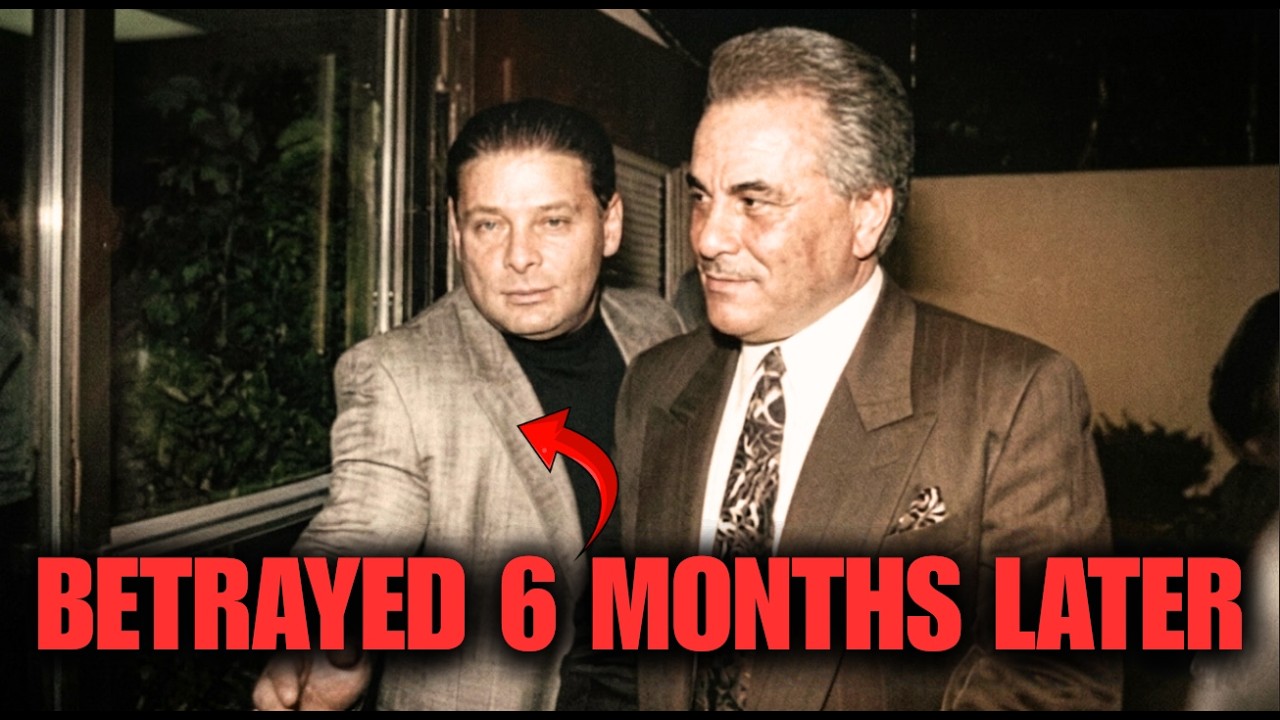
Most men in the Gambino family occupied a standard chain of command. Soldier reported to a capo. Capo reported to the administration. DiBernardo had no capo above him. He paid tribute directly to the boss.
Castellano was a particular kind of boss. He managed the family with the disposition of a corporate executive. The pornography business that DiBernardo operated was, in Castellano’s private assessment, beneath the kind of organization he was trying to run.
He accepted a substantial percentage of DiBernardo’s returns with complete consistency regardless. DiBernardo was generating significant income for a boss who found the source of that income to be a source of mild private embarrassment.
DiBernardo had no formal rank that signaled his standing to the rest of the family. There was no crew beneath him. He was one of the most valuable men in the organization and one of the least protected.
In the summer of 1977, the FBI launched what its leadership described as the largest undercover investigation in the agency’s history directed at the obscenity industry. The operation received the internal designation MIPORN.
Two agents established cover identities as pornography distributors running a company called Goldcoast out of Miami. The investigation ran for 2 and 1/2 years and consumed nearly half a million dollars.
On February 14, 1980, the field phase concluded simultaneously across the country. 400 FBI agents moved in 16 cities. 53 defendants were arrested in a single coordinated sweep.
DiBernardo and Rothstein were among the 44 individuals eventually convicted in the proceedings that followed. DiBernardo’s conviction, handed down in 1981, appeared at the time to be the end of the operation he had spent 12 years building.
Then came one of the most legally extraordinary collapses in the history of federal prosecution. In November of 1981, Patrick Livingston, the lead undercover agent, was arrested for shoplifting.
At the moment of his arrest, Livingston identified himself to the officers using the undercover identity documents he had accumulated during the investigation. Psychiatric examination found that Livingston had developed a serious and clinically documented inability to distinguish between his real identity and the identity he had inhabited as an undercover agent.
The implications for every prosecution built on his work were immediate and significant. The 11th Circuit Court of Appeals addressed the resulting questions through multiple rounds of review.
What emerged from those proceedings was the reversal of DiBernardo’s conviction. He had been tried, convicted, and sentenced. And he walked away from it because the agent who built the case against him could no longer reliably determine which version of himself was real.
His operation continued. His national relationships continued. The income continued.
But a different investigative thread had been developing independently. FBI documents from as early as July 28, 1981, described DiBernardo as a well-known pornography distributor also dealing in child pornography.
By the middle years of the decade, that surveillance notation had evolved into an active prosecutorial effort moving faster than the Broome Street office had reason to expect.
And then in the summer of 1984, his name appeared in newspapers across the country and remained there for weeks.
Walter Mondale announced the selection of Representative Geraldine Ferraro of New York as his vice presidential running mate in July of 1984. Ferraro was the first woman nominated for national office by a major American political party.
Ferraro’s husband, John Zaccaro, was a New York real estate developer. Among the properties managed by his company was a building in Lower Manhattan. Star Distributors had been renting its business premises from a building in Zaccaro’s portfolio for years.
An intelligence report from the New York State Organized Crime Task Force noted that Zaccaro had been observed in conversation with DiBernardo. The configuration became a story that resisted resolution regardless of what the campaign said in response to it.
Ferraro stated publicly that she and Zaccaro had been unaware of the nature of Star Distributors’ business until the news coverage made it impossible to remain unaware. She promised to have the tenant removed from the property.
Star Distributors remained in the building for 3 more years despite the promise.
No impropriety involving DiBernardo was established against either Ferraro or Zaccaro. The formal absence of impropriety arrived too late and with too little force to fully undo what the coverage had already created.
Mondale and Ferraro lost to Ronald Reagan in November of 1984 in one of the most decisive electoral outcomes in modern presidential history.
A man who had operated in deliberate invisibility for nearly two decades had, through the accident of a rental arrangement, attached his name to one of the historic political campaigns of the era.
In September 1985, the Gambino family was in a condition that could not remain stable. Paul Castellano was facing a racketeering prosecution that most observers expected would result in a prison sentence.
His response to that legal pressure had been to draw the family’s anticipated future structure closer to his nephew Thomas Gambino and to Thomas Bilotti, his driver and most trusted personal associate.
There was a second and more immediately dangerous problem. Angelo Ruggiero, John Gotti’s childhood friend and closest associate, had been caught on FBI surveillance tapes discussing heroin operations with members of Gotti’s crew.
Castellano had established explicitly and repeatedly that narcotics dealing by Gambino family members would be punished by death. The question running through Gotti’s circle in the fall of 1985 was not whether Castellano would move against them, but when.
Into this situation, DiBernardo moved with the specific usefulness that had always defined his organizational value. He did not belong to any single faction in a way that would make a message from him automatically read as a provocation.
In September of 1985, DiBernardo contacted Sammy Gravano and delivered a message. Carmine Ruggiero wanted to meet with Gravano in Queens.
When Gravano arrived, Ruggiero laid out what was being considered. He and Gotti were planning the murder of Paul Castellano, and they needed to know whether Gravano was with them or against them.

DiBernardo was not at the Queens meeting. He had made the phone call that put it together. Being trusted enough by both parties to make the first contact was not a minor thing.
His grievances against Castellano were real and had been accumulating for years. He was ready for the transition being planned, and he made himself part of making it happen.
Aniello Della Croce, the family’s underboss, died of cancer on December 2nd, 1985. Castellano did not attend the wake.
The team assembled for December 16th wore trench coats and Russian-style fur hats and took their positions outside Sparks Steak House on East 46th Street in Midtown Manhattan. When Castellano’s car arrived and he stepped onto the sidewalk, the order was given.
Castellano was shot six times. Thomas Bilotti was shot four times. Both died on East 46th Street on a December evening.
The bodies outside Sparks Steak House were the culmination of a process that had started 3 months earlier with a phone call DiBernardo placed to Gravano.
After Castellano was dead, the family reorganized itself around the man who had killed him. Gotti emerged as the acknowledged boss within days.
He was 55 years old. His style as a public figure was the precise opposite of the institutional distance that Castellano had cultivated. Gotti held captain meetings at the Ravenite Social Club on Mulberry Street while FBI cameras documented arrivals and departures.
The men who had supported the coup received their recognition. DiBernardo was elevated to the rank of capo regime.
In structural terms, however, the promotion changed nothing that actually mattered. He still commanded no crew. He had no soldiers beneath him.
Frank DeCicco was named underboss. He held it for less than four months.
On April 13th, 1986, DeCicco walked toward his parked car outside a social club in Bensonhurst, Brooklyn. A bomb planted beneath the vehicle detonated when he approached it. DeCicco was killed.
Joe Armone took the underboss position. The man now positioned most directly between Gotti and the rest of the family’s daily operational life was Angelo Ruggiero.
Ruggiero had accumulated debt to Robert DiBernardo that the record would eventually establish at a considerable sum.
Robert DiBernardo was navigating two distinct problems in the first months of 1986, but he had full visibility into only one of them. The federal investigation he was aware of was serious by any measure.
The other problem existed entirely outside his awareness. It was being constructed in the conversations that Angelo Ruggiero was conducting with Gotti from the inside of a jail cell.
DiBernardo’s structural position inside the Gotti administration created the specific conditions that made what happened to him possible. He commanded no crew. He appeared at every organizational gathering alone.
He also controlled income streams that other men in the organization could absorb if he were removed. His connection to Teamsters Local 282, which represented the workers who transported building materials to construction sites across New York City, gave whoever held it significant leverage.
Sammy Gravano was developing his own construction business and was positioned to benefit from control of that union relationship in immediate practical terms.
In June of 1986, Angelo Ruggiero arrived at Sammy Gravano’s door with an order he said came from John Gotti. Gotti was incarcerated at the time awaiting trial on a racketeering indictment.
Ruggiero was the only Gambino family member allowed access to Gotti during his incarceration. This position of exclusive access meant that Ruggiero controlled, to a significant extent, what Gotti understood about the family’s internal dynamics.
Ruggiero told Gravano that DiBernardo had been acting subversive. DiBernardo had been making statements behind Gotti’s back that undermined the boss’s standing. He had discussed with Gravano the possibility of organizing specific actions without first seeking Gotti’s authorization.
Gravano’s response to this account is documented in his trial testimony. He could not understand how DiBernardo could constitute a threat to anyone.
DiBernardo had no crew. He was not associated with violence in any documented way. He was no threat.
Gravano tried to introduce delay. He told Ruggiero the matter could wait until Gotti was released. The answer that came back was that Gotti was growing angry.
What Gravano did not know at this moment was that Ruggiero owed DiBernardo approximately $250,000. When Gravano learned the figure afterward, he arrived at a conclusion about what had actually happened.
Ruggiero had constructed the account of DiBernardo’s subversive behavior to eliminate a creditor whose claim against him disappeared permanently the moment the creditor himself did.
The FBI recording made at the Ravenite Social Club in December of 1989 captures what Gotti said when he discussed this with Frank Locascio. "He was in jail when DiB was killed," he said. "They told him a story. He knew why it was being done. He'd done it anyway. He allowed it to be done anyway."
Gotti understood that the story he was told might not be accurate and gave the order regardless.
Gravano said, "Yes." Not because he believed DiBernardo was capable of threatening anyone, but because the man delivering the order was the boss’s oldest friend.
June 5th, 1986 began as an ordinary afternoon. DiBernardo had been at his Broome Street office through the morning and into the early hours of the afternoon.
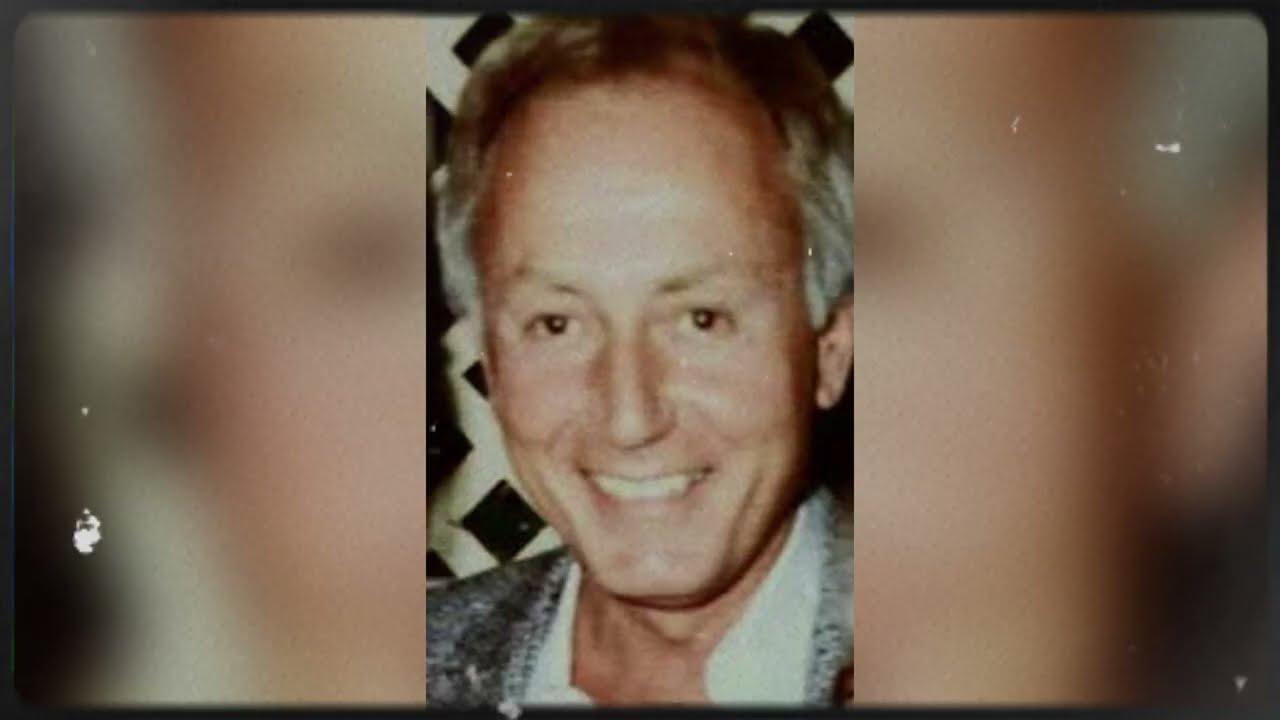
Theodore Rothstein was present at the office that day. He was the last person to see DiBernardo at 418 Broome Street.
At approximately 2:00 in the afternoon, DiBernardo left the office. He walked to where the gray Mercedes was parked and got in.
Around a quarter to 3:00, he reached for the car telephone and called his family. He told them where he was going, a meeting in Bensonhurst at a drywall company office. Brief and unremarkable, he would be home.
The address was 1809 Stillwell Avenue in the Bensonhurst section of Brooklyn. The premises were connected to a construction business in Gravano’s orbit.
DiBernardo had met with Gravano multiple times across their shared business interests. He fit the meeting in as something manageable between other obligations.
He arrived at Stillwell Avenue. He walked into the building and into the office. He sat down.
The meeting began as what it appeared to be, a brief discussion of a business matter. At some point in the meeting, Gravano told Joseph Peruta to get DiBernardo a cup of coffee.
Peruta had been working with Gravano’s operation for years. He was not a man whose usefulness was measured by his ability to retrieve beverages.
Peruta stood from his seat. He moved to a cabinet positioned behind where DiBernardo was sitting. From that cabinet, he took a .38 caliber revolver.
He shot Robert DiBernardo in the back of the head.
The body was removed from the Stillwell Avenue office. Robert DiBernardo’s body was never found.
The organization absorbed what he had controlled with the efficiency that closed systems apply to the redistribution of assets. Sammy Gravano took over the family’s connection to Teamsters Local 282.
Gravano’s own description of what the acquisition meant was unambiguous. He had control of the whole thing.
Joseph Peruta continued working for Gravano until lung cancer ended his capacity to do so. As Peruta was dying, Gravano arranged for him to be inducted into the Gambino family as a formally made member.
DiBernardo’s daughter, Lori DiBernardo Koonin, eventually went to court to have her father declared legally dead. There was no body and no official communication of any kind from the organization that had employed him.
She testified at John Gotti’s murder and racketeering trial in Brooklyn in 1992. Her voice, as described in contemporaneous trial reporting, was audible in the courtroom in a way that the surrounding proceedings were not.
Three and a half years after the afternoon in Bensonhurst, on December 12th, 1989, FBI listening devices installed in an apartment above the Ravenite Social Club recorded a conversation between John Gotti and his consigliere, Frank Locascio.
The conversation turned at some point to Robert DiBernardo. Gotti said he had been in jail when DiB was killed. They had told him a story. He had known why it was being done. He had done it anyway.
Robert DiBernardo’s body was never recovered.
What DiBernardo’s story reveals about John Gotti is not what the newspaper coverage concentrated on when the trial played out in Brooklyn in 1992. The coverage was focused on the reversal of the Teflon Don’s remarkable record of acquittals.
Gotti killed the man who helped make him. He did so on the word of a man who owed that man $250,000, delivered through a channel that could not be independently verified while Gotti sat inside a jail cell.
He eliminated a man who had no crew, no soldiers, and no capacity for the power play he was accused of planning. The income streams that man controlled moved directly to Sammy Gravano.
Gravano used the Teamsters connection to build his own construction power. Then, when he heard himself described on an FBI recording as someone Gotti was positioning to absorb the blame for multiple murders, he made the decision to cooperate with the government.
That cooperation produced Gotti’s conviction in April of 1992.
The phone call at a quarter to 3:00 on June 5th was the last call Robert DiBernardo made. He told his family where he was going, and then he drove across Brooklyn to an address on Stillwell Avenue and walked inside and sat down.
He had survived nearly two decades of federal attention. He had survived the most comprehensive undercover obscenity prosecution the FBI had ever mounted. He had survived the moment when a presidential campaign accidentally illuminated his name.
He had survived the transition from Castellano to Gotti and placed himself on the right side of it. He had carried the message in September of 1985 that no one else in the organization was positioned to carry.
He did not survive the death that the man who relayed the order was carrying.
John Gotti was convicted in April of 1992 on five murder counts, including DiBernardo’s, sentenced to life in prison without parole, and died at the Federal Medical Center in Springfield, Missouri on June 10th, 2002.
Angelo Ruggiero died of cancer in December of 1989, the same month the FBI recorded Gotti’s admission at the Ravenite.
DiBernardo had been exactly the kind of man the organization needed and exactly the kind of man the organization consumed. He could move between worlds, carry dangerous messages, build commercial empires, and generate income without requiring the infrastructure of violence that surrounded everyone around him.
The qualities that made him useful as an instrument were the same qualities that left him unguarded when the instrument became inconvenient. Being the man who could carry any message also meant being the man who could be eliminated without the organizational friction that protected everyone else.
He drove to Bensonhurst. He sat down. He waited for a cup of coffee that was never coming.