On June 10, 1986, a man who had spent his entire adult life building wealth for the Gambino crime family walked into a room in New York and never walked out. There was no trial, no warning, and no explanation. There were just 14 bullets in a body that was never found.
The man who ordered the killing was John Gotti. The victim was Robert Di Bernardo, a man who had quietly supported Gotti, protected him, and made him rich. It was 14 shots for loyalty.
Robert Di Bernardo was born in 1937 in New York City. He grew up with neighborhood connections and a street education, eventually being pulled into the gravitational force of organized crime. By his 30s, DiB, as everyone called him, was a made member of the Gambino crime family.
But DiB was not a street guy. He wasn't a Tommy DeSimone type, swinging fists in barrooms. DiB was a businessman. He was a sophisticated, methodical, and extraordinarily effective earner who understood that the real money in organized crime wasn't in hijacking trucks. It was in controlling industries.
By the 1970s and early 1980s, Di Bernardo had become one of the most financially powerful figures inside the Gambino family. He was connected to labor unions, specifically construction unions in New York City. If you were building anything in Manhattan in that era, DiB had his hand in it somewhere.
He also ran one of the largest adult film distribution networks in the United States. It was a major industrial operation that moved adult content through retail channels across dozens of states. The industry was cash-heavy, legally murky, and perfect for mob involvement.
DiB built what federal investigators later described as a near monopoly on the distribution side of the business. The money was staggering.
Being extraordinarily wealthy inside a crime family makes you valuable. But it also makes you a target. DiB understood this. He paid his tribute. He kept his head down. He was quiet, methodical, and careful. But you can't be the richest man in a room full of predators and stay safe forever.
John Gotti was born October 27, 1940 in the Bronx. By his 20s, he was embedded in the Gambino family's Bergin crew, working under Aniello Dellacroce, the underboss who served as a counterweight to Paul Castellano's authority.
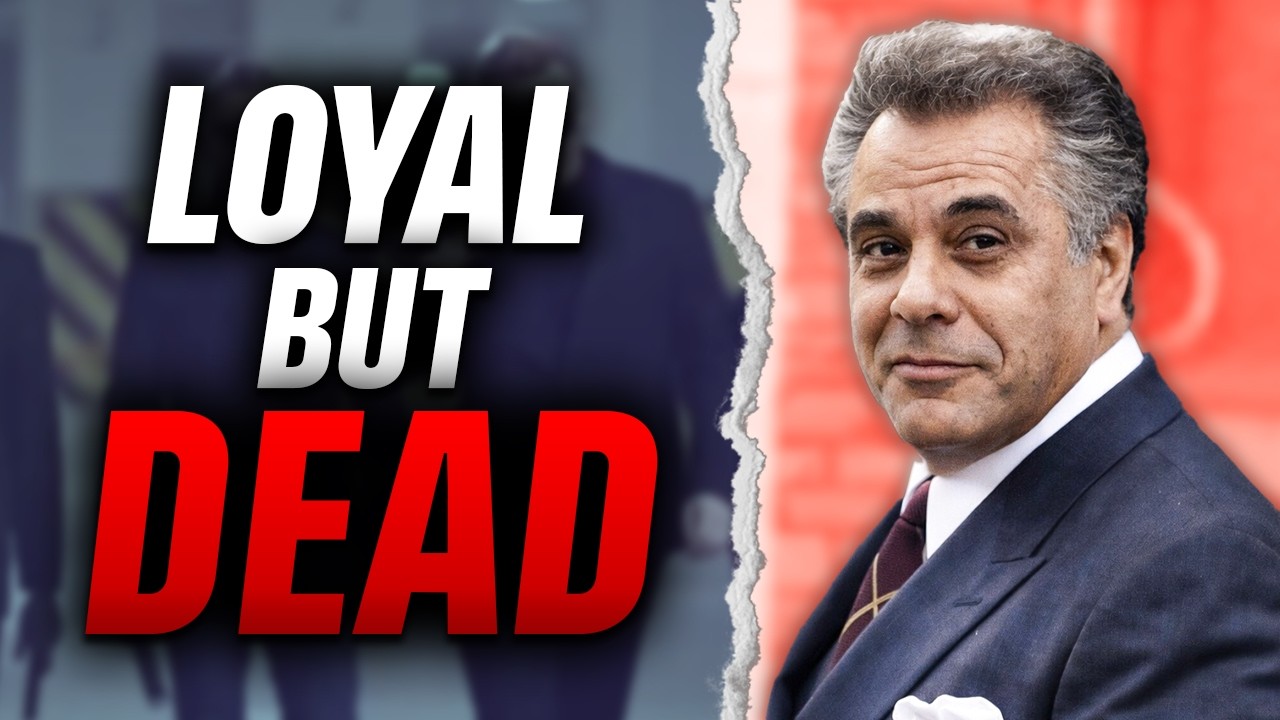
Gotti idolized Dellacroce. By the early 1980s, Gotti was a capo running one of the most active crews in the family. But he wasn't satisfied. Above him was Castellano, and the two men despised each other.
When Dellacroce died of cancer in December 1985, the last restraining force on Gotti's ambition was gone. Castellano had maybe two weeks left to live.
On December 16, 1985, outside Sparks Steak House in Manhattan, Paul Castellano stepped out of a black Lincoln and was shot multiple times in the head and upper body. His driver, Thomas Bilotti, was shot simultaneously. Both men died on the sidewalk.
John Gotti sat in a car across the street and watched it happen. Within weeks, Gotti was recognized as the new boss of the Gambino family.
DiB was watching all of this. He had been valuable under Castellano. The question was whether he'd be valuable under Gotti, or whether he'd be seen as a remnant of the old regime.
By 1986, Gotti had been boss for roughly six months. He was consolidating power and watching everyone else. Someone brought a story to Gotti that Robert Di Bernardo had been making undermining comments, suggesting that Gotti wasn't the right man to be running the family.
That someone was Sammy Gravano, also known as Sammy the Bull, Gotti's underboss and closest confidant. There is no independent verification that DiB ever said any of this. No wiretap captured it. No cooperating witness corroborated it.
DiB was extraordinarily wealthy. He controlled operations that generated enormous revenue. Under the new regime, that revenue had to go somewhere. Sammy Gravano had extensive interests in the construction industry, the same industry DiB had deep connections in.
On June 10, 1986, DiB was summoned to a meeting. He walked into a location that has never been publicly confirmed. He was shot 14 times.

There was no conversation before the shooting. No confrontation. No chance to respond. Just bullets.
DiB's body has never been found. No body means no murder scene. No murder scene means no forensic evidence. For a period of time, officially, Robert Di Bernardo was simply missing.
The FBI had been running surveillance on Gotti's operations for years. They captured conversations, including one in which John Gotti discussed the murder of Robert Di Bernardo with the casual tone of a man talking about a plumbing problem he'd had fixed.
On the tape, Gotti references the DiB situation and confirms that he ordered the killing. He discusses it matter-of-factly. No remorse. No weight. Gotti says on tape that he didn't even speak to DiB before having him killed.
Robert Di Bernardo was not killed because he undermined John Gotti. There is no credible evidence that he did. He was killed because of what he represented to the new regime.
DiB was a Castellano era power center. He controlled income streams that predated Gotti's rise. He had independent relationships that didn't run through Gotti. He didn't need Gotti the way Gotti needed people to need him.
That's the real threat DiB posed. Not disloyalty, but sufficiency. Men who don't require your favor are men you can't control.
After DiB was gone, his construction connections and income streams were redistributed to men closer to Gotti. You can draw a straight line from DiB's death to Gravano's enrichment.
DiB thought loyalty to the family was protection. It isn't. Loyalty is expected as a baseline. What keeps you alive isn't loyalty, it's leverage.

DiB had leverage, but he didn't weaponize it. He stayed quiet, paid his tribute, and trusted that his contributions would protect him. They didn't. They made him a prize.
John Gotti ran the Gambino family until 1992. He beat every charge against him, earning the nickname the Teflon Don. Then Sammy Gravano flipped.
Gravano entered into a cooperation agreement with federal prosecutors and provided testimony that dismantled Gotti's defense completely. Gotti was convicted on April 2, 1992 on charges including murder, racketeering, obstruction of justice, and tax evasion.
He was sentenced to life in prison without the possibility of parole. He died at the United States Medical Center for Federal Prisoners in Springfield, Missouri on June 10, 2002. Lung cancer. June 10th. The same date DiB was murdered.
Sammy Gravano served five years for 19 murders under his cooperation deal. He was released in 1994 and has spent years since doing podcast interviews and YouTube content.
DiB's body was never recovered. He has no grave. There is no marker, no memorial, no address you can visit to acknowledge that this man existed and mattered and was taken.
In organized crime, there is no such thing as loyalty flowing upward. There is tribute, there is usefulness, there is the maintenance of relationships through mutual benefit. But loyalty as a protective force is a myth.
DiB believed the myth. He operated inside it his entire career. He did everything right by the standards of the world he'd chosen. And a man who had known him for years sent a story to a boss who needed an excuse, and DiB was shot 14 times in a room he walked into willingly.
DiB was worth more dead than alive to John Gotti. That calculation took about 30 seconds. 30 seconds to erase 30 years.
He did everything right. He just did it inside a system where doing everything right doesn't save you. It just makes you valuable enough to eventually be worth killing.
14 shots for 30 years of loyalty. In the end, that's all it was worth.