On February 14, 2000, authorities in Colorado made a discovery that would remain unresolved for more than two decades. It was Valentine’s Day, a date typically associated with love and connection, but investigators instead found a man alone, dead, with no identification and no documents. There were no immediate answers, only a body and a question mark.
Investigators processed the scene methodically, examining his clothing, physical characteristics, and the condition of his remains. They estimated his age and recorded every detail that might later prove useful. But nothing pointed to a name. No missing person report matched. Fingerprints yielded no results. Dental records led nowhere.
He became known as John Doe 2000. With that label, the life he lived before his death slipped further away. There was no public outcry, no family demanding answers from the sidelines, no photo broadcast on the evening news. Whoever Christopher Scott Case had been, he had disappeared quietly enough that no one was actively searching for him. At least, no one looking in the right places.
The years passed. Leads ran cold. Detectives changed. Files were archived, reviewed, and archived again. The man found on that cold February day remained frozen in time, defined only by how he was found, not by who he was.
But one thing endured: his DNA. At the time, it seemed unremarkable, carefully collected, cataloged, and stored. No one in 2000 could have predicted that this biological trace would become his voice decades later, powerful enough to bridge generations.
For now, Christopher Scott Case remained invisible. A man without a name, an interrupted story, waiting in silence for the world to catch up. It would take more than 20 years for that to finally happen.
Years after the discovery, John Doe 2000 existed only in a file. His photo sat in databases alongside hundreds of other unidentified men, faces staring back without recognition. Investigators periodically reviewed the case, hoping time might bring something new. A late missing person report. A tip from someone who remembered a man who never came home.
What made his case particularly difficult was the lack of context. No confirmed last-seen location. No known contacts. No vehicle linked to him. No personal belongings found with him that could suggest where he had lived or where he was going. He was simply there. And then gone.
As the early 2000s progressed, technology advanced, but not quickly enough. DNA testing could only confirm someone’s identity if there was something to compare it against. In his case, there was nothing. His genetic profile entered police databases, waiting in silence year after year, producing no matches.
Meanwhile, somewhere outside Colorado, life continued without him. A family member might have wondered where he went. A friend might have assumed he chose to disappear. A relationship might have ended without explanation. Whatever ties Christopher Scott Case had in life slowly stretched under the weight of time.
By the early 2000s, the case was officially a cold case. But cold cases are not dead cases. Behind the scenes, a quiet shift began as forensic genealogy emerged as a tool to answer questions traditional methods could not solve. Instead of searching for direct matches, investigators could now look for distant relatives, second cousins, people who shared only fragments of DNA.
When his DNA was re-examined through this new lens, something finally moved. Small genetic connections began to surface. Not names yet, only branches, family lines, possibilities. Investigators began building a family tree backward, piecing together how this unknown man might fit into it. Each step required patience. Every assumption had to be verified. One wrong turn could undo months of work.
It was slow, painstaking, and uncertain. But for the first time in decades, John Doe 2000 was no longer alone in the system. He was moving quietly and steadily toward his name.
As the genealogical puzzle took shape, investigators realized this was no longer just an unknown person. It was a race against time. Each passing year made the work harder. Potential relatives were aging. Memories were fading. Some witnesses had already died. Yet the DNA forgot nothing. It waited patiently, connecting past to present in ways paperwork never could.
The family tree slowly narrowed. Investigators traced surnames across state lines, following lines through birth records, obituaries, and public documents. Each discovery brought them closer to the heart of the mystery: a man who had slipped out of his own life without leaving a clear trail.
Eventually, one branch stood out. It led to a family with a missing son. Someone who had drifted away years earlier, whose absence never quite made sense but never triggered an official investigation. He had not disappeared dramatically. He had not been reported missing right away. He had simply stopped calling.

When investigators approached family members from this branch, the conversations were careful and heavy. These are not calls anyone expects to receive after decades. They asked cautious questions. They shared limited details. And they waited. DNA samples were provided. Then came confirmation.
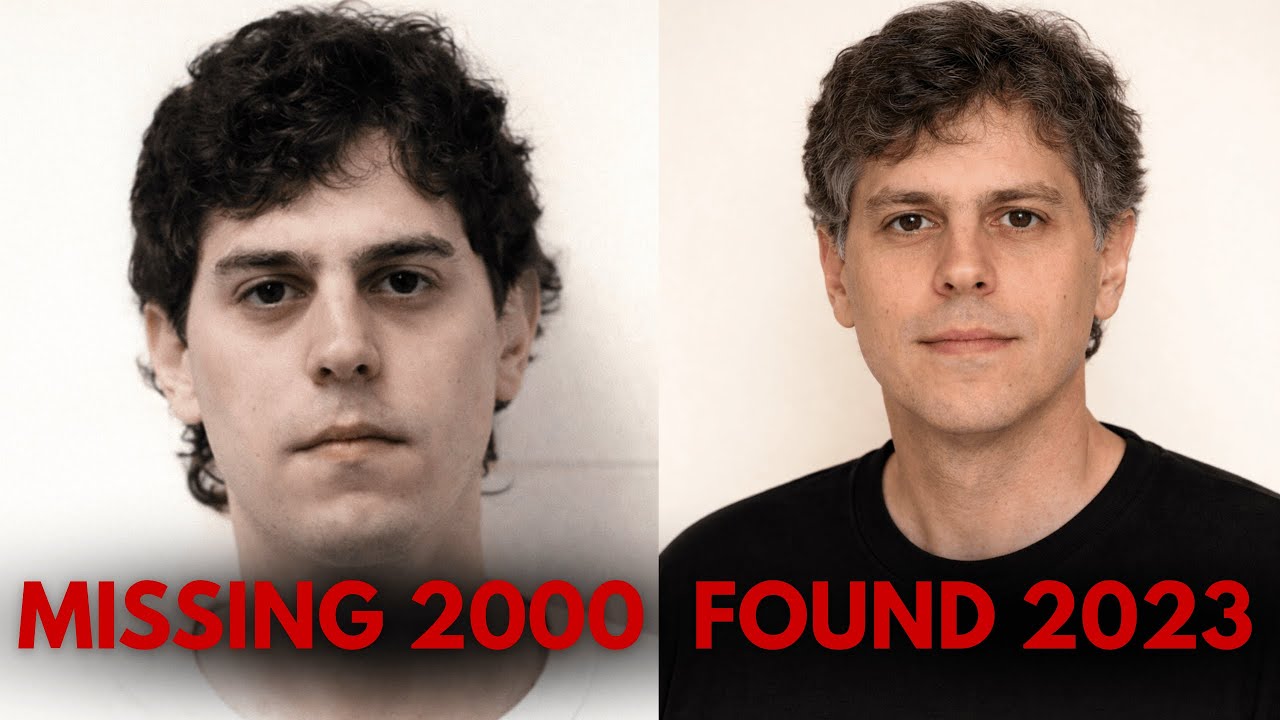
In December 2023, more than 23 years after his body was found, John Doe 2000 was officially identified as Christopher Scott Case. The name changed everything. He was no longer a case number or a forensic reconstruction. He had a past, a place in the world before 2000, a family that now had answers but also pain they had unknowingly carried for decades.
For investigators, the identification brought both relief and frustration. Relief that the man had finally gotten his identity back. Frustration because the hardest questions remained unanswered. How did Christopher end up in Colorado? When was he last seen alive? Who was with him before he died?
The truth was simple and cruel. Identification did not mean resolution, but it did something just as important. It opened the door to justice once more. Now that Christopher Scott Case was finally identified, investigators could look back with clarity instead of guessing in the dark.
They began reconstructing his life, not the final moment when he was found, but the long span before he became John Doe. Where he grew up, the places he might have lived, the movement patterns that could explain how he ended up in Colorado at all. These details matter because understanding someone’s life often explains their death.
What emerged was not a man trying to disappear, but someone who had slowly slipped out of sight. Christopher had not left behind a dramatic rupture that demanded attention. No sudden crime, no explosive argument, no official missing person report filed immediately. As with many adults who go missing, his absence was gradual. A call that never came. A visit that never happened. Over time, people assumed he was living his life elsewhere. That assumption cost years.
Investigators now believe Christopher may have been traveling or between stable living situations in the late 1990s. That alone increases vulnerability. People without strong anchors, jobs, housing, or consistent contact can cross state lines without anyone noticing. When something goes wrong, there is no immediate alarm.
The location where his body was found was re-examined, this time with purpose. Was it a place he chose himself? Was it somewhere he was brought? Did it suggest passing through or something more deliberate? These questions, previously impossible to answer, now carried weight because they were connected to a real person.

Detectives also re-examined the original evidence with modern techniques. Advances in forensic analysis allow old material to speak in new ways. Even details dismissed decades earlier could now matter. And because the case was no longer anonymous, investigators could compare timelines, cross-reference known movements, and recheck overlooked tips.
Still, there were limits. Witnesses from 2000 may not remember anything now. Some may no longer be alive. Physical evidence degrades. And the truth, whatever it is, has had more than two decades to hide.
Yet Christopher’s identification changed the moral stakes of the case. It was no longer about an unknown man found dead on Valentine’s Day. It was about Christopher Scott Case, a man whose life had a beginning, whose end deserved accountability, and whose story refused to stay buried.
Even if the final answers take time, or never fully come, one thing is certain. He will never again be a John Doe.
Christopher Scott Case spent more than two decades as a question mark in the system. But that is not how his story should be remembered. For 23 years, the world passed him by without knowing his name. He existed in files, in evidence lockers, in databases full of forgotten faces. And yet the truth waited quietly, carried in his DNA, until science caught up and forced the past back into the present.
His identification in December 2023 did more than close a file. It restored his dignity. It acknowledged that his life mattered enough to be named, even after death tried to erase him.
His story also exposes something uncomfortable. How easily an adult can disappear. How silence can be mistaken for choice. How absence, when gradual, can go unnoticed until it is too late. Christopher did not vanish in a single moment. He faded, and the world did not notice.
Somewhere, someone encountered him in his final days. Someone remembers a conversation, a ride, a place he stayed, a detail that did not seem important at the time. That person may not know they hold a piece of the truth, or may hope no one ever asks.
Because identification is not justice. Justice comes when the full truth is known. Christopher Scott Case now has his name back. His family has the answers they waited decades for, and his case stands as proof that time does not defeat the truth. It only delays it.